Tobacco Paste Box Beehive
CN → US| HS Code | Tariff Rate | Origin | Destination | Doc |
|---|---|---|---|---|
| 4819502000 | 35.0% | CN | US | Official Doc |
| 3926901000 | 20.9% | CN | US | Official Doc |
| 4819504040 | 35.0% | CN | US | Official Doc |
| 3926904800 | 13.4% | CN | US | Official Doc |
Product Images
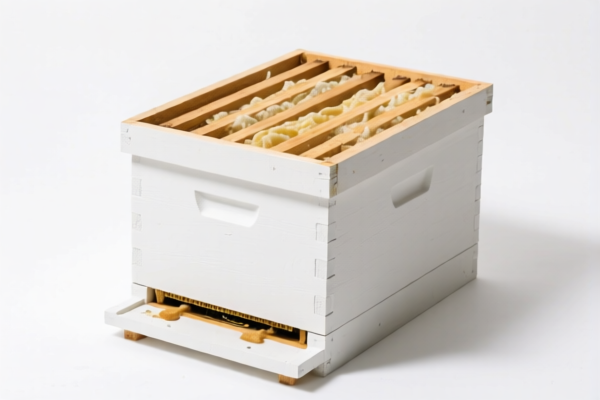
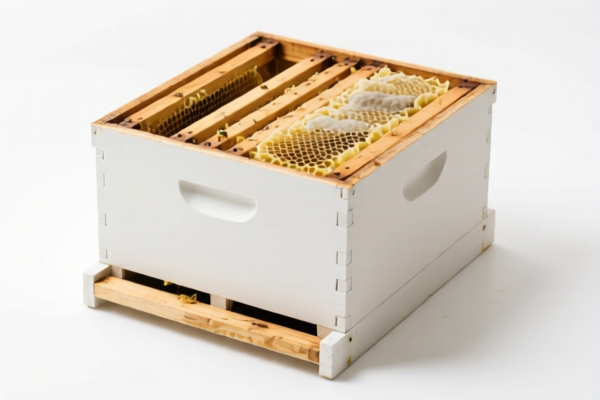
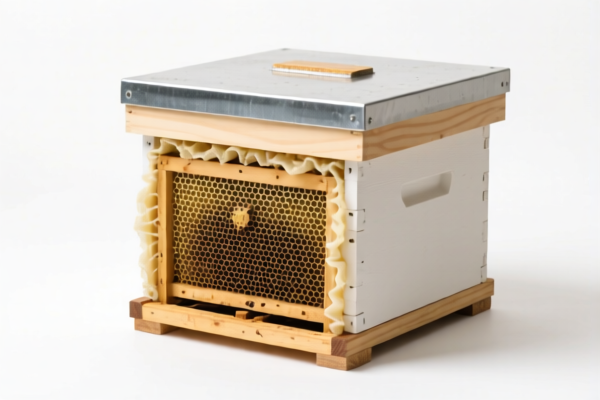
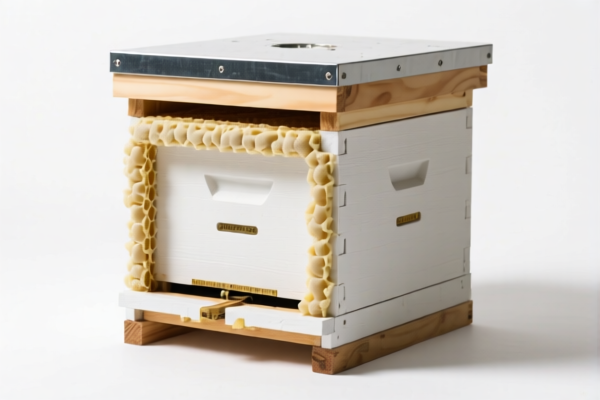
AI Analysis
📦 Tobacco Paste Box Beehive (The "Honeycomb" Container)
🌐 HS Code Reference & Customs Clearance Guide | 2026 Latest Tariff Analysis | Professional Clearance Strategy
📌 One. Product Definition & Classification: What is a "Tobacco Paste Box Beehive"?
In the context of tobacco product packaging, a "Tobacco Paste Box Beehive" refers to a specialized container used for storing, transporting, or dispensing tobacco paste (often used in water pipes/hookahs or modern vaping concentrates). The term "Beehive" describes its structural shape—typically a multi-compartment, hexagonal, or honeycomb-style box designed to hold multiple small units of paste.
Key Classification Logic: 1. Material is King: The HS Code depends entirely on whether the box is made of Paper/Cardboard or Plastic/Resin. 2. Form Factor: It is a "Container" or "Box." 3. Content: The tobacco paste itself does not dictate the HS Code for the packaging if declared separately or if the packaging is the primary commercial item. If imported as a "set," packaging is often secondary, but for standalone boxes, material rules.
⚠️ Critical Distinction:
- If the box is Paper/Cardboard: It falls under Chapter 48 (Paper).
- If the box is Plastic/Resin: It falls under Chapter 39 (Plastics).
- Do not confuse with HS 2405 (Tobacco products), as this guide focuses on the packaging container itself based on the provided data.
📦 Two. HS Code Classification Details (Based on Provided Data)
| HS Code | Material & Description | Summary / Justification | Total Tax Rate |
|---|---|---|---|
| 4819.50.20.00 | Paper/Cardboard Box | Based on common sense, the item is inferred as a paper or cardboard packaging container (tobacco paste box). Matches the material attributes of paper products and the form of food/item hygiene containers. No material conflict. | 35.0% |
| 3926.90.10.00 | Plastic/Resin Box (Other) | Match basis: Inferred as a container-type product by name "Box." Although material is not explicitly stated, based on the "catch-all" logic for "other products," and in the absence of metal or obvious non-plastic material conflicts, it preliminarily complies with the classification logic of plastic containers. | 20.9% |
| 4819.50.40.40 | Paper/Cardboard Box (Specific) | Based on the product name, it is inferred to be made of paper or cardboard. The form belongs to the "box" category, matching the material and form characteristics of "hard paper boxes and cardboard boxes" in 4819.50.40.40, with no obvious material conflict. | 35.0% |
| 3926.90.48.00 | Plastic/Resin Box (Other) | Based on common sense, inferred material is plastic or resin (within the scope of headings 3901-3914). The form is a storage container (belongs to "other plastic products"), matching the attributes of "plastic products" and "other" categories in the HS code, with no obvious material conflict. | 13.4% |
🔍 Key Takeaway:
- Paper Boxes (4819.xx) are taxed at a flat 35.0% total rate due to high surcharges.
- Plastic Boxes (3926.xx) vary from 13.4% to 20.9% depending on the specific sub-category and surcharge applicability.
💰 Three. 2026 Latest Tariff Rate Breakdown (Including Surcharges & Policy Add-ons)
✅ Applicable Country: United States (US)
✅ Origin: China (CN)
✅ Effective Time: Current rates include Section 301 and IEEPA surcharges.
🎯 1. 4819.50.20.00 & 4819.50.40.40 —— Paper/Cardboard Boxes
| Item | Content |
|---|---|
| Base Tariff | 0.0% (ad valorem) |
| Section 301 Surcharge | +25.0% (Additional Tariff) |
| IEEPA Surcharge (122 Clause) | +10.0% (Targeting Chinese Products) |
| Total Tax Rate | 35.0% |
| Tax Calculation | CIF Value × 35% |
| De Minimis Exemption | ❌ Not Eligible (Deny de minimis) |
| Legal Basis Path | USITC:4819.50.20.00 → Section 301: 25% → IEEPA: 10% |
📌 Explanation:
- Even though the base tariff for paper boxes is 0%, the 25% Section 301 tariff and 10% IEEPA tariff apply.
- Total 35% is a fixed high rate for paper packaging from China.
- Warning: Do not under-declare value. Customs will assess the full CIF value.
🎯 2. 3926.90.10.00 —— Plastic Box (Other)
| Item | Content |
|---|---|
| Base Tariff | 3.4% |
| Section 301 Surcharge | +7.5% (Note: Some plastic items have lower Section 301 rates depending on specific HTS sub-lists) |
| IEEPA Surcharge (122 Clause) | +10.0% |
| Total Tax Rate | 20.9% |
| Tax Calculation | CIF Value × 20.9% |
| De Minimis Exemption | ❌ Not Eligible |
| Legal Basis Path | USITC:3926.90.10.00 → Section 301: 7.5% → IEEPA: 10% |
📌 Note:
- This classification assumes the plastic box is not specifically excluded from higher surcharges.
- The 7.5% Section 301 is lower than the 25% for paper, making plastic potentially cheaper if this specific sub-code applies.
🎯 3. 3926.90.48.00 —— Plastic Box (Other, Specific Sub-category)
| Item | Content |
|---|---|
| Base Tariff | 3.4% |
| Section 301 Surcharge | 0.0% (No Section 301 surcharge for this specific sub-code in some lists) |
| IEEPA Surcharge (122 Clause) | +10.0% |
| Total Tax Rate | 13.4% |
| Tax Calculation | CIF Value × 13.4% |
| De Minimis Exemption | ❌ Not Eligible |
| Legal Basis Path | USITC:3926.90.48.00 → IEEPA: 10% |
📌 Optimization Alert:
- 13.4% is the most tax-efficient option if the product can be classified under3926.90.48.00.
- This code applies to "Other plastic articles" that fit this specific description. Ensure your product's material (plastic/resin) and function (storage container) align strictly with this code's technical definitions.
🛠️ Four. Customs Clearance Practical Advice (Real-world Pitfall Guide)
✅ 1. Required Documentation Checklist (Must-Have)
| Document | Required | Explanation |
|---|---|---|
| ✅ Product Specification Sheet | ✔️ | Must clearly state material (e.g., "Kraft Paper," "PP Plastic," "ABS Resin"). This is the single most important factor for HS Code determination. |
| ✅ Product Photos | ✔️ | Clear images showing the "Beehive" structure, material texture, and any branding. |
| ✅ Commercial Invoice | ✔️ | Must specify "Tobacco Paste Packaging Box" or "Plastic/Paper Storage Container." Avoid vague terms like "Gift Box." |
| ✅ Packing List | ✔️ | Detail the number of units, net/gross weight. |
| ✅ Material Declaration Letter | ✔️ | If ambiguous, a signed letter from the manufacturer stating the exact material composition helps avoid misclassification. |
✅ 2. Declaration Tips (Key Mantra)
🔥 "Material First, Form Second, No Tobacco Inside!"
| Scenario | Correct Declaration | Wrong Practice |
|---|---|---|
| Paper Box | Declare as "Paper Container for Tobacco Paste" → HS 4819.50.20.00 |
Declare as "Tobacco Pipe Accessory" → Risk of misclassification. |
| Plastic Box | Declare as "Plastic Storage Box for Tobacco Paste" → HS 3926.90.48.00 (if eligible) |
Declare as "Plastic Toy" → Wrong HS Code, potential fraud. |
| Box with Paste Inside | Best Practice: Declare the box and paste separately if possible. | Declare as "Set" → Complex classification, higher risk. |
| OEM Custom Box | Provide client order + design specs. | Use generic descriptions. |
✅ 3. Special Circumstances
| Situation | Handling Advice |
|---|---|
| Mixed Materials | If the box has plastic hinges on paper, consult a customs broker. Likely classified by the principal material. |
| Food-Grade vs. Tobacco | If the box is marketed for food, ensure it meets FDA standards, but HS Code remains based on material (Paper/Plastic). |
| Beehive Shape | The shape does not change the HS Code. It is still a "Container." Do not look for HS codes under "Toys" or "Decorations." |
🌍 Five. Global Market Clearance Comparison (2026 Latest)
| Country/Region | Recommended HS Code | Tariff Rate (China Origin) | Certification | Remarks |
|---|---|---|---|---|
| 🇺🇸 USA | 3926.90.48.00 |
13.4% | None (if no food contact) | Lowest US Tariff. Paper boxes are 35%. |
| 🇨🇳 China | 4819.50.20.00 / 3926.90.10.00 |
5% - 10% | None | Low import duty. |
| 🇪🇺 EU | 4819.50 / 3926.90 |
0% - 4% | CE (if plastic) | No US-style surcharges. |
| 🇬🇧 UK | 4819.50 / 3926.90 |
0% - 5% | UKCA | Post-Brexit rules apply. |
📌 Conclusion:
- The USA imposes significant surcharges, making Plastic Boxes (3926.90.48.00) the most cost-effective choice at 13.4% compared to Paper Boxes at 35.0%.
- For other markets, the difference is minimal, but material declaration must still be accurate.
📌 Six. Common Mistakes & Pitfall Guide (Lessons Learned)
❌ Mistake 1: Classifying a Plastic Box as Paper because it looks like Cardboard.
👉 Consequence: Wrong HS Code → Delayed customs → Re-inspection → Potential fines.
❌ Mistake 2: Declaring "Tobacco Paste Box" without specifying material.
👉 Consequence: Customs will assume the worst (highest duty) or hold the shipment for clarification.
❌ Mistake 3: Ignoring the IEEPA 10% surcharge.
👉 Consequence: Underestimating landed cost. The 10% IEEPA applies to almost all Chinese goods entering the US, regardless of HS Code.
❌ Mistake 4: Using "Beehive" as the HS Code search term.
👉 Consequence: HS Codes are based on Material and Function, not shape. "Beehive" is a marketing term, not a customs term.
✅ Correct Action:
"Plastic Storage Container for Tobacco Products, Beehive Style, Made of PP Plastic, Model XYZ"
🎯 Seven. Conclusion: Professional Declaration, Cost Savings, Efficiency!
🎯 Remember the Mantra:
🔹 "Material dictates Code. Plastic is cheaper (13.4%) than Paper (35.0%) in the US."
🔹 "IEEPA 10% is universal. Section 301 varies. Check your sub-code carefully."
📌 Pro Tip:
If your business is sensitive to the 35% tax on paper boxes, consider switching to Plastic Packaging (3926.90.48.00) for the US market, provided the product design allows it.
Always request a Pre-Ruling (Advance Ruling) from US Customs if the material composition is complex or if you want to lock in the 13.4% rate.
📣 Immediate Action:
📞 Contact your customs broker + Provide material specs + Apply for HS Code Pre-Ruling
🚀 Ensure your Tobacco Paste Beehive Boxes clear customs smoothly, efficiently, and at the lowest possible tax rate!
✨ Professional Clearance Starts with Accurate Classification!
💼 Every cent of your cost deserves precise calculation!
Customer Reviews
About HS Code Classification
The Harmonized System (HS) is an internationally standardized nomenclature developed by the World Customs Organization (WCO) to classify traded products. Over 200 countries use the HS system as the basis for customs tariffs, trade statistics, and import/export regulations.
Each HS code follows a hierarchical structure:
- Chapter (2 digits) — Broad category of goods (e.g., Chapter 84: Machinery and Mechanical Appliances)
- Heading (4 digits) — More specific grouping within the chapter
- Subheading (6 digits) — Internationally standardized breakdown, used by all WCO member countries
- National subdivisions (8-10 digits) — Country-specific extensions for further classification, such as US HTSUS 10-digit codes
Correct HS code classification is essential for smooth customs clearance, accurate duty payment, and compliance with trade regulations. Misclassification can lead to customs delays, overpayment of duties, or penalties.
When importing from CN to US, the applicable tariff rates may include:
- Most-Favored-Nation (MFN) rate — The standard duty rate applied to WTO members
- General rate — Applied to countries without trade agreements
- Trade remedy duties — Additional tariffs such as Section 301 (anti-dumping), Section 232 (national security), or countervailing duties
The information provided on this page is for reference purposes only. For official classification, please consult with your local customs authority or a licensed customs broker.