Toddler Walking Leash
CN → US| HS Code | Tariff Rate | Origin | Destination | Doc |
|---|---|---|---|---|
| 5609004000 | 38.9% | CN | US | Official Doc |
| 5609001000 | 37.9% | CN | US | Official Doc |
| 9503000071 | 10.0% | CN | US | Official Doc |
| 9503000073 | 10.0% | CN | US | Official Doc |
| 6117809570 | 32.1% | CN | US | Official Doc |
Product Images
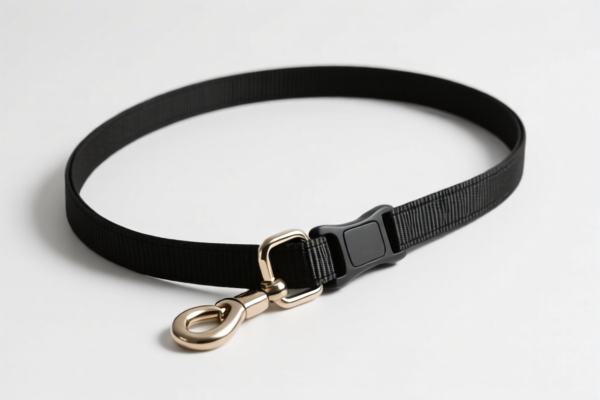
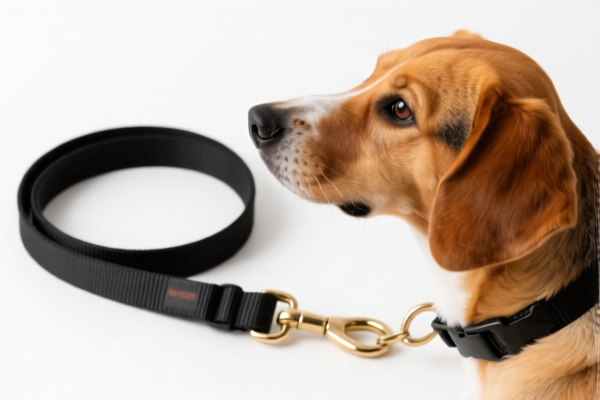
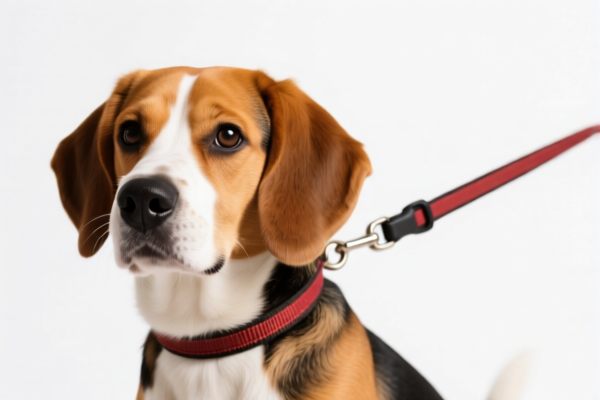
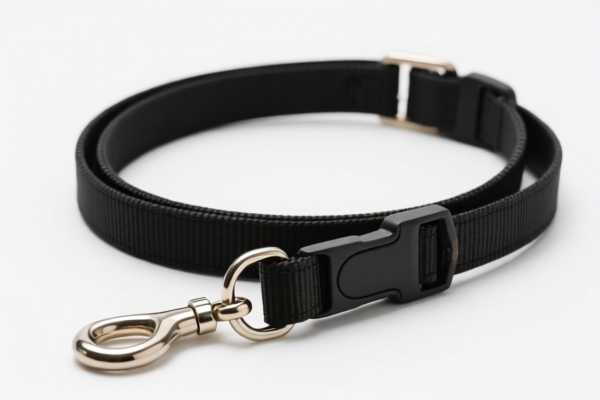
AI Analysis
🚸 Toddler Walking Leash (Baby Safety Harness)
🌐 HS Code Reference & Customs Clearance Guide | 2026 Latest Tariff Analysis | Professional Clearance Strategy
📌 I. Product Definition & Classification: Do You Really Understand "Toddler Walking Leash"?
A Toddler Walking Leash (also known as a baby safety harness, wrist leash, or anti-lost strap) is a device designed to prevent toddlers from wandering away. In international trade, this product sits at the intersection of toys, apparel accessories, and textile articles. Its classification depends heavily on: 1. Perceived Use: Is it viewed as a "toy" for play, or a "safety accessory" for parenting? 2. Material Composition: What is the main fabric? (Nylon, Polyester, Cotton, etc.) 3. Design Features: Does it include buckles, gloves, or just a strap?
⚠️ Key Distinction Point:
- If deemed a Toy (often due to marketing, packaging, or inclusion of plush/character elements) → Chapter 95
- If deemed an Apparel Accessory (functional strap/handle) → Chapter 61 or Chapter 56
- If deemed a General Textile Article (simple rope/strap) → Chapter 56
📦 II. HS Code Classification Details (2026 Latest Tariff Authority Comparison)
| HS Code | Product Description | Application Scenario | Tax Rate (US/CN Origin) | Classification Logic |
|---|---|---|---|---|
| 9503.00.00.71 | Toys: Tricycles, scooters, dolls, and other toys; specifically for children under 3 years old | Marketing as a "play accessory," bright colors, character designs, used for fun/safety play | 10.0% | Toy Category: Primary purpose is perceived as entertainment/play aid for young children. |
| 9503.00.00.73 | Other toys; for children of a specific age group (e.g., 3+ years) | Similar to above, but potentially for slightly older toddlers; generic toy classification | 10.0% | Toy Category: Broad "other toys" classification when specific child-use fits the description. |
| 6117.80.95.70 | Other made-up clothing accessories, knitted or crocheted (e.g., hand straps, wristbands) | Functional parenting aid; made of knit fabric; used as an apparel accessory (hand/wrist attachment) | 32.1% | Apparel Accessory: Viewed as a "made-up clothing accessory" (like a wristband or glove) rather than a toy. |
| 5609.00.40.00 | Articles of yarn or string, ropes, cords, plaited materials (e.g., ropes, braids) | Simple rope-like construction; no significant fabric structure; primarily a "string" or "cord" | 38.9% | Textile Article: Classified as a general rope/strap article without specific apparel or toy intent. |
| 5609.00.10.00 | Articles of yarn or string, ropes, cords, plaited materials (e.g., cotton ropes) | If made primarily of cotton; simple rope structure | 37.9% | Textile Article: Specific to cotton-based rope/cord articles. |
🔍 Critical Reminder:
- US Customs (CBP) often scrutinizes these items. If the product is packaged like a toy, has cartoon prints, or is marketed to parents for "fun" outings, CBP may classify it as 9503 (Toys), attracting the 10% rate.
- If marketed strictly as a "safety harness" or "walking aid" with minimal "toy-like" features, it may fall under 6117 (Apparel Accessories) or 5609 (Ropes).
- Do NOT assume all leashes are toys. The marketing angle and product design dictate the final classification.
💰 III. 2026 Latest Tariff Rate Breakdown (Including Additional Taxes, Policy Add-ons)
✅ Applicable Country: United States (US)
✅ Origin: China (CN)
✅ Effective Date: November 10, 2025 (and subsequent imports)
🎯 1. 9503.00.00.71 & 9503.00.00.73 —— Toys for Young Children
| Item | Content |
|---|---|
| Base Duty Rate | 0.0% (ad valorem) |
| USITC Additional Duty | 0.0% (No 301 Section duty on these specific subheadings) |
| IEEPA Additional Duty | +10% (Targeting China/Hong Kong products, effective from Nov 10, 2025) |
| Total Duty Rate | 10.0% |
| Tax Calculation | CIF Value × 10% |
| De Minimis Eligibility | ❌ Not Eligible (deny_de_minimis applies to China-origin goods under 8612/IEEPA rules for certain categories, but specifically, toy imports from China are subject to these tariffs and may not qualify for $800 de minimis if flagged. Note: De minimis rules are complex; always verify. |
| Legal Basis Path | IEEPA:9903.01.24 (10% surcharge) |
📌 Explanation:
- Why 10%? The base duty for most toys is 0%, but the IEEPA 10% surcharge applies to all China-origin goods under this chapter.
- No 301 Duty? Unlike electronics or machinery, these specific toy subheadings often escape the 25% Section 301 tariff, but the 10% IEEPA surcharge is mandatory.
- Cost Efficiency: This is the lowest tariff option (10%), making it highly desirable if the product can be classified as a toy.
🎯 2. 6117.80.95.70 —— Other Made-Up Clothing Accessories
| Item | Content |
|---|---|
| Base Duty Rate | 14.6% (ad valorem) |
| USITC Additional Duty | +7.5% (Partial 301 Section duty or specific footnotes) |
| IEEPA Additional Duty | +10% (Targeting China/Hong Kong products) |
| Total Duty Rate | 32.1% |
| Tax Calculation | CIF Value × 32.1% |
| De Minimis Eligibility | ❌ Not Eligible |
| Legal Basis Path | USITC:6117.80.95.70 + IEEPA:9903.01.24 |
📌 Explanation:
- Why 32.1%? Apparel accessories often face higher base duties. The 7.5% is likely a partial 301 tariff or specific footnote duty, plus the universal 10% IEEPA surcharge.
- Risk: If CBP disagrees with the "toy" classification and defaults to "apparel accessory," the cost more than triples.
🎯 3. 5609.00.40.00 & 5609.00.10.00 —— Rope/Strap Articles
| Item | Content |
|---|---|
| Base Duty Rate | 2.9% - 3.9% |
| USITC Additional Duty | +25.0% (Full Section 301 duty) |
| IEEPA Additional Duty | +10.0% (Targeting China/Hong Kong products) |
| Total Duty Rate | 37.9% - 38.9% |
| Tax Calculation | CIF Value × ~38% |
| De Minimis Eligibility | ❌ Not Eligible |
| Legal Basis Path | IEEPA:9903.01.24 + USITC:5609.xxxxxx (Footnote 9903.88.01) |
📌 Explanation:
- Why ~38%? These are general textile articles. They are subject to the full 25% Section 301 tariff (unlike some toys) PLUS the 10% IEEPA surcharge.
- Avoid This: Unless the product is a simple, unbranded rope with no safety features, this is the most expensive classification.
🛠️ IV. Customs Clearance Practical Advice (Real-World Pitfall Guide)
✅ 1. Preparation Checklist (All Required)
| Document | Mandatory? | Explanation |
|---|---|---|
| ✅ Product Photos | ✔️ | Clear images showing the entire item, including buckles, handles, and any plush/character elements. |
| ✅ Marketing Materials | ✔️ | Website screenshots, Amazon listings, packaging. CBP will use this to determine if it’s a "Toy" or "Accessory". |
| ✅ Composition Statement | ✔️ | Exact material breakdown (e.g., "90% Polyester, 10% Nylon buckle"). |
| ✅ Function Description | ✔️ | Is it for "safety" or "play"? If it has a "distractor" (e.g., a rattle), it leans toward Toy. |
| ✅ Commercial Invoice | ✔️ | Must accurately describe the product. Do NOT use vague terms like "Accessory." Use "Toddler Safety Harness" or "Child Toy Leash." |
| ✅ Origin Certificate | ✔️ | Proof of China origin (to apply IEEPA surcharges correctly). |
✅ 2. Declaration Strategy (Key Mantras)
🔥 “Toy or Accessory? Design is Key. Marketing Dictates Duty.”
| Scenario | Correct Declaration | Risk of Misclassification |
|---|---|---|
| Product has cartoon prints, plush handle, or is marketed for "fun walks" | HS 9503.00.00.71 (Toy) | If declared as Rope/Accessory → Overpay ~28% (38% vs 10%) |
| Product is plain, functional, no character design, marketed as "Safety Gear" | HS 6117.80.95.70 (Accessory) | If declared as Toy → Underpayment Risk (CBP may audit and charge back taxes + penalties) |
| Product is a simple braided rope with no handle/buckle | HS 5609.00.40.00 (Rope) | Rare for modern leashes; if misclassified as Toy → Underpayment Risk |
⚠️ Crucial Tip:
- If you declare it as a Toy (9503), ensure your marketing supports it. If CBP finds it’s purely functional with no "toy" appeal, they may reclassify it to 6117 or 5609, leading to additional duties, interest, and penalties.
- Pre-Ruling: Consider applying for a CBP Pre-Ruling to lock in the HS Code. This is especially valuable for high-volume imports.
✅ 3. Special Cases Handling
| Situation | Handling Advice |
|---|---|
| Mixed Materials (Fabric + Plastic Buckle + Metal Ring) | The essential character determines the chapter. For leashes, the textile/strap usually dominates, but if the buckle is the main feature, it might shift to Chapter 73/39. However, leashes are typically Textile/Toy. |
| OEM/Private Label | Provide the brand owner’s design specs. If the design includes "toy-like" features, it strengthens the Toy classification. |
| Gift Sets (Leash + Toy) | If packaged with a separate toy, declare separately. If integrated, the entire set may be classified as a Toy. |
| Anti-Lost GPS Leash | If it contains electronics, it may shift to Chapter 85 (Electronic devices), complicating the classification. Ensure the electronic component is minor or non-functional for the primary classification. |
🌍 V. Global Market Comparison (2026 Latest)
| Country/Region | Recommended HS Code | Total Duty (China Origin) | Certification Required | Notes |
|---|---|---|---|---|
| 🇺🇸 USA | 9503.00.00.71 (Toy) |
10.0% | CPC (Children’s Product Certificate), CPSIA | Lowest duty. Strongly push Toy classification if design allows. |
| 🇨🇳 China | 9503.00.00.71 |
9.0% | CCC (if applicable) | No IEEPA surcharge. |
| 🇪🇺 EU | 9503.00.70 |
0% - 4.7% | CE, EN71 | No 301/IEEPA taxes. Toy classification is standard. |
| 🇬🇧 UK | 9503.00.70 |
0% - 4.7% | UKCA, EN71 | Post-Brexit rules align with EU for toys. |
| 🇦🇺 Australia | 9503.00.00 |
5% | ACM GSR | Moderate duty. |
| 🇯🇵 Japan | 9503.00.70 |
0% | PSE (if electronic) | Often duty-free for toys. |
📌 Conclusion:
- USA is the most challenging market due to IEEPA and 301 tariffs.
- Toy Classification (9503) is the ONLY way to minimize US duties (10% vs 32-39%).
- EU/UK/Japan are favorable with low/no duties on toys.
📌 VI. Common Errors & Pitfall Guide (Lessons from Tears)
❌ Error 1: Declaring a "Toy-like" leash as an "Apparel Accessory" (6117)
👉 Result: Overpaying ~22% extra. (10% Toy vs 32.1% Accessory).
Fix: If it has any playful elements, declare as Toy.
❌ Error 2: Declaring a purely functional leash as a "Toy" (9503)
👉 Result: Underpayment. CBP audits reveal it’s a safety device, not a toy. You pay back taxes + 10% penalty.
Fix: Ensure marketing and design align with "Toy" if using this code. Use Pre-Ruling.
❌ Error 3: Ignoring the IEEPA 10% Surcharge
👉 Result: Surprises at customs.
Fix: All China-origin goods are subject to 10% IEEPA. Calculate this into your landed cost.
❌ Error 4: Vague Description "Baby Strap"
👉 Result: CBP holds shipment for classification. Delay of 2-4 weeks.
Fix: Use precise terms: "Toddler Walking Harness with Plush Handle" or "Functional Safety Leash."
🎯 VII. Conclusion: Professional Declaration, Time-Saving, Cost-Efficient!
🎯 Remember the Mantra:
🔹 “Toy or Tool? Design Tells the Story. Toy is 10%, Rope is 38%.”
🔹 “HS Code Saves Money, Misclassification Costs a Fortune.”
📌 Pro Tip:
If your product is 100% functional with no toy elements, declare as Apparel Accessory (6117.80.95.70). It’s safer legally, even if the duty is higher. If you have any playful design, declare as Toy (9503.00.00.71) to save 22% in duties.
📣 Immediate Action:
📞 Contact a Customs Broker to review your product photos and marketing.
🚀 Apply for a CBP Pre-Ruling if your volume is high. This single step can save you thousands in potential disputes.
💼 Your Landed Cost Depends on This Choice!
✨ Professional Clearance Starts with Accurate Classification!
💼 Every Percent Counts in Global Trade!
Customer Reviews
About HS Code Classification
The Harmonized System (HS) is an internationally standardized nomenclature developed by the World Customs Organization (WCO) to classify traded products. Over 200 countries use the HS system as the basis for customs tariffs, trade statistics, and import/export regulations.
Each HS code follows a hierarchical structure:
- Chapter (2 digits) — Broad category of goods (e.g., Chapter 84: Machinery and Mechanical Appliances)
- Heading (4 digits) — More specific grouping within the chapter
- Subheading (6 digits) — Internationally standardized breakdown, used by all WCO member countries
- National subdivisions (8-10 digits) — Country-specific extensions for further classification, such as US HTSUS 10-digit codes
Correct HS code classification is essential for smooth customs clearance, accurate duty payment, and compliance with trade regulations. Misclassification can lead to customs delays, overpayment of duties, or penalties.
When importing from CN to US, the applicable tariff rates may include:
- Most-Favored-Nation (MFN) rate — The standard duty rate applied to WTO members
- General rate — Applied to countries without trade agreements
- Trade remedy duties — Additional tariffs such as Section 301 (anti-dumping), Section 232 (national security), or countervailing duties
The information provided on this page is for reference purposes only. For official classification, please consult with your local customs authority or a licensed customs broker.