Toilet Bag
CN → US| HS Code | Tariff Rate | Origin | Destination | Doc |
|---|---|---|---|---|
| 3306100000 | 10.0% | CN | US | Official Doc |
| 9603210000 | 17.5% | CN | US | Official Doc |
| 3306200000 | 17.5% | CN | US | Official Doc |
| 4015195100 | 49.0% | CN | US | Official Doc |
| 4015129000 | 49.0% | CN | US | Official Doc |
Product Images
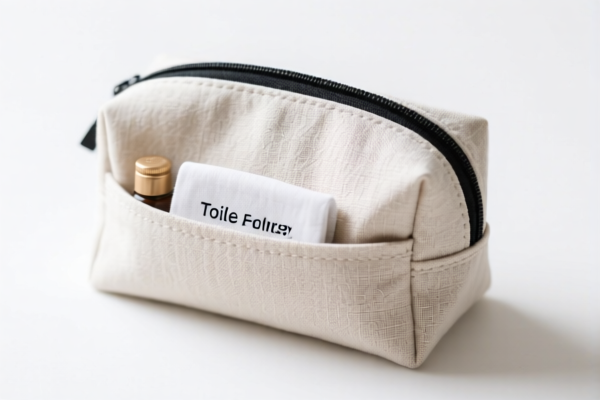
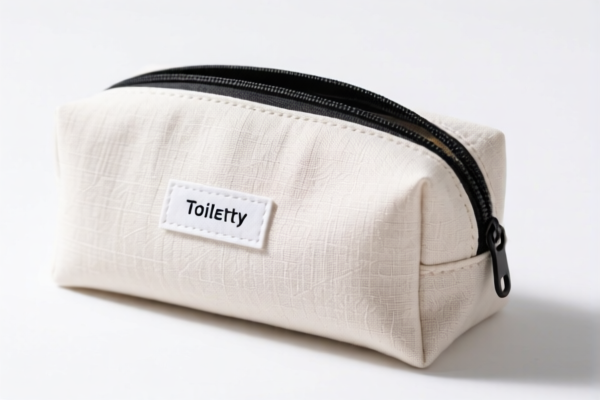
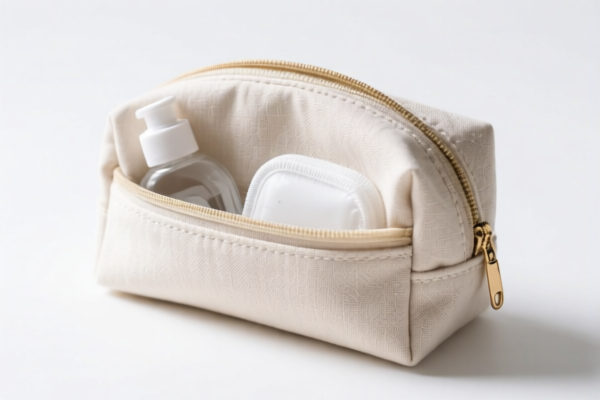
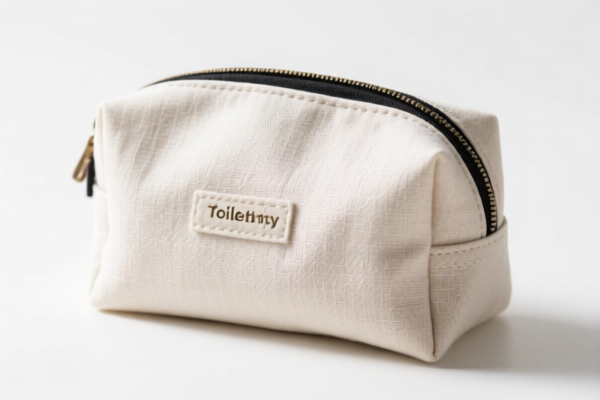
AI Analysis
🧴 Toilet Bag (Toiletry Bag)
🌐 HS Code Reference & Customs Clearance Guide | 2026 Latest Tariff Analysis | Professional-Level Clearance Strategy
📌 1. Product Definition & Classification: Do You Really Understand "Toilet Bags"?
Toilet bags, also known as toiletry kits or cosmetic pouches, are portable containers used to store personal hygiene and grooming items such as toothpaste, toothbrushes, tooth floss, and occasionally small protective accessories like rubber gloves. In international trade, these items do not have a single, exclusive HS Code because they are often mixed-use products. The classification depends entirely on the dominant material, primary function, or specific contents declared.
⚠️ Key Distinction Point:
- If the bag primarily holds oral hygiene products (toothpaste, toothbrushes) → It aligns with Chapter 33 (Essential Oils & Cosmetics) or Chapter 96 (Articles of Plastics/Rubber/Bristles).
- If the bag is considered a packaging container for the products inside, it might follow the classification of the products. However, if the bag itself is the commercial unit being imported with pre-filled contents, customs often look at the principal component or the nature of the good.
- Note: The provided data suggests specific classifications based on the contents or material composition implied by the product name "Toilet Bag" in a commercial context, likely referencing pre-filled kits or specific material attributes.
📦 2. HS Code Classification Details (Based on Provided Data)
| HS Code | Product Description & Rationale | Tax Rate | Key Components/Criteria |
|---|---|---|---|
3306.10.00.00 |
Oral Care Preparations: Toothpaste and other oral hygiene preparations. Rationale: If the toilet bag is treated as a kit where the toothpaste is the principal item, or if the bag is marketed primarily as a vessel for oral care agents. |
10.0% | Toothpaste, oral hygiene agents. |
9603.21.00.00 |
Toothbrushes: Toothbrushes, including denture brushes. Rationale: If the toilet bag is considered a kit where toothbrushes are the dominant component, or if the bag itself is classified under bristle/plastic articles depending on design. |
17.5% | Toothbrushes, bristle items. |
3306.20.00.00 |
Dental Floss and Related Products: Dentifrices in the form of powders, pastes, liquids, and similar preparations for cleaning teeth. Rationale: Overlap with oral care items like tooth floss. If the kit's primary value/utility comes from dental floss or similar pastes. |
17.5% | Dental floss, cleaning pastes. |
4015.19.51.00 |
Rubber Gloves & Accessories: Other surgical or household gloves made of rubber. Rationale: "Toilet Bag" may imply the inclusion of rubber protective gloves (e.g., cleaning gloves). If rubber components are significant, it may fall here. |
49.0% | Rubber gloves, protective accessories. |
4015.12.90.00 |
Rubber Gloves: Rubber gloves, boots, and other articles of vulcanized rubber. Rationale: Default classification for rubber items if no specific conflict. As a finished consumer good with rubber elements (e.g., waterproof bag or gloves inside), it defaults to this category. |
49.0% | Vulcanized rubber articles, general protective gear. |
🔍 Critical Insight:
- "Toilet Bag" is ambiguous. Without a specific bill of materials, customs may classify it based on the most valuable item inside or the principal material of the bag itself.
- The provided data indicates that rubber-based classifications (4015) carry a significantly higher tax burden (49.0%) due to base tariffs, Section 301 tariffs, and IEEPA surcharges.
- Oral care items (3306, 9603, 3306) have lower base rates but are still subject to significant surcharges.
💰 3. 2026 Latest Tariff Rate Breakdown (Including Additional Taxes)
✅ Applicable Country: United States (US)
✅ Origin: China (CN)
✅ Effective Date: From November 10, 2025 (including subsequent imports)
🎯 1. 3306.10.00.00 – Oral Care Preparations (e.g., Toothpaste Kits)
| Item | Details |
|---|---|
| Base Tariff | 0.0% |
| Section 301 Tariff | 0.0% |
| IEEPA Surcharge | +10.0% (122-Clause Tariff) |
| Total Tariff | 10.0% |
| Calculation | CIF Value × 10.0% |
| De Minimis Exemption | ❌ Not Applicable (IEEPA items usually exclude de minimis) |
| Legal Path | IEEPA: 122 Clause |
📌 Explanation:
- Despite a 0% base tariff, the 10% IEEPA surcharge applies to Chinese-origin oral care products.
- This is the lowest risk category among the options, making it favorable if the product is primarily toothpaste-based.
🎯 2. 9603.21.00.00 – Toothbrushes
| Item | Details |
|---|---|
| Base Tariff | 0.0% |
| Section 301 Tariff | +7.5% |
| IEEPA Surcharge | +10.0% (122-Clause Tariff) |
| Total Tariff | 17.5% |
| Calculation | CIF Value × 17.5% |
| De Minimis Exemption | ❌ Not Applicable |
| Legal Path | Section 301: 7.5% + IEEPA: 10% |
📌 Explanation:
- Toothbrushes face a 7.5% Section 301 tariff plus the 10% IEEPA surcharge.
- Total cost impact is nearly double that of toothpaste kits.
🎯 3. 3306.20.00.00 – Dental Floss & Cleaning Preparations
| Item | Details |
|---|---|
| Base Tariff | 0.0% |
| Section 301 Tariff | +7.5% |
| IEEPA Surcharge | +10.0% (122-Clause Tariff) |
| Total Tariff | 17.5% |
| Calculation | CIF Value × 17.5% |
| De Minimis Exemption | ❌ Not Applicable |
| Legal Path | Section 301: 7.5% + IEEPA: 10% |
📌 Explanation:
- Similar to toothbrushes, dental care items incur the same 17.5% total rate.
🎯 4. 4015.19.51.00 & 4015.12.90.00 – Rubber Gloves/Articles
| Item | Details |
|---|---|
| Base Tariff | 14.0% |
| Section 301 Tariff | +25.0% |
| IEEPA Surcharge | +10.0% (122-Clause Tariff) |
| Total Tariff | 49.0% |
| Calculation | CIF Value × 49.0% |
| De Minimis Exemption | ❌ Not Applicable |
| Legal Path | Base: 14% + Section 301: 25% + IEEPA: 10% |
📌 Explanation:
- WARNING: If your "Toilet Bag" is classified under these rubber codes (e.g., if it’s marketed as a "cleaning kit" with gloves or is made of rubber), the tariff skyrockets to 49.0%.
- This is due to the high base tariff (14%) combined with the full 25% Section 301 tariff.
- Cost Impact: Nearly 5x the tax of toothpaste kits.
🛠️ 4. Practical Customs Clearance Advice (Avoiding Pitfalls)
✅ 1. Documentation Checklist (Essential)
| Document | Required? | Purpose |
|---|---|---|
| ✅ Detailed Product Description | ✔️ | Must specify contents: "Toiletry bag containing toothpaste, toothbrush, and floss." |
| ✅ Bill of Materials (BOM) | ✔️ | Identifies the principal component (e.g., plastic bag vs. rubber gloves). |
| ✅ Product Images | ✔️ | Show the bag, contents, and any labels. |
| ✅ Certificate of Origin | ✔️ | Crucial for applying correct tariff rates and verifying country of origin. |
| ✅ Commercial Invoice | ✔️ | Must clearly state HS Code and tariff implications. |
✅ 2. Classification Strategy (Key Tips)
🔥 "Content Determines Code, Material Matters Most!"
| Scenario | Recommended Approach | Avoid |
|---|---|---|
| Kit with Toothpaste & Brush | Declare as 3306.10.00.00 if toothpaste is principal. |
Declaring as 9603 if toothpaste value > toothbrush. |
| Kit with Rubber Gloves | Expect 4015 classification. High tax! |
Trying to avoid this by hiding the gloves. |
| Empty Plastic Bag | If empty, it might be 4202 (Luggage/Pouches) – Not in provided data, but common. |
Misdeclaring as "Toiletries" when empty. |
| Mixed Content | Use GRI 3(b): Classify by "essential character" or "value". | Randomly picking the lowest tax code without justification. |
✅ 3. Special Considerations
| Situation | Advice |
|---|---|
| Pre-filled Kits | Customs may assess the entire kit based on the highest valued item or the principal function. If it contains a 10% tax item (toothpaste) and a 49% item (rubber gloves), the whole kit may be taxed at 49% if gloves are deemed essential. |
| Component Separation | If possible, ship empty bags and contents separately to optimize tariff classification for each item. |
| Origin Marking | Ensure all items are properly marked as "Made in China" to apply accurate Section 301 and IEEPA tariffs. |
🌍 5. Global Market Comparison (2026)
| Region | Recommended HS Code | Approx. Total Tariff (China Origin) | Notes |
|---|---|---|---|
| 🇺🇸 USA | 3306.10.00.00 |
10.0% | Lowest risk for oral care kits. |
| 🇺🇸 USA | 4015.19.51.00 |
49.0% | Highest risk if rubber gloves included. |
| 🇪🇺 EU | Varies | 0% - 6.5% | Generally lower tariffs; check for anti-dumping duties. |
| 🇨🇳 China | Varies | 5% - 10% | Lower base tariffs; no IEEPA surcharges. |
📌 Conclusion:
- The USA imposes significant surcharges on Chinese toiletries.
- Toothpaste-based kits (3306) are the most tax-efficient (10%).
- Rubber-based items (4015) are the most expensive (49%).
- Toothbrush/Floss (9603,3306.20) are mid-range (17.5%).
📌 6. Common Mistakes & Pitfalls (Lessons Learned)
❌ Mistake 1: Classifying a kit with rubber gloves as "Toiletries" (3306) to save tax.
👉 Consequence: Customs audit reveals rubber content → Re-classified to 4015 → Back taxes + penalties!
❌ Mistake 2: Declaring "Toilet Bag" without specifying contents.
👉 Consequence: Customs assigns the highest possible rate or delays shipment for clarification.
❌ Mistake 3: Ignoring the IEEPA 10% surcharge.
👉 Consequence: Underpayment of duties → Seizure or liens on cargo.
✅ Correct Approach:
"Toiletry Kit: Contains 1x Toothpaste Tube (HS 3306.10), 1x Toothbrush (HS 9603.21), and 1x Pair of Rubber Gloves (HS 4015.19). Principal item: Toothpaste. Declared as
3306.10.00.00."
🎯 7. Final Advice: Optimize Classification, Save Costs!
🎯 Remember:
🔹 "Check the Contents, Not Just the Bag!"
🔹 "Toothpaste = 10%, Toothbrush = 17.5%, Rubber Gloves = 49%!"
🔹 "Separate Shipping = Lower Risk!"
📌 Pro Tip:
If you are importing large volumes, consider shipping empty bags and filling them domestically in the US to avoid complex kit classifications. Alternatively, apply for an Advance Ruling from US Customs and Border Protection (CBP) to confirm the correct HS Code for your specific product mix.
📣 Action Item:
📞 Consult a licensed customs broker.
📄 Provide detailed product specs.
🚀 Prevent delays and maximize profit margins!
✨ Professional Clearance Starts with Accurate Classification!
💼 Every cent saved in tariffs is pure profit!
Customer Reviews
About HS Code Classification
The Harmonized System (HS) is an internationally standardized nomenclature developed by the World Customs Organization (WCO) to classify traded products. Over 200 countries use the HS system as the basis for customs tariffs, trade statistics, and import/export regulations.
Each HS code follows a hierarchical structure:
- Chapter (2 digits) — Broad category of goods (e.g., Chapter 84: Machinery and Mechanical Appliances)
- Heading (4 digits) — More specific grouping within the chapter
- Subheading (6 digits) — Internationally standardized breakdown, used by all WCO member countries
- National subdivisions (8-10 digits) — Country-specific extensions for further classification, such as US HTSUS 10-digit codes
Correct HS code classification is essential for smooth customs clearance, accurate duty payment, and compliance with trade regulations. Misclassification can lead to customs delays, overpayment of duties, or penalties.
When importing from CN to US, the applicable tariff rates may include:
- Most-Favored-Nation (MFN) rate — The standard duty rate applied to WTO members
- General rate — Applied to countries without trade agreements
- Trade remedy duties — Additional tariffs such as Section 301 (anti-dumping), Section 232 (national security), or countervailing duties
The information provided on this page is for reference purposes only. For official classification, please consult with your local customs authority or a licensed customs broker.