Toilet Paper
CN → US| HS Code | Tariff Rate | Origin | Destination | Doc |
|---|---|---|---|---|
| 4803002000 | 35.0% | CN | US | Official Doc |
| 4803004000 | 35.0% | CN | US | Official Doc |
| 4818100000 | 35.0% | CN | US | Official Doc |
| 4818900080 | 17.5% | CN | US | Official Doc |
| 4818900020 | 17.5% | CN | US | Official Doc |
Product Images
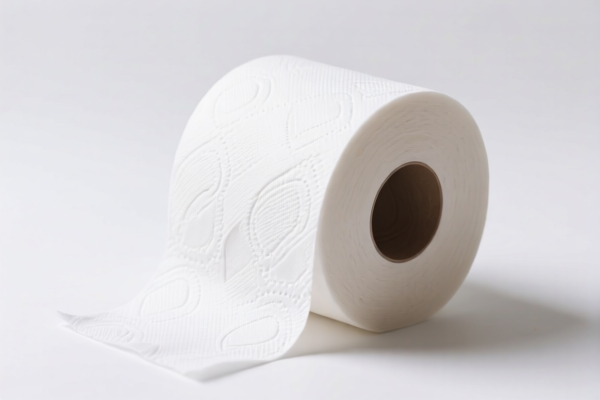
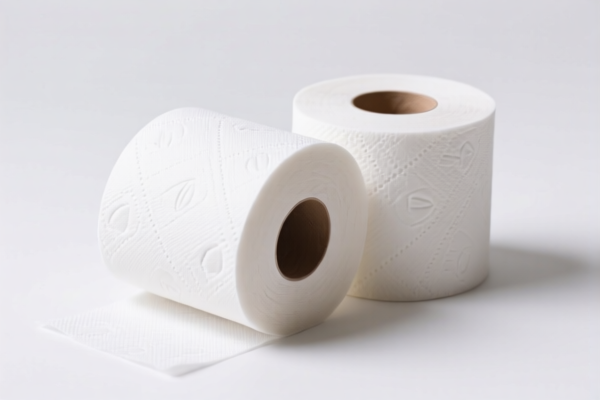
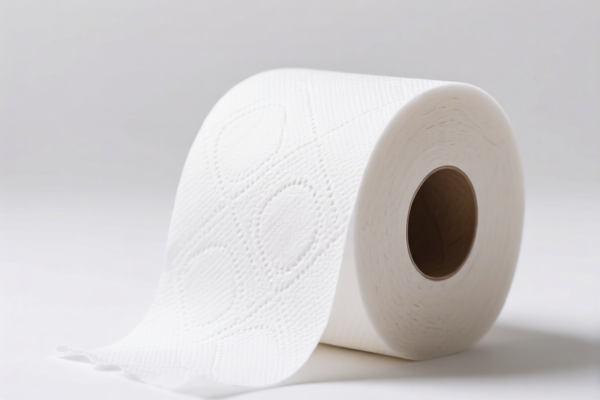
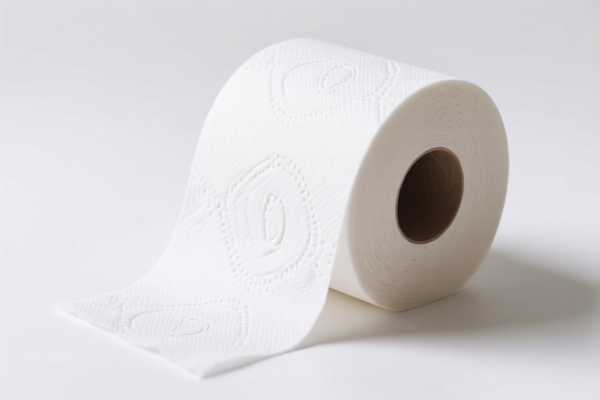
AI Analysis
🧻 Toilet Paper (Sanitary Paper Rolls)
🌐 HS Code Reference & Customs Clearance Guide | 2026 Latest Tariff Analysis | Professional Clearance Strategy
📌 I. Product Definition & Classification: Do You Really Understand "Toilet Paper"?
Toilet paper, a daily essential for hygiene, is strictly regulated in international trade due to its material composition and end-use. In US customs classification, it is primarily divided based on physical form (rolls), material source (virgin vs. recycled), and specific hygiene application.
The key distinction lies in whether the paper is manufactured from recycled fibers or virgin pulp, and its specific sub-heading designation under Chapter 48 (Paper and Paperboard).
⚠️ Critical Distinction Point:
- If it is Sanitary Paper, Rolls, Virgin Pulp → Typically falls under 4803 or 4818 series depending on specific sub-category.
- If it is Recycled Sanitary Paper → Falls under specific sub-headings in 4818.90.
- Do not confuse with "Facial Tissues" (4818.20) or "Other Paper Household Articles" (4818.90) unless the product description matches exactly.
📦 II. HS Code Classification Details (2026 Latest Tariff Authoritative Comparison)
| HS Code | Product Description | Application Scenario | Tax Rate (US/CN) |
|---|---|---|---|
4803.00.20.00 |
Toilet Paper, Rolls, Form: Rolled, for Hygienic Purposes | Standard virgin pulp toilet paper rolls | 35.0% |
4803.00.40.00 |
Toilet Paper, Rolls, Material: Paper, Household or Hygienic Use | General household sanitary paper | 35.0% |
4818.10.00.00 |
Toilet Paper Rolls, Paper Products, Roll Form, Hygienic Purpose | Specific hygienic roll applications | 35.0% |
4818.90.00.80 |
Toilet Paper Rolls, Paper Products, Hygienic Purpose, Rolled Form | Non-standard hygienic paper rolls | 17.5% |
4818.20.00.40 |
Tissues and Toilet Paper, Paper-based, Handkerchief or Facial Tissue Use | Facial tissues (Note: Often confused with toilet paper) | 35.0% |
4818.90.00.20 |
Recycled Toilet Paper, Paper Products, Hygienic Purpose | Recycled fiber sanitary paper | 17.5% |
🔍 Key Reminder:
- Virgin Pulp products generally attract higher scrutiny and specific HS codes under 4803 or 4818.10/4818.90 (non-recycled) with 35% total tax.
- Recycled products (HS4818.90.00.20) enjoy a lower base surcharge, resulting in 17.5% total tax.
- Facial Tissues (4818.20) are often misclassified as toilet paper; ensure product description matches "Handkerchief or Facial Tissue" if it is indeed facial tissue, not toilet roll.
💰 III. 2026 Latest Tariff Rate Breakdown (Including Surcharges & Policy Add-ons)
✅ Applicable Country: United States (US)
✅ Country of Origin: China (CN)
✅ Effective Date: From November 10, 2025 (including subsequent imports)
🎯 1. HS 4803.00.20.00 / 4803.00.40.00 / 4818.10.00.00 / 4818.20.00.40
Product Category: Virgin Pulp Toilet Paper, Facial Tissues, Standard Hygienic Rolls
| Item | Content |
|---|---|
| Base Tariff | 0.0% (ad valorem) |
| Section 301 Surcharge | +25.0% (From USITC Footnote 9903.88.01) |
| Section 122 Tariff | +10.0% (Targeting specific Chinese goods) |
| Total Tax Rate | 35.0% |
| Tax Calculation | CIF Value × 35% |
| De Minimis Exemption | ❌ Not Eligible (deny_de_minimis) |
| Legal Basis Path | Section 301:9903.88.01 → Section 122:9903.xx → USITC:4803/4818.10/4818.20 |
📌 Explanation:
- The 25% Section 301 surcharge is the primary driver for high costs on Chinese-made paper goods.
- The 10% Section 122 tariff is an additional levy on specific Chinese imports.
- Combined 35% is a high tariff, significantly impacting profit margins. This applies to most standard virgin pulp toilet papers and facial tissues.
🎯 2. HS 4818.90.00.80 / 4818.90.00.20
Product Category: Other Paper Hygienic Articles & Recycled Toilet Paper
| Item | Content |
|---|---|
| Base Tariff | 0.0% (ad valorem) |
| Section 301 Surcharge | +7.5% (Reduced rate for certain sub-headings) |
| Section 122 Tariff | +10.0% |
| Total Tax Rate | 17.5% |
| Tax Calculation | CIF Value × 17.5% |
| De Minimis Exemption | ❌ Not Eligible (deny_de_minimis) |
| Legal Basis Path | Section 301:9903.xx → Section 122:9903.xx → USITC:4818.90 |
📌 Explanation:
- Recycled Toilet Paper (4818.90.00.20) and Other Hygienic Paper Rolls (4818.90.00.80) benefit from a lower Section 301 surcharge of 7.5% instead of 25%.
- This results in a total tax of only 17.5%, which is half the cost of virgin pulp alternatives.
- Strategic Advantage: If your product is made from recycled fibers, ensure it is correctly classified under4818.90.00.20to save 17.5% in duties.
🛠️ IV. Customs Clearance Practical Advice (Combat Pitfall Guide)
✅ 1. Required Documentation Checklist (Non-Negotiable)
| Document | Mandatory | Description |
|---|---|---|
| ✅ Product Specification Sheet | ✔️ | Must specify: Material (Virgin/Recycled), Form (Rolls), Dimensions, Ply, Embossing. |
| ✅ Material Composition Statement | ✔️ | Explicitly state % of Recycled vs. Virgin Pulp. Critical for HS 4818.90.00.20 vs. 4803/4818.10. |
| ✅ Product Photos | ✔️ | Clear images of the roll, packaging, and label. Show if it's facial tissue vs. toilet paper. |
| ✅ Commercial Invoice | ✔️ | Must describe as "Toilet Paper, Rolls, Paper, Hygienic Purpose" or "Facial Tissues" accurately. |
| ✅ Packing List | ✔️ | Weight, dimensions, number of rolls per carton. |
| ✅ Certificate of Origin (CO) | ✔️ | Required to prove Chinese origin for Section 301/122 assessment. |
✅ 2. Declaration Tips (Key Mantras)
🔥 “Material Dictates Tax, Form Defines Code, Name Must Be Precise!”
| Scenario | Correct Declaration | Error to Avoid |
|---|---|---|
| Standard Virgin Pulp Roll | 4803.00.20.00 or 4818.10.00.00 |
Misclassifying as recycled → 17.5% vs 35% risk. |
| Recycled Toilet Paper | 4818.90.00.20 |
Declaring as "Other Paper" → 17.5% is lower, but ensure it's truly recycled. |
| Facial Tissues (Boxed) | 4818.20.00.40 |
Declaring as "Toilet Paper" → Might trigger wrong scrutiny, but tax is same (35%). |
| Other Hygienic Rolls | 4818.90.00.80 |
Generic "Paper Products" → Risk of audit for incorrect sub-heading. |
📌 Note:
- Toilet Paper and Facial Tissues have the same 35% total tax but fall under different HS codes.
- Recycled Toilet Paper is the only item with a significantly lower tax rate (17.5%).
- Ensure your product description matches the HS Code summary exactly.
✅ 3. Special Circumstances Handling
| Situation | Handling Advice |
|---|---|
| Mixed Shipments | Separate virgin and recycled products in the declaration. Do not bundle them under one HS Code if rates differ. |
| OEM Custom Rolls | Provide customer PO and technical specs. Ensure "Recycled" claim is backed by material certification. |
| Packaging Differences | Whether in rolls, boxes, or packs, the material composition is the key to HS classification, not the packaging. |
| Section 122 Coverage | All these items are subject to the 10% Section 122 tariff. No exemptions currently. |
🌍 V. Global Market Customs Comparison (2026 Latest)
| Country/Region | Recommended HS Code | Tariff (CN Origin) | Certification | Notes |
|---|---|---|---|---|
| 🇺🇸 USA | 4803.00.20.00 / 4818.90.00.20 |
35% (Virgin) / 17.5% (Recycled) | FDA (if applicable) | High surcharges; recycled is cheaper. |
| 🇨🇳 China | 4803.00.20.00 |
5% | No special certs | Domestic trade, low tariff. |
| 🇪🇺 EU | 4803.00.20.00 |
0% - 6% | CE (if wet wipes) | No Section 301; standard MFN rates apply. |
| 🇬🇧 UK | 4803.00.20.00 |
0% - 6% | UKCA | Post-Brexit rules, generally lower than US. |
| 🇦🇺 Australia | 4803.00.20.00 |
5% | GHS | Standard FTA rates may apply. |
📌 Conclusion:
- USA is the most challenging market for toilet paper due to Section 301 (25%) and Section 122 (10%) tariffs.
- Recycled Toilet Paper offers a significant cost advantage (17.5% vs 35%) in the US market.
- Consider sourcing recycled paper products for US exports to maximize competitiveness.
📌 VI. Common Mistakes & Pitfall Guide (Lessons from Blood & Tears)
❌ Mistake 1: Classifying Recycled Toilet Paper as Virgin Pulp (4803)
👉 Consequence: Pay 35% instead of 17.5% → Overpayment of 17.5%!
✅ Fix: Provide material composition proof (recycled fiber percentage).
❌ Mistake 2: Declaring Facial Tissues as "Toilet Paper"
👉 Consequence: While tax is same (35%), it may trigger additional FDA or labeling scrutiny.
✅ Fix: Use precise description: "Facial Tissues, Paper, Boxed" for 4818.20.00.40.
❌ Mistake 3: Ignoring Section 122 Tariff
👉 Consequence: Under-declaration of duties → Penalties + Back Taxes.
✅ Fix: Always include the 10% Section 122 surcharge in cost calculations.
❌ Mistake 4: Vague Product Description ("Paper Rolls")
👉 Consequence: Customs delay, potential re-classification to higher duty rate.
✅ Fix: Use detailed description: "Toilet Paper, Rolls, Recycled Paper, Hygienic Use".
🎯 VII. Conclusion: Precision in Classification, Profit in Clearance
🎯 Remember the Mantra:
🔹 “Virgin 35%, Recycled 17.5%, 301 + 122 is the Key!”
🔹 “De Minimis is Dead for Paper Goods; Plan Ahead!”
📌 Pro Tip:
If your toilet paper is originally from Vietnam, Mexico, Thailand, or Malaysia, you may qualify for IEEPA exemptions or lower tariffs, reducing costs significantly.
Recommend applying for an Advance Ruling (Pro Rata) to confirm HS Code and tariff eligibility before shipping.
📣 Immediate Action:
📞 Contact a professional customs broker + Provide Material Certificates + Apply for HS Code Advance Ruling
🚀 Let your toilet paper clear customs smoothly, boost efficiency, and maximize profits!
✨ Professional Clearance Starts with Accurate Classification!
💼 Every cent of your cost deserves precise calculation!
Customer Reviews
About HS Code Classification
The Harmonized System (HS) is an internationally standardized nomenclature developed by the World Customs Organization (WCO) to classify traded products. Over 200 countries use the HS system as the basis for customs tariffs, trade statistics, and import/export regulations.
Each HS code follows a hierarchical structure:
- Chapter (2 digits) — Broad category of goods (e.g., Chapter 84: Machinery and Mechanical Appliances)
- Heading (4 digits) — More specific grouping within the chapter
- Subheading (6 digits) — Internationally standardized breakdown, used by all WCO member countries
- National subdivisions (8-10 digits) — Country-specific extensions for further classification, such as US HTSUS 10-digit codes
Correct HS code classification is essential for smooth customs clearance, accurate duty payment, and compliance with trade regulations. Misclassification can lead to customs delays, overpayment of duties, or penalties.
When importing from CN to US, the applicable tariff rates may include:
- Most-Favored-Nation (MFN) rate — The standard duty rate applied to WTO members
- General rate — Applied to countries without trade agreements
- Trade remedy duties — Additional tariffs such as Section 301 (anti-dumping), Section 232 (national security), or countervailing duties
The information provided on this page is for reference purposes only. For official classification, please consult with your local customs authority or a licensed customs broker.