Toilet Seat Hinge
CN → US| HS Code | Tariff Rate | Origin | Destination | Doc |
|---|---|---|---|---|
| 9403999045 | 85.0% | CN | US | Official Doc |
| 8302106090 | 88.5% | CN | US | Official Doc |
| 8302109090 | 38.4% | CN | US | Official Doc |
| 7326908688 | 87.9% | CN | US | Official Doc |
| 7326190080 | 87.9% | CN | US | Official Doc |
Product Images
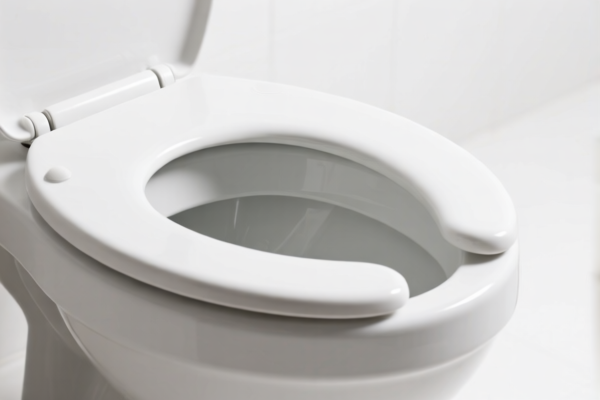
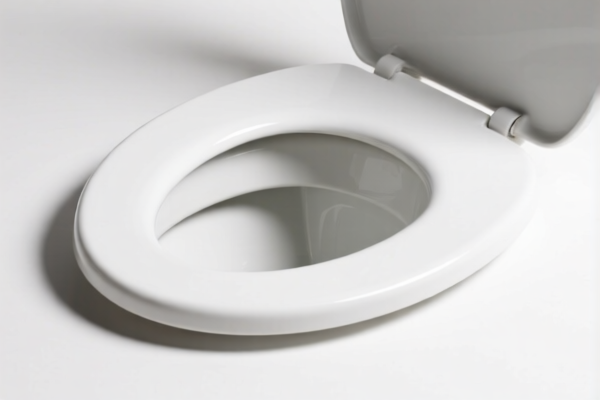
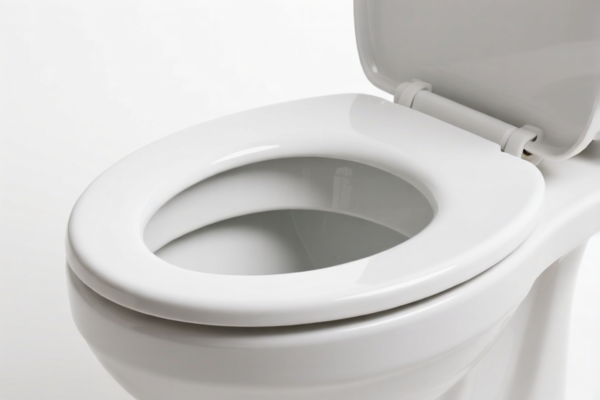
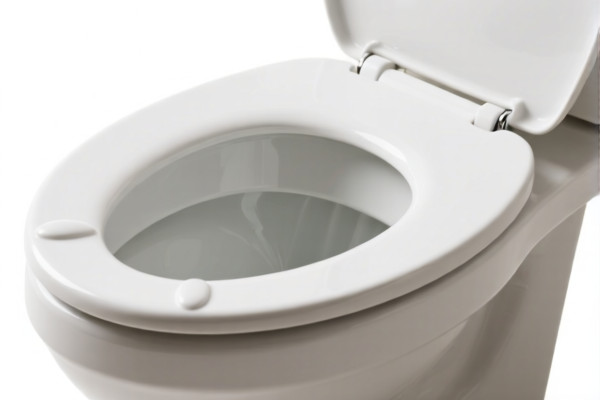
AI Analysis
🚽 Toilet Seat Hinge (Toilet Seat Hinge)
🌐 HS Code Reference & Customs Clearance Guide | 2026 Latest Tariff Analysis | Professional Clearance Strategy
📌 I. Product Definition & Classification: Do You Really Understand "Toilet Seat Hinge"?
The toilet seat hinge, commonly known as a "butt joint" or "joint" in the furniture industry, is a critical hardware component that connects the toilet seat to the toilet bowl. It allows for opening, closing, and lifting functions. In international trade, its classification depends heavily on its material and functional attribution.
Metal Hinges (Most Common): Made of stainless steel, zinc alloy, or brass; these are classified under metal hardware chapters.
Plastic/Composite Hinges: Made of engineered plastics or resins; these may fall under plastic articles.
⚠️ Key Distinction:
- If the hinge is metallic (steel, zinc alloy, etc.) and functions as a furniture part → It generally falls under Chapter 83 (Base Metal Articles).
- If it is considered a generic metal part not specifically enumerated elsewhere → It may fall under Chapter 73 (Iron/Steel Articles) or Chapter 94 (Furniture Parts).
- Crucial Note: The US imposes significant additional tariffs (Section 301 & Section 232/122) on many metal imports from China, drastically affecting the final duty rate.
📦 II. HS Code Classification Details (2026 Latest Tariff Authority Comparison)
| HS Code | Product Description | Applicable Scenario | Material Characteristic | Total Tax Rate (CN→US) |
|---|---|---|---|---|
8302.10.90.90 |
Other base metal fittings and similar articles (Hinges, including those for furniture) | Standard metal hinges for toilets, cabinets, doors | Metal (Zinc/Steel/Brass) | 38.4% |
8302.10.60.90 |
Other base metal fittings (Deduction Category) | Generic metal hinges, no specific sub-category match | Metal (Unspecified Base Metal) | 88.5% |
7326.90.86.88 |
Other articles of iron or steel (Parts) | Steel hinges classified as generic steel parts | Steel/Iron | 87.9% |
7326.19.00.80 |
Other articles of iron or steel (Parts) | Generic steel hardware parts | Steel/Iron | 87.9% |
9403.99.90.45 |
Parts of furniture (Other materials) | Hinges considered as furniture parts (Non-metal or Non-standard) | Mixed/Non-Metal or Generic Part | 85.0% |
🔍 Key Reminder:
-8302.10.90.90is often the most favorable legal classification for standard metal hinges, offering a lower base tariff (3.4% + 25% Section 301 = ~38.4%, excluding Section 232 if not applicable).
-8302.10.60.90,7326.90.86.88, and7326.19.00.80carry Section 232 (Steel/Aluminum) tariffs (additional 50% or similar high rates), pushing the total tax to ~88%.
-9403.99.90.45avoids the steel tariff but carries a high Section 301 tariff, totaling 85%.
- Why the huge difference? Misclassification can add 50%+ in duty. Correctly identifying the hinge as "Base Metal Fittings" (Ch 83) rather than "Steel Articles" (Ch 73) is critical for cost savings.
💰 III. 2026 Latest Tariff Rate Breakdown (Including Surcharges, Policy Add-ons)
✅ Applicable Country: United States (US)
✅ Origin: China (CN)
✅ Effective Date: 2025-2026 Tariff Schedule
🎯 1. 8302.10.90.90 —— Base Metal Fittings (Optimal Classification)
| Item | Content |
|---|---|
| Base Tariff | 3.4% (ad valorem) |
| Section 301 Surcharge | +25% (From USITC Footnote 9903.01.25) |
| Section 232 Surcharge | 0% (If classified under Ch 83, not Ch 73 steel articles) |
| Total Tax Rate | ~38.4% |
| Tax Calculation | CIF Value × 38.4% |
| De Minimis Eligibility | ❌ No (Section 301 goods are excluded from $800 de minimis) |
| Legal Basis Path | USITC:8302.10.90.90 → IEEPA:9903.01.25 → Footnote:9903.88.01 |
📌 Explanation:
- The 3.4% is the standard MFN rate for base metal hinges.
- The 25% is the Section 301 tariff for Chinese "fittings and similar articles."
- Crucial Advantage: By classifying under HS 8302, you often avoid the 50% Section 232 steel tariff that applies to Ch 73 steel products. This saves ~50% in duties compared to misclassification.
🎯 2. 8302.10.60.90 —— Other Base Metal Fittings (High Risk)
| Item | Content |
|---|---|
| Base Tariff | 3.5% |
| Section 301 Surcharge | +25% |
| Section 122/Steel Surcharge | +50% (Steel/Aluminum/Copper Surcharge) |
| Total Tax Rate | 88.5% |
| Tax Calculation | CIF Value × 88.5% |
| De Minimis Eligibility | ❌ No |
| Legal Basis Path | USITC:8302.10.60.90 → IEEPA:9903.01.25 → Footnote:Steel Surcharge |
📌 Note:
- This code is a "deduction category" and often attracts additional steel/copper surcharges.
- Avoid this unless the hinge material is explicitly non-steel/non-iron and not covered under 8302.10.90.
🎯 3. 7326.90.86.88 / 7326.19.00.80 —— Steel Articles (Avoid if Possible)
| Item | Content |
|---|---|
| Base Tariff | 2.9% |
| Section 301 Surcharge | +25% |
| Section 122/Steel Surcharge | +50% (For Steel/Aluminum Products) |
| Total Tax Rate | 87.9% |
| Tax Calculation | CIF Value × 87.9% |
| De Minimis Eligibility | ❌ No |
📌 Warning:
- These codes classify hinges as steel articles, triggering the 50% Section 122/232 steel tariff.
- This is the worst-case scenario for metal hinges.
- Only use if the hinge is purely steel and cannot be classified under Ch 83 (rare for hardware).
🎯 4. 9403.99.90.45 —— Furniture Parts (High Surcharge)
| Item | Content |
|---|---|
| Base Tariff | 0.0% |
| Section 301 Surcharge | +25% |
| Section 122/Steel Surcharge | +50% (If deemed steel content) |
| Total Tax Rate | 85.0% |
| Tax Calculation | CIF Value × 85.0% |
📌 Note:
- While the base tariff is 0%, the surcharges push the rate to 85%.
- Used if the hinge is considered a furniture part rather than a standalone metal fitting.
- Still significantly higher than the optimal 38.4%.
🛠️ IV. Customs Clearance Practical Advice (Battle-Tested Pitfall Guide)
✅ 1. Document Checklist (Essential Items)
| Document | Mandatory | Description |
|---|---|---|
| ✅ Product Specification Sheet | ✔️ | Material (e.g., "Stainless Steel 304"), Dimensions, Load Capacity |
| ✅ Material Certificate | ✔️ | Critical! Must specify Base Metal (Zinc Alloy, Stainless Steel) to support Ch 83 classification |
| ✅ Product Photos (Clear) | ✔️ | Show hinge, branding, and model number |
| ✅ Commercial Invoice | ✔️ | Describe as "Metal Hinge for Toilet Seat" not just "Hardware Part" |
| ✅ Packing List | ✔️ | Item weight, package count |
| ✅ Country of Origin | ✔️ | CN (China) triggers Section 301 |
✅ 2. Declaration Tips (Key Mantra)
🔥 "Base Metal Ch 83, Avoid Ch 73 Steel, Save 50% Duty!"
| Scenario | Correct Declaration | Wrong Practice |
|---|---|---|
| Standard Metal Hinge (Zinc/Steel) | 8302.10.90.90 (Base Metal Fittings) |
7326.90.86.88 (Steel Article) → 87.9% Duty |
| Plastic Hinge | 3926.90.99.90 (Plastic Articles) |
8302.10.90.90 → Misclassification |
| Hinge with Plastic Parts | 8302.10.90.90 (If Metal > 50% by weight/value) |
Split declaration → 88.5% Duty |
| Generic "Furniture Part" | 9403.99.90.45 |
8302.10.90.90 → If not strictly a fitting |
📌 Important:
- Material Proof is Key: Customs may require mill certificates to prove the material is "Base Metal" (Ch 83) and not "Steel" (Ch 73) if it triggers steel-specific tariffs.
- Function: Emphasize it is a "Hinge/Fitting" for furniture/toilets, not a structural steel component.
✅ 3. Special Cases
| Scenario | Handling Advice |
|---|---|
| Stainless Steel Hinges | Strongly argue for 8302.10.90.90. Stainless steel is often treated as base metal fittings, avoiding Ch 73 steel tariffs. |
| Zinc Alloy Hinges | Best candidate for 8302.10.90.90. Zinc is a base metal, not iron/steel, so Section 232 may not apply. |
| Plastic Hinges | Classify under 3926.90.99.90. Lower base tariff, but verify Section 301 applicability (often 25% + potential surcharges). |
| Mixed Material (Metal + Plastic) | If metal parts are dominant, classify as metal. If plastic is dominant, classify as plastic. Document composition clearly. |
🌍 V. Global Market Comparison (2026 Latest)
| Country/Region | Recommended HS Code | Tariff (CN Origin) | Certification | Notes |
|---|---|---|---|---|
| 🇺🇸 USA | 8302.10.90.90 |
38.4% (Optimal) | No special cert | High tariffs on Ch 73/94. Avoid 7326 codes. |
| 🇨🇳 China | 8302.10.90.90 |
5% - 8% | No special cert | Low tariffs, easy clearance. |
| 🇪🇺 EU | 8302.10.90.90 |
0% - 2% | CE (if applicable) | Low tariffs, no Section 301/232. |
| 🇦🇺 Australia | 8302.10.90.90 |
5% | RCM | Moderate tariffs. |
| 🇯🇵 Japan | 8302.10.90.90 |
0% - 5% | PSE (if electrical) | Low tariffs. |
📌 Conclusion:
- The US is the most challenging market due to Section 301 and Section 232 tariffs.
- Correct classification under8302.10.90.90is essential to save ~50% in duties compared to misclassification under Ch 73.
- China, EU, and Japan have low tariffs, making clearance easier and cheaper.
📌 VI. Common Mistakes & Pitfall Guide (Lessons Learned)
❌ Mistake 1: Classifying metal hinges as 7326.90.86.88 (Steel Articles)
👉 Consequence: Triggers 50% Section 232 steel tariff → Total duty 87.9% instead of 38.4%.
Loss: ~$50 per $100 CIF value.
❌ Mistake 2: Describing as "Furniture Part" (9403.99.90.45) without justification
👉 Consequence: Attracts 25% Section 301 + 50% Steel Surcharge → Total 85%.
Loss: High duty, risk of audit.
❌ Mistake 3: No material certificate for zinc/alloy hinges
👉 Consequence: Customs may reclassify as "Steel" (Ch 73) → 87.9% Duty.
Solution: Always provide Material Test Reports or Mill Certificates.
❌ Mistake 4: Using "Hinge" without specifying "Base Metal Fitting"
👉 Consequence: Ambiguity leads to conservative classification (higher tax).
Solution: Use precise description: "Zinc Alloy Toilet Seat Hinge, Base Metal Fitting, HS 8302.10.90.90".
✅ Correct Practice:
"Toilet Seat Hinge, Zinc Alloy, Stainless Steel Fittings, HS Code 8302.10.90.90, Material: Zinc Alloy 304 Stainless Steel, Origin: China"
🎯 VII. Conclusion: Professional Declaration, Save Time, Money, and Headaches!
🎯 Remember the Mantra:
🔹 "Ch 83 is King, Ch 73 is Costly! Save 50% by Using 8302.10.90.90!"
🔹 "Material Certs are Mandatory! No Proof = Steel Tariff Nightmare!"
📌 Pro Tip:
- If your hinges are exported to the US, ensure your supplier provides Material Certificates proving the item is Zinc Alloy or Stainless Steel (not plain carbon steel) to support HS 8302 classification.
- Consider Advance Ruling (Pre-Ruling) from US Customs if importing large volumes, to lock in the 38.4% duty rate and avoid audit risks.
📣 Take Action Now:
📞 Contact a professional customs broker + Provide Material Certs + File for HS Code Advance Ruling
🚀 Let your toilet seat hinges clear smoothly, reduce costs by 50%, and boost profits!
✨ Professional Customs Clearance Starts with Accurate Classification!
💼 Every cent in duty is worth saving!
Customer Reviews
About HS Code Classification
The Harmonized System (HS) is an internationally standardized nomenclature developed by the World Customs Organization (WCO) to classify traded products. Over 200 countries use the HS system as the basis for customs tariffs, trade statistics, and import/export regulations.
Each HS code follows a hierarchical structure:
- Chapter (2 digits) — Broad category of goods (e.g., Chapter 84: Machinery and Mechanical Appliances)
- Heading (4 digits) — More specific grouping within the chapter
- Subheading (6 digits) — Internationally standardized breakdown, used by all WCO member countries
- National subdivisions (8-10 digits) — Country-specific extensions for further classification, such as US HTSUS 10-digit codes
Correct HS code classification is essential for smooth customs clearance, accurate duty payment, and compliance with trade regulations. Misclassification can lead to customs delays, overpayment of duties, or penalties.
When importing from CN to US, the applicable tariff rates may include:
- Most-Favored-Nation (MFN) rate — The standard duty rate applied to WTO members
- General rate — Applied to countries without trade agreements
- Trade remedy duties — Additional tariffs such as Section 301 (anti-dumping), Section 232 (national security), or countervailing duties
The information provided on this page is for reference purposes only. For official classification, please consult with your local customs authority or a licensed customs broker.