Toilet Step Stool
CN → US| HS Code | Tariff Rate | Origin | Destination | Doc |
|---|---|---|---|---|
| 6910100020 | 15.8% | CN | US | Official Doc |
| 3922900000 | 41.3% | CN | US | Official Doc |
| 9401804046 | 35.0% | CN | US | Official Doc |
| 9401698011 | 35.0% | CN | US | Official Doc |
| 9401806028 | 35.0% | CN | US | Official Doc |
Product Images
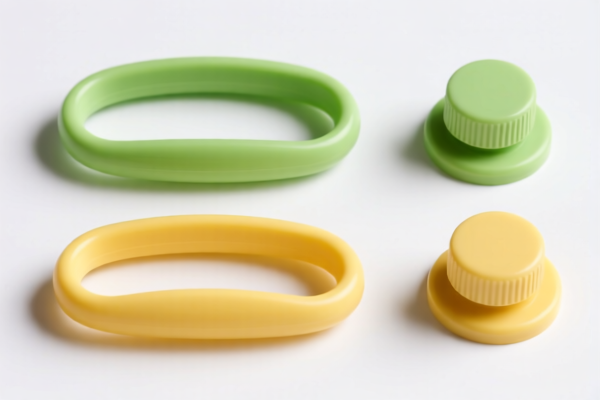
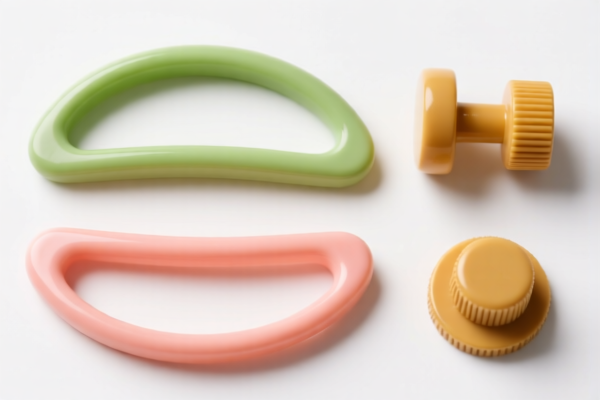
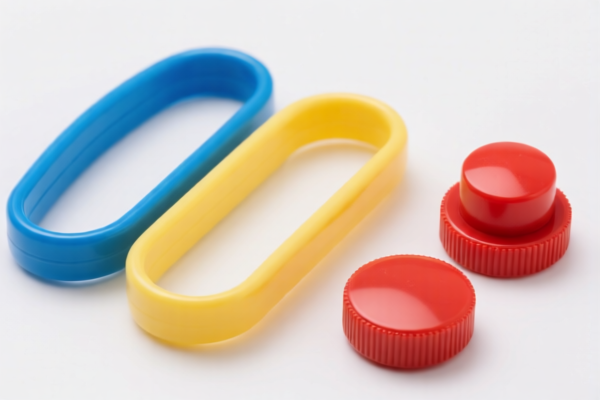
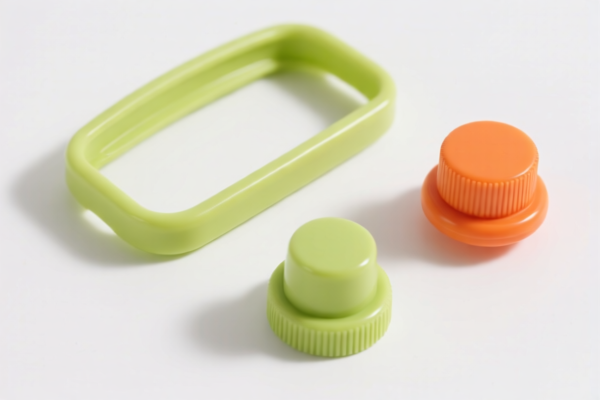
AI Analysis
🚽 Toilet Step Stool (White Plastic/Rubber/Wood/Resin)
🌐 HS Code Reference & Customs Clearance Guide | 2026 Latest Tariff Analysis | Professional Entry Strategy
📌 I. Product Definition & Classification: Do You Really Understand the "Toilet Step Stool"?
The Toilet Step Stool is a simple aid for users (often children or those with mobility issues) to reach the toilet seat more comfortably. However, in international trade, its classification is highly dependent on the material composition and specific design intent.
It is NOT a single HS Code. Depending on whether it is considered a "sanitary ware accessory," a "plastic household item," or a "seat/furniture piece," the tax rates vary drastically (from 15.8% to 41.3%).
⚠️ Critical Distinction:
- If viewed as an accessory to a toilet (sanitary ware) → HS 6910 (Lowest Tax)
- If viewed as a generic plastic/household item → HS 3922 (Highest Tax)
- If viewed as a piece of furniture (seat/chair) → HS 9401 (Medium-High Tax)
📦 II. HS Code Classification Details (2026 Latest Authorized Tariff对照)
Based on the provided data for "White Toilet Step Stool", here are the 5 possible HS Codes and their corresponding tax structures.
| HS Code | Product Summary (From Data) | Material Match | Category Description |
|---|---|---|---|
| 6910.10.00.20 | White Toilet Stool | Ceramic or Plastic | Other Sanitary Ware (Toilet Seats/Accessories) |
| 3922.90.00.00 | White Toilet Stool | Plastic Only | Plastic Sanitary Ware & Accessories |
| 9401.80.40.46 | White Toilet Stool | Rubber or Plastic | Other Seats (Furniture) |
| 9401.69.80.11 | White Toilet Stool | Plastic or Resin | Other Household Seats |
| 9401.80.60.28 | White Toilet Stool | Plastic or Wood | Other Household Seats |
🔍 Key Insight:
- HS 6910 is the "Golden Ticket" for lowest tax. It requires the stool to be classified as part of the sanitary system (often implying ceramic construction or specific functional integration).
- HS 3922 is the "Trap". It applies strictly to plastic items classified as plastic sanitary ware, incurring the highest total tax (41.3%).
- HS 9401 variants treat the stool as furniture. While slightly cheaper than HS 3922, they still carry significant surcharges.
💰 III. 2026 Latest Tariff Rate Breakdown (Including Surcharges & Policy Add-ons)
✅ Applicable Country: USA (US)
✅ Origin: China (CN)
✅ Effective Time: 2025-11-10 onwards (for subsequent imports)
🎯 1. 6910.10.00.20 —— BEST OPTION: Sanitary Ware Classification
Matches: Ceramic or Plastic material, classified as "Other Sanitary Ware"
| Item | Detail |
|---|---|
| Base Tariff | 5.8% |
| Section 301 Surcharge | 0.0% |
| Section 122 Surcharge | 10.0% |
| Total Effective Rate | 15.8% |
| Tax Calculation | CIF Value × 15.8% |
| De Minimis Exemption? | ❌ No (Generally applies to higher value goods, but verify specific de minimis thresholds) |
| Legal Basis | USITC:6910.10.00.20 → Section 122:10% |
📌 Explanation:
- This is the only code with 0% Section 301 Tariff.
- The "122 Clause" (likely referring to specific US Trade Law sections or recent policy add-ons) adds 10%.
- Total 15.8% is significantly lower than other options.
- Strategy: Attempt to classify as "Sanitary Ware" if the stool has features linking it directly to toilet use (e.g., non-slip feet designed specifically for wet ceramic floors, or marketed explicitly as a toilet accessory).
🎯 2. 3922.90.00.00 —— WORST OPTION: Plastic Sanitary Ware
Matches: Plastic material only, classified as "Toilet Stool Accessories"
| Item | Detail |
|---|---|
| Base Tariff | 6.3% |
| Section 301 Surcharge | 25.0% |
| Section 122 Surcharge | 10.0% |
| Total Effective Rate | 41.3% |
| Tax Calculation | CIF Value × 41.3% |
| De Minimis Exemption? | ❌ No |
| Legal Basis | USITC:3922.90.00.00 → Section 301:25% → Section 122:10% |
📌 Warning:
- If your product is 100% Plastic and customs perceives it as a "Plastic Sanitary Item," you face the highest tax.
- The 25% Section 301 tariff applies heavily here.
- Avoid this classification if possible by arguing for Furniture (HS 9401) or Sanitary Ware (HS 6910).
🎯 3, 4, & 5. 9401 Series —— MIDDLE GROUND: Furniture/Seats
Matches: Rubber, Plastic, Resin, or Wood materials, classified as "Seats"
| HS Code | Material | Base Tariff | Section 301 | Section 122 | Total Rate |
|---|---|---|---|---|---|
| 9401.80.40.46 | Rubber/Plastic | 0.0% | 25.0% | 10.0% | 35.0% |
| 9401.69.80.11 | Plastic/Resin | 0.0% | 25.0% | 10.0% | 35.0% |
| 9401.80.60.28 | Plastic/Wood | 0.0% | 25.0% | 10.0% | 35.0% |
| Item | Detail |
|---|---|
| Total Effective Rate | 35.0% |
| Tax Calculation | CIF Value × 35.0% |
| Legal Basis | USITC:9401.xx.xx.xx → Section 301:25% → Section 122:10% |
📌 Analysis:
- These codes have 0% Base Tariff but are hit hard by the 25% Section 301 Surcharge.
- They are cheaper than HS 3922 (41.3%) but more expensive than HS 6910 (15.8%).
- Strategy: If the stool is made of Wood, Rubber, or complex Resin, or if it looks like a miniature chair, argue for HS 9401 (Furniture). This avoids the higher base rate of plastic sanitary ware.
🛠️ IV. Customs Clearance Practical Advice (Battle-Tested Pitfall Guide)
✅ 1. Preparation Checklist (Non-negotiable)
| Document | Required | Purpose |
|---|---|---|
| ✅ Product Specification Sheet | ✔️ | Must explicitly state materials (e.g., "PP Plastic," "Rubber Feet," "Wood Frame"). |
| ✅ High-Resolution Photos | ✔️ | Show the stool from all angles, including non-slip feet, brand logo, and any connection to toilet use. |
| ✅ Marketing Materials/Brochure | ✔️ | Does it say "Toilet Stool" or "Children's Chair"? This influences customs' view. |
| ✅ Bill of Lading / Commercial Invoice | ✔️ | Ensure HS Code is clearly stated. Discrepancies cause delays. |
| ✅ Certificate of Origin (CO) | ✔️ | To verify China origin and apply correct surcharges. |
✅ 2. Classification Strategy (Key Mnemonic)
🔥 "Material Determines Code, Code Determines Cost!"
| Scenario | Recommended HS Code | Total Tax | Why? |
|---|---|---|---|
| Stool is Ceramic or closely integrated with toilet | 6910.10.00.20 | 15.8% | Low base, no 301 tariff. Best for cost saving. |
| Stool is All-Plastic | 9401.80.60.28 | 35.0% | Avoid HS 3922. Argue it's "Furniture/Seat," not "Sanitary Accessory." |
| Stool has Wood/Rubber Parts | 9401.80.40.46 or 9401.80.60.28 | 35.0% | Furniture classification avoids higher plastic sanitary rates. |
| Stool is Pure Plastic, marketed as "Accessory" | 3922.90.00.00 | 41.3% | AVOID. Only use if no other classification is viable. |
📌 Critical Tip:
- Do NOT declare all-plastic stools as "Plastic Sanitary Ware" (HS 3922) unless forced.
- Argument for HS 9401: "This is a seat for ergonomic support, similar to a footstool, not a direct accessory to the plumbing system."
- Argument for HS 6910: "This item is functionally part of the toilet assembly, designed specifically for toilet use, made of ceramic/composite materials."
✅ 3. Special Cases & Handling
| Case | Handling Advice |
|---|---|
| OEM Custom Designs | Provide design drawings. If the shape is unique (not a standard bucket), argue for Furniture (HS 9401). |
| Mixed Materials | If the stool is Plastic + Wood, lean towards HS 9401.80.60.28 (Plastic/Wood Seat). Avoid pure plastic codes. |
| Children's Stools | If marketed for general use (not just toilet), argue for Furniture. If strictly for potty training, consider Sanitary Ware (HS 6910) if material allows. |
| Non-Slip Feet | Emphasize rubber components. If rubber is a key feature, HS 9401.80.40.46 is a strong candidate. |
🌍 V. Global Market Comparison (2026 Latest)
| Country/Region | Recommended HS Code | Approx. Tariff | Notes |
|---|---|---|---|
| 🇺🇸 USA | 6910.10.00.20 |
15.8% | Best option. Avoid 3922 (41.3%). |
| 🇨🇳 China | 3922.90.00.00 |
~2-5% | Lower base rates, but verify latest local tax. |
| 🇪🇺 EU | 9401.69.00 |
~0-2% | EU does not typically apply Section 301/122 surcharges. |
| 🇬🇧 UK | 9401.69.00 |
~0-2% | Post-Brexit tariffs vary, but generally lower than US. |
📌 Conclusion:
- The US market is the most punitive for plastic goods due to Section 301 and 122 surcharges.
- Strategic Classification is Key: Saving 25% (301 tariff) by misclassifying a plastic stool as "Furniture" or "Sanitary Ware" is a major cost saver.
📌 VI. Common Errors & Pitfalls (Lessons Learned)
❌ Error 1: Declaring all-plastic stools as HS 3922 (Plastic Sanitary Ware)
👉 Result: Pay 41.3% tax.
👉 Fix: Argue for HS 9401 (Furniture) to reduce to 35.0%.
❌ Error 2: Declaring Ceramic Stools as HS 9401 (Furniture)
👉 Result: Pay 35.0% instead of 15.8%.
👉 Fix: If material is ceramic, always use HS 6910.
❌ Error 3: Vague Description: "Plastic Stool"
👉 Result: Customs may assign the highest applicable code (3922) by default.
👉 Fix: Be specific: "White Plastic Toilet Step Stool, Ergonomic Design, Non-Slip Rubber Feet."
❌ Error 4: Ignoring Section 122 Surcharge
👉 Result: Underestimating landed cost.
👉 Fix: All codes above include 10% Section 122. Budget for it in all scenarios.
✅ Correct Declaration Example:
"White Toilet Step Stool, Ergonomic Design, Made of PP Plastic with Rubber Non-Slip Feet. Classified as Household Seat/Furniture. Model: TS-100."
🎯 Target HS Code:9401.80.60.28(35.0%) or6910.10.00.20(15.8% if ceramic/sanitary argument wins).
🎯 VII. Conclusion: Smart Classification Saves Money!
🎯 Remember the Mantra:
🔹 "Plastic? Fight for Furniture (9401). Ceramic? Claim Sanitary (6910). Avoid Plastic Sanitary (3922) at all costs!"
🔹 "35% is better than 41.3%. 15.8% is the ultimate goal."
📌 Pro Tip:
- If your product is 100% Plastic, prepare a strong technical argument that it is a "Seat" (Furniture) rather than a "Sanitary Accessory". Cite that it is used for ergonomic support and is not plumbed into the toilet system.
- Consider Pre-Ruling (Advance Ruling) from US Customs if you are shipping high volumes. A pre-ruling can lock in the 35.0% or 15.8% rate, providing certainty.
📣 Immediate Action:
📞 Contact your Customs Broker: Provide material specs and photos.
🚀 Request Pre-Ruling for your specific product design.
💼 Optimize Landed Cost: Every percentage point of tariff saved is pure profit.
✨ Smart Customs, Smarter Business!
💼 Don't let tariff traps eat your margins!
Customer Reviews
About HS Code Classification
The Harmonized System (HS) is an internationally standardized nomenclature developed by the World Customs Organization (WCO) to classify traded products. Over 200 countries use the HS system as the basis for customs tariffs, trade statistics, and import/export regulations.
Each HS code follows a hierarchical structure:
- Chapter (2 digits) — Broad category of goods (e.g., Chapter 84: Machinery and Mechanical Appliances)
- Heading (4 digits) — More specific grouping within the chapter
- Subheading (6 digits) — Internationally standardized breakdown, used by all WCO member countries
- National subdivisions (8-10 digits) — Country-specific extensions for further classification, such as US HTSUS 10-digit codes
Correct HS code classification is essential for smooth customs clearance, accurate duty payment, and compliance with trade regulations. Misclassification can lead to customs delays, overpayment of duties, or penalties.
When importing from CN to US, the applicable tariff rates may include:
- Most-Favored-Nation (MFN) rate — The standard duty rate applied to WTO members
- General rate — Applied to countries without trade agreements
- Trade remedy duties — Additional tariffs such as Section 301 (anti-dumping), Section 232 (national security), or countervailing duties
The information provided on this page is for reference purposes only. For official classification, please consult with your local customs authority or a licensed customs broker.