Tongue Cleaner
CN → US| HS Code | Tariff Rate | Origin | Destination | Doc |
|---|---|---|---|---|
| 3924905650 | 20.9% | CN | US | Official Doc |
| 3924900500 | 20.6% | CN | US | Official Doc |
| 9605000000 | 18.1% | CN | US | Official Doc |
| 7323999030 | 88.4% | CN | US | Official Doc |
| 7323999080 | 88.4% | CN | US | Official Doc |
Product Images
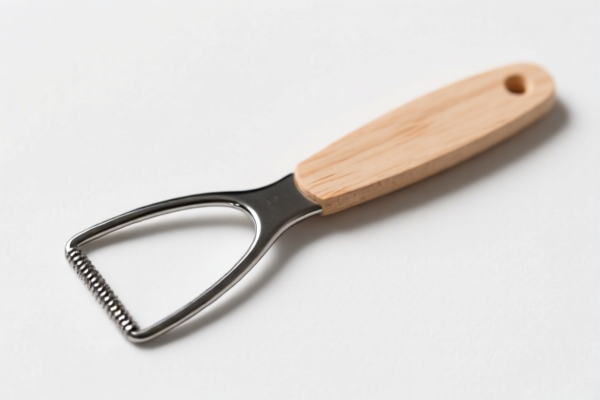
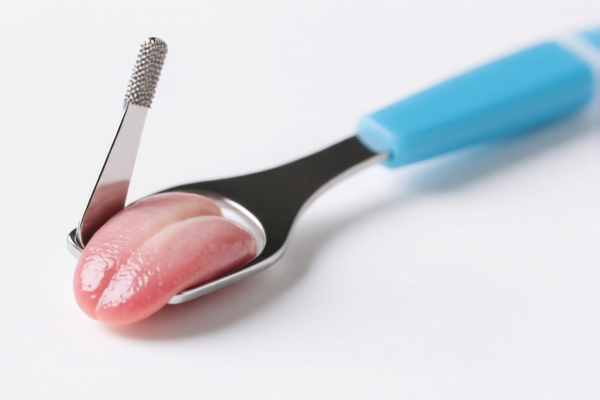


AI Analysis
🗣️ Tongue Cleaner (Tongue Scrapers/Scrapers)
🌐 HS Code Reference & Customs Clearance Guide | 2026 Latest Tariff Analysis | Professional Clearance Strategy
📌 I. Product Definition & Classification: What exactly is a "Tongue Cleaner"?
A tongue cleaner is a personal hygiene tool designed to remove bacteria, debris, and coating from the surface of the tongue to improve oral hygiene and freshness. In international trade, its classification heavily depends on material and packaging context.
Personal Hygiene Supplies (Plastic): The most common type, made of plastic, classified under household sanitary articles.
Travel Kits (Mixed Materials): If sold as part of a "personal toilet set" or travel kit, it may fall under a different category.
Metal/Steel Variants: Stainless steel or metal tongue scrapers are classified differently due to material restrictions.
⚠️ Key Classification Distinction:
- Plastic Only → Generally3924(Plastic household articles);
- Travel Set Context → Generally9605(Personal toilet sets);
- Metal/Stainless Steel → Generally7323(Tableware, kitchenware, or other household articles of iron/steel);
- High Tariff Risk: Metal items from China face significantly higher additional tariffs.
📦 II. HS Code Classification Details (2026 Latest Tariff Authority Comparison)
| HS Code | Product Description | Material | Applicability | Total Tax Rate (China to US) |
|---|---|---|---|---|
3924.90.56.50 |
Tongue cleaner as personal hygiene item, fitting plastic household & sanitary articles | Plastic | General personal use | 20.9% |
3924.90.05.00 |
Inferred plastic material, fitting other household/sanitary articles | Plastic | General personal use | 20.6% |
9605.00.00.00 |
Personal toiletry item, fitting "personal toilet sets" (travel kits) | Mixed/Any | Sold as part of a kit/sets | 18.1% |
7323.99.90.30 |
Inferred metal, oral cleaning-related tableware/personal care | Metal (Stainless Steel) | High-risk metal category | 88.4% |
7323.99.90.80 |
Inferred stainless steel/iron, fitting catch-all category for household articles | Metal (Stainless Steel) | High-risk metal category | 88.4% |
🔍 Critical Note:
- Plastic Tongue Cleaners (3924.xx) are the most common and have moderate tariffs (~20%).
- Travel Sets (9605.00.00.00) offer the lowest tax rate (~18.1%) but only if the product is marketed/sold as a "set."
- Metal Tongue Cleaners (7323.xx) face extremely high tariffs (~88.4%) due to Section 301 and 122 penalties on steel/iron products. Avoid declaring metal items unless absolutely necessary or if alternative sourcing is available.
💰 III. 2026 Latest Tariff Rate Breakdown (Including Additional Taxes)
✅ Applicable Country: United States (US)
✅ Origin: China (CN)
✅ Effective Time: 2025 November 10 onwards (including subsequent imports)
🎯 1. 3924.90.56.50 & 3924.90.05.00 —— Plastic Tongue Cleaners
| Item | Content |
|---|---|
| Base Duty | 3.1% – 3.4% (Ad Valorem) |
| Section 301 Additional Duty | 7.5% |
| Section 122 Duty | 10% |
| Total Tax Rate | 20.6% – 20.9% |
| Tax Calculation | CIF Value × 20.6–20.9% |
| De Minimis Exemption | ❌ Not Eligible (Deny De Minimis) |
| Legal Basis Path | Base Tariff → Section 301 (7.5%) → Section 122 (10%) |
📌 Explanation:
- Base Duty: Standard MFN duty for plastic sanitary articles.
- Section 301 (7.5%): Additional tariff on Chinese goods under Trade Act Section 301.
- Section 122 (10%): Additional tariff on specific Chinese products under IEEPA Section 122.
- Total ~20.7%: This is the standard cost for plastic tongue cleaners. Do not under-declare, as customs may audit material composition.
🎯 2. 9605.00.00.00 —— Personal Toilet Sets (Travel Kits)
| Item | Content |
|---|---|
| Base Duty | 8.1% (Ad Valorem) |
| Section 301 Additional Duty | 0.0% |
| Section 122 Duty | 10% |
| Total Tax Rate | 18.1% |
| Tax Calculation | CIF Value × 18.1% |
| De Minimis Exemption | ❌ Not Eligible (Deny De Minimis) |
| Legal Basis Path | Base Tariff → Section 122 (10%) |
📌 Key Insight:
- This category offers the lowest total tariff (18.1%) because Section 301 additional duty is 0% for personal toilet sets in some interpretations.
- Condition: The product must be genuinely sold as a "set" (e.g., brush, comb, tongue cleaner packaged together). Single tongue cleaners cannot arbitrarily use this code.
- Base duty is higher (8.1%), but the absence of Section 301 makes it cheaper overall.
🎯 3. 7323.99.90.30 & 7323.99.90.80 —— Metal/Stainless Steel Tongue Cleaners
| Item | Content |
|---|---|
| Base Duty | 3.4% (Ad Valorem) |
| Section 301 Additional Duty | 25.0% |
| Section 122 Duty | 10% |
| Steel/Aluminum/Copper Additional Duty | 50% (if applicable under specific steel/iron clauses) |
| Total Tax Rate | 88.4% |
| Tax Calculation | CIF Value × 88.4% |
| De Minimis Exemption | ❌ Not Eligible (Deny De Minimis) |
| Legal Basis Path | Base Tariff → Section 301 (25%) → Section 122 (10%) → Steel/Aluminum/Copper Duty (50%) |
📌 Warning:
- Metal tongue cleaners are subject to multiple overlapping tariffs: Section 301 (25%), Section 122 (10%), and potentially an additional 50% for steel/iron products.
- Total ~88.4% makes metal tongue cleaners prohibitively expensive for direct import from China to the US.
- Recommendation: Avoid shipping metal tongue cleaners from China to the US unless exempted or re-routed through a third country with proper origin change.
🛠️ IV. Customs Clearance Practical Advice (Avoid Pitfalls Guide)
✅ 1. Required Documentation List (No Exceptions)
| Document | Mandatory | Description |
|---|---|---|
| ✅ Product Specification Sheet | ✔️ | Material (Plastic/Metal), dimensions, usage instructions |
| ✅ Product Photos (Including Packaging) | ✔️ | Clear view of label, brand, and packaging context (e.g., "Travel Set") |
| ✅ Commercial Invoice | ✔️ | Must specify "Tongue Cleaner" and correct HS Code |
| ✅ Packing List | ✔️ | Detail contents, especially if marketed as a "set" |
| ✅ Material Declaration | ✔️ | Explicitly state "Plastic" or "Stainless Steel" to avoid misclassification |
| ✅ Certifications (if applicable) | ✔️ | FDA, LFGB, or food-safe certifications (for oral care products) |
✅ 2. Declaration Tips (Key Mnemonics)
🔥 "Plastic 20%, Set 18%, Metal 88% – Declare Right, Save Your Dream!"
| Scenario | Correct Declaration | Error to Avoid |
|---|---|---|
| Single Plastic Tongue Cleaner | 3924.90.56.50 |
Misdeclaring as 9605 → Customs rejection |
| Plastic in a "Travel Kit" | 9605.00.00.00 |
Declaring as single item → Higher tax (20.9%) |
| Stainless Steel Cleaner | 7323.99.90.80 |
Ignoring 50% steel duty → Unexpected bill |
| Mixed Materials (Plastic Handle + Metal Scraping Tip) | 3924 (if plastic dominant) or 7323 (if metal functional) |
Ambiguous description → Customs audit |
✅ 3. Special Handling Cases
| Scenario | Handling Advice |
|---|---|
| OEM Private Label | Provide customer order + design drawings; avoid "generic" descriptions |
| Travel Kits | Ensure packaging explicitly states "Personal Toilet Set" to justify 9605 |
| Metal Tongue Cleaners | Consider sourcing from non-China origins to avoid 88.4% tariff |
| FDA Compliance | Oral care products may require FDA registration; include compliance docs |
| Material Change | If switching from plastic to metal, re-evaluate tariff impact immediately |
🌍 V. Global Market Customs Comparison (2026 Latest)
| Country/Region | Recommended HS Code | Duty Rate | Certification Requirements | Remarks |
|---|---|---|---|---|
| 🇺🇸 United States | 3924.90.56.50 (Plastic) |
20.9% | FDA/LFGB | 7323 is 88.4% – Avoid |
| 🇨🇳 China | 3924.90.56.50 |
3.4% | GB Standards | No additional tariffs |
| 🇪🇺 European Union | 3924.90.56.50 |
0% – 3% | CE/REACH | Low tariffs, high compliance |
| 🇬🇧 United Kingdom | 3924.90.56.50 |
0% – 3% | UKCA | Post-Brexit standards apply |
| 🇦🇺 Australia | 3924.90.56.50 |
5% | TGA (if medical) | Moderate duty |
| 🇯🇵 Japan | 3924.90.56.50 |
0% – 3% | PSE/FDA | Low barriers |
📌 Conclusion:
- US is the highest-cost market for tongue cleaners due to Section 301 and 122 tariffs.
- Plastic is the safest material for US imports (~20% total tax).
- Metal is the most expensive (~88.4% total tax).
- Travel Kits offer a slight advantage (18.1%) if marketed correctly.
📌 VI. Common Errors & Pitfalls (Lessons Learned)
❌ Error 1: Declaring a "Travel Set" as a single item to avoid complexity
👉 Consequence: Incorrect classification → Potential penalty or higher audit risk.
Correct: If sold as a set, use 9605.00.00.00.
❌ Error 2: Misdeclaring Metal Tongue Cleaners as Plastic
👉 Consequence: Customs inspection reveals metal → 88.4% tax + fines + detention.
Correct: Always declare correct material.
❌ Error 3: Ignoring Section 122 (10%) and Section 301 (7.5% or 25%)
👉 Consequence: Under-declared duties → Back taxes + interest.
Correct: Include all additional tariffs in cost calculations.
❌ Error 4: Using "Oral Care Tool" as generic description
👉 Consequence: Vague description → Customs delay for clarification.
Correct: Specify "Tongue Cleaner, Plastic, Personal Use" or "Stainless Steel Tongue Scraper."
✅ Correct Practice:
"Plastic Tongue Cleaner, Personal Hygiene, Single Unit, Model XYZ, FDA Compliant"
OR
"Personal Toilet Set including Tongue Cleaner, Brush, Comb, Travel Size, Model XYZ"
🎯 VII. Conclusion: Professional Declaration, Cost Optimization!
🎯 Remember Mnemonics:
🔹 "Plastic 20%, Set 18%, Metal 88% – Choose Wisely!"
🔹 "HS Code Determines Life, Tax Rate Differs by 70%, One Step Wrong, Thousands Lost!"
📌 Tips:
- If your tongue cleaners are originating from Vietnam, Mexico, Thailand, or Malaysia, you may qualify for IEEPA Exemptions, reducing tariffs to 0%–5%.
- Apply for Advance Rulings with US Customs and Border Protection (CBP) to confirm classification and avoid surprises.
- For metal tongue cleaners, consider sourcing from non-China countries to avoid the 88.4% tariff burden.
📣 Immediate Action:
📞 Contact Professional Customs Broker + Provide Product Photos + Apply for HS Code Advance Ruling
🚀 Ensure your tongue cleaners clear customs smoothly, maximize margins, and scale globally!
✨ Professional Clearance Starts with Accurate Classification!
💼 Every cent of your cost deserves precise calculation!
Customer Reviews
About HS Code Classification
The Harmonized System (HS) is an internationally standardized nomenclature developed by the World Customs Organization (WCO) to classify traded products. Over 200 countries use the HS system as the basis for customs tariffs, trade statistics, and import/export regulations.
Each HS code follows a hierarchical structure:
- Chapter (2 digits) — Broad category of goods (e.g., Chapter 84: Machinery and Mechanical Appliances)
- Heading (4 digits) — More specific grouping within the chapter
- Subheading (6 digits) — Internationally standardized breakdown, used by all WCO member countries
- National subdivisions (8-10 digits) — Country-specific extensions for further classification, such as US HTSUS 10-digit codes
Correct HS code classification is essential for smooth customs clearance, accurate duty payment, and compliance with trade regulations. Misclassification can lead to customs delays, overpayment of duties, or penalties.
When importing from CN to US, the applicable tariff rates may include:
- Most-Favored-Nation (MFN) rate — The standard duty rate applied to WTO members
- General rate — Applied to countries without trade agreements
- Trade remedy duties — Additional tariffs such as Section 301 (anti-dumping), Section 232 (national security), or countervailing duties
The information provided on this page is for reference purposes only. For official classification, please consult with your local customs authority or a licensed customs broker.