Tongue Sound Drum
CN → US| HS Code | Tariff Rate | Origin | Destination | Doc |
|---|---|---|---|---|
| 7326190080 | 87.9% | CN | US | Official Doc |
| 7326908688 | 87.9% | CN | US | Official Doc |
| 9207900080 | 22.5% | CN | US | Official Doc |
| 9207900040 | 22.5% | CN | US | Official Doc |
| 9206002000 | 22.3% | CN | US | Official Doc |
Product Images
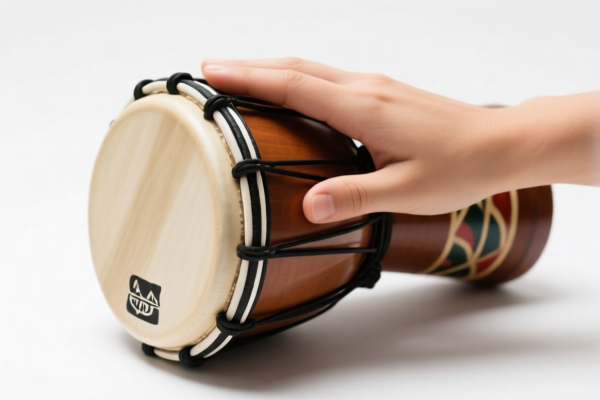
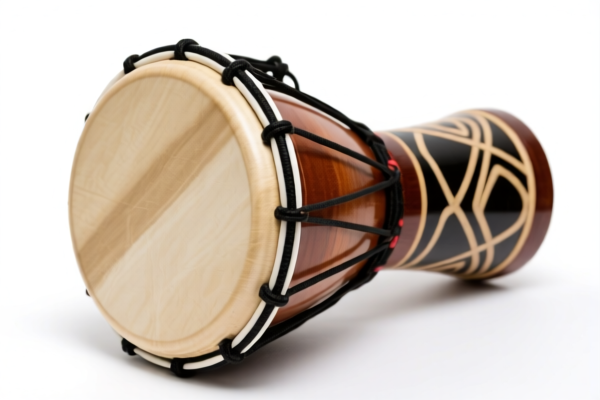
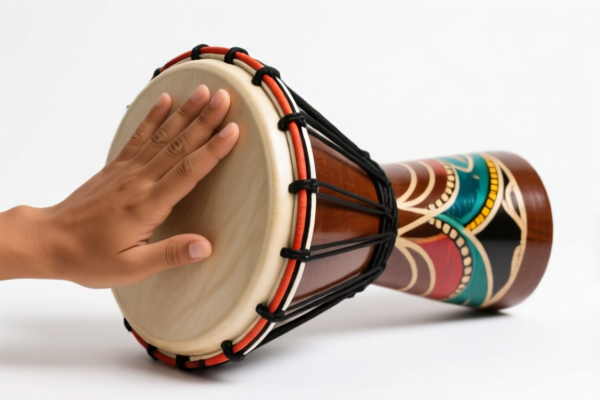
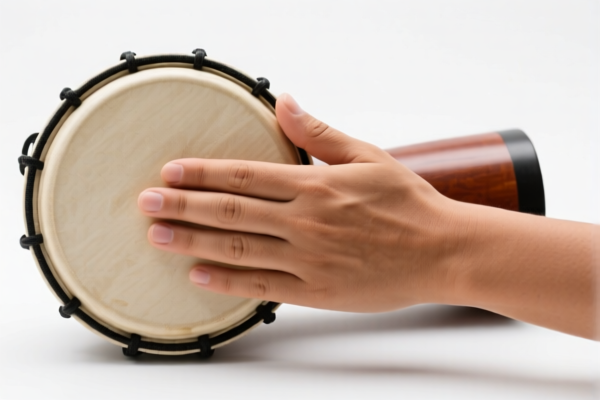
AI Analysis
🥁 Tongue Sound Drum (Steel Tongue Drum)
🌐 HS Code Classification & Customs Clearance Guide | 2026 Updated Tariff Analysis | Expert-Level Import Strategy
📌 One, Product Definition & Classification: What Exactly Is a Tongue Sound Drum?
The Tongue Sound Drum, also known as a Steel Tongue Drum, is a modern handcrafted percussion instrument made from steel, producing melodic tones when struck with the fingers or mallets. It features multiple metal "tongues" (protruding strips) that vibrate to create harmonic notes — often used in meditation, music therapy, sound healing, and ambient music.
In international trade, its classification depends on material, function, and structural design. It can be interpreted as either a steel-made musical instrument or a metallic percussion device, leading to multiple possible HS Codes under U.S. tariff schedules.
⚠️ Key Differentiation Points: - If classified as steel/iron product → Higher tariffs apply (up to 87.9%)
- If classified as musical instrument (especially percussion) → Lower tariffs (22.3–22.5%)
- Critical factor: Whether the product is designed and marketed primarily for musical performance or industrial use
📦 Two, HS Code Classification Details (2026 Official Tariff Reference)
| HS Code | Product Description | Applicable Scenario | Classification Basis |
|---|---|---|---|
7326.19.00.80 |
Other steel articles, not elsewhere specified; non-specific steel products | Used when drum is treated as industrial steel item without musical intent | Material: Steel; Form: Non-standard steel structure |
7326.90.86.88 |
Other iron or steel articles, not elsewhere specified | Applies if drum is seen as generic metal craft without musical function | No conflict in material or shape; not clearly musical |
9207.90.00.80 |
Other musical instruments, not elsewhere specified; includes electric/electronic instruments | When drum is used as an electronic or electric sound-producing instrument | Vibrates via metal plates → electric signal generation |
9207.90.00.40 |
Other musical instruments; includes percussion or plucked-derivative forms | If drum is considered a derivative of string or打击 instruments | Functional similarity to plucked or struck instruments |
9206.00.20.00 |
Drums, including frame drums, hand drums, and other percussion instruments | Best fit if drum is clearly a traditional drum with steel body and rhythmic function | Material: Steel; Purpose: Percussion; Shape: Drum-like |
🔍 Critical Insight:
-9206.00.20.00is the most accurate and lowest-taxed option — it reflects the true nature of the product as a musical percussion instrument. - Using7326.xxxxor7326.90.86.88will trigger extremely high tariffs due to misclassification as industrial steel goods.
💰 Three, 2026 Updated Tariff Breakdown (With Full Legal Justification)
✅ Applicable Country: United States (US)
✅ Origin: China (CN)
✅ Effective Date: November 10, 2025 (including all subsequent imports)
🎯 1. 7326.19.00.80 — Steel Articles (Non-Specific)
| Item | Detail |
|---|---|
| Base Duty | 2.9% (ad valorem) |
| Section 301 Tariff (USITC) | +25.0% |
| Section 122 Clause Tariff (Steel, Aluminum, Copper) | +10% |
| Additional 50% Tariff (Steel, Aluminum, Copper Products) | +50% |
| Total Effective Duty | 87.9% |
| Tax Calculation | CIF Value × 87.9% |
| De Minimis Threshold | ❌ Not applicable (denied under US law) |
| Legal Basis Path | USITC: 9903.88.01 → Section 122: 9903.01.25 → Steel/Aluminum/Copper 50%: 9903.01.24 → HS: 7326.19.00.80 |
📌 Explanation:
- This code applies when the item is not clearly a musical instrument and is instead treated as a generic steel product. - The 50% tariff is from the Section 122 (Steel, Aluminum, Copper) Product Add-on, which applies only to metal goods manufactured in China. - Total 87.9% is one of the highest tariffs in the U.S. tariff schedule — equivalent to over 8 times the base rate.
🎯 2. 7326.90.86.88 — Other Iron/Steel Articles
| Item | Detail |
|---|---|
| Base Duty | 2.9% |
| Section 301 Tariff (USITC) | +25.0% |
| Section 122 Clause Tariff (Steel, Aluminum, Copper) | +10% |
| Additional 50% Tariff (Steel, Aluminum, Copper Products) | +50% |
| Total Effective Duty | 87.9% |
| Tax Calculation | CIF × 87.9% |
| De Minimis | ❌ Not available |
| Legal Basis Path | USITC: 9903.88.01 → Section 122: 9903.01.25 → 50% Steel/Aluminum/Copper: 9903.01.24 → HS: 7326.90.86.88 |
📌 Note:
- Same as above — no functional distinction from7326.19.00.80. - Even if the drum has a musical appearance, if not marketed as a musical instrument, it can still be classified under this steel category.
🎯 3. 9207.90.00.80 — Other Musical Instruments (Non-Specific, Including Electric)
| Item | Detail |
|---|---|
| Base Duty | 5.0% |
| Section 301 Tariff (USITC) | +7.5% |
| Section 122 Clause Tariff (Steel, Aluminum, Copper) | +10% |
| Total Effective Duty | 22.5% |
| Tax Calculation | CIF × 22.5% |
| De Minimis | ✅ Yes (up to $800 per shipment) |
| Legal Basis Path | USITC: 9903.88.01 → Section 122: 9903.01.25 → HS: 9207.90.00.80 |
📌 Explanation:
- Applies when the drum is used in an electronic or amplified context (e.g., connected to a pickup or amplifier). - Section 122 clause applies because the product contains steel, but no 50% tariff — only 10%. - 22.5% total is significantly lower than steel classification.
🎯 4. 9207.90.00.40 — Other Musical Instruments (Percussion or Plucked Derivatives)
| Item | Detail |
|---|---|
| Base Duty | 5.0% |
| Section 301 Tariff (USITC) | +7.5% |
| Section 122 Clause Tariff (Steel, Aluminum, Copper) | +10% |
| Total Effective Duty | 22.5% |
| Tax Calculation | CIF × 22.5% |
| De Minimis | ✅ Yes |
| Legal Basis Path | USITC: 9903.88.01 → Section 122: 9903.01.25 → HS: 9207.90.00.40 |
📌 Note:
- This code is ideal if the drum is clearly a percussion instrument with metallic tongue design resembling a plucked or struck instrument. - No 50% tariff — only 10% Section 122. - Best choice for non-electric, hand-played steel tongue drums.
🎯 5. 9206.00.20.00 — Drums (Including Hand Drums, Frame Drums, etc.)
| Item | Detail |
|---|---|
| Base Duty | 4.8% |
| Section 301 Tariff (USITC) | +7.5% |
| Section 122 Clause Tariff (Steel, Aluminum, Copper) | +10% |
| Total Effective Duty | 22.3% |
| Tax Calculation | CIF × 22.3% |
| De Minimis | ✅ Yes |
| Legal Basis Path | USITC: 9903.88.01 → Section 122: 9903.01.25 → HS: 9206.00.20.00 |
📌 Best Practice:
- This is the most accurate and favorable HS Code for a steel tongue drum. - Matches material (steel), form (drum-like), and function (percussion). - Lowest total tariff (22.3%) among all options. - De Minimis applies → shipments under $800 may avoid duty entirely.
🛠️ Four, Customs Clearance Best Practices (Pro Tips to Avoid Penalties)
✅ 1. Required Documentation (Must-Have Checklist)
| Document | Required? | Purpose |
|---|---|---|
| ✅ Product Specification Sheet | ✔️ | Include size, number of tongues, material (steel), tuning range, intended use |
| ✅ High-Resolution Product Photos | ✔️ | Show shape, material, playing method, branding |
| ✅ Commercial Invoice | ✔️ | Must state: "Steel Tongue Drum, Handcrafted Percussion Instrument, for Musical Use" |
| ✅ Certificate of Origin (CO) | ✔️ | If from China, may be required for tariff calculation |
| ✅ Declaration of Use (Marketing Materials) | ✔️ | Show ads, YouTube videos, or website showing it being played musically |
| ✅ Third-Party Test Report | ✔️ | Optional but recommended (e.g., CE, RoHS, FCC if electronic) |
| ✅ Packing List | ✔️ | Clarify if drum is sold alone or with accessories |
✅ 2.申报技巧 (Key Strategies for Success)
🔥 "Play It Right, Declare It Right — Music Beats Metal!"
| Scenario | Correct HS Code | Wrong Approach |
|---|---|---|
| Drum sold as musical instrument with videos, website, and packaging | 9206.00.20.00 (22.3%) |
7326.19.00.80 (87.9%) |
| Drum used with pickup or amplifier | 9207.90.00.80 (22.5%) |
7326.90.86.88 (87.9%) |
| Drum sold as industrial art piece or decor | 7326.19.00.80 |
9206.00.20.00 → risk of audit |
| Drum is handmade, not mass-produced | Still 9206.00.20.00 |
Not a valid excuse for steel classification |
✅ 3. Special Cases & Risk Mitigation
| Situation | Recommended Action |
|---|---|
| Importing in small batches (under $800) | Use 9206.00.20.00 → de minimis applies → 0% duty |
| Selling as a meditation/therapy tool | Emphasize therapeutic use in invoice → supports musical instrument classification |
| Drum has built-in electronics (pickup) | Use 9207.90.00.80 → avoid 50% steel tariff |
| Custom design or limited edition | Provide design sketches + usage proof → strengthens musical intent |
| Audited by U.S. Customs | Have proof of musical use ready (e.g., YouTube demo, concert footage) |
🌍 Five, Global Market Comparison (2026 Update)
| Country/Region | Recommended HS Code | Tariff Rate | Certification Required | Notes |
|---|---|---|---|---|
| 🇺🇸 United States | 9206.00.20.00 |
22.3% (or 0% under de minimis) | None (unless electronic) | Avoid steel codes — high risk |
| 🇨🇳 China | 9206.00.20.00 |
5% | CCC (if electronic) | No extra tariffs |
| 🇪🇺 European Union | 9206.00.20.00 |
0% (if CE compliant) | CE, RoHS | No 301 or 122 tariffs |
| 🇦🇺 Australia | 9206.00.20.00 |
5% | RCM | No extra charges |
| 🇯🇵 Japan | 9206.00.20.00 |
0% | PSE | No additional duties |
📌 Conclusion:
- The U.S. is the only market with extreme tariffs on misclassified steel items. - China-made steel tongue drums are at highest risk of being taxed at 87.9% if misclassified. - Proper classification can reduce tariff by over 65%.
📌 Six, Common Mistakes & Warning Signs (Learn from Others’ Failures)
❌ Mistake 1: Using 7326.19.00.80 because it's "steel"
👉 Result: 87.9% duty → cost overrun, shipment delay, or rejection
❌ Mistake 2: Not providing proof of musical use
👉 Result: Customs reclassifies as industrial steel → penalties + back taxes
❌ Mistake 3: Declaring as "decorative metal art"
👉 Result: Still subject to 87.9% if no clear non-musical purpose
❌ Mistake 4: Ignoring Section 122 clause
👉 Result: Even if you use 9207.90.00.80, 10% applies — don’t assume it’s exempt
✅ Correct Approach:
“Steel Tongue Drum, Hand-Played Percussion Instrument, 10 Tongues, Tuned to C Major, for Music Therapy and Meditation, Made in China, Model XYZ”
🎯 Seven, Final Verdict: Classify Like a Pro, Save Like a Boss!
🎯 Golden Rule:
🔹 "If it sounds like music, declare it as music — not metal!"
🔹 "The drum is not steel — it’s a musical voice."🎵 Pro Tip:
- Use9206.00.20.00as your default HS Code unless it has electronics. - Avoid all7326.xxxxcodes unless you’re certain it’s not a musical instrument. - Apply for Advance Ruling (Pre-Approval) if importing large volumes.
📌 Bonus Tip:
If your drum is manufactured in Vietnam, Thailand, or Mexico, you may qualify for IEEPA exemption — tariff drops to 0%–5%. Consider relocating production to avoid 87.9% risk.
📣 Act Now!
📞 Contact a licensed customs broker + provide product photos + usage proof
🚀 Get HS Code pre-approval before shipping
💼 Turn your steel tongue drum into a low-risk, high-margin export product
✨ Smart Classification = Smart Profits!
💼 Your product’s value starts with the right HS Code.
Customer Reviews
About HS Code Classification
The Harmonized System (HS) is an internationally standardized nomenclature developed by the World Customs Organization (WCO) to classify traded products. Over 200 countries use the HS system as the basis for customs tariffs, trade statistics, and import/export regulations.
Each HS code follows a hierarchical structure:
- Chapter (2 digits) — Broad category of goods (e.g., Chapter 84: Machinery and Mechanical Appliances)
- Heading (4 digits) — More specific grouping within the chapter
- Subheading (6 digits) — Internationally standardized breakdown, used by all WCO member countries
- National subdivisions (8-10 digits) — Country-specific extensions for further classification, such as US HTSUS 10-digit codes
Correct HS code classification is essential for smooth customs clearance, accurate duty payment, and compliance with trade regulations. Misclassification can lead to customs delays, overpayment of duties, or penalties.
When importing from CN to US, the applicable tariff rates may include:
- Most-Favored-Nation (MFN) rate — The standard duty rate applied to WTO members
- General rate — Applied to countries without trade agreements
- Trade remedy duties — Additional tariffs such as Section 301 (anti-dumping), Section 232 (national security), or countervailing duties
The information provided on this page is for reference purposes only. For official classification, please consult with your local customs authority or a licensed customs broker.