Tools
CN → US| HS Code | Tariff Rate | Origin | Destination | Doc |
|---|---|---|---|---|
| 8467290070 | 17.5% | CN | US | Official Doc |
| 8201300080 | 35.0% | CN | US | Official Doc |
| 8201906000 | 35.0% | CN | US | Official Doc |
| 8467891000 | 17.5% | CN | US | Official Doc |
Product Images
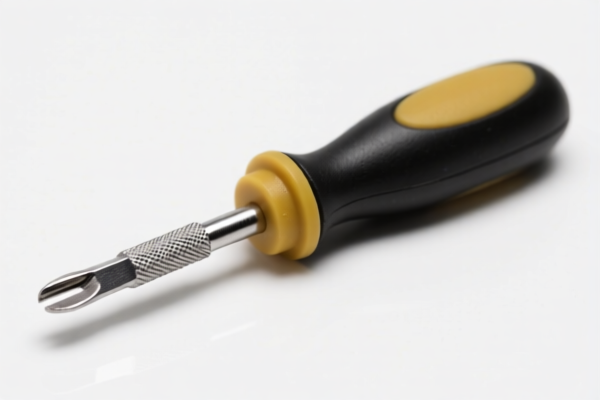
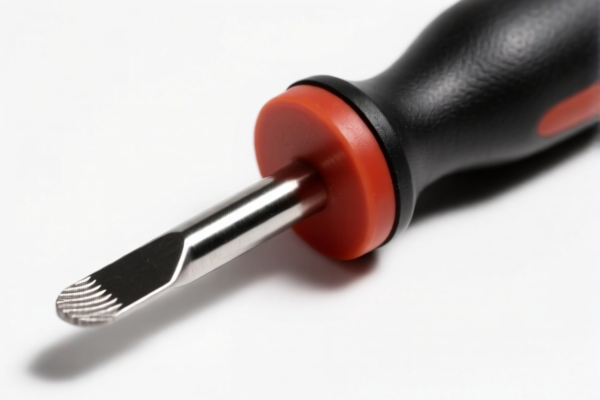
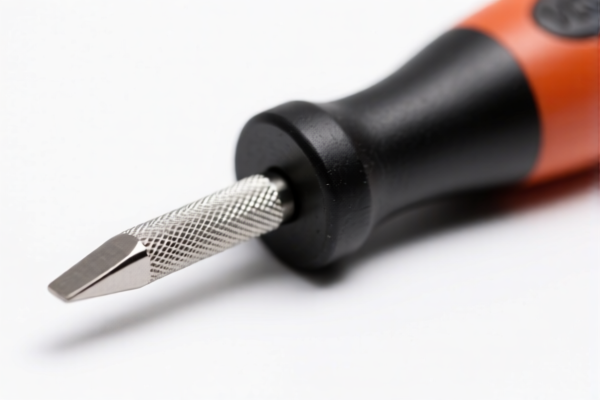
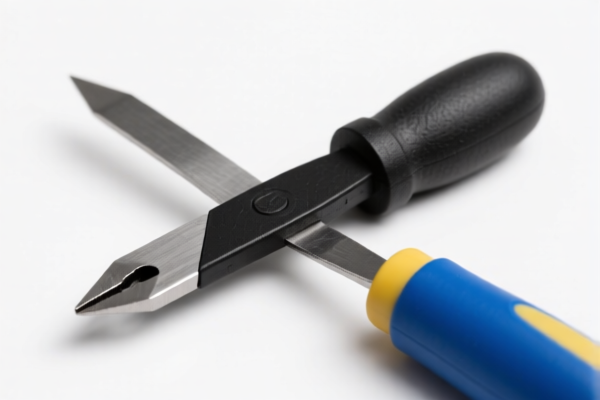
AI Analysis
🔨 Tools (Hand Tools & Power Tool Accessories)
🌐 HS Code Reference & Clearance Guide | 2026 Latest Tariff Analysis | Professional Clearance Strategy
📌 I. Product Definition: What Exactly Are "Tools"?
In international trade, the term "Tools" is a broad, generic descriptor that lacks specificity. It generally falls under the category of Hand Tools (manual instruments for cutting, shaping, or assembling) or Parts/Accessories for Power Tools.
Because the input "Tools" is vague, customs classification relies on deductive logic: 1. Usage Inclusion: The generic term "Tools" is conceptually included within specific categories like "Hand Tools" or "Power Tool Parts." 2. Material Neutrality: Without specified material (e.g., steel, plastic, diamond), we assume standard metal tools unless proven otherwise. 3. "Other" Clauses: When specific sub-categories (like "hammers" or "wrenches") don't fit perfectly, they fall into "Other" (residual) categories.
⚠️ Critical Distinction:
- If the tool is manual/hand-operated (no motor) → Likely Chapter 82 (Base Metal Tools) or 8467 (Parts/Accessories for Hand Tools).
- If the tool is pneumatic/hydraulic/electric → Likely Chapter 84 (Machinery/Parts).
- Agricultural vs. Industrial: Usage dictates Chapter 82 (Agri) vs. 84 (Industrial/General).
📦 II. HS Code Classification Details (2026 Latest Tariff Mapping)
Based on the provided data, the generic term "Tools" maps to four primary HS Codes depending on the specific type of tool (hand, agri, or power accessory) and the applicable fallback ("Other") clauses.
| HS Code | Product Description | Classification Logic | Applicability |
|---|---|---|---|
8467.29.00.70 |
Parts & Accessories for Hand Tools (Other) | Generic "Tools" include hand tools. This is a residual category for parts/accessories not specifically named (like drills/saws). | ✅ General Hand Tool Accessories |
8201.30.00.80 |
Hand Tools for Agri/Horti/Forestry (Other) | "Tools" are included in agricultural use. Since it's an "Other" category, it captures unspecified agri-tools without material conflict. | ✅ Agricultural Hand Tools |
8201.90.60.00 |
Other Hand Tools (General Residual) | "Tools" fall under hand tools. Without specific usage, this "Other" bucket is the default for general hand tools. | ✅ General Hand Tools (Non-Agri) |
8467.89.10.00 |
Parts/Accessories for Pneumatic/Hydraulic/Electric Tools | "Tools" align with power tool attributes. As a residual "Other" category, it fits unspecified power tool accessories. | ✅ Power Tool Accessories |
🔍 Key Insight:
- All four codes utilize "Other" (兜底) classification principles due to the vague input "Tools."
- No material conflict was detected, so all are deemed "Possibly Compliant" (可能符合) based on usage inclusion.
💰 III. 2026 Latest Tariff Rate Breakdown (US Import from China)
✅ Applicable Country: United States (US)
✅ Origin: China (CN)
✅ Effective Date: Post-2025/2026 Trade Policies
🎯 1. 8467.29.00.70 & 8467.89.10.00 — Tool Accessories/Parts
(Covers general hand tool parts and power tool accessories)
| Item | Detail |
|---|---|
| Base Tariff | 0.0% |
| Section 301 Tariff | +7.5% |
| IEEPA Tariff (122 Clause) | +10.0% |
| Total Tax Rate | 17.5% |
| Calculation | CIF Value × 17.5% |
| De Minimis Exemption | ❌ Not Eligible (High tax rates usually disqualify from $800 de minimis, but confirm with broker) |
| Legal Path | USITC:8467.29.00.70 → 301:7.5% → IEEPA:10% |
📌 Explanation:
- These codes belong to Chapter 84 (Machinery).
- The 17.5% rate is significantly lower than agricultural tools due to different trade war escalations.
- Risk: If classified as "Hand Tools" (Ch 82) instead, taxes jump to 35%.
🎯 2. 8201.30.00.80 & 8201.90.60.00 — Hand Tools (Agri & General)
(Covers agricultural hand tools and general hand tools)
| Item | Detail |
|---|---|
| Base Tariff | 0.0% |
| Section 301 Tariff | +25.0% |
| IEEPA Tariff (122 Clause) | +10.0% |
| Total Tax Rate | 35.0% |
| Calculation | CIF Value × 35.0% |
| De Minimis Exemption | ❌ Not Eligible |
| Legal Path | USITC:8201.xx.xx → 301:25% → IEEPA:10% |
📌 Explanation:
- These codes belong to Chapter 82 (Base Metal Tools).
- High Tax Alert: Hand tools from China face the 25% Section 301 tariff, the highest among these options.
- Why?: Agricultural and general hand tools are heavily scrutinized due to their widespread use and perceived competitive threat to US manufacturing.
🛠️ IV. Customs Clearance Practical Advice (Pitfall Avoidance)
✅ 1. Preparation Checklist (Mandatory)
| Document | Required? | Note |
|---|---|---|
| ✅ Product Specifications | ✔️ | Must specify: Manual vs. Electric, Material (Steel/Plastic), Use (Agri/Industrial). |
| ✅ Product Photos | ✔️ | Clear images of the tool, handles, blades, and any labels. |
| ✅ Commercial Invoice | ✔️ | Do NOT just write "Tools." Use specific terms like "Garden Trowel," "Wrench Set," or "Drill Bit." |
| ✅ Packing List | ✔️ | Detail contents per box. Avoid mixed generic lists. |
| ✅ Material Declaration | ✔️ | Confirm if >90% is metal, plastic, or wood. Impacts Chapter 82 vs. 84/85. |
✅ 2. Declaration Strategy
🔥 Golden Rule:
"Vague Names = High Risk. Specific Names = Lower Risk."
| Scenario | Recommended Declaration | Avoid |
|---|---|---|
| Agri Tool | "Stainless Steel Gardening Hand Trowel" | "Tools for Farm" |
| General Hand Tool | "Steel Adjustable Wrench" | "Hardware Tools" |
| Power Accessory | "Replacement Drill Chuck for Electric Drill" | "Electric Tool Parts" |
| Mixed Lot | Split by function: "Hand Tools" + "Power Accessories" | "Mixed Tools Lot" |
✅ 3. Special Handling
| Situation | Advice |
|---|---|
| OEM Custom Tools | Provide design drawings to prove material composition. |
| Plastic-Handled Metal Tools | Classify as Base Metal (Ch 82) if metal is the essential character. |
| Wooden Handles | May shift classification to Chapter 44 (Wood) if handle is primary, but rare for tools. |
| Kit Sets | If sold as a set, classify by the essential character (usually the main tool). |
🌍 V. Global Market Comparison (2026)
| Region | HS Code Trend | Tariff (China Origin) | Key Requirement |
|---|---|---|---|
| 🇺🇸 USA | Ch 82 (35%) / Ch 84 (17.5%) | High (25% + 10%) | Strict Material Declaration |
| 🇪🇺 EU | Ch 82 | 0% - 4% | CE Mark (if power), RoHS |
| 🇨🇳 China | Ch 82 | 0% - 10% | CCC (if power tools) |
| 🇦🇺 AU | Ch 82 | 5% | RCM Certification |
📌 Conclusion:
- USA is the most expensive market for Chinese hand tools (35% total).
- Diversification Strategy: Consider sourcing non-Chinese components or using Section 301 Exclusions if applicable.
📌 VI. Common Mistakes & Pitfalls
❌ Mistake 1: Declaring all items as "Hand Tools" when some are Power Tool Accessories.
👉 Result: Misclassification. Power accessories (Ch 84) pay 17.5%, Hand Tools (Ch 82) pay 35%. Overpaying 17.5% or risking penalty for under-declaring.
❌ Mistake 2: Using vague terms like "Tools," "Hardware," or "Miscellaneous."
👉 Result: Customs will assign the highest duty rate based on the most restricted sub-category, or issue a Notice of Treatment (delay + storage fees).
❌ Mistake 3: Ignoring Material Composition.
👉 Result: If a tool has a significant plastic component (>50% by weight), it might fall under Chapter 39 (Plastics), which has different tariffs.
✅ Correct Approach:
"Stainless Steel Pruning Shears, Manual, for Garden Use" →
8201.30.00.80(35%)
"Electric Drill Bit Set, Tungsten Carbide" →8467.89.10.00(17.5%)
🎯 VII. Conclusion: Precision Saves Money!
🎯 Remember:
🔹 "Tools" is not an HS Code.
🔹 Hand Tools (Ch 82) = 35% Tax (USA)
🔹 Power Accessories (Ch 84) = 17.5% Tax (USA)
🔹 Be Specific or Pay the Penalty!
📌 Pro Tip:
If your product is a Kit, classify based on the main item. If you can separate the items (e.g., sell tools and drills separately), you might optimize the total tax burden.
📣 Immediate Action:
📞 Contact a Licensed Customs Broker
📄 Provide Detailed Product Specs
🚀 Apply for Pre-Ruling if Possible
💡 Avoid Generic Declarations!
✨ Professional Clearance Starts with Precise Classification!
💼 Every Percent of Tariff Matters to Your Bottom Line!
Customer Reviews
About HS Code Classification
The Harmonized System (HS) is an internationally standardized nomenclature developed by the World Customs Organization (WCO) to classify traded products. Over 200 countries use the HS system as the basis for customs tariffs, trade statistics, and import/export regulations.
Each HS code follows a hierarchical structure:
- Chapter (2 digits) — Broad category of goods (e.g., Chapter 84: Machinery and Mechanical Appliances)
- Heading (4 digits) — More specific grouping within the chapter
- Subheading (6 digits) — Internationally standardized breakdown, used by all WCO member countries
- National subdivisions (8-10 digits) — Country-specific extensions for further classification, such as US HTSUS 10-digit codes
Correct HS code classification is essential for smooth customs clearance, accurate duty payment, and compliance with trade regulations. Misclassification can lead to customs delays, overpayment of duties, or penalties.
When importing from CN to US, the applicable tariff rates may include:
- Most-Favored-Nation (MFN) rate — The standard duty rate applied to WTO members
- General rate — Applied to countries without trade agreements
- Trade remedy duties — Additional tariffs such as Section 301 (anti-dumping), Section 232 (national security), or countervailing duties
The information provided on this page is for reference purposes only. For official classification, please consult with your local customs authority or a licensed customs broker.