Top Cabinet
CN → US| HS Code | Tariff Rate | Origin | Destination | Doc |
|---|---|---|---|---|
| 9403409080 | 35.0% | CN | US | Official Doc |
| 9403409060 | 35.0% | CN | US | Official Doc |
Product Images
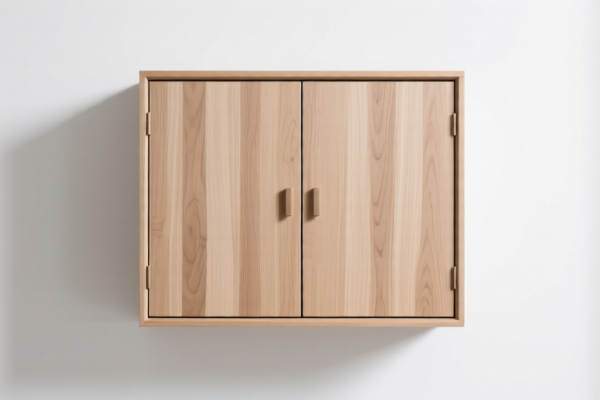
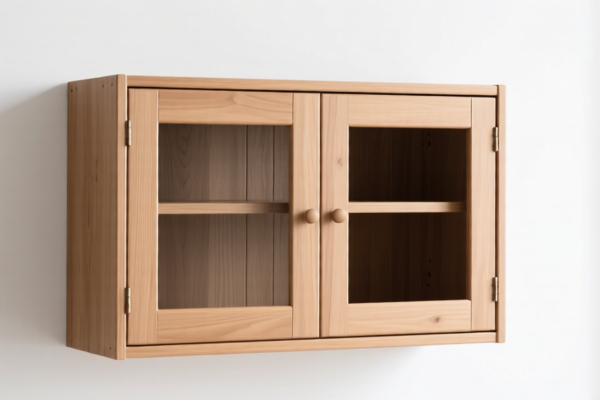
AI Analysis
🏠 Top Cabinet (Kitchen Wooden Furniture)
🌐 HS Code Reference & Customs Clearance Guide | 2026 Latest Tariff Analysis | Professional Clearance Strategy
📌 I. Product Definition & Classification: Do You Really Understand "Top Cabinet"?
In international trade, "Top Cabinet" refers specifically to wooden kitchen cabinets designed for permanent installation. These are not movable standalone furniture pieces but rather built-in or fixed units that form part of the kitchen structure. The classification hinges on two critical factors:
1. Material: Must be wooden.
2. Purpose: Must be of a kind used in the kitchen (e.g., upper storage, wall-mounted units).
⚠️ Key Distinction:
- If the cabinet is movable (e.g., on wheels, not fixed to walls/floors) → It may be classified under general wooden furniture (e.g., 9403.30/9403.60).
- If the cabinet is designed for permanent installation (e.g., fixed to walls, part of a modular kitchen system) → It falls under 9403.40.90.60.
- If it is wooden kitchen furniture but not designed for permanent installation (e.g., freestanding pantry cabinet) → It falls under 9403.40.90.80.
📦 II. HS Code Classification Details (2026 Latest Tariff Authority Comparison)
| HS Code | Product Description | Application Scenario | Permanent Installation? |
|---|---|---|---|
9403.40.90.60 |
Other wooden kitchen furniture: Other: Other: Cabinets designed for permanent installation | Wall-mounted kitchen cabinets, fixed overhead units, built-in storage | ✅ Yes |
9403.40.90.80 |
Other wooden kitchen furniture: Other: Other: Other | Freestanding wooden kitchen cabinets, movable pantry units, non-permanent fixtures | ❌ No |
🔍 Critical Reminder:
- 9403.40.90.60 is for cabinets that are structurally integrated into the kitchen (e.g., screwed to walls, part of a custom kitchen layout).
- 9403.40.90.80 is for wooden kitchen furniture that is not designed for permanent installation (e.g., standalone cabinets that can be moved).
- Misclassification Risk: Declaring a permanent cabinet as "other" (9403.40.90.80) or vice versa may lead to customs audits, delays, or penalties.
💰 III. 2026 Latest Tariff Rate Details (Including Surtaxes & Policy Add-ons)
✅ Applicable Country: United States (US)
✅ Origin: China (CN)
✅ Effective Date: November 10, 2025 (including subsequent imports)
🎯 1. 9403.40.90.60 —— Wooden Kitchen Cabinets (Permanent Installation)
| Item | Content |
|---|---|
| Base Tariff Rate | 0.0% (ad valorem) |
| USITC Surtax | +25.0% (under USITC Footnote 9903.88.01) |
| Total Tariff Rate | 25.0% |
| Tax Calculation | CIF Value × 25.0% |
| De Minimis Exemption Eligibility | ❌ Not Eligible (deny_de_minimis) |
| Legal Basis Path | USITC:9403.40.90.60 → FOOTNOTE:9903.88.01 |
📌 Explanation:
- The 25% surtax is imposed under Section 301 of the Trade Act of 1974, targeting specific Chinese goods.
- No IEEPA surtax applies to this HS code (unlike electronics or certain machinery).
- Total Rate: 25% is applied to the CIF value. This is a high tariff for furniture, requiring careful cost planning.
🎯 2. 9403.40.90.80 —— Other Wooden Kitchen Furniture (Non-Permanent)
| Item | Content |
|---|---|
| Base Tariff Rate | 0.0% (ad valorem) |
| USITC Surtax | +25.0% (under USITC Footnote 9903.88.01) |
| Total Tariff Rate | 25.0% |
| Tax Calculation | CIF Value × 25.0% |
| De Minimis Exemption Eligibility | ❌ Not Eligible (deny_de_minimis) |
| Legal Basis Path | USITC:9403.40.90.80 → FOOTNOTE:9903.88.01 |
📌 Note:
- The tax rate is identical to 9403.40.90.60 (25%).
- Both codes are subject to the same 25% surtax because they fall under the same USITC category for Chinese wooden kitchen furniture.
- No additional IEEPA surtax applies.
🛠️ IV. Customs Clearance Practical Advice (Pitfall Avoidance Guide)
✅ 1. Required Documentation Checklist (All Items Mandatory)
| Document | Required | Explanation |
|---|---|---|
| ✅ Product Specification Sheet | ✔️ | Include dimensions, material (wood type), finish, installation method (fixed vs. movable). |
| ✅ Installation Diagrams/Photos | ✔️ | Show how cabinets are attached to walls/floors to prove "permanent installation" status. |
| ✅ Product Photos (with Labels) | ✔️ | Clear images of the cabinet, including any fixed hardware (brackets, screws). |
| ✅ Commercial Invoice | ✔️ | Must explicitly state: "Wooden Kitchen Cabinet, Designed for Permanent Installation" or "Freestanding Wooden Kitchen Cabinet." |
| ✅ Packing List | ✔️ | Detail contents to avoid confusion with movable furniture. |
| ✅ Origin Certificate (CO) | ✔️ | Required for US origin verification; not eligible for preferential treatment under current tariffs. |
✅ 2. Declaration Tips (Key Mnemonics)
🔥 "Permanent? Yes to 60. Movable? Yes to 80. Both 25%!"
| Scenario | Correct Declaration | Wrong Practice |
|---|---|---|
| Wall-mounted kitchen cabinet | 9403.40.90.60 |
Misdeclare as movable → Same rate, but risk of audit. |
| Freestanding pantry cabinet | 9403.40.90.80 |
Misdeclare as permanent → Same rate, but risk of audit. |
| Mixed shipment (some fixed, some movable) | Split declaration | Combine into one code → Customs may reject or audit. |
📌 Critical Warning:
- Even though both codes have the same 25% rate, misclassification can lead to customs delays or penalties if documentation does not match the declared code.
- Always provide proof of installation method (e.g., photos, diagrams) to justify the chosen HS code.
✅ 3. Special Cases
| Scenario | Handling Advice |
|---|---|
| Modular Kitchen Systems | Declare each component separately. Fixed units → 9403.40.90.60; movable units → 9403.40.90.80. |
| Cabinets with Integrated Appliances | If the cabinet is primarily for storage (wooden), use 9403.40.90.xx. If appliances dominate, consider electrical equipment codes. |
| OEM Custom Cabinets | Provide client orders and design specs to prove "kitchen use" and installation method. |
| Non-Wooden Cabinets | Not covered in this data. Wooden only applies here. |
🌍 V. Global Market Customs Comparison (2026 Latest)
| Country/Region | Recommended HS Code | Tariff | Certification Requirements | Notes |
|---|---|---|---|---|
| 🇺🇸 USA | 9403.40.90.60 / 9403.40.90.80 |
25% (Chinese origin) | None (standard furniture) | 25% surtax applies to both codes. |
| 🇨🇳 China | 9403.40.90.60 / 9403.40.90.80 |
0-5% | CCC (if applicable) | No additional surtax. |
| 🇪🇺 EU | 9403.40.90.60 / 9403.40.90.80 |
0% (if CE compliant) | CE + FSC (if wood certified) | No surtax. |
| 🇬🇧 UK | 9403.40.90.60 / 9403.40.90.80 |
0% | UKCA | No surtax. |
| 🇦🇺 Australia | 9403.40.90.60 / 9403.40.90.80 |
5% | No specific surtax | Standard tariff. |
📌 Conclusion:
- USA is the only major market with a 25% surtax on Chinese wooden kitchen furniture.
- EU, UK, Australia, and China have lower or no additional tariffs on these codes.
- Supply Chain Strategy: Consider sourcing from Vietnam, Mexico, or Thailand to avoid US surtaxes (if applicable under local trade agreements).
📌 VI. Common Mistakes & Pitfall Guide (Lessons Learned)
❌ Mistake 1: Declaring all wooden kitchen furniture under one code without distinguishing "permanent" vs. "movable."
👉 Consequence: Customs may reject the declaration if documentation is inconsistent.
❌ Mistake 2: Failing to provide installation photos/diagrams for 9403.40.90.60.
👉 Consequence: Customs may reclassify as 9403.40.90.80 or delay clearance.
❌ Mistake 3: Not specifying "kitchen use" in the declaration.
👉 Consequence: May be misclassified as general furniture (e.g., 9403.30/9403.60) with different tax implications.
✅ Correct Practice:
"Wooden Kitchen Cabinet, Wall-Mounted, Fixed Installation, Model XYZ, for Residential Use"
or
"Freestanding Wooden Pantry Cabinet, Movable, Model ABC, for Residential Use"
🎯 VII. Conclusion: Precise Classification Saves Time and Money!
🎯 Remember the Mnemonic:
🔹 "Permanent = 60, Movable = 80. Both 25% in USA!"
🔹 "HS Code determines clearance speed, not just tax!"
📌 Pro Tip:
If your cabinets are originating from Vietnam, Mexico, or Thailand, they may be exempt from the 25% US surtax. Verify country-specific trade agreements (e.g., USMCA for Mexico) to reduce costs.
Apply for an Advance Ruling from US Customs and Border Protection (CBP) to confirm classification before shipment.
📣 Immediate Action:
📞 Contact a licensed customs broker + Provide installation photos + Apply for HS Code Advance Ruling
🚀 Ensure your wooden kitchen cabinets clear US customs smoothly, avoid delays, and maximize profit!
✨ Professional clearance starts with accurate classification!
💼 Every cent of cost must be precisely calculated!
Customer Reviews
About HS Code Classification
The Harmonized System (HS) is an internationally standardized nomenclature developed by the World Customs Organization (WCO) to classify traded products. Over 200 countries use the HS system as the basis for customs tariffs, trade statistics, and import/export regulations.
Each HS code follows a hierarchical structure:
- Chapter (2 digits) — Broad category of goods (e.g., Chapter 84: Machinery and Mechanical Appliances)
- Heading (4 digits) — More specific grouping within the chapter
- Subheading (6 digits) — Internationally standardized breakdown, used by all WCO member countries
- National subdivisions (8-10 digits) — Country-specific extensions for further classification, such as US HTSUS 10-digit codes
Correct HS code classification is essential for smooth customs clearance, accurate duty payment, and compliance with trade regulations. Misclassification can lead to customs delays, overpayment of duties, or penalties.
When importing from CN to US, the applicable tariff rates may include:
- Most-Favored-Nation (MFN) rate — The standard duty rate applied to WTO members
- General rate — Applied to countries without trade agreements
- Trade remedy duties — Additional tariffs such as Section 301 (anti-dumping), Section 232 (national security), or countervailing duties
The information provided on this page is for reference purposes only. For official classification, please consult with your local customs authority or a licensed customs broker.