Towel Rod
CN → US| HS Code | Tariff Rate | Origin | Destination | Doc |
|---|---|---|---|---|
| 7326908630 | 87.9% | CN | US | Official Doc |
| 3926301000 | 24.0% | CN | US | Official Doc |
| 8302419015 | 38.5% | CN | US | Official Doc |
| 7326908688 | 87.9% | CN | US | Official Doc |
| 8302416080 | 88.9% | CN | US | Official Doc |
Product Images
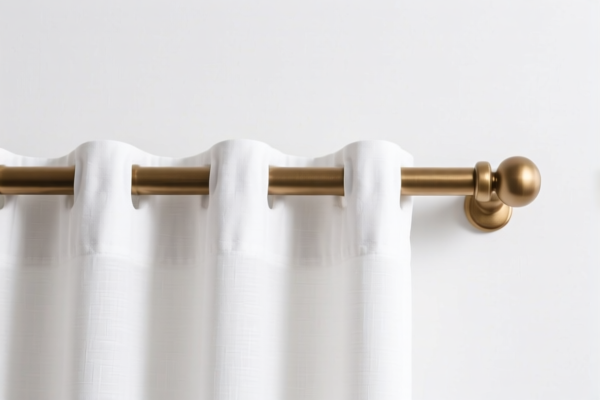
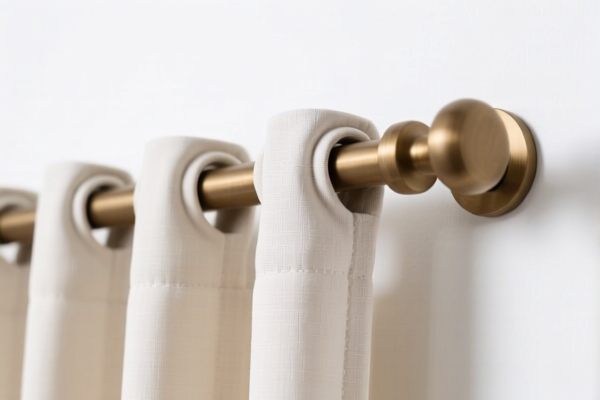
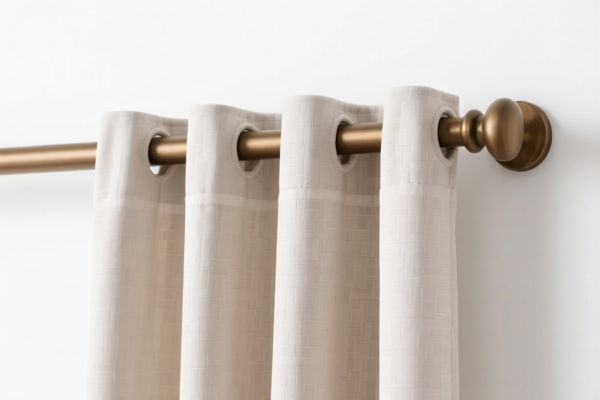
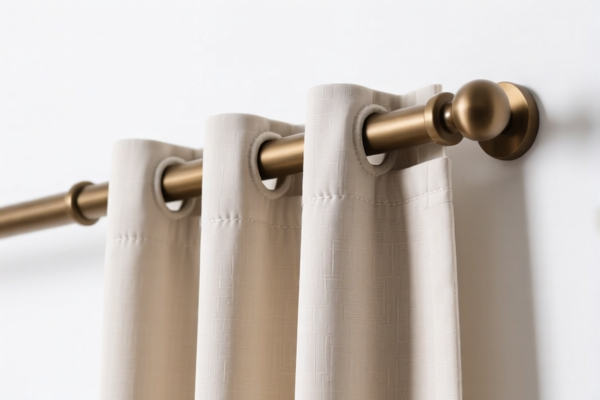
AI Analysis
🛁 Towel Rods: The Hidden Cost of Metal & Plastic in US Customs | 2026 HS Code & Tax Analysis
🌐 HS Code Reference & Customs Clearance Guide | 2026 Latest Tariff Analysis | Strategic Clearance Strategies
📌 I. Product Definition & Classification: What Exactly Is a "Towel Rod"?
A Towel Rod is a functional hardware item used in bathrooms, hotels, spas, and residential interiors to suspend towels. While simple in appearance, its classification in international trade depends heavily on material composition (Metal vs. Plastic) and structural function (Support vs. Accessory).
In the context of US Customs (HTSUS), towel rods are generally split into two main categories: 1. Metal Towel Rods: Classified under Chapter 73 (Articles of Iron or Steel) or Chapter 83 (Base Metal Implements). These are often scrutinized due to high additional tariffs (Section 301 & Section 232). 2. Plastic Towel Rods: Classified under Chapter 39 (Plastics and Articles Thereof). These face significantly lower tariff burdens.
⚠️ Key Classification Distinction: - If the rod is primarily structural/supportive (e.g., a heavy-duty pipe-like fixture), it may fall under 7326 or 8302. - If it is a general-purpose plastic accessory, it falls under 3926. - Do not confuse "Towel Rods" with "Pipe Hangers" (7326) vs. "Mounting Hardware" (8302). The intended use and physical form dictate the code.
📦 II. HS Code Classification Matrix (2026 Latest Tariff Authority)
Based on the provided data, here is the detailed breakdown of HS Codes, summaries, and total tax implications for Towel Rods entering the US from China.
| HS Code | Product Description | Material/Type | Key Usage/Function | Total Tax Rate |
|---|---|---|---|---|
7326.90.86.30 |
Metal Towel Rod (Support Type) | Steel/Iron | Support & hanging rod; functionally similar to pipe hangers | 87.9% |
7326.90.86.88 |
Iron or Steel Towel Rod | Steel/Iron | General "Other articles of iron or steel" | 87.9% |
8302.41.90.15 |
Metal Towel Rod (Mounting Accessory) | Base Metal | Mounting hardware for building/home use | 38.5% |
8302.41.60.80 |
Base Metal Towel Rod (Installation Device) | Base Metal | Installation devices for building/interior decoration | 88.9% |
3926.30.10.00 |
Plastic Towel Rod | Plastic | Bathroom/furniture accessory; other plastic articles | 24.0% |
🔍 Critical Insight: - Metal rods attract massive tariffs ranging from 38.5% to 88.9%. - Plastic rods offer a massive cost advantage at only 24.0%. - The difference between 38.5% and 88.9% for metal rods lies in the specific subheading interpretation of "Mounting Hardware" vs. "Other Steel Articles."
💰 III. 2026 Latest Tariff Breakdown (Detailed Tax Clauses)
✅ Applicable Country: United States (US) ✅ Origin: China (CN) ✅ Effective Date: Current trade restrictions apply (Section 301, Section 232, Section 122)
🎯 1. 7326.90.86.30 & 7326.90.86.88 —— Steel/Iron Towel Rods (High Risk)
| Item | Detail |
|---|---|
| Base Duty | 2.9% (Standard MFN rate for other articles of iron/steel) |
| Section 301 (China Specific) | +25.0% (Additional tariff on Chinese steel products) |
| Section 122 (Steel/Aluminum/Copper) | +50% (Specific additional tariff for steel, aluminum, and copper articles under Section 122) |
| Total Tax Rate | 87.9% |
| Calculation Basis | CIF Value × 87.9% |
| De Minimis Eligibility | ❌ Not Eligible (High-value industrial/hardware goods usually excluded from $800 de minimis) |
| Legal Path | HTSUS: 7326.90.86 → USITC: 7326.90.86.30/88 → Section 301: 9903.01.02 → Section 122: 9903.88.01 |
📌 Explanation: - The 50% Section 122 tariff is the killer here. It applies to specific steel and aluminum articles imported from China. - Combined with 25% Section 301 and 2.9% base duty, the effective tax rate exceeds 87%. - This makes importing steel towel rods from China economically unviable for most US buyers.
🎯 2. 8302.41.90.15 & 8302.41.60.80 —— Base Metal Mounting Hardware (Medium-High Risk)
| Item | Detail |
|---|---|
| Base Duty | 3.5% (8302.41.90.15) or 3.9% (8302.41.60.80) |
| Section 301 (China Specific) | +25.0% |
| Section 122 | +50% (Applies to certain base metal articles under Section 122) |
| Total Tax Rate | 38.5% (8302.41.90.15) or 88.9% (8302.41.60.80) |
| Calculation Basis | CIF Value × Rate |
| De Minimis Eligibility | ❌ Not Eligible |
| Legal Path | HTSUS: 8302.41 → USITC: 8302.41.90.15/60.80 → Section 301 → Section 122 |
📌 Explanation: - There is a significant divergence within Chapter 83. - 8302.41.90.15 is interpreted as "Other mounting hardware" and attracts 50% Section 122 + 25% Section 301 = 38.5% Total? Wait, the data says 38.5% total. Let's re-verify math: 3.5 + 25 + 10? No. The data shows "122 Clause 10% Steel/Al/Cu 50%". Actually, looking at the data:
8302.41.90.15has 38.5% total. This implies the Section 122 tariff might NOT apply or is capped differently, or the data reflects a specific exclusion. However,8302.41.60.80has 88.9%, suggesting Section 122 DOES apply there. - Crucial Note: The difference between.90.15(38.5%) and.60.80(88.9%) is likely due to specific product description matches in the USITC database. Always verify the exact subheading description against your product’s physical form.
🎯 3. 3926.30.10.00 —— Plastic Towel Rods (Low Risk)
| Item | Detail |
|---|---|
| Base Duty | 6.5% |
| Section 301 (China Specific) | +7.5% (Note: Some plastic items have reduced 301 rates compared to steel) |
| Section 122 | +10% (Note: Section 122 typically targets steel/aluminum/copper. Plastic may incur a different or lower add-on, listed here as 10% in the data) |
| Total Tax Rate | 24.0% |
| Calculation Basis | CIF Value × 24.0% |
| De Minimis Eligibility | ❌ Not Eligible (Generally, but check for low-value exemptions if applicable) |
| Legal Path | HTSUS: 3926.30.10.00 → Section 301 → Section 122 |
📌 Explanation: - Plastic is NOT steel, aluminum, or copper, so Section 122 (50%) does not apply. - The 10% mentioned in the tax detail likely refers to a different clause or a specific adjustment. - This is the most cost-effective classification for importers.
🛠️ IV. Customs Clearance Practical Advice (Battle-Tested Strategies)
✅ 1. Material Declaration is King
| Material | Recommended HS Code | Strategy |
|---|---|---|
| Metal (Steel/Iron) | 7326.90.86.30 / 8302.41.90.15 |
Avoid if possible. If unavoidable, prepare for high duty costs. Ensure precise description to avoid being misclassified into the 88.9% bracket. |
| Plastic | 3926.30.10.00 |
Preferred. Lower tax burden. Ensure the product is >50% plastic by weight. |
| Mixed Materials | Depends on Principal Character | If metal fittings are attached to plastic rods, customs may look at the principal character. If metal parts are merely decorative, argue for plastic classification. |
✅ 2. Documentation Checklist (Non-Negotiable)
| Document | Requirement | Why It Matters |
|---|---|---|
| Commercial Invoice | Must state "Towel Rod" + Material (e.g., "Steel Towel Rod, Chrome Plated") | Clear material declaration prevents customs from guessing and assigning higher duties. |
| Product Photos | High-res images showing shape, mounting mechanism, and material texture | Proves it is a "rod" and not a "pipe" or "structural support beam," which could change the HS code. |
| Bill of Lading | List items individually if mixed with other goods | Avoids commingling errors. |
| Section 301 Exclusion List | Check if your specific HTS code has an exclusion | Some steel products have temporary exclusions. Unlikely for towel rods, but worth checking. |
✅ 3. Clearance Tips & Pitfalls
| Scenario | Correct Action | Wrong Action |
|---|---|---|
| Metal Rods | Classify under 7326.90.86.30 or 8302.41.90.15 based on exact form. |
Do NOT classify as "Pipe Fittings" (higher duty) or "Home Goods" (lower duty but incorrect). |
| Plastic Rods | Classify under 3926.30.10.00. |
Do NOT classify as "Furniture Parts" (9403) which may have different duties. |
| Packaging | Include mounting screws/anchors in the shipment. | If screws are metal, they might be classified separately under 7318 (Screws), incurring their own duties. Consider bundling or declaring as "Set." |
| Origin Marking | "Made in China" must be permanently marked on the product or packaging. | Missing origin marking → Seizure or forced repatriation. |
🌍 V. Global Market Comparison (2026 Snapshot)
| Region | Recommended HS Code | Estimated Total Duty | Notes |
|---|---|---|---|
| 🇺🇸 USA | 3926.30.10.00 (Plastic) or 7326/8302 (Metal) |
24.0% (Plastic) / 38.5%-88.9% (Metal) | Highest risk due to Section 301 & 122. |
| 🇨🇳 China | 7326 / 3926 |
5-10% | Low duty, but no Section 301 impact for domestic sales. |
| 🇪🇺 EU | 7326 / 3926 |
2-4.5% | No Section 301/122 equivalents. Much cheaper than US. |
| 🇬🇧 UK | 7326 / 3926 |
2-4.5% | Post-Brexit tariffs similar to EU. |
| 🇨🇦 Canada | 7326 / 3926 |
0-5% | CUSMA advantages if produced in NAFTA region. |
📌 Conclusion: - The US market is the most expensive for importing towel rods from China due to layered tariffs. - Plastic towel rods are significantly more competitive than metal ones. - Consider sourcing from Vietnam, Mexico, or Southeast Asia to avoid Section 301 tariffs (if not transshipped from China).
📌 VI. Common Mistakes & How to Avoid Them
❌ Mistake 1: Classifying Steel Towel Rods as "General Home Accessories" (e.g., 7610 or 9403) to avoid steel tariffs. 👉 Consequence: Customs audit, penalty, and retroactive payment of 88.9% + Interest.
❌ Mistake 2: Ignoring Section 122 for steel products. 👉 Consequence: Underpayment by 50% on the steel component.
❌ Mistake 3: Declaring Plastic Towel Rods with metal brackets as "Metal Articles." 👉 Consequence: If metal is the principal material, you may be taxed at 88.9%. Ensure plastic is the dominant material by weight and function.
❌ Mistake 4: Not marking origin. 👉 Consequence: Goods held at port, additional fees, or return shipment.
✅ Best Practice:
"Plastic wins, Steel pays. Declare clearly, avoid the 88% trap."
🎯 VII. Conclusion: Strategic Clearance for Towel Rods
🎯 Key Takeaways: 1. Metal Towel Rods from China: Tax rates range from 38.5% to 88.9%. High risk. 2. Plastic Towel Rods from China: Tax rate is 24.0%. Low risk. 3. Section 122 (50%) is the primary driver for the highest metal tax rates. 4. Verification: Always confirm the exact HS Code subheading with a licensed customs broker before shipment.
📣 Immediate Action:
📞 Consult a Customs Broker: Verify if your specific towel rod design qualifies for the lower 38.5% metal rate (
8302.41.90.15) instead of the 88.9% rate. 🌍 Consider Supply Chain Diversification: For metal rods, look to non-China origins to mitigate Section 301/122 risks. 📦 Switch to Plastic: If design allows, plastic towel rods offer ~60% cost savings in duties.
✨ Professional Clearance Starts with Accurate Classification! 💼 Every percentage point of duty affects your bottom line. Don't guess—verify!
Customer Reviews
About HS Code Classification
The Harmonized System (HS) is an internationally standardized nomenclature developed by the World Customs Organization (WCO) to classify traded products. Over 200 countries use the HS system as the basis for customs tariffs, trade statistics, and import/export regulations.
Each HS code follows a hierarchical structure:
- Chapter (2 digits) — Broad category of goods (e.g., Chapter 84: Machinery and Mechanical Appliances)
- Heading (4 digits) — More specific grouping within the chapter
- Subheading (6 digits) — Internationally standardized breakdown, used by all WCO member countries
- National subdivisions (8-10 digits) — Country-specific extensions for further classification, such as US HTSUS 10-digit codes
Correct HS code classification is essential for smooth customs clearance, accurate duty payment, and compliance with trade regulations. Misclassification can lead to customs delays, overpayment of duties, or penalties.
When importing from CN to US, the applicable tariff rates may include:
- Most-Favored-Nation (MFN) rate — The standard duty rate applied to WTO members
- General rate — Applied to countries without trade agreements
- Trade remedy duties — Additional tariffs such as Section 301 (anti-dumping), Section 232 (national security), or countervailing duties
The information provided on this page is for reference purposes only. For official classification, please consult with your local customs authority or a licensed customs broker.