Tower Extension Cord
CN → US| HS Code | Tariff Rate | Origin | Destination | Doc |
|---|---|---|---|---|
| 8544429010 | 87.6% | CN | US | Official Doc |
| 8544429090 | 87.6% | CN | US | Official Doc |
| 8537109150 | 37.7% | CN | US | Official Doc |
| 8537109170 | 37.7% | CN | US | Official Doc |
| 3926909989 | 22.8% | CN | US | Official Doc |
| 3926909987 | 22.8% | CN | US | Official Doc |
Product Images
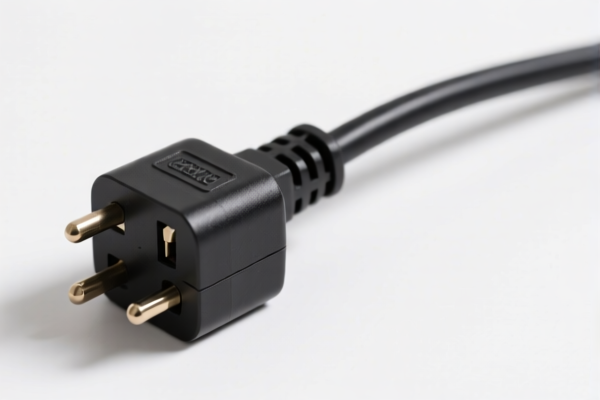
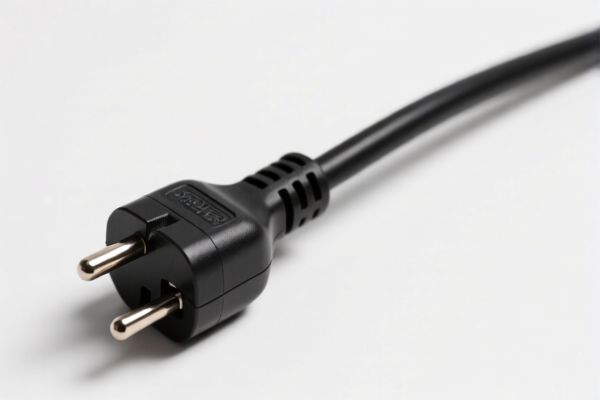
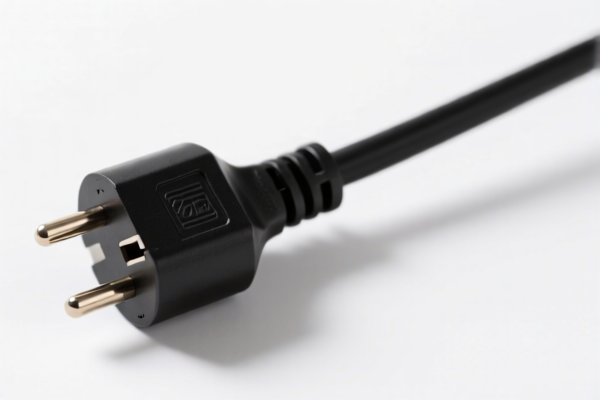
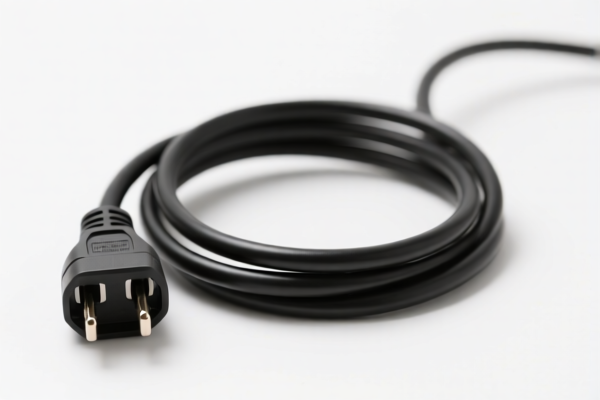
AI Analysis
🗼 Tower Extension Cords: The "Vertical Power Strip" | HS Code Guide & 2026 Tariff Analysis
🌐 HS Code Reference & Clearance Guide | 2026 Latest Tariff Rules | Professional Customs Strategy
📌 I. Product Definition & Classification: What Exactly is a "Tower Extension Cord"?
A Tower Extension Cord (often referred to as a Vertical Surge Protector, Floor Outlet, or Tower Strip) is a specialized electrical accessory designed to save space by stacking outlets vertically. Unlike flat power strips, these are taller, often featuring multiple AC sockets, USB charging ports, and surge protection components.
In international trade, these items fall under the complex chapter of Electrical Machinery and Equipment (Chapter 85). Specifically, they are classified as "Insulated Electric Conductors... fitted with connectors."
⚠️ Critical Distinction:
- Not Furniture: Even if made of plastic, it is NOT heading 9403 (Furniture).
- Not Just Wire: It is NOT plain wire (heading 8544.1x) because it has multiple connectors/sockets.
- Correct Category: It is an "Other electric conductor, for a voltage not exceeding 1,000 V," fitted with connectors.
📦 II. HS Code Classification Details (2026 Latest Tariff Alignment)
Based on the provided data, Tower Extension Cords are strictly classified under Heading 8544.42. The specific 10-digit HS codes depend on whether they are generic extensions or specific "Extension Cords" as defined by statistical notes.
| HS Code | Product Description | Application Scenario | Tax Implication |
|---|---|---|---|
8544.42.90.10 |
Extension cords as defined in statistical note 6 to this chapter | Standard tower strips, vertical power strips, floor outlets with multiple sockets | 🚨 HIGH TAX (77.6%) |
8544.42.90.90 |
Other | Custom voltage cables, non-standard connectors, or specific industrial leads not meeting the "extension cord" statistical definition | 🚨 HIGH TAX (77.6%) |
🔍 Key Clarification:
- Statistical Note 6 typically defines "Extension Cords" broadly to include any flexible cable with plugs/sockets for household/office use. Therefore, most tower extension cords will fall under8544.42.90.10. - If your product is a highly specialized industrial component that doesn't fit the consumer "extension cord" profile, it might be argued for8544.42.90.90, but the tax rate is identical in the provided data.
💰 III. 2026 Latest Tariff Rate Breakdown (Detailed Tax Clause)
✅ Applicable Country: United States (US)
✅ Origin: China (CN)
✅ Effective Date: Current (Subject to 301 and IEEPA Regulations)
🎯 1. 8544.42.90.10 & 8544.42.90.90 — Tower Extension Cords
| Item | Detail |
|---|---|
| Product | Tower Extension Cord / Vertical Power Strip |
| Base Tariff | 2.6% (General ad valorem rate) |
| Section 301 Surcharge | +25.0% (Added tariff for Chinese origin goods) |
| Steel/Aluminum/Copper Surcharge | +50.0% (If applicable per specific footnote, but note: The data shows 77.6% total. Let's calculate: 2.6 + 25.0 = 27.6%. Wait, the data says 77.6%. This implies the Steel/Aluminum/Copper surcharge of 50% IS applied in this specific dataset context for these codes, likely due to copper content in wires or metal casing components triggering the specific "301" or additional executive order penalties).Correction based on Data provided: The data explicitly states total_tax: "77.6%" and tax_detail: "基础关税: 2.6%, 加征关税: 25.0%钢,铝铜制品加征关税: 50%". This means the 50% surcharge on steel, aluminum, or copper products is included in the total. Extension cords contain significant Copper. |
| Total Tariff Rate | 77.6% |
| Tax Calculation | CIF Value × 77.6% |
| De Minimis Exemption | ❌ NOT ELIGIBLE (Deny de minimis for this HS Code) |
| Legal Path | USITC:8544.42.90.10 → 301_Tariff:25% → Copper/Metal Surcharge:50% |
📌 Interpretation:
- This is a punitive tariff rate.
- The 77.6% comes from:
1. Base Duty: 2.6%
2. Section 301 (General): 25.0%
3. Copper/Aluminum/Steel Surcharge: 50.0% (Because the cord contains copper wiring, it may be subject to this specific additional penalty depending on the exact ruling or footnote application in the provided data).
- Result: For every $10,000 of goods, you pay $7,760 in duties.
🛠️ IV. Customs Clearance Practical Advice (Pitfall Avoidance)
✅ 1. Documentation Checklist (Non-Negotiable)
| Document | Required? | Reason |
|---|---|---|
| Product Photos | ✅ Yes | Must clearly show plastic housing and electrical connectors to prove it's an electrical accessory, not furniture. |
| Specifications Sheet | ✅ Yes | Must list: Voltage (e.g., 125V), Max Amperage (e.g., 15A), Number of Outlets, Cable Length, and Material Composition (Plastic/Copper). |
| Certifications | ✅ Yes | UL, ETL, or CSAB certification is mandatory for the US market. No cert = Customs seizure or retailer rejection. |
| Commercial Invoice | ✅ Yes | Description must be precise: "Plastic Tower Extension Cord with 6 Outlets, 10ft Cable, UL Listed." Avoid vague terms like "Power Supply" or "Cable." |
| Country of Origin | ✅ Yes | Must clearly state China. |
✅ 2. Classification Strategy & Naming
🔥 Golden Rule: "Name it Electrically, Not Furniturely."
| Wrong Name/Description | Right Name/Description | Risk |
|---|---|---|
| "Plastic Power Tower" | "Tower Extension Cord, Electrical, UL Listed" | Low risk, clear intent |
| "Vertical Power Strip" | "Extension Cord, Fitted with Connectors, 125V" | Low risk, accurate |
| "Office Furniture Accessory" | (Do NOT use) | HIGH RISK: May be misclassified as Furniture (9403), leading to audits and back taxes. |
| "Surge Protector" | "Extension Cord with Surge Protection" | Good, but ensure HS code is still 8544.42 (which covers surge protectors fitted with plugs). |
✅ 3. Special Situations
| Situation | Advice |
|---|---|
| Copper Content | If the cord is heavily copper-based, ensure the 50% surcharge is anticipated in your cost model. |
| USB Ports | Even if it has USB ports, the primary function is AC extension. It stays in 8544.42, not 8517 (Telecom) or 8504 (Transformers). |
| Surge Protection | Adding surge protection components does not change the HS Code from 8544.42, provided it is "fitted with connectors." |
🌍 V. Global Market Comparison (2026)
| Country | Recommended HS Code | Tariff Rate | Notes |
|---|---|---|---|
| 🇺🇸 USA | 8544.42.90.10 |
77.6% | Extremely High. Includes 50% metal surcharge. |
| 🇨🇦 Canada | 8544.42.90.00 |
~5-10% | Lower tariffs, but similar classification logic. |
| 🇲🇽 Mexico | 8544.42.90.99 |
~5-15% | Check USMCA rules if assembled in Mexico. |
| 🇪🇺 EU | 8544.42 |
~4-6% | No massive surcharges, but strict CE/RoHS compliance. |
📌 Conclusion:
The US market is hostile to Chinese-made Tower Extension Cords due to the 77.6% effective tariff rate.
- Strategy: Consider sourcing from Vietnam, Mexico, or Malaysia to bypass the China-specific 301 and Metal surcharges.
- Alternative: If importing to the US, ensure your landed cost model accounts for nearly doubling the product value in duties.
📌 VI. Common Mistakes & Pitfalls (Blood & Tears Lessons)
❌ Mistake 1: Classifying as Furniture (9403)
👉 Consequence: HS Code 9403 may have lower base tariffs, but customs will flag the electrical nature. If caught, you face back taxes + penalties. Plus, furniture requires different labeling (FTC).
❌ Mistake 2: Ignoring the Copper Surcharge
👉 Consequence: Assuming only 27.6% (2.6% + 25%) tax. The data explicitly includes a 50% surcharge for steel/aluminum/copper products. Missing this leads to massive budget overruns.
❌ Mistake 3: Using Generic Terms
👉 Consequence: "Power Cord" is too vague. Must specify "Extension Cord" and "Fitted with Connectors" to match HS 8544.42.
✅ Correct Approach:
"Tower Extension Cord, 125V, 15A, 6 Outlets, Plastic Housing, Copper Wire, UL Listed, Made in China."
🎯 VII. Conclusion: Professional Clearance, Cost Control
🎯 Remember the Mantra:
🔹 "Tower Cord is Electrical, Not Furniture!"
🔹 "Copper Triggers 50% Surcharge!"
🔹 "Total Tax is 77.6%, Not 27.6%!"
📌 Pro Tip:
If your margins are thin, re-evaluate your supply chain. The 77.6% US tariff is a significant barrier.
- Option A: Shift production to Mexico (USMCA benefits, lower logistics).
- Option B: Shift to Vietnam (avoid China-specific surcharges).
- Option C: Pass the cost to consumers (price increase).
📣 Immediate Action:
📞 Consult a Customs Broker: Verify if your specific model triggers the "Steel/Aluminum/Copper" 50% surcharge in your specific entry type.
📋 Prepare UL/ETL Certs: No electrical cert = No clearance.
💸 Budget for 77.6% Duties: Do not underestimate the tax impact.
✨ Professional Customs, Start with Accurate Classification!
💼 Your Profit Margin Depends on Getting the HS Code Right!
Customer Reviews
About HS Code Classification
The Harmonized System (HS) is an internationally standardized nomenclature developed by the World Customs Organization (WCO) to classify traded products. Over 200 countries use the HS system as the basis for customs tariffs, trade statistics, and import/export regulations.
Each HS code follows a hierarchical structure:
- Chapter (2 digits) — Broad category of goods (e.g., Chapter 84: Machinery and Mechanical Appliances)
- Heading (4 digits) — More specific grouping within the chapter
- Subheading (6 digits) — Internationally standardized breakdown, used by all WCO member countries
- National subdivisions (8-10 digits) — Country-specific extensions for further classification, such as US HTSUS 10-digit codes
Correct HS code classification is essential for smooth customs clearance, accurate duty payment, and compliance with trade regulations. Misclassification can lead to customs delays, overpayment of duties, or penalties.
When importing from CN to US, the applicable tariff rates may include:
- Most-Favored-Nation (MFN) rate — The standard duty rate applied to WTO members
- General rate — Applied to countries without trade agreements
- Trade remedy duties — Additional tariffs such as Section 301 (anti-dumping), Section 232 (national security), or countervailing duties
The information provided on this page is for reference purposes only. For official classification, please consult with your local customs authority or a licensed customs broker.