Toy Airplane
CN → US| HS Code | Tariff Rate | Origin | Destination | Doc |
|---|---|---|---|---|
| 9503000071 | 10.0% | CN | US | Official Doc |
| 9504909080 | 17.5% | CN | US | Official Doc |
| 9503000073 | 10.0% | CN | US | Official Doc |
| 3926400090 | 15.3% | CN | US | Official Doc |
| 9503000071 | 10.0% | CN | US | Official Doc |
Product Images
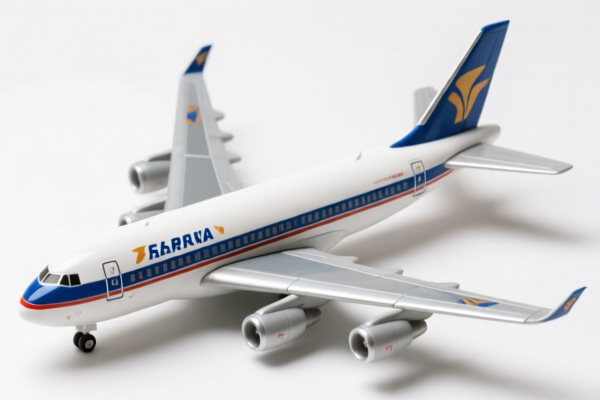
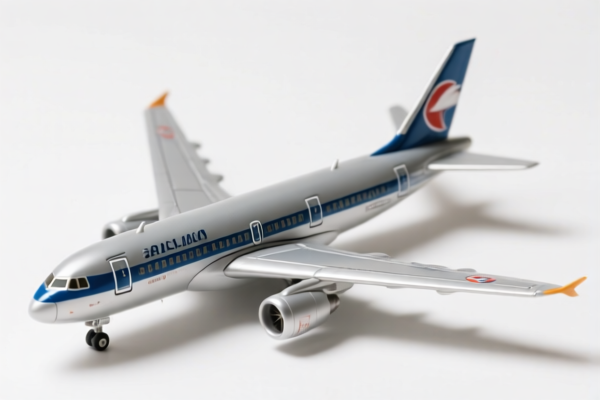
AI Analysis
🛩️ Toy Airplane (Playground & Model Aircraft)
🌐 HS Code Reference & Clearance Guide | 2026 Updated Tax Regime | Strategic Customs Strategy
📌 I. Product Definition & Classification: Do You Really Know "Toy Airplane"?
A Toy Airplane is a recreational item designed primarily for children's play, model assembly, or simulated aviation entertainment. It is not a real aircraft or a military drone. In international trade, its classification depends heavily on its material composition, functionality, and structural design.
Key Classification Distinctions:
- Pure Toy Category: If the item is designed solely for play (e.g., plastic gliders, action figures, simple发射ers), it falls under Heading 9503 ("Toys").
- Model/Decoration Category: If it is a detailed scale model intended for display or hobbyist assembly (similar to "models of all kinds"), it may fall under 9503.00 sub-ranges or be treated as a decorative item.
- Plastic Component Category: If the item is classified as a plastic part or a non-specific decorative plastic article without a primary "toy" function in the eyes of customs, it may fall under Heading 3926.
⚠️ Critical Distinction: * "Toy" vs. "Model": If the item is marketed as a "flight toy" with moving parts (e.g., launchers, spinning blades), it leans toward 9503. * "Launcher" Specifics: If the product is specifically an "Airplane Launcher" (a device to throw/fly the plane), it can be classified as a Toy Accessory (9503) OR as a General Game/Toy Part (9504) depending on its specific mechanical nature. * "Plastic" vs. "Toy": If the item is a simple plastic piece used for decoration or general play without distinct "toy" features, it risks being classified as Plastics (3926).
📦 II. HS Code Classification Details (2026 Updated Regime)
Based on the provided data, here are the four possible classifications for a Toy Airplane (specifically focusing on the "Launcher/Emmitter" component described in your data).
| HS Code | Product Description | Usage Scenario | Tax Rate (Total) |
|---|---|---|---|
9503.00.00.71 |
Toy Airplane Launcher (Classified as "Toys & Parts") |
General play, children's launchers, standard toy accessories. | 10.0% |
9504.90.90.80 |
Toy Airplane Launcher (Classified as "Other Game/Entertainment") |
Non-specific entertainment devices, general recreational gear. | 17.5% |
9503.00.00.73 |
Toy Airplane Launcher (Classified as "Similar Entertainment Models") |
Scale models, hobbyist models, similar entertainment toys. | 10.0% |
3926.40.00.90 |
Toy Airplane Launcher (Classified as "Plastic Articles") |
Decorative plastic items, general plastic parts with no specific toy function. | 15.3% |
🔍 Key Insight: * The
9503codes are generally the most accurate for "Toy" items, offering the lowest tax (10.0%). * The9504code is for "other games," resulting in a higher tax (17.5%). * The3926code treats the item as a plastic part, adding a base tariff of 5.3% on top of the 10% Section 122 tax, leading to a total of 15.3%.
💰 III. 2026 Tax Rate Breakdown (Including Surtaxes & Policy Additions)
✅ Applicable Country: USA (US)
✅ Origin: China (CN)
✅ Effective Date: Based on current 122% (Section 122) and USITC rules.
🎯 1. 9503.00.00.71 & 9503.00.00.73 — The "Toy" Category (Low Tax Strategy)
| Item | Content |
|---|---|
| Base Tariff | 0.0% (Ad valorem, Duty-free for Toys under normal conditions) |
| Section 301 / USITC Surcharge | 0.0% (No additional 301 tariff applied to these specific sub-codes) |
| Section 122 Tariff | +10.0% (Specific tariff on "Toys" from China) |
| Total Tax Rate | 10.0% |
| Tax Calculation | CIF Value × 10% |
| Legal Basis Path | Section 122 (Specific Toy Tariff) → 9503.00 |
📌 Explanation: * This is the most favorable classification for Toy Airplanes. * It relies on the definition that the item is a "Toy" (Heading 9503). * It avoids the Section 301 (301) surcharges often found in other categories, paying only the specific 122% Section 10% tariff.
🎯 2. 9504.90.90.80 — The "Game/Entertainment" Category (High Tax Risk)
| Item | Content |
|---|---|
| Base Tariff | 0.0% |
| Section 301 / USITC Surcharge | +7.5% (Specific surcharge for "Other Games") |
| Section 122 Tariff | +10.0% |
| Total Tax Rate | 17.5% |
| Tax Calculation | CIF Value × 17.5% |
| Legal Basis Path | Section 301 (USITC Footnote) → Section 122 → 9504.90 |
📌 Explanation: * This classification applies if the item is deemed a "General Game" rather than a "Toy" or "Model." * It attracts an extra 7.5% surcharge on top of the 10% Section 122 tax. * Avoid this if your product is clearly a toy, unless you are certain it fits the "game" definition better.
🎯 3. 3926.40.00.90 — The "Plastic Article" Category (Medium Tax)
| Item | Content |
|---|---|
| Base Tariff | 5.3% (Standard duty for plastic articles) |
| Section 301 / USITC Surcharge | 0.0% (No additional 301 surcharge for this specific code) |
| Section 122 Tariff | +10.0% |
| Total Tax Rate | 15.3% |
| Tax Calculation | CIF Value × 15.3% |
| Legal Basis Path | 3926.40 (Plastic Articles) → Section 122 |
📌 Explanation: * This is a "fallback" classification if the item is considered a plastic part rather than a finished toy. * It incurs a 5.3% base tariff which the
9503codes do not have. * While it avoids the 7.5% surcharge of9504, it is still 5.3% more expensive than the9503toy category.
🛠️ IV. Clearance Practical Advice (Actionable Tips)
✅ 1. Preparation Checklist (Must-Have Documents)
| Document | Requirement | Why It Matters |
|---|---|---|
| ✅ Product Spec Sheet | ✔️ | Must explicitly state "Toy," "Plastic," and "For Children." |
| ✅ Design Photos (360°) | ✔️ | Must show no "real" aircraft features (no engines, no navigation lights). |
| ✅ Function Description | ✔️ | Explain the "Launcher" mechanism clearly (e.g., "Rubber band launcher"). |
| ✅ Safety Certification | ✔️ | ASTM F963 (US) or CPSC registration is mandatory for toys. |
| ✅ Packing List | ✔️ | Confirm if the "launcher" is sold separately or with the plane. |
✅ 2. Declaration Strategy (The "Golden Rule")
🔥 "Define as Toy, Not Plastic, Not Game"
| Situation | Recommended HS Code | Why? |
|---|---|---|
| Toy Airplane with Launcher | 9503.00.00.71 |
Lowest Tax (10%) It is clearly a "Toy & Parts." |
| Detailed Scale Model Plane | 9503.00.00.73 |
Lowest Tax (10%) It is an "Entertainment Model." |
| Generic Plastic Toy Part | Avoid 3926.40.00.90 |
Higher Tax (15.3%) Only use if the item is not a toy (e.g., a plastic decoration). |
| Game-like Device | Avoid 9504.90.90.80 |
Highest Tax (17.5%) Only use if it's a "game" not a "toy." |
✅ 3. Special Handling for "Launchers"
| Scenario | Advice |
|---|---|
| Launcher Sold Separately | If the launcher is sold without the airplane, declare it as "Toy Parts" under 9503.00.00.71 or 9503.00.00.73. |
| Launcher with Plane | Declare as a single unit (Complete Toy) under 9503.00.00.71. Do not split into "Plastic Part" and "Toy." |
| No Battery/Electronics | Ensure no electronic components are present. If present, it might shift to Electronics classification (different HS Code). |
🌍 V. Global Market Comparison (2026)
| Country | Recommended HS Code | Total Tax (China Origin) | Notes |
|---|---|---|---|
| 🇺🇸 USA | 9503.00.00.71 |
10.0% | Best to use 9503 to avoid 9504 surcharges. |
| 🇨🇳 China | 9503.00.00.71 |
0% | Domestic toys are generally duty-free. |
| 🇪🇺 EU | 9503.00.00 |
0% | No Section 122 tax; standard duty is 0%. |
| 🇯🇵 Japan | 9503.00.00 |
0% | No additional surcharges for toys. |
📌 Conclusion: * USA is the only market with significant Section 122 taxes (10% + 7.5% for games). * Always declare as
9503(Toy) to minimize costs in the US. * Avoid9504unless the product is strictly a "game" and not a "toy."
📌 VI. Common Mistakes & Pitfalls
❌ Mistake 1: Declaring a Toy Airplane as a "Plastic Toy" (3926)
👉 Result: Paying an extra 5.3% base tariff unnecessarily.
✅ Fix: Declare as 9503.00.00.71 to get 0% base duty.
❌ Mistake 2: Declaring a Toy as a "Game" (9504)
👉 Result: Paying an extra 7.5% surcharge (Total 17.5% vs 10%).
✅ Fix: Ensure marketing materials clearly state "Toy" not "Game."
❌ Mistake 3: Failing to provide Safety Certs for Toys in the US
👉 Result: Detention at Customs or Return.
✅ Fix: Include ASTM F963 or CPSC compliance documents.
🎯 VII. Final Verdict: Professional Clearance Strategy
🎯 Key Takeaway:
🔹 "Toys are 10%, Games are 17.5%, Plastic Parts are 15.3%"
🔹 "The 122% Section Tax applies to ALL, but the Base Duty varies."
🔹 "Declare as9503for the lowest cost!"
📌 Pro Tip: If your product is a Launcher, ensure the description includes "Plastic Toy Launcher" or "Toy Accessory". Avoid generic terms like "Plastic Device" or "Game Equipment."
📣 Immediate Action:
📞 Contact your Customs Broker with the HS Code
9503.00.00.71.
🚀 Apply for Pre-Ruling if you are unsure about the "Toy" vs. "Game" distinction.
💰 Save 7.5% by avoiding the9504classification.
✨ Professional Clearance Starts with the Right Code!
💼 Your profit margin depends on your HS Code accuracy!
Customer Reviews
About HS Code Classification
The Harmonized System (HS) is an internationally standardized nomenclature developed by the World Customs Organization (WCO) to classify traded products. Over 200 countries use the HS system as the basis for customs tariffs, trade statistics, and import/export regulations.
Each HS code follows a hierarchical structure:
- Chapter (2 digits) — Broad category of goods (e.g., Chapter 84: Machinery and Mechanical Appliances)
- Heading (4 digits) — More specific grouping within the chapter
- Subheading (6 digits) — Internationally standardized breakdown, used by all WCO member countries
- National subdivisions (8-10 digits) — Country-specific extensions for further classification, such as US HTSUS 10-digit codes
Correct HS code classification is essential for smooth customs clearance, accurate duty payment, and compliance with trade regulations. Misclassification can lead to customs delays, overpayment of duties, or penalties.
When importing from CN to US, the applicable tariff rates may include:
- Most-Favored-Nation (MFN) rate — The standard duty rate applied to WTO members
- General rate — Applied to countries without trade agreements
- Trade remedy duties — Additional tariffs such as Section 301 (anti-dumping), Section 232 (national security), or countervailing duties
The information provided on this page is for reference purposes only. For official classification, please consult with your local customs authority or a licensed customs broker.