Toy Barrier Strip
CN → US| HS Code | Tariff Rate | Origin | Destination | Doc |
|---|---|---|---|---|
| 9503000073 | 10.0% | CN | US | Official Doc |
| 9503000071 | 10.0% | CN | US | Official Doc |
| 3926909989 | 22.8% | CN | US | Official Doc |
| 3926909940 | 22.8% | CN | US | Official Doc |
| 95030090 | 0.0% | CN | US | Official Doc |
| 39269090 | 0.0% | CN | US | Official Doc |
Product Images
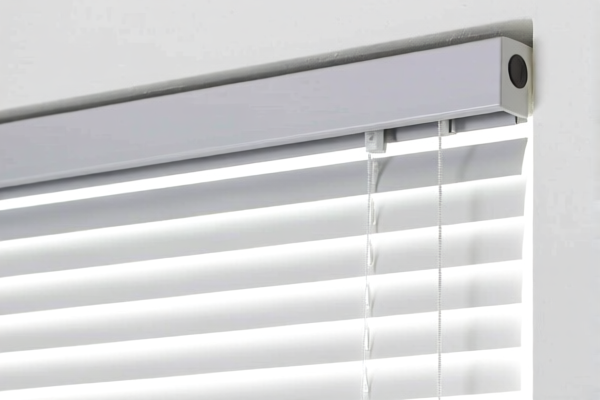
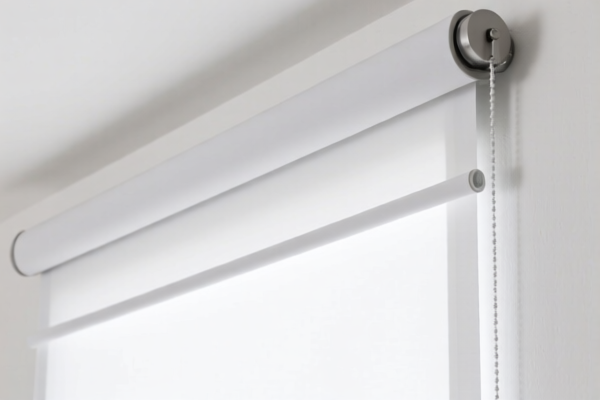
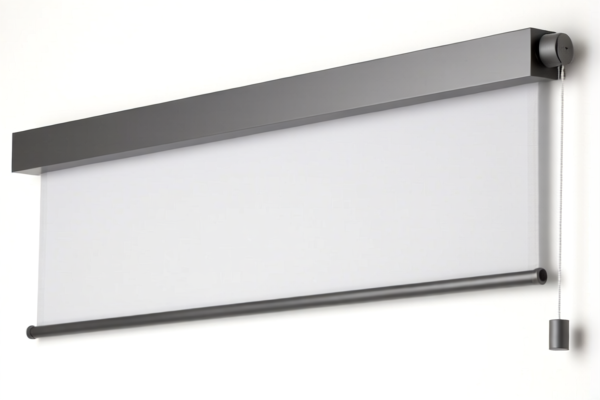
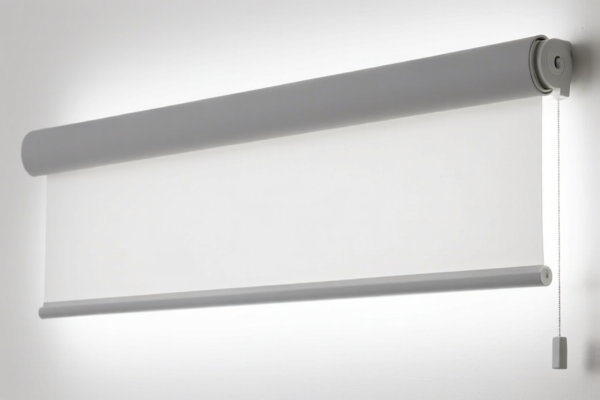
AI Analysis
🧸 Toy Barrier Strips (Children's Play Boundary Markers)
🌐 HS Code Reference & Customs Clearance Guide | 2026 Latest Tariff Analysis | Professional Compliance Strategy
📌 I. Product Definition & Classification: What Exactly Are "Toy Barrier Strips"?
Toy Barrier Strips are specialized components designed for children's play environments. They are primarily used to define boundaries, create separate play zones, or form enclosed areas within indoor or outdoor play structures. These strips are typically made of soft plastics or synthetic materials to ensure child safety while providing clear visual and physical demarcation.
In international trade, the classification depends heavily on whether the item is considered a "Toy Component" (falling under Chapter 95) or a "General Plastic Article" (falling under Chapter 39). The key distinction lies in the intended use and design specificity:
- Toy-Specific Design: If the strip is explicitly designed only for toys (e.g., interlocking parts of a play castle, boundary markers for a doll's house, or accessories for a specific toy set), it falls under Chapter 95 (Toys).
- General Utility/Component: If the strip is a generic plastic component used in various toy structures but not exclusively a "toy" itself, or if it's an integral part of a larger non-toy play structure, it may fall under Chapter 39 (Plastics).
⚠️ Key Distinction Point:
- If the product is labeled/determined as a "Children's Product" or "Toy Accessory" → Go to 9503
- If the product is a generic plastic barrier/component for play settings → Go to 3926
📦 II. HS Code Classification Details (2026 Latest Tariff Authority Comparison)
| HS Code | Product Description | Applicable Scenario | Tax Rate (China Origin to US) |
|---|---|---|---|
9503.00.00.71 |
Tricycles, scooters... other toys; dolls' carriages... parts and accessories thereof “Children’s products” as defined in 15 U.S.C. § 2052: Under 3 years of age |
Soft plastic boundary strips for toddler playpens, baby safe zones, or toys intended for infants/toddlers. | 0.0% (Base: 0.0%, Additional: 0.0%) |
9503.00.00.73 |
Tricycles, scooters... other toys; dolls' carriages... parts and accessories thereof “Children’s products” as defined in 15 U.S.C. § 2052: 3 to 12 years of age |
Plastic barrier strips for older children’s play areas, play kitchens, dollhouses, or general toy accessories for kids 3+. | 0.0% (Base: 0.0%, Additional: 0.0%) |
9503.00.90 |
Other articles of toys | General toy barrier strips not specifically covered by age brackets 71/73, or generic toy accessories. | Error (Failed to retrieve tax information; requires manual verification) |
3926.90.90 |
Plastic strips used as barriers in toys, not specifically designed as toys themselves but integral components of toy play structures | Generic plastic barriers used in play settings, not specifically designed as toys. Made of synthetic plastics. | Error (Failed to retrieve tax information; requires manual verification) |
3926.90.99.89 |
Other articles of plastics and articles of other materials of headings 3901 to 3914: Other: Other: Other | Generic plastic articles not specified elsewhere, including non-toy plastic barriers or general plastic components. | 12.8% (Base: 5.3%, Additional: 7.5%) |
3926.90.99.40 |
Other articles of plastics... Covers, rings and frames for manholes; catch basins... valve, service and meter boxes | NOT APPLICABLE – This code is for utility infrastructure covers, not toys. Do not misclassify here. | 0.0% (Base: 0.0%, Additional: 0.0%) |
🔍 Key Reminder:
- Most Toy Barrier Strips intended for children should be classified under 9503.00.00.71 or 9503.00.00.73, resulting in 0% tariffs.
- Misclassifying as a general plastic article (3926.90.99.89) incurs a 12.8% tariff.
- Codes 9503.00.90 and 3926.90.90 show "Error" in tax retrieval; use only if no other classification fits, and verify manually with customs.
💰 III. 2026 Latest Tariff Rate Breakdown (Including Additional Duties & Policy Surcharges)
✅ Applicable Country: United States (US)
✅ Origin: China (CN)
✅ Effective Time: 2026 (Current Status)
🎯 1. 9503.00.00.71 & 9503.00.00.73 – Toy Barrier Strips (Children’s Products)
| Item | Content |
|---|---|
| Base Tariff | 0% (ad valorem) |
| USITC Additional Duty | 0% (No Section 301 tariff applies to these specific toy codes) |
| IEEPA Additional Duty | 0% (No IEEPA tariff applies to these toy codes) |
| Total Tariff Rate | 0.0% |
| Tax Calculation | CIF Value × 0.0% = $0 |
| De Minimis Eligibility | ✅ Yes (Eligible for de minimis if value < $800, but even if > $800, tax is 0%) |
| Legal Basis | HTSUS:9503.00.00.71/73 |
📌 Explanation:
- Toys for children (especially those labeled for specific age groups) often enjoy 0% tariff rates under US trade policy.
- No Section 301 tariffs apply to these specific subheadings, making them highly cost-effective for importers.
- This is the recommended classification for toy barrier strips to minimize costs.
🎯 2. 3926.90.99.89 – Other Plastic Articles (Non-Toy Classification)
| Item | Content |
|---|---|
| Base Tariff | 5.3% |
| USITC Additional Duty | 7.5% (Section 301 tariff applies) |
| IEEPA Additional Duty | 0% |
| Total Tariff Rate | 12.8% |
| Tax Calculation | CIF Value × 12.8% |
| De Minimis Eligibility | ❌ No (If > $800, duty applies) |
| Legal Basis | HTSUS:3926.90.99.89 |
📌 Warning:
- If customs determines the product is not a "toy" but a general plastic article, you will face a 12.8% tariff.
- This is a significant cost increase compared to the 0% rate for toys.
- Always provide documentation proving the product is a toy or toy accessory.
🛠️ IV. Customs Clearance Practical Advice (Battle-Tested Pitfall Guide)
✅ 1. Documentation Checklist (Essential for 0% Tariff)
| Document | Must Provide | Explanation |
|---|---|---|
| ✅ Product Description | ✔️ | Clearly state: "Toy Barrier Strip for Children's Play Environment" |
| ✅ Age Intention Label | ✔️ | Proof of intended age group (Under 3 or 3-12 years) |
| ✅ Product Photos | ✔️ | Show the strip in a toy context (e.g., inside a playpen or dollhouse) |
| ✅ Composition Certificate | ✔️ | Confirm material is plastic/synthetic, and no hazardous substances |
| ✅ Safety Certifications | ✔️ | ASTM F963 (US), CPSIA compliance for children's products |
| ✅ Invoice | ✔️ | Mark as "Toy Accessory" or "Children's Product" |
✅ 2. Classification Tips (Key Mantra)
🔥 "Label as Toy, Specify Age, Avoid General Plastic!"
| Scenario | Correct Classification | Wrong Approach |
|---|---|---|
| Strip designed for toy play | 9503.00.00.71 or 9503.00.00.73 |
3926.90.99.89 → 12.8% Tax |
| Strip for general home organization | 3926.90.99.89 |
9503... → Misclassification Risk |
| Strip with no clear toy use | 3926.90.90 (Verify) |
9503... → Audit Risk |
✅ 3. Special Handling
| Situation | Handling Advice |
|---|---|
| Mixed Packaging | If toy strips are packed with non-toy items, declare them separately to avoid tax disputes. |
| Customs Inquiry | Provide photos showing the strip being used in a play setting (e.g., with dolls, toys, or play structures). |
| Age Group Uncertainty | If age is unclear, use 9503.00.00.73 (3-12 years) as a broader category, but ensure it’s not for infants if safety standards differ. |
| Generic Plastic Barriers | If the strip is not designed for toys, classify under 3926 and accept the 12.8% tariff. |
🌍 V. Global Market Clearance Comparison (2026 Latest)
| Country/Region | Recommended HS Code | Tariff (China Origin) | Certification Requirements | Notes |
|---|---|---|---|---|
| 🇺🇸 USA | 9503.00.00.71/73 |
0.0% | ASTM F963, CPSIA | Best for cost; avoid 3926 codes. |
| 🇨🇳 China | 9503.00.00.71/73 |
0.0% | CCC (if applicable) | No additional duties for toys. |
| 🇪🇺 EU | 9503.00.00 |
0.0% | CE, EN71 | Zero tariff for toys in many cases. |
| 🇬🇧 UK | 9503.00.00 |
0.0% | UKCA, EN71 | Similar to EU post-Brexit. |
| 🇨🇦 Canada | 9503.00.00 |
0.0% | CPSIA/CSA | No duties for toys from China. |
📌 Conclusion:
- USA, EU, UK, Canada all offer 0% tariffs for properly classified toys.
- The key is to prove toy intent. Misclassification as "plastic articles" leads to 12.8% tax in the US.
- Always obtain CPSIA/ASTM compliance for US imports.
📌 VI. Common Errors & Pitfall Guide (Lessons Learned)
❌ Error 1: Classifying toy barrier strips as "Plastic Containers" or "Other Plastic Articles"
👉 Consequence: 12.8% tariff instead of 0%. Loss of profit.
❌ Error 2: Failing to specify age group on invoice or product labeling
👉 Consequence: Customs may reject 9503.00.00.71/73 and default to 9503.00.90 (Tax Error) or 3926 (12.8%).
❌ Error 3: Using vague descriptions like "Plastic Strip" without context
👉 Consequence: Customs may misclassify as general plastic goods → 12.8% tax.
❌ Error 4: Ignoring safety certifications (ASTM F963, CPSIA)
👉 Consequence: Product seizure or refusal of entry for children's products.
✅ Correct Approach:
"Toy Barrier Strips, Plastic, for Children's Play Zones, Intended for Ages 3-12, ASTM F963 Compliant, Model XYZ"
🎯 VII. Conclusion: Accurate Classification, Cost Savings, Compliance!
🎯 Remember the Mantra:
🔹 "Toy Intent = 0% Tax; General Plastic = 12.8% Tax!"
🔹 "Specify Age Group, Provide Certs, Avoid Misclassification!"
🔹 "HS Code 9503 is Your Friend, 3926 is Your Expense!"
📌 Pro Tip:
- If your toy barrier strips are packaged with other toys, declare them as part of the toy set to maintain the 0% tariff.
- Always include safety compliance documents (ASTM F963, CPSIA) to prove "Children's Product" status.
- For customs clarity, use explicit terms like "Toy Accessory" or "Children's Play Barrier" in your commercial invoice.
📣 Immediate Action:
📞 Contact Your Customs Broker + Provide Product Photos + Confirm Age Labeling
🚀 Ensure Your Toy Barrier Strips Are Classified Under 9503.00.00.71/73 for 0% Tariff!
✨ Professional Clearance Starts with Precise Classification!
💼 Every Percent of Tariff Saved Is Pure Profit!
Customer Reviews
About HS Code Classification
The Harmonized System (HS) is an internationally standardized nomenclature developed by the World Customs Organization (WCO) to classify traded products. Over 200 countries use the HS system as the basis for customs tariffs, trade statistics, and import/export regulations.
Each HS code follows a hierarchical structure:
- Chapter (2 digits) — Broad category of goods (e.g., Chapter 84: Machinery and Mechanical Appliances)
- Heading (4 digits) — More specific grouping within the chapter
- Subheading (6 digits) — Internationally standardized breakdown, used by all WCO member countries
- National subdivisions (8-10 digits) — Country-specific extensions for further classification, such as US HTSUS 10-digit codes
Correct HS code classification is essential for smooth customs clearance, accurate duty payment, and compliance with trade regulations. Misclassification can lead to customs delays, overpayment of duties, or penalties.
When importing from CN to US, the applicable tariff rates may include:
- Most-Favored-Nation (MFN) rate — The standard duty rate applied to WTO members
- General rate — Applied to countries without trade agreements
- Trade remedy duties — Additional tariffs such as Section 301 (anti-dumping), Section 232 (national security), or countervailing duties
The information provided on this page is for reference purposes only. For official classification, please consult with your local customs authority or a licensed customs broker.