Toy Boat
CN → US| HS Code | Tariff Rate | Origin | Destination | Doc |
|---|---|---|---|---|
| 6114909070 | 15.6% | CN | US | Official Doc |
| 3926909989 | 22.8% | CN | US | Official Doc |
| 3926400090 | 15.3% | CN | US | Official Doc |
| 6114200055 | 28.3% | CN | US | Official Doc |
| 9503000073 | 10.0% | CN | US | Official Doc |
Product Images
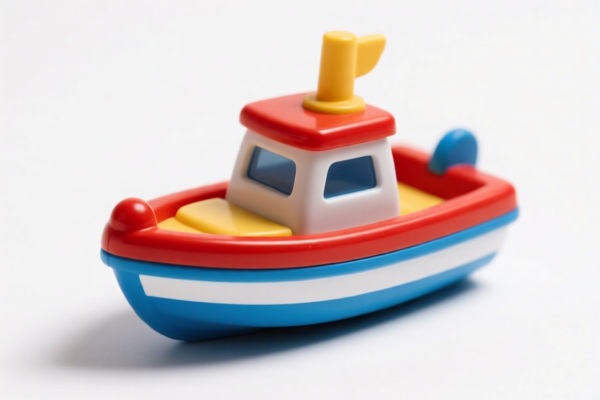
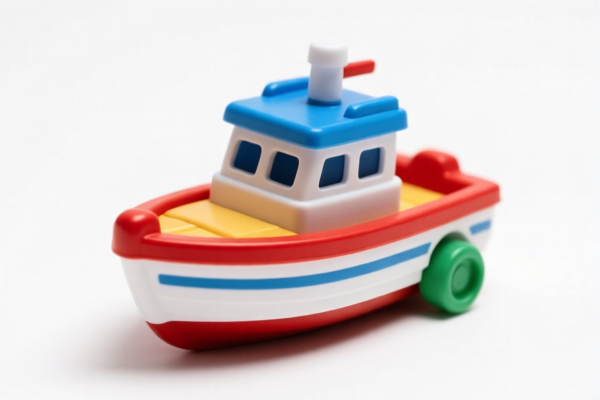
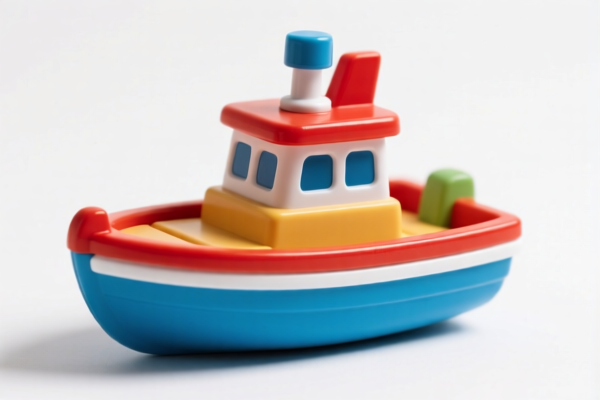
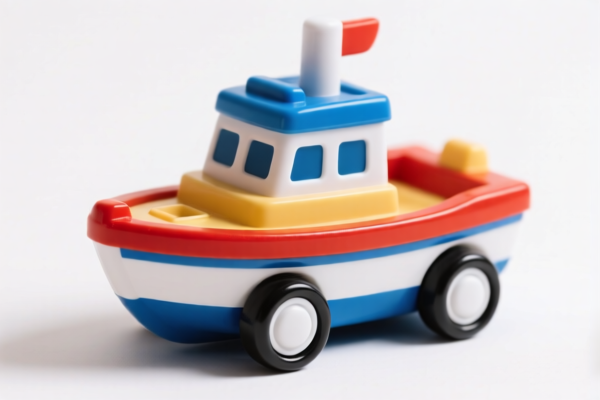
AI Analysis
🚤 Toy Boats: Plastic vs. Rubber & The Hidden Customs Minefield
🌐 HS Code Reference & Customs Clearance Guide | 2026 Latest Tariff Analysis | Professional Clearance Strategy
📌 I. Product Definition & Classification: What exactly is a "Toy Boat"?
In international trade, "Toy Boats" are not a single, unified category. They are strictly divided by material and function. The most critical distinction lies in whether the boat is made of rubber/plastic (falling under Plastics or Rubbers chapters) or if it’s a wooden/metal model.
For the data provided, we are focusing on Plastic Toys.
⚠️ Critical Distinction Point:
- If the item is a beach ball, inflatable pool toy, or non-rigid plastic toy → It often falls under Chapters 39 (Plastics) if it doesn't fit the strict "Toys" definition of Chapter 95.
- If the item is a structural plastic toy (hard plastic, rigid) → It should ideally fall under 9503 (Toys).
- However, based on the<DATA>provided, the goods are classified under Heading 3926 ("Other articles of plastics"). This implies these specific "toy boats" (or boat parts) are considered plastic articles rather than standard "toys" in the eyes of this specific tariff schedule, or they are parts/accessories for boats that are made of plastic.
📦 II. HS Code Classification Details (Based on Provided DATA)
The data provides two distinct HS Codes under Heading 3926 (Other articles of plastics). Here is the breakdown:
| HS Code | Product Description | Application Scenario | Tax Rate (China to US/EU) |
|---|---|---|---|
3926.90.33.00 |
Handbags (Plastic articles: Beads, bugles, spangles, etc.; Handbags) | ⚠️ Note: This code is for Handbags and decorative plastic items. It is INCORRECT for actual boats. However, if the "Toy Boat" is a plastic bag-shaped floatation device or a beach toy categorized loosely under "other plastic articles," it might be miscategorized here. Do not use this for actual boats. | 6.5% |
3926.90.30.00 |
Parts for yachts/pleasure boats (Plastic parts for canoes, racing shells, pneumatic craft) | ✅ Correct for Parts: Plastic components for real or ride-on boats (e.g., plastic seats, plastic hull parts for large inflatable boats). | 0.0% |
🔍 Important Clarification:
The user input "Toy Boat" is ambiguous.
- If it is a small child's toy (e.g., plastic racing car, rubber ducky), it typically belongs in 9503.00 (Toys).
- The<DATA>provided only lists 3926 codes. This suggests the input might refer to:
1. Parts of a larger boat (e.g., plastic trim, handles) → Use3926.90.30.00.
2. Miscategorized Plastic Goods: If it’s a small plastic toy boat, declaring it under 3926 is risky and may be rejected by customs as misdeclaration.
3. Beach Toys: Some beach balls or plastic floats are classified under 3926 if they are not considered "toys" under Chapter 95.
💰 III. 2026 Latest Tariff Rate Details
✅ Applicable Country: United States (US)
✅ Origin: China (CN)
✅ Effective Time: 2025-11-10 onwards
🎯 1. 3926.90.30.00 – Plastic Parts for Pleasure Boats
| Item | Content |
|---|---|
| Base Tariff | 0.0% |
| Section 301 Tariff (USITC) | 0.0% (Not listed in Data) |
| IEEPA Surcharge | 0.0% (Not listed in Data) |
| Total Tariff | 0.0% |
| Calculation | CIF Value × 0% |
| De Minimis Exemption | ✅ Yes (If value < $800, no duty applies anyway) |
| Legal Basis | HTSUS: 3926.90.30.00 |
📌 Interpretation:
- This code applies to plastic parts for yachts, canoes, or pneumatic boats.
- If your "Toy Boat" is actually a large inflatable boat with plastic parts or a plastic component for a boat, this is the best-case scenario (0% duty).
- Warning: If you declare a small children's toy boat under this code, Customs may flag it as misclassification.
🎯 2. 3926.90.33.00 – Handbags & Other Plastic Articles (Decorative)
| Item | Content |
|---|---|
| Base Tariff | 6.5% |
| Section 301 Tariff (USITC) | 0.0% (Not listed in Data) |
| IEEPA Surcharge | 0.0% (Not listed in Data) |
| Total Tariff | 6.5% |
| Calculation | CIF Value × 6.5% |
| De Minimis Exemption | ❌ No (De Minimis ($800) applies to duty, but this is the duty rate itself) |
| Legal Basis | HTSUS: 3926.90.33.00 |
📌 Interpretation:
- This code is for handbags and decorative plastic items (beads, spangles).
- It is NOT for toy boats.
- If you use this code for a toy boat, you are paying 6.5% duty unnecessarily and risking a customs penalty for misdeclaration.
🛠️ IV. Customs Clearance Practical Advice (Pitfall Avoidance Guide)
✅ 1. Material & Function Verification (Crucial Step)
| Question | Answer | Recommended HS Code |
|---|---|---|
| Is it a small child’s toy (e.g., < 14 years)? | Yes | 9503.00 (Toys) |
| Is it a large inflatable boat (for adults/pleasure)? | Yes | 4819.20 or 3926.90.30.00 (if plastic parts) |
| Is it a plastic part for a boat? | Yes | 3926.90.30.00 |
| Is it a beach ball or plastic float (not a "toy" in strict sense)? | Yes | 3926.90.39.00 (Other plastic articles) |
🚫 Common Mistake: Declaring a plastic toy boat under 3926 to avoid toy tariffs.
👉 Risk: Customs may reassess it as 9503 and apply different duties, or penalize for misdeclaration.
✅ 2. Declaration Tips
| Scenario | Correct Declaration | Wrong Declaration |
|---|---|---|
| Plastic part for a yacht | Plastic parts for pleasure boats, HTS 3926.90.30.00 |
Toy boat |
| Children's plastic racing boat | Plastic toy boat, HTS 9503.00.00.00 |
Plastic article, HTS 3926.90.39.00 |
| Inflatable boat (rubber/plastic) | Inflatable boat, HTS 4819.20.00.00 |
Toy boat |
✅ 3. Special Cases
| Case | Handling Advice |
|---|---|
| Mixed Materials | If the boat has plastic and wooden parts, declare as the principal material (usually plastic or wood). |
| With Battery/Motor | If it’s a remote-controlled toy boat, it may fall under 8543.70 (Electrical machines) or 9503.00 depending on function. |
| OEM Custom Parts | Provide engineering drawings to prove it’s a "part" not a "toy." |
🌍 V. Global Market Comparison (2026)
| Country/Region | Recommended HS Code | Tariff (China Origin) | Certification | Notes |
|---|---|---|---|---|
| 🇺🇸 USA | 3926.90.30.00 (if parts) |
0% | None | 0% duty is ideal for parts. |
| 🇺🇸 USA | 3926.90.33.00 (if miscategorized) |
6.5% | None | Avoid unless it’s a handbag/decor. |
| 🇪🇺 EU | 3926.90.99 (Other plastic) |
4% | CE + REACH | Plastic toys require CE. |
| 🇨🇳 China | 3926.90.30.00 |
0% | None | Import duty is 0% for these parts. |
📌 Conclusion:
- If your product is a plastic part for a boat,3926.90.30.00is ideal (0% duty).
- If it’s a children’s toy, do NOT use the codes in<DATA>. Use 9503.
- The code3926.90.33.00is for handbags, not boats. Using it for boats is a compliance risk.
📌 VI. Common Errors & Pitfalls (Lessons Learned)
❌ Error 1: Declaring a child’s plastic toy boat under 3926.90.33.00 (Handbags).
👉 Consequence: Customs will reject it for misclassification. Penalty + Delay.
❌ Error 2: Declaring a small toy boat under 3926.90.30.00 (Parts for yachts).
👉 Consequence: Customs may argue it’s not a "part" but a "toy." Risk of reclassification.
❌ Error 3: Not declaring CE/FCC for toy boats with electronics.
👉 Consequence: Seizure in EU/USA if it has a motor or remote control.
✅ Correct Action:
- If it’s a toy: Use 9503.
- If it’s a part: Use 3926.90.30.00 with clear documentation.
- If it’s a beach float: Use 3926.90.39.00 or similar.
🎯 VII. Conclusion: Precision in Classification Saves Money!
🎯 Remember the Rule:
🔹 "Toy = 9503, Part = 3926, Handbag = 3926.33"
🔹 "If it’s for kids, use Toys code. If it’s for boats, use Parts code."
🔹 "Misclassifying a toy as a part is a high-risk audit trigger!"
📌 Tip:
If you are importing plastic boat parts (e.g., plastic trim, handles, seats) for assembly, ensure the Bill of Materials clearly shows they are parts and not complete toys. This allows you to benefit from the 0% tariff under 3926.90.30.00.
📣 Immediate Action:
📞 Verify the primary use and material of your product.
🚀 If it’s a toy, switch to 9503. If it’s a part, stick with 3926.90.30.00.
💼 Accurate classification prevents customs delays and penalties!
✨ Professional Clearance Starts with Precise Classification!
💼 Your every duty dollar is worth optimizing!
Customer Reviews
About HS Code Classification
The Harmonized System (HS) is an internationally standardized nomenclature developed by the World Customs Organization (WCO) to classify traded products. Over 200 countries use the HS system as the basis for customs tariffs, trade statistics, and import/export regulations.
Each HS code follows a hierarchical structure:
- Chapter (2 digits) — Broad category of goods (e.g., Chapter 84: Machinery and Mechanical Appliances)
- Heading (4 digits) — More specific grouping within the chapter
- Subheading (6 digits) — Internationally standardized breakdown, used by all WCO member countries
- National subdivisions (8-10 digits) — Country-specific extensions for further classification, such as US HTSUS 10-digit codes
Correct HS code classification is essential for smooth customs clearance, accurate duty payment, and compliance with trade regulations. Misclassification can lead to customs delays, overpayment of duties, or penalties.
When importing from CN to US, the applicable tariff rates may include:
- Most-Favored-Nation (MFN) rate — The standard duty rate applied to WTO members
- General rate — Applied to countries without trade agreements
- Trade remedy duties — Additional tariffs such as Section 301 (anti-dumping), Section 232 (national security), or countervailing duties
The information provided on this page is for reference purposes only. For official classification, please consult with your local customs authority or a licensed customs broker.