Toy Bow and Arrow
CN → US| HS Code | Tariff Rate | Origin | Destination | Doc |
|---|---|---|---|---|
| 8306290000 | 10.0% | CN | US | Official Doc |
| 9503000073 | 10.0% | CN | US | Official Doc |
| 9503000071 | 10.0% | CN | US | Official Doc |
Product Images
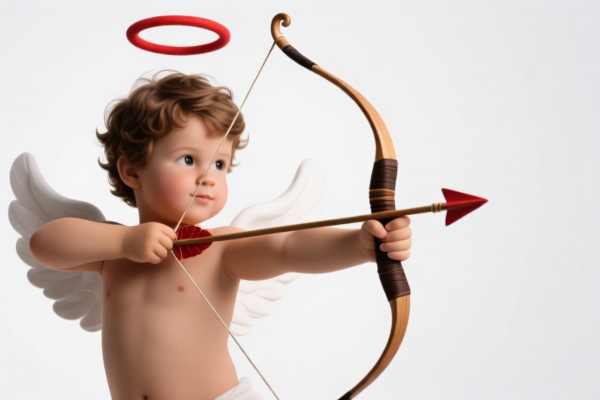



AI Analysis
🏹 Toy Bow and Arrow (Toys)
🌐 HS Code Reference & Customs Clearance Guide | 2026 Latest Tariff Analysis | Professional Strategy
📌 I. Product Definition & Classification: What Exactly is a "Toy Bow and Arrow"?
A Toy Bow and Arrow is a recreational item designed for play, imitation, or target practice, strictly categorized under Chapter 95 (Toys, Games, and Sports requisites). In international trade, its classification hinges on two factors:
1. Intent: It is not a real weapon or hunting equipment but a toy.
2. Material: Usually made of plastic, foam, or lightweight metal, avoiding materials that would classify it as a weapon or industrial part.
⚠️ Key Distinction:
- If the item is a functional weapon (e.g., metal tips, hunting grade) → NOT a toy (excluded from HS 9503).
- If it is a toy (suction cups, foam tips, flexible plastic) → Classified under HS 9503.
📦 II. HS Code Classification Details (2026 Latest Tariff Authority)
Based on the provided data, here are the applicable HS Codes for "Toy Bow and Arrow" variants:
| HS Code | Product Description | Applicability | Material Assumption |
|---|---|---|---|
9503.00.00.71 |
Other toys, suitable for all ages or specific age groups | General toy bows/arrows, non-specific design | Plastic/Composite |
9503.00.00.73 |
Other toys, specifically categorized as "Swords" or similar imitation weapons | Toy bows/arrows explicitly marketed as "swords" or "weapons" for play | Plastic/Metal (Toy-grade) |
8306.29.00.00 |
Ornamental articles of base metal or plastic | Decorative bow and arrow statues, display pieces, non-playable | Base Metal/Plastic |
🔍 Critical Note:
- HS 9503.00.00.71: Best for general-purpose toy bows (e.g., foam-tipped archery sets).
- HS 9503.00.00.73: Used if the product is grouped with "other toys" like toy swords, often for marketing consistency in "action toy" categories.
- HS 8306.29.00.00: Only for non-playable, decorative items (e.g., wall decor). Do not use for toys!
💰 III. 2026 Latest Tariff Rate Breakdown (Including Surcharges)
✅ Applicable Country: United States (US)
✅ Origin: China (CN)
✅ Effective Date: From November 10, 2025 (and subsequent imports)
🎯 1. 9503.00.00.71 & 9503.00.00.73 —— Toy Bows and Arrows
| Item | Detail |
|---|---|
| Base Tariff | 0.0% |
| Section 301 (Trade War) Surcharge | 0.0% |
| Section 122 Tariff (USMCA/Recent Policy) | +10.0% |
| Total Tariff Rate | 10.0% |
| Tax Calculation | CIF Value × 10% |
| De Minimis Exemption | ❌ Not Applicable (High value toys may not qualify for Section 321) |
| Legal Basis Path | Section 122: USMCA Implementation → USITC:9503.00.00.71/73 |
📌 Explanation:
- The 10% rate is driven by Section 122 Tariffs, a recent policy adjustment affecting certain imports.
- No Section 301 (25%) tariff applies to these specific toy sub-codes in this dataset, which is favorable compared to electronics or steel products.
- Total Cost Impact: 10% is moderate for toys, but must be included in pricing strategies.
🎯 2. 8306.29.00.00 —— Decorative/Bas Metal Toy-Style Items
| Item | Detail |
|---|---|
| Base Tariff | 0.0% |
| Section 301 (Trade War) Surcharge | 0.0% |
| Section 122 Tariff (USMCA/Recent Policy) | +10.0% |
| Total Tariff Rate | 10.0% |
| Tax Calculation | CIF Value × 10% |
| De Minimis Exemption | ❌ Not Applicable |
| Legal Basis Path | Section 122: USMCA Implementation → USITC:8306.29.00.00 |
📌 Warning:
- If your product is a toy but classified under8306due to material (e.g., metal parts), you still pay 10%.
- Misclassification Risk: If it’s a toy, do not use8306. Use9503. If misclassified, you may face penalties or higher retroactive tariffs.
🛠️ IV. Customs Clearance Practical Advice (Field Avoidance Guide)
✅ 1. Required Documentation Checklist
| Document | Must Provide | Purpose |
|---|---|---|
| ✅ Product Catalog/Photos | ✔️ | Show suction cups, foam tips, or flexible strings to prove it’s a toy |
| ✅ Material Composition Statement | ✔️ | Confirm no sharp metal tips or live ammunition components |
| ✅ Commercial Invoice | ✔️ | Clearly state "Toy Bow and Arrow" – NOT "Weapon" or "Archery Equipment" |
| ✅ ASTM F963 / CPSIA Compliance | ✔️ | Proof of safety for children’s toys (US requirement) |
| ✅ Country of Origin Certificate | ✔️ | To confirm CN origin for Section 122 application |
✅ 2. Declaration Strategy (Key Mnemonic)
🔥 "Toy Not Weapon, Foam Tip Proven, Section 122 Apply, 10% Tax Shown!"
| Scenario | Correct Declaration | Wrong Declaration |
|---|---|---|
| Play toy with foam tips | 9503.00.00.71 – "Toy Bow" |
"Archery Bow" → May be flagged as weapon |
| Decorative metal bow | 8306.29.00.00 – "Ornament" |
"Toy Bow" → Misclassification risk |
| Set with arrows | Declare as set under 9503.00.00.71 |
Split items → Higher complexity |
| Suction cup arrows | Emphasize "Suction Cup" in description | Omit safety features → Customs delay |
✅ 3. Special Cases
| Case | Handling Advice |
|---|---|
| Metal Tips | ❌ Refuse to declare as toy. This is a weapon. Requires different classification (possibly restricted). |
| Electronic Toy Bows | If it has lights/sound, still 9503.00.00.71. Do not split into electronics. |
| Bulk vs. Retail | Bulk commercial toys → Same HS. Retail gift sets → Same HS. |
| Age Labeling | Must label "Not for children under 3" if small parts present. Avoids additional safety scrutiny. |
🌍 V. Global Market Comparison (2026 Latest)
| Country/Region | Recommended HS Code | Tariff Rate | Certification | Notes |
|---|---|---|---|---|
| 🇺🇸 USA | 9503.00.00.71 |
10% | CPSIA, ASTM F963 | Section 122 applies. No 301 tariff on this code. |
| 🇨🇳 China | 9503.00.00.71 |
5–9% | CCC (if applicable) | Domestic tax varies. |
| 🇪🇺 EU | 9503.00.00.00 |
0–4% | CE, EN71 | Standard toy tariffs. |
| 🇬🇧 UK | 9503.00.00.00 |
0–4% | UKCA, EN71 | Post-Brexit rules apply. |
| 🇨🇦 Canada | 9503.00.00.00 |
0% | Health Canada | CITES not applicable. |
📌 Conclusion:
- USA imposes a 10% tariff via Section 122.
- No 25% Section 301 tariff on these specific toy codes in this dataset, making it competitive.
- Safety compliance (CPSIA) is non-negotiable in the US.
📌 VI. Common Mistakes & Pitfalls (Lessons Learned)
❌ Mistake 1: Calling it "Archery Equipment" or "Weapon"
👉 Result: Customs seizure, potential legal issues, or reclassification as a restricted item.
👉 Fix: Use "Toy Bow", "Recreational Bow".
❌ Mistake 2: Using HS 8306 for playable toys
👉 Result: Misclassification. While tariff is same (10%), it may trigger deeper inspection for "decorative vs. functional".
👉 Fix: Use 9503 for playable items.
❌ Mistake 3: Ignoring Section 122
👉 Result: Underpayment of 10% tariff → Penalties + Back Taxes.
👉 Fix: Include 10% surcharge in cost modeling.
❌ Mistake 4: Missing CPSIA Compliance
👉 Result: Goods detained at US border.
👉 Fix: Provide CPSIA Certificate of Compliance and ASTM F963 test reports.
✅ Correct Practice:
"Toy Bow and Arrow Set, Foam-Tipped Arrows, Plastic Bow, CPSIA Compliant, Model XYZ"
🎯 VII. Conclusion: Smart Classification, Smooth Clearance!
🎯 Remember:
🔹 "Toy, Not Weapon – Use HS 9503"
🔹 "Section 122 Adds 10% – Plan Your Margins"
🔹 "Foam Tips Prove It’s a Toy – Avoid Seizure Risks"
📌 Pro Tip:
If your product includes electronic components (e.g., light-up bow), it still falls under 9503.00.00.71 as long as the primary function is play. Do not split it into electronics (HS 85) and toys (HS 95) – primary function rule applies.
📣 Action Item:
📞 Pre-Ship Check: Confirm CPSIA compliance + Declare as "Toy Bow" under
9503.00.00.71.
🚀 Clearance Speed: 10% tariff is manageable. Focus on safety documentation to avoid delays.
✨ Professional Clearance Starts with Accurate Classification!
💼 Every Dollar Saved in Tariffs is Profit Gained!
Customer Reviews
About HS Code Classification
The Harmonized System (HS) is an internationally standardized nomenclature developed by the World Customs Organization (WCO) to classify traded products. Over 200 countries use the HS system as the basis for customs tariffs, trade statistics, and import/export regulations.
Each HS code follows a hierarchical structure:
- Chapter (2 digits) — Broad category of goods (e.g., Chapter 84: Machinery and Mechanical Appliances)
- Heading (4 digits) — More specific grouping within the chapter
- Subheading (6 digits) — Internationally standardized breakdown, used by all WCO member countries
- National subdivisions (8-10 digits) — Country-specific extensions for further classification, such as US HTSUS 10-digit codes
Correct HS code classification is essential for smooth customs clearance, accurate duty payment, and compliance with trade regulations. Misclassification can lead to customs delays, overpayment of duties, or penalties.
When importing from CN to US, the applicable tariff rates may include:
- Most-Favored-Nation (MFN) rate — The standard duty rate applied to WTO members
- General rate — Applied to countries without trade agreements
- Trade remedy duties — Additional tariffs such as Section 301 (anti-dumping), Section 232 (national security), or countervailing duties
The information provided on this page is for reference purposes only. For official classification, please consult with your local customs authority or a licensed customs broker.