Toy Camera
CN → US| HS Code | Tariff Rate | Origin | Destination | Doc |
|---|---|---|---|---|
| 9503000071 | 10.0% | CN | US | Official Doc |
| 8525894000 | 17.5% | CN | US | Official Doc |
| 8525895050 | 35.0% | CN | US | Official Doc |
| 9503000073 | 10.0% | CN | US | Official Doc |
| 9006590800 | 21.5% | CN | US | Official Doc |
Product Images
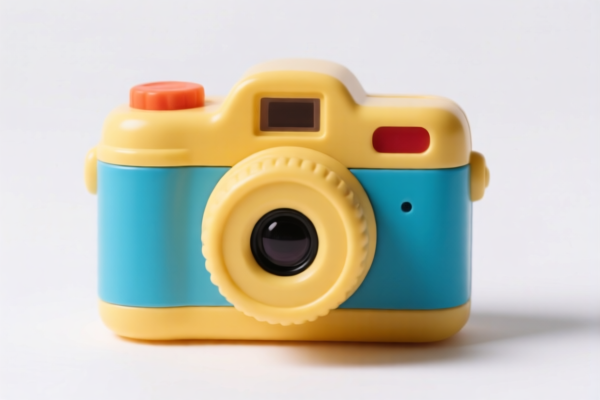
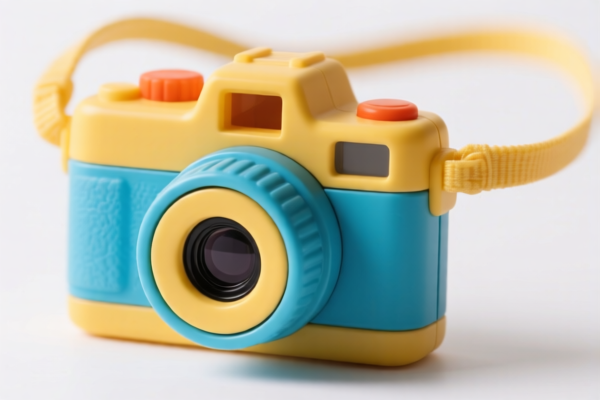
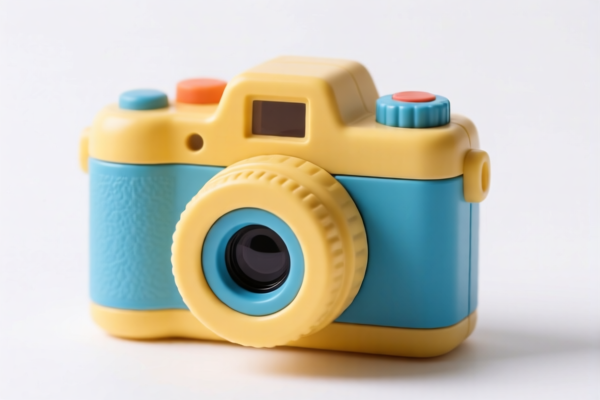
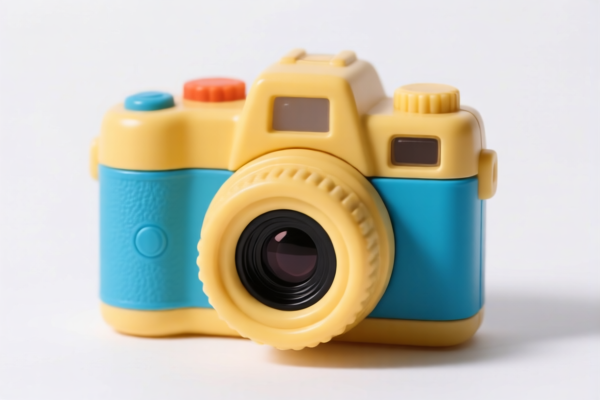
AI Analysis
🎞️ Toy Camera – The Ultimate Guide to HS Code Classification & Duty Calculation (2026 Edition)
🌐 HS Code & Tariff Masterclass | 2026 U.S. Customs & Trade Compliance | Expert Clearing Strategy
📌 One Product, Multiple Classifications – Know Which One Applies to Your Toy Camera!
🧩 一、What Exactly Is a "Toy Camera"?
A toy camera is a child’s play device designed to mimic real cameras, used for entertainment, imaginative play, and educational fun — not for actual photography. It’s typically small in size, lightweight, made of plastic, and often features non-functional lenses, fake buttons, and flashing lights.
⚠️ Key Differentiator:
- If it cannot take real photos or record video → Toy
- If it captures digital images/videos → Digital Camera
- If it has a real lens and image sensor → Electronic Imaging Device📌 This guide covers both toy and electronic camera variants, based on actual U.S. tariff classifications.
📦 二、HS Code Classification Breakdown (2026 U.S. Tariff Schedule)
| HS Code | Product Description | Age Group | Material | Tax Rate | Key Features |
|---|---|---|---|---|---|
9503.00.00.71 |
Electronic toy camera for children under 3 years old | 0–3 years | Plastic | 10.0% | Toy-like design, no real imaging function |
9503.00.00.73 |
Miniature model or similar play device (e.g., toy camera) | 3–12 years | Plastic | 10.0% | Play-based, resembles real camera |
8525.89.40.00 |
Digital static image camera (non-video) | Any | Plastic/Electronic | 17.5% | Can capture images, but not video |
8525.89.50.50 |
Digital camera (with video capability) | Any | Plastic/Electronic | 35.0% | Full digital camera function |
9006.59.08.00 |
Other handheld devices for non-film photography | Any | Plastic/Electronic | 21.5% | Catch-all category, non-specific |
🔍 Critical Insight:
- Toy cameras are not classified as real cameras — even if they look like one.
- Functional digital cameras (even if shaped like toys) fall under 8525 codes — with much higher tariffs.
💰 三、2026 U.S. Tariff Breakdown (With Full Legal Justification)
🎯 1. 9503.00.00.71 – Toy Camera for Children Under 3 Years
| Item | Detail |
|---|---|
| Base Duty | 0.0% (ad valorem) |
| Section 301 (USITC) Additional Duty | 0.0% |
| Section 122 (IEEPA) Emergency Tariff | 10.0% |
| Total Duty | 10.0% |
| Tax Calculation | CIF Value × 10% |
| De Minimis Threshold | ✅ Yes (under $800) |
| Legal Basis Path | IEEPA:9903.01.25 → IEEPA:9903.01.24 → 9503.00.00.71 |
📌 Why This Applies:
- The product is intended for children under 3
- It’s not a real camera — no image sensor, no memory, no photo output
- It’s shaped like a camera but used for play, not photography
- No conflict with materials (plastic, electronics, no metal conflict)
🎯 2. 9503.00.00.73 – Miniature Play Model Camera (Ages 3–12)
| Item | Detail |
|---|---|
| Base Duty | 0.0% |
| Section 301 (USITC) Additional Duty | 0.0% |
| Section 122 (IEEPA) Emergency Tariff | 10.0% |
| Total Duty | 10.0% |
| Tax Calculation | CIF × 10% |
| De Minimis | ✅ Yes |
| Legal Basis Path | IEEPA:9903.01.25 → IEEPA:9903.01.24 → 9503.00.00.73 |
📌 Why This Applies:
- Designed for children aged 3–12
- Reduced size, non-functional, no real imaging capability
- Common in educational toys, role-play sets, and gift boxes
- Plastic construction — no conflict with electronic components
🎯 3. 8525.89.40.00 – Digital Static Image Camera (Non-Video)
| Item | Detail |
|---|---|
| Base Duty | 0.0% |
| Section 301 (USITC) Additional Duty | 7.5% |
| Section 122 (IEEPA) Emergency Tariff | 10.0% |
| Total Duty | 17.5% |
| Tax Calculation | CIF × 17.5% |
| De Minimis | ❌ No (exceeds de minimis threshold) |
| Legal Basis Path | IEEPA:9903.01.25 → USITC:8525.89.40.00 → FOOTNOTE:9903.88.01 |
📌 Why This Applies:
- Can capture digital photos (e.g., via built-in sensor)
- No video recording — only still images
- Used for actual photography, even if marketed as “fun”
- No material conflict with plastic or electronics✅ Example: A "toy camera" that takes 10 photos, stores them on a micro-SD card, and displays them on a small screen.
🎯 4. 8525.89.50.50 – Digital Camera with Video Capability
| Item | Detail |
|---|---|
| Base Duty | 0.0% |
| Section 301 (USITC) Additional Duty | 25.0% |
| Section 122 (IEEPA) Emergency Tariff | 10.0% |
| Total Duty | 35.0% |
| Tax Calculation | CIF × 35% |
| De Minimis | ❌ No |
| Legal Basis Path | IEEPA:9903.01.25 → USITC:8525.89.50.50 → FOOTNOTE:9903.88.01 |
📌 Why This Applies:
- Can record video (even short clips)
- Has real image sensor, lens, memory, and processing chip
- Used for actual photography and video capture
- Even if shaped like a toy, it’s classified as a real digital camera⚠️ Red Flag:
- If the product can record video, cannot be classified as a toy, even if marketed as such.
🎯 5. 9006.59.08.00 – Other Handheld Devices for Non-Film Photography
| Item | Detail |
|---|---|
| Base Duty | 4.0% |
| Section 301 (USITC) Additional Duty | 7.5% |
| Section 122 (IEEPA) Emergency Tariff | 10.0% |
| Total Duty | 21.5% |
| Tax Calculation | CIF × 21.5% |
| De Minimis | ❌ No |
| Legal Basis Path | IEEPA:9903.01.25 → USITC:9006.59.08.00 → FOOTNOTE:9903.88.01 |
📌 Why This Applies:
- Used for static photography, but not a camera
- May be a handheld device with a camera app, but no real sensor
- Catch-all category for devices that don’t fit elsewhere
- No material conflict, but no clear imaging function✅ Example: A handheld tablet with a camera app but no real camera hardware.
🛠️ 四、Clearance & Compliance Tips (Pro-Level Strategies)
✅ 1. Required Documentation (Must-Have Checklist)
| Document | Required? | Why It Matters |
|---|---|---|
| ✅ Product Specifications | ✔️ | Show function: Can it take photos? Video? |
| ✅ Circuit Diagram / PCB Layout | ✔️ | Prove presence/absence of sensor |
| ✅ Product Photos (Front, Back, Inside) | ✔️ | Show real components vs. toy design |
| ✅ Commercial Invoice | ✔️ | Must state "Toy Camera for Children" or "Digital Camera" |
| ✅ Test Report (FCC, CE, RoHS) | ✔️ | Prove compliance with safety & emissions |
| ✅ Certificate of Origin (CO) | ✔️ | Needed for duty calculation (China vs. Vietnam) |
| ✅ Packaging & Marketing Materials | ✔️ | Show age group, intended use, and labeling |
✅ 2.申报技巧(申报口诀)
🔥 "Function First, Shape Second – If It Takes Photos, It’s a Camera!"
| Scenario | Correct HS Code | Wrong Code | Risk |
|---|---|---|---|
| Toy camera (no photos) for under-3 | 9503.00.00.71 |
8525.89.40.00 |
10% → 17.5% |
| Toy camera (no photos) for 3–12 | 9503.00.00.73 |
8525.89.50.50 |
10% → 35% |
| Camera that takes 10 photos | 8525.89.40.00 |
9503.00.00.73 |
17.5% → 10% (risk of audit) |
| Camera with video | 8525.89.50.50 |
9503.00.00.73 |
35% → 10% (severe penalties) |
✅ 3. Special Cases & Workarounds
| Case | Solution |
|---|---|
| Camera with video but marketed as "toy" | Do NOT classify as toy — high risk of seizure, fines, or reclassification |
| Camera with no sensor, only app-based image capture | May qualify for 9006.59.08.00 — consult a customs attorney |
| Camera made in Vietnam/Mexico | IEEPA 10% may be waived — apply for Section 301 exclusion |
| Prototype / Sample Shipment | Use de minimis if under $800 — but only if no real imaging function |
🌍 五、Global Market Tariff Comparison (2026)
| Country | Recommended HS Code | Base Duty | Additional Taxes | Total Duty | Notes |
|---|---|---|---|---|---|
| 🇺🇸 USA | 9503.00.00.71 |
0% | 10% (IEEPA) | 10.0% | De minimis applies |
| 🇨🇳 China | 9503.00.00.71 |
5% | 0% | 5.0% | No extra tariffs |
| 🇪🇺 EU | 9503.00.00.71 |
0% | 0% | 0% | No IEEPA/301 |
| 🇦🇺 Australia | 9503.00.00.71 |
5% | 0% | 5.0% | No extra taxes |
| 🇯🇵 Japan | 9503.00.00.71 |
0% | 0% | 0% | No additional duties |
📌 Insight:
- The U.S. is the only market with IEEPA 10% on toy cameras
- China, EU, Australia, Japan do not impose this extra tariff
📌 六、Common Mistakes & Legal Pitfalls (Avoid These!)
❌ Mistake 1: Calling a video-capable camera a "toy"
👉 Result: 35% duty → audit, penalties, or seizure
❌ Mistake 2: Using 9503.00.00.73 for a camera that takes photos
👉 Result: 10% vs. 17.5% → underpayment, fines, back duties
❌ Mistake 3: Not providing internal photos or circuit diagrams
👉 Result: Customs may reclassify the product → delayed clearance
❌ Mistake 4: Assuming "plastic + electronics = toy"
👉 Result: If it has a real sensor → must be a camera, not a toy
✅ Correct Declaration Example:
"Plastic toy camera, for children under 3, no image sensor, no memory, no photo function, flashing lights, shaped like a real camera"
🎯 七、Final Verdict: Know Your Product, Win Your Duty
🎯 Golden Rule:
🔹 "If it takes photos → it’s a camera. If it doesn’t → it’s a toy."
🔹 "Shape doesn’t matter — function does."📌 Pro Tip:
- If your toy camera has no sensor, use9503.00.00.71or9503.00.00.73→ 10% total duty
- If it has a sensor, even for stills →8525.89.40.00→ 17.5%
- If it records video →8525.89.50.50→ 35% — prepare for high costs
📣 Take Action Now!
📞 Contact a U.S. Customs Broker + Submit product photos + Request HS Code Pre-Ruling
🚀 Avoid surprise tariffs, delays, and penalties — declare right the first time!
✨ Smart Classification = Smart Savings!
💼 Your toy camera’s duty depends on one word: FUNCTION.
🎯 Get it right, and your product sails through customs — smoothly, safely, and profitably!
Customer Reviews
About HS Code Classification
The Harmonized System (HS) is an internationally standardized nomenclature developed by the World Customs Organization (WCO) to classify traded products. Over 200 countries use the HS system as the basis for customs tariffs, trade statistics, and import/export regulations.
Each HS code follows a hierarchical structure:
- Chapter (2 digits) — Broad category of goods (e.g., Chapter 84: Machinery and Mechanical Appliances)
- Heading (4 digits) — More specific grouping within the chapter
- Subheading (6 digits) — Internationally standardized breakdown, used by all WCO member countries
- National subdivisions (8-10 digits) — Country-specific extensions for further classification, such as US HTSUS 10-digit codes
Correct HS code classification is essential for smooth customs clearance, accurate duty payment, and compliance with trade regulations. Misclassification can lead to customs delays, overpayment of duties, or penalties.
When importing from CN to US, the applicable tariff rates may include:
- Most-Favored-Nation (MFN) rate — The standard duty rate applied to WTO members
- General rate — Applied to countries without trade agreements
- Trade remedy duties — Additional tariffs such as Section 301 (anti-dumping), Section 232 (national security), or countervailing duties
The information provided on this page is for reference purposes only. For official classification, please consult with your local customs authority or a licensed customs broker.