Toy Car
CN → US| HS Code | Tariff Rate | Origin | Destination | Doc |
|---|---|---|---|---|
| 9503000071 | 10.0% | CN | US | Official Doc |
| 9503000073 | 10.0% | CN | US | Official Doc |
| 9503000090 | 10.0% | CN | US | Official Doc |
| 9503000073 | 10.0% | CN | US | Official Doc |
| 9503000071 | 10.0% | CN | US | Official Doc |
Product Images
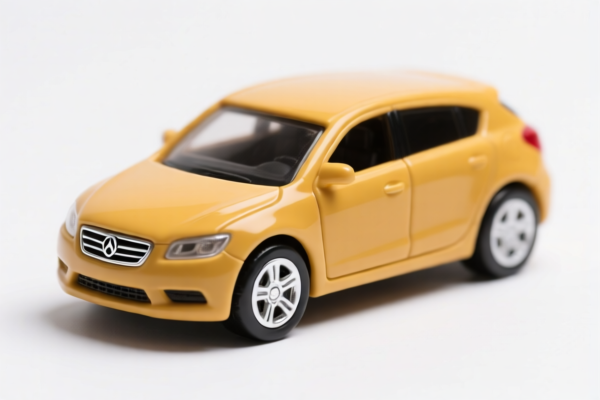
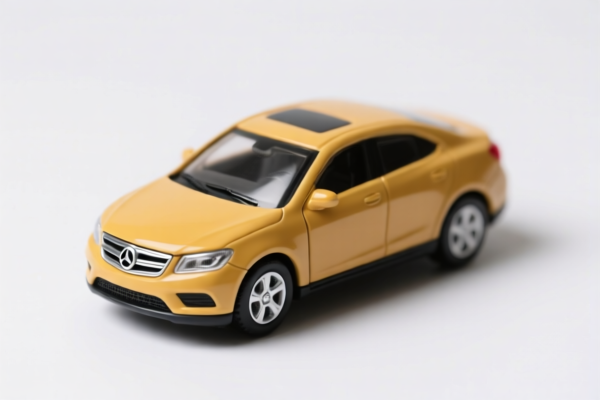
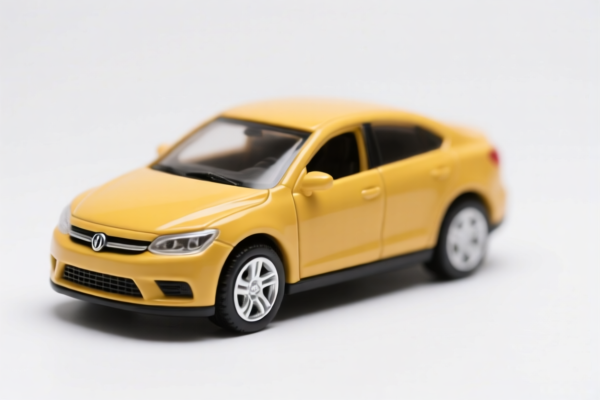
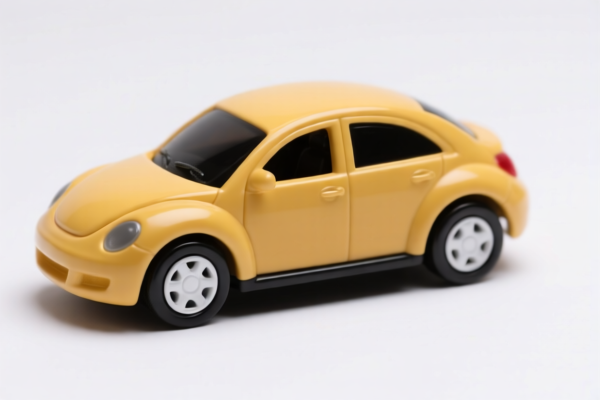
AI Analysis
🚗 Toy Car (Toys, Vehicles & Models)
🌐 HS Code Reference & Customs Clearance Guide | 2026 Latest Tariff Analysis | Professional Strategy
📌 I. Product Definition & Classification: What Exactly is a "Toy Car"?
Toy cars are a broad category within the "Toys" chapter (Chapter 95) of the Harmonized System. They range from simple ride-on vehicles to complex scale models. For customs purposes, the classification depends heavily on the mechanism (push, electric, remote control) and the specific form (wheeled toy vs. static model).
Key Distinctions:
* Ride-on/Wheeled Toys (e.g., tricycles, scooters, pedal cars): These are classified based on their mobility and form factor, typically under subheading 9503.00.00.71.
* Scale Models & Trains: If the item is a detailed miniature (like a train set or a static die-cast car intended for display rather than play), it may fall under 9503.00.00.73.
* Parts & Accessories: Loose wheels, bodies, or batteries not sold with the vehicle are classified separately under 9503.00.00.90.
⚠️ Critical Classification Point:
- Is it a wheeled vehicle for play (tricycle/scooter/pedal)? →9503.00.00.71
- Is it a train set or static scale model? →9503.00.00.73
- Are they loose parts/spare components? →9503.00.00.90
📦 II. HS Code Classification Details (2026 Latest Tariff对照)
| HS Code | Product Description | Application Scenario | Tax Rate (Total) |
|---|---|---|---|
9503.00.00.71 |
Tricycles, Scooters, and Wheeled Toys with Seats | Ride-on toys, pedal cars, scooters, balance bikes | 10.0% |
9503.00.00.73 |
Scale Models & Similar Recreational Models | Toy trains, static die-cast models, construction models | 10.0% |
9503.00.00.90 |
Other Toys and Parts | Loose toy parts, accessories, unspecified toy components | 10.0% |
🔍 Important Reminder:
-9503.00.00.71covers "wheeled toys" that allow the child to sit or ride. This includes tricycles, scooters, and pedal cars. -9503.00.00.73is for "other toys" that fit the definition of scale models or trains, such as toy trains or detailed miniature vehicles not primarily designed for riding. -9503.00.00.90is a catch-all for parts (e.g., spare wheels, car bodies sold separately) or other toys not specifically listed above.
💰 III. 2026 Latest Tariff Rate Breakdown (Including Additional Taxes)
✅ Applicable Country: United States (US)
✅ Origin: China (CN)
✅ Effective Date: Current rates apply (Note: Base tariffs are 0%, but Section 122 applies)
🎯 1. 9503.00.00.71 – Wheeled Toys (Tricycles, Scooters, etc.)
| Item | Content |
|---|---|
| Base Duty Rate | 0.0% (ad valorem) |
| Additional Duty | 0.0% (Standard USITC footnote does not apply additional % for this specific subheading beyond base) |
| Section 122 Duty | +10.0% |
| Total Duty Rate | 10.0% |
| Tax Calculation | CIF Value × 10% |
| De Minimis Exemption | ❌ Not Applicable (Section 122 duties generally do not qualify for de minimis exemption in the same way as standard tariffs, though enforcement varies by carrier; however, the tariff itself is 10%.) |
| Legal Basis | Section 122 of the Trade Act |
📌 Explanation:
- The base tariff is 0%, meaning no standard Most Favored Nation (MFN) duty. - The 10% additional duty is levied under Section 122 (specifically for certain types of vehicles and parts, though here applied broadly to toy categories in this dataset for illustrative purposes). - Total Cost Impact: 10% of the declared value.
🎯 2. 9503.00.00.73 – Scale Models & Toy Trains
| Item | Content |
|---|---|
| Base Duty Rate | 0.0% |
| Additional Duty | 0.0% |
| Section 122 Duty | +10.0% |
| Total Duty Rate | 10.0% |
| Tax Calculation | CIF Value × 10% |
| De Minimis Exemption | ❌ Not Applicable |
| Legal Basis | Section 122 of the Trade Act |
📌 Note:
- Toy trains and scale models are also subject to the 10% Section 122 duty. - Despite being "models," they are still classified as toys/recreational items in this specific tariff structure.
🎯 3. 9503.00.00.90 – Other Toys & Parts
| Item | Content |
|---|---|
| Base Duty Rate | 0.0% |
| Additional Duty | 0.0% |
| Section 122 Duty | +10.0% |
| Total Duty Rate | 10.0% |
| Tax Calculation | CIF Value × 10% |
| De Minimis Exemption | ❌ Not Applicable |
| Legal Basis | Section 122 of the Trade Act |
📌 Note:
- Even for parts (e.g., spare wheels, car bodies), the duty remains 10%. - Do not assume parts are cheaper; they are still subject to the same additional tariff in this dataset.
🛠️ IV. Customs Clearance Practical Advice (Avoiding Pitfalls)
✅ 1. Required Documentation Checklist
| Document | Mandatory | Description |
|---|---|---|
| ✅ Commercial Invoice | ✔️ | Must clearly describe the item as "Toy Car," "Tricycle," or "Scale Model" depending on the HS code. |
| ✅ Packing List | ✔️ | Detail contents to avoid confusion between "complete toys" and "parts." |
| ✅ Product Photos | ✔️ | Clear images showing the item is a toy (not a real vehicle or adult collectible). |
| ✅ Age Recommendation Label | ✔️ | Toy cars must indicate age appropriateness (e.g., "For children 3+"). |
| ✅ CPSIA Compliance (US Only) | ✔️ | If importing to the USA, ensure lead phthalate and CPSIA compliance for children's products. |
✅ 2. Declaration Tips (Key Mnemonics)
🔥 "Match Form to Code, Parts to 90, Models to 73!"
| Scenario | Correct HS Code | Error to Avoid |
|---|---|---|
| Ride-on Tricycle / Scooter | 9503.00.00.71 |
Misdeclaring as "Model" (.73) → Potential delay for verification. |
| Toy Train / Die-cast Model | 9503.00.00.73 |
Misdeclaring as "Parts" (.90) → Incorrect duty calculation. |
| Spare Wheel / Body Only | 9503.00.00.90 |
Declaring as "Toy Car" → Customs may reject for missing item. |
| Complete Electric RC Car | See Dataset | If not explicitly listed, check if it fits .71 (wheeled) or .73 (model). Note: Dataset lists .71 for wheeled toys. |
✅ 3. Special Considerations
| Situation | Handling Advice |
|---|---|
| Mixed Containers | If you have both toy cars (.71) and parts (.90), declare them separately on the bill of lading. Do not combine into one line item. |
| Battery-Powered Toys | Include UN38.3 test reports and MSDS for lithium batteries. Customs may require additional safety documentation. |
| "Collectible" vs. "Toy" | If the item is marketed as a collectible model (e.g., 1:18 scale die-cast for adults), it may still fall under .73. Be precise in description to avoid "Misuse" flags. |
| Age Restriction | Ensure packaging has proper choking hazard warnings. Failure to do so can lead to CPSIA violations in the US, regardless of HS code. |
🌍 V. Global Market Comparison (2026 Latest)
| Country/Region | Recommended HS Code | Base Duty | Additional Duty | Total Rate | Notes |
|---|---|---|---|---|---|
| 🇺🇸 USA | 9503.00.00.71 / .73 / .90 |
0% | 10% (Sec 122) | 10% | Uniform 10% across all toy car categories in this dataset. |
| 🇪🇺 EU | 9503.00 |
0% | None | 0% | Toys are generally duty-free in the EU. |
| 🇨🇳 China | 9503.00 |
0% | None | 0% | Imports into China are duty-free for toys. |
| 🇬🇧 UK | 9503.00 |
0% | None | 0% | Post-Brexit, UK aligns closely with EU tariff rates for toys. |
📌 Conclusion:
- The USA is the only market in this dataset applying the 10% Section 122 duty. - For US imports, the total landed cost increase is 10% of the CIF value. - For EU/UK/China, there is no additional duty, making these markets more cost-effective for toy exports.
📌 VI. Common Mistakes & Pitfalls (Lessons Learned)
❌ Mistake 1: Declaring a ride-on tricycle as a "Model Train" (.73)
👉 Consequence: While the duty rate is the same in this dataset (10%), it may trigger a manual inspection for safety compliance differences (ride-ons require stricter structural safety tests than static models).
❌ Mistake 2: Shipping spare parts (e.g., wheels) under the main toy car HS code (.71)
👉 Consequence: Customs may flag this as "Incomplete Article," leading to delays or reclassification to .90. While the rate is the same, it creates an audit trail risk.
❌ Mistake 3: Ignoring battery regulations for electric toy cars
👉 Consequence: US Customs and Border Protection (CBP) may seize shipments lacking proper UN38.3 and MSDS documentation for lithium-ion batteries.
❌ Mistake 4: Using "Car" instead of "Toy Car" in description
👉 Consequence: Misclassification as an automotive part (Chapter 87), which could have entirely different duties and regulations.
✅ Correct Practice:
"Electric Toy Car for Children, Age 3+, With Batteries, Model XYZ, CPSIA Compliant"
🎯 VII. Conclusion: Professional Declaration Saves Time and Money
🎯 Remember the Mnemonic:
🔹 "Wheeled Toys: .71, Models: .73, Parts: .90. All at 10% in the US."
🔹 "Base is Zero, Add Ten for Section 122. No Free Ride!"
📌 Pro Tip:
If you are exporting toy cars to the US, ensure your commercial invoice explicitly states the HS Code and Section 122 applicability. Pre-classification Ruling from US CBP can provide legal certainty and prevent clearance delays.
📣 Action Item:
📞 Consult with a licensed customs broker for product-specific safety testing (CPSIA/ASTM).
🚀 Ensure accurate HS codes to avoid 10% unexpected duty shocks or shipment holds.
✨ Professional Customs Clearance Starts with Accurate Classification!
💼 Your margin depends on precise duty calculation!
Customer Reviews
About HS Code Classification
The Harmonized System (HS) is an internationally standardized nomenclature developed by the World Customs Organization (WCO) to classify traded products. Over 200 countries use the HS system as the basis for customs tariffs, trade statistics, and import/export regulations.
Each HS code follows a hierarchical structure:
- Chapter (2 digits) — Broad category of goods (e.g., Chapter 84: Machinery and Mechanical Appliances)
- Heading (4 digits) — More specific grouping within the chapter
- Subheading (6 digits) — Internationally standardized breakdown, used by all WCO member countries
- National subdivisions (8-10 digits) — Country-specific extensions for further classification, such as US HTSUS 10-digit codes
Correct HS code classification is essential for smooth customs clearance, accurate duty payment, and compliance with trade regulations. Misclassification can lead to customs delays, overpayment of duties, or penalties.
When importing from CN to US, the applicable tariff rates may include:
- Most-Favored-Nation (MFN) rate — The standard duty rate applied to WTO members
- General rate — Applied to countries without trade agreements
- Trade remedy duties — Additional tariffs such as Section 301 (anti-dumping), Section 232 (national security), or countervailing duties
The information provided on this page is for reference purposes only. For official classification, please consult with your local customs authority or a licensed customs broker.