Toy Crocodile
CN → US| HS Code | Tariff Rate | Origin | Destination | Doc |
|---|---|---|---|---|
| 9503000071 | 10.0% | CN | US | Official Doc |
| 9503000073 | 10.0% | CN | US | Official Doc |
| 4205006000 | 39.9% | CN | US | Official Doc |
| 4205008000 | 35.0% | CN | US | Official Doc |
Product Images
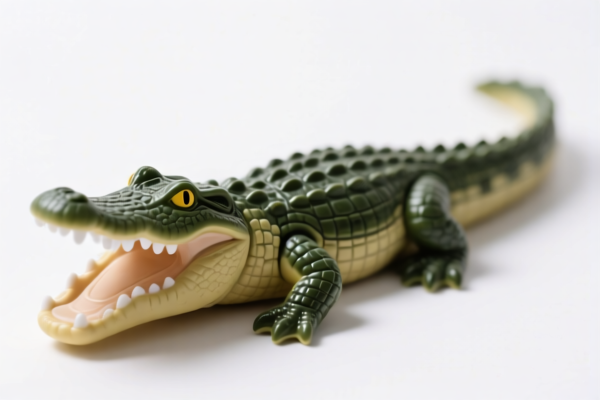
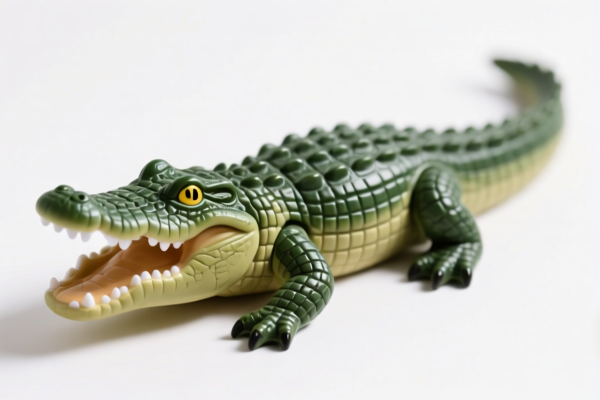
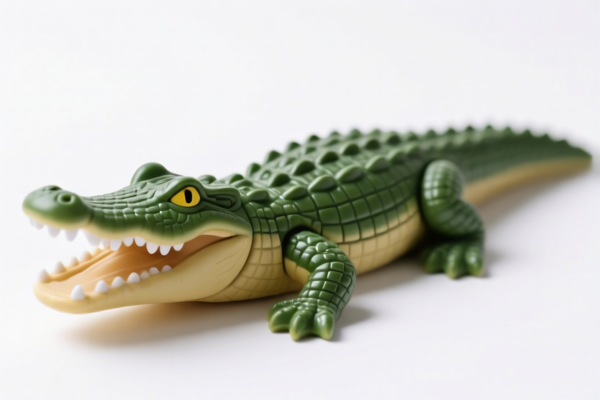
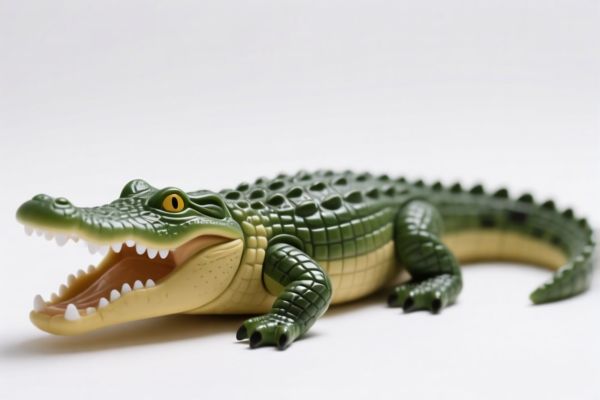
AI Analysis
🐊 Toy Crocodile: HS Code Classification & US Customs Clearance Guide (2026)
🌐 HS Code Reference & Customs Clearance Guide | 2026 Latest Tariff Analysis | Professional Entry Strategy
📌 I. Product Definition & Classification: Do You Truly Understand "Toy Crocodile"?
The Toy Crocodile is a popular imitation of the real crocodile, widely used for children's play, educational purposes, or decorative items. In international trade, its classification depends heavily on the material composition and manufacturing method:
- Soft Toys (Stuffed): Usually made of plush fabric, cotton filling, or synthetic fibers.
- Plastic/Rigid Toys: Made of molded plastic, EVA foam, or hard rubber.
- Leather/Leatherette Toys: Made from real crocodile leather or synthetic leather/PU.
⚠️ Critical Classification Point:
- If it's a plush/stuffed or plastic/rigid toy → It falls under Chapter 95 (Toys).
- If it's made of leather or imitation leather → It falls under Chapter 42 (Articles of leather).
📦 II. HS Code Classification Details (2026 Latest Tariff Alignment)
| HS Code | Product Description | Material Attribute | Tax Rate | Key Conditions |
|---|---|---|---|---|
9503.00.00.71 |
Toy Crocodile, matching toy usage, commonly stuffed or plastic material | Plush, stuffed, or plastic | 10.0% | Must be a toy, not a fashion accessory |
9503.00.00.73 |
Toy Crocodile, matching toy usage, commonly plastic or fabric material | Plastic, fabric, or soft | 10.0% | Must be clearly a toy, not a replica for fashion |
4205.00.60.00 |
Crocodile Toy, matching real reptile leather material attribute | Real crocodile leather | 39.9% | High tariff due to "exotic leather" classification |
4205.00.80.00 |
Crocodile Toy, matching synthetic leather or artificial leather attribute | PU, PVC, or faux leather | 35.0% | Still subject to "leather" category tariffs |
🔍 Key Reminder:
- Toys (Chapter 95) are classified based on function (play) rather than material, unless the material is the primary defining feature.
- Leather goods (Chapter 42) are classified based on material, even if used as a toy, leading to much higher tariffs.
- Misclassification can lead to massive tariff hikes (e.g., 10% vs. 39.9%).
💰 III. 2026 Latest Tariff Rate Breakdown (Including Additional Taxes & Policy Add-ons)
✅ Applicable Country: United States (US)
✅ Country of Origin: China (CN)
✅ Effective Date: November 10, 2025 (and subsequent imports)
🎯 1. 9503.00.00.71 & 9503.00.00.73 — Toy Crocodile (Plastic/Plush)
| Item | Content |
|---|---|
| Base Duty | 0% (ad valorem) |
| Section 301 Additional Duty | +25% (USITC Footnote 9903.88.01) |
| Section 122 Additional Duty | +10% (China-specific, effective 2025) |
| Total Duty Rate | 35% |
| Tax Calculation | CIF Value × 35% |
| De Minimis Exemption | ❌ Not Eligible (deny_de_minimis) |
| Legal Path | Section 301 → USITC:9503.00.00.71/73 → Section 122 |
📌 Explanation:
- The Base Duty is 0% for toys under normal trade conditions.
- However, Section 301 adds 25% for Chinese-origin goods.
- Section 122 adds an additional 10% specifically for Chinese products.
- Total: 35% — A significant cost increase for plush/plastic toys.
🎯 2. 4205.00.60.00 & 4205.00.80.00 — Leather/Synthetic Leather Crocodile Toy
| Item | Content |
|---|---|
| Base Duty | 4.9% (for real leather) or 0% (for synthetic) |
| Section 301 Additional Duty | +25% |
| Section 122 Additional Duty | +10% |
| Total Duty Rate | 39.9% (Real Leather) or 35.0% (Synthetic) |
| Tax Calculation | CIF Value × Total Rate |
| De Minimis Exemption | ❌ Not Eligible |
| Legal Path | Section 301 → USITC:4205.00.60.00/80.00 → Section 122 |
📌 Explanation:
- Real Leather (4205.00.60.00) has a base duty of 4.9%, leading to 39.9% total.
- Synthetic Leather (4205.00.80.00) has a base duty of 0%, leading to 35.0% total.
- Both are subject to the same 25% + 10% additional taxes, making the total cost very high.
🛠️ IV. Customs Clearance Practical Advice (Real-World Avoidance Guide)
✅ 1. Preparation Checklist (All Items Mandatory)
| Document | Must Provide | Description |
|---|---|---|
| Product Specifications | ✔️ | Material type, dimensions, filling, age group |
| Material Composition Report | ✔️ | Proof of "plastic/plush" vs. "leather/synthetic" |
| Product Photos | ✔️ | Clear images of material texture, labels, packaging |
| Third-Party Test Report | ✔️ | CPSIA (for US toys), REACH, RoHS (if applicable) |
| Commercial Invoice | ✔️ | Clearly state "Toy Crocodile" + Material Type |
| Certificate of Origin (CO) | ✔️ | If not China, may qualify for lower rates |
| Packing List | ✔️ | Show toy + accessories, avoid splitting申报 |
✅ 2. Declaration Strategy (Key Tips)
🔥 "Material Matters, Function Follows, Label Clearly, Tariff Drops!"
| Scenario | Correct Declaration | Wrong Practice |
|---|---|---|
| Plush/Plastic Toy | 9503.00.00.71 or 73 |
Declare as "Leather Crocodile" → 39.9% |
| Real Leather Toy | 4205.00.60.00 |
Declare as "Toy" → 10% (Risk of Penalty) |
| Synthetic Leather Toy | 4205.00.80.00 |
Declare as "Plastic Toy" → 10% (Risk of Penalty) |
| Mixed Materials | Split Declaration | Combine → Incorrect rate |
✅ 3. Special Cases Handling
| Situation | Recommendation |
|---|---|
| OEM Custom Crocodile | Provide client order + design drawings to avoid "non-standard" classification |
| Leather + Plush Hybrid | Declare based on primary material; if >50% leather → Chapter 42 |
| Educational Toy with Leather Accents | Still Chapter 95 if function is play; avoid Chapter 42 |
| Children's Toy with Safety Features | Ensure CPSIA compliance; otherwise, customs may reject entry |
🌍 V. Global Market Clearance Comparison (2026 Latest)
| Country/Region | Recommended HS Code | Duty Rate | Certification | Notes |
|---|---|---|---|---|
| 🇺🇸 USA | 9503.00.00.71/73 |
35% (Plastic/Plush) | CPSIA | High additional taxes |
| 🇨🇳 China | 9503.00.00.71/73 |
5% | CCC | No additional taxes |
| 🇪🇺 EU | 9503.00.00.71/73 |
0% (if CE) | CE + EN71 | No additional taxes |
| 🇦🇺 Australia | 9503.00.00.71/73 |
5% | RCM | No additional taxes |
| 🇯🇵 Japan | 9503.00.00.71/73 |
0% | PSE | No additional taxes |
📌 Conclusion:
- USA is the most expensive market for toy crocodiles due to Section 301 + Section 122 taxes.
- China, EU, Australia, Japan offer much lower rates, making them more attractive for export.
- Leather toys are universally expensive due to material-based tariffs.
📌 VI. Common Mistakes & Pitfalls (Lessons from the Field)
❌ Mistake 1: Declaring a leather toy as a plastic toy
👉 Consequence: Underpayment + Fines + Goods Seized
❌ Mistake 2: Declaring a plastic toy as a leather toy
👉 Consequence: Overpayment + Loss of Competitive Edge
❌ Mistake 3: Not providing material composition report
👉 Consequence: Customs delays, reclassification, higher tariffs
❌ Mistake 4: Using "Crocodile" as the only product name
👉 Consequence: Ambiguity in classification → Higher scrutiny
✅ Correct Practice:
"Stuffed Crocodile Toy, 15cm, Polyester Plush, Cotton Filling, CPSIA Certified, Model XYZ, For Children 3+ Years"
🎯 VII. Conclusion: Accurate Classification Saves Costs!
🎯 Remember the Mantra:
🔹 "Material First, Function Second, Label Clearly, Tariff Smart!"
🔹 "HS Code is King, Tax Rate is Queen, One Mistake = Thousands in Cost!"
📌 Pro Tip:
If your crocodile toys are originally from Vietnam, Mexico, Thailand, or Malaysia, you may qualify for Section 301 exemptions, reducing the tax to 0%~5%.
Recommendation: Apply for Advance Ruling before shipping to avoid delays and unexpected costs.
📣 Take Action Now:
📞 Contact a professional customs broker + Provide product photos + Apply for HS Code Advance Ruling
🚀 Let your Toy Crocodile sail smoothly, clear customs efficiently, and maximize profits!
✨ Professional Classification, From the First Step!
💼 Your Every Cent Counts — Calculate Precisely!
Customer Reviews
About HS Code Classification
The Harmonized System (HS) is an internationally standardized nomenclature developed by the World Customs Organization (WCO) to classify traded products. Over 200 countries use the HS system as the basis for customs tariffs, trade statistics, and import/export regulations.
Each HS code follows a hierarchical structure:
- Chapter (2 digits) — Broad category of goods (e.g., Chapter 84: Machinery and Mechanical Appliances)
- Heading (4 digits) — More specific grouping within the chapter
- Subheading (6 digits) — Internationally standardized breakdown, used by all WCO member countries
- National subdivisions (8-10 digits) — Country-specific extensions for further classification, such as US HTSUS 10-digit codes
Correct HS code classification is essential for smooth customs clearance, accurate duty payment, and compliance with trade regulations. Misclassification can lead to customs delays, overpayment of duties, or penalties.
When importing from CN to US, the applicable tariff rates may include:
- Most-Favored-Nation (MFN) rate — The standard duty rate applied to WTO members
- General rate — Applied to countries without trade agreements
- Trade remedy duties — Additional tariffs such as Section 301 (anti-dumping), Section 232 (national security), or countervailing duties
The information provided on this page is for reference purposes only. For official classification, please consult with your local customs authority or a licensed customs broker.