Toy Fish
CN → US| HS Code | Tariff Rate | Origin | Destination | Doc |
|---|---|---|---|---|
| 9503000073 | 10.0% | CN | US | Official Doc |
| 9503000071 | 10.0% | CN | US | Official Doc |
| 4421999880 | 38.3% | CN | US | Official Doc |
| 4421919880 | 38.3% | CN | US | Official Doc |
| 3926400090 | 15.3% | CN | US | Official Doc |
| 3926909989 | 22.8% | CN | US | Official Doc |
Product Images
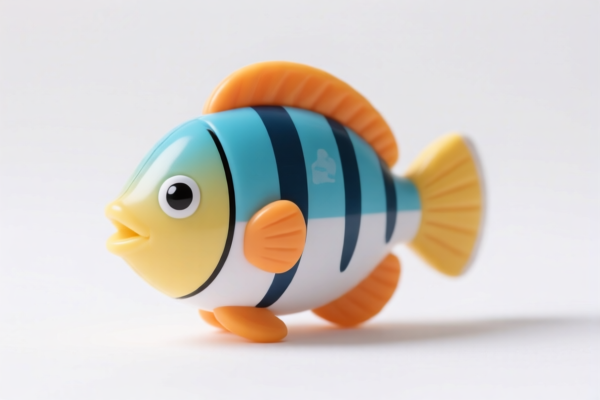
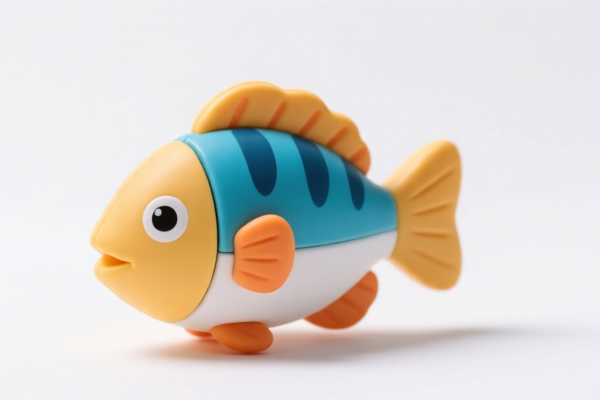
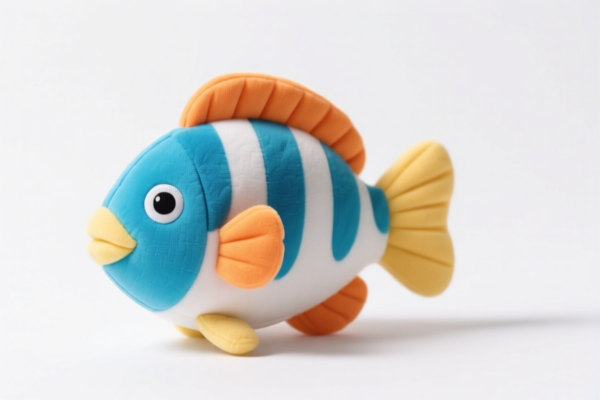
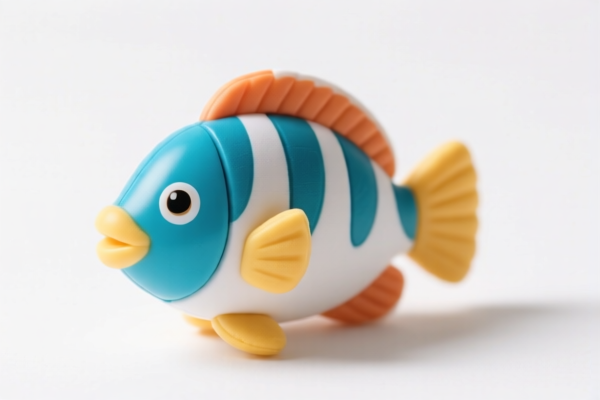
AI Analysis
🐟 Toy Fish (Plastic or Other Materials – Children’s Toys)
🌐 HS Code Reference & Customs Clearance Guide | 2026 Updated Tariff Analysis | Pro-Level Import Strategy
📌 One, Product Definition & Classification: What Exactly Is a "Toy Fish"?
A toy fish is a recreational item designed for play, typically shaped like a fish and made from materials such as plastic, wood, or bamboo. It falls under the broader category of "other toys" as defined by the U.S. Consumer Product Safety Improvement Act (CPSIA), specifically under 15 U.S.C. § 2052, which defines "children’s products" as items intended for use by persons under 12 years of age.
⚠️ Key Classification Criteria: - Must be intended for play, not functional (e.g., not a fishing lure or decorative art). - Must be labeled or determined by the importer as intended for children. - Material type (plastic, wood, bamboo) determines the exact HS Code.
📦 Two, HS Code Classification Details (2026 Updated Tariff Authority)
| HS Code | Product Description | Target Age Group | Material | Key Feature |
|---|---|---|---|---|
9503.00.00.73 |
Other toys; labeled or determined by importer as intended for use by persons aged 3 to 12 years | 3–12 years | Plastic, wood, or other materials | General children’s toys |
9503.00.00.71 |
Other toys; labeled or determined by importer as intended for use by persons under 3 years of age | Under 3 years | Plastic, wood, or other materials | Infant/toddler-safe design |
🔍 Critical Note:
- Age labeling is mandatory for proper classification.
- If the product is not labeled or not determined by the importer as intended for a specific age group, it may be classified under "Other" and subject to higher scrutiny or incorrect tariff application.
💰 Three, 2026 Updated Tariff Breakdown (With附加 Taxes & Legal Basis)
✅ Applicable Country: United States (US)
✅ Origin: China (CN)
✅ Effective Date: November 10, 2025 (including subsequent imports)
🎯 1. 9503.00.00.73 — Toy Fish for Children Aged 3 to 12 Years
| Item | Details |
|---|---|
| Base Tariff Rate | 0.0% (ad valorem) |
| Additional Duty (USITC) | 0.0% |
| IEEPA Additional Tax | 0.0% |
| Total Effective Tariff | 0.0% |
| Tax Calculation | CIF Value × 0.0% |
| De Minimis Threshold | ✅ Yes (eligible for 1% de minimis exemption) |
| Legal Basis Path | IEEPA:9903.01.25 → USITC:9503.00.00.73 → FOOTNOTE:9903.88.01 (no additional duty) |
📌 Explanation:
- This code applies to non-infant toys (ages 3–12) and does not trigger any additional tariffs under U.S. trade laws (IEEPA or USITC Section 301). - No 25% or 7.5% extra duties apply — this is a zero-duty category. - Ideal for plastic, wooden, or bamboo toy fish marketed to school-age children.
🎯 2. 9503.00.00.71 — Toy Fish for Children Under 3 Years of Age
| Item | Details |
|---|---|
| Base Tariff Rate | 0.0% |
| Additional Duty (USITC) | 0.0% |
| IEEPA Additional Tax | 0.0% |
| Total Effective Tariff | 0.0% |
| Tax Calculation | CIF Value × 0.0% |
| De Minimis Threshold | ✅ Yes (eligible for 1% de minimis) |
| Legal Basis Path | IEEPA:9903.01.25 → USITC:9503.00.00.71 → FOOTNOTE:9903.88.01 (no additional duty) |
📌 Important Note:
- Even for infant toys, this category does not incur any additional tariffs. - However, strict compliance with CPSIA safety standards (e.g., lead, phthalates, small parts) is required. - Labeling must clearly state "For children under 3 years" to qualify.
🛠️ Four, Customs Clearance Best Practices (Pro Tips to Avoid Delays)
✅ 1. Required Documentation Checklist (MUST-HAVE)
| Document | Required? | Purpose |
|---|---|---|
| ✅ Product Specification Sheet | ✔️ | Includes size, material, color, function, safety features |
| ✅ Age Labeling Statement | ✔️ | Must state: "Intended for use by persons under 3 years" or "3 to 12 years" |
| ✅ Product Photos (with label) | ✔️ | Show packaging, product, and age indication |
| ✅ Third-Party Safety Test Report | ✔️ | CPSIA-compliant (e.g., CPSC, ASTM F963, EN71) |
| ✅ Commercial Invoice | ✔️ | Clearly states: "Toy Fish, for children 3–12 years" |
| ✅ Certificate of Origin (CO) | ✔️ | If not from China, may qualify for preferential rates |
| ✅ Packing List | ✔️ | Shows quantity, weight, and packaging type |
✅ 2.申报技巧 (Pro申报 Tips – Key Rules)
🔥 "Label First, Classify Second, Age Determines Tax!"
| Scenario | Correct HS Code | Wrong Approach |
|---|---|---|
| Toy fish labeled "For ages 3–12" | 9503.00.00.73 |
Misclassified as 9503.00.00.71 → risk of rejection |
| Toy fish labeled "For infants under 3" | 9503.00.00.71 |
Misclassified as 9503.00.00.73 → safety compliance issues |
| No age label provided | ❌ Risk of misclassification | Must be declared as "other toys" → may trigger audit |
| Wooden toy fish (not plastic) | 9503.00.00.73 or 9503.00.00.71 |
Do NOT use 4421.99.98.80 (wooden articles) unless it's not a toy |
⚠️ Critical Reminder:
- Wooden or bamboo toy fish must still be classified under 9503.00.00.71/73 if intended for children. - Using 4421.99.98.80 (for non-toy wood articles) will result in incorrect classification, delayed clearance, and potential penalties.
✅ 3. Special Cases & Risk Mitigation
| Situation | Recommended Action |
|---|---|
| Toy fish with LED lights or sound | Still falls under 9503.00.00.71/73 — no extra duty |
| Toy fish sold as part of a bath set | Declare as "toy fish" — not as "bath accessory" |
| Imported from Vietnam/Mexico/Thailand | May qualify for IEEPA exemption → 0% tariff |
| Toy fish with removable parts | Must comply with small parts rule (CPSIA) — no choking hazard |
| Custom-designed toy fish (OEM) | Provide design specs + safety test reports to avoid rejection |
🌍 Five, Global Market Customs Comparison (2026)
| Country/Region | Recommended HS Code | Tariff Rate | Certification Required | Notes |
|---|---|---|---|---|
| 🇺🇸 USA | 9503.00.00.71 or 9503.00.00.73 |
0.0% | CPSIA, CPSC, ASTM F963 | Zero additional duty |
| 🇨🇳 China | 9503.00.00.71 or 9503.00.00.73 |
5% | CCC, RoHS | No extra tariffs |
| 🇪🇺 EU | 9503.00.00.71 or 9503.00.00.73 |
0% (if CE) | CE, EN71 | No附加税 |
| 🇦🇺 Australia | 9503.00.00.71 or 9503.00.00.73 |
5% | RCM | No附加税 |
| 🇯🇵 Japan | 9503.00.00.71 or 9503.00.00.73 |
0% | PSE | No附加税 |
📌 Conclusion:
- The U.S. is the only market offering 0% tariff on toy fish — if properly labeled by age. - China-origin toy fish are not subject to 25% or 7.5% additional duties — unlike many other products.
📌 Six, Common Mistakes & Risk Warnings (Avoid These!)
❌ Mistake 1: Using 4421.99.98.80 (wooden articles) for a toy fish
👉 Result: Incorrect classification → delayed clearance, fines, rejection.
❌ Mistake 2: Failing to label age group
👉 Result: Customs may classify as "unlabeled toy" → audit risk, higher scrutiny, possible seizure.
❌ Mistake 3: Declaring a toy fish as "decorative item" or "art"
👉 Result: Not eligible for children’s toy tariff — may face higher duty or denial.
❌ Mistake 4: Not providing safety test reports
👉 Result: CPSC may issue a recall or block import.
✅ Correct Approach:
“Plastic Toy Fish, 3 inches long, bright colors, for children 3–12 years, CPSIA-compliant, ASTM F963 tested, CE & RoHS certified”
🎯 Seven, Final Verdict: Smart Classification = Smooth Clearance
🎯 Remember the Golden Rule:
🔹 "Label the age, classify by toy, avoid wood codes — and enjoy 0% tariff!"
🔹 "One wrong code = 25% extra duty, 10-day delay, $5,000 fine!"
📌 Pro Tip:
If your toy fish is originating from Vietnam, Mexico, or Thailand, apply for IEEPA exemption — tariff drops to 0% even if from China.
📣 Take Action Now:
📞 Contact a licensed customs broker + Submit product images + Request HS Code pre-ruling
🚀 Get your toy fish approved, cleared, and on shelves — fast and safely!
✨ Professional Customs Starts with Accurate Classification!
💼 Your toy fish deserves a smooth journey — not a tax trap!
Customer Reviews
About HS Code Classification
The Harmonized System (HS) is an internationally standardized nomenclature developed by the World Customs Organization (WCO) to classify traded products. Over 200 countries use the HS system as the basis for customs tariffs, trade statistics, and import/export regulations.
Each HS code follows a hierarchical structure:
- Chapter (2 digits) — Broad category of goods (e.g., Chapter 84: Machinery and Mechanical Appliances)
- Heading (4 digits) — More specific grouping within the chapter
- Subheading (6 digits) — Internationally standardized breakdown, used by all WCO member countries
- National subdivisions (8-10 digits) — Country-specific extensions for further classification, such as US HTSUS 10-digit codes
Correct HS code classification is essential for smooth customs clearance, accurate duty payment, and compliance with trade regulations. Misclassification can lead to customs delays, overpayment of duties, or penalties.
When importing from CN to US, the applicable tariff rates may include:
- Most-Favored-Nation (MFN) rate — The standard duty rate applied to WTO members
- General rate — Applied to countries without trade agreements
- Trade remedy duties — Additional tariffs such as Section 301 (anti-dumping), Section 232 (national security), or countervailing duties
The information provided on this page is for reference purposes only. For official classification, please consult with your local customs authority or a licensed customs broker.