Toy Monkey
CN → US| HS Code | Tariff Rate | Origin | Destination | Doc |
|---|---|---|---|---|
| 9503000071 | 10.0% | CN | US | Official Doc |
| 3926400010 | 15.3% | CN | US | Official Doc |
| 3926400090 | 15.3% | CN | US | Official Doc |
| 9503000073 | 10.0% | CN | US | Official Doc |
Product Images
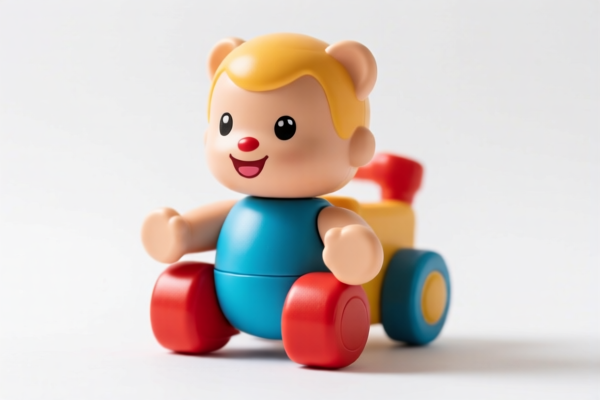
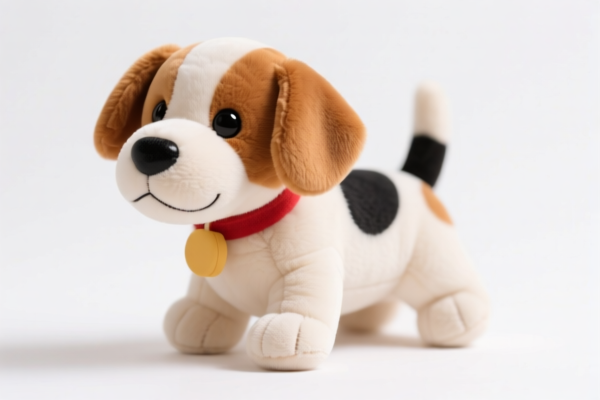


AI Analysis
🐒 Toy Monkey (Stuffed & Plastic Play Figures)
🌐 HS Code Reference & Customs Clearance Guide | 2026 Latest Tariff Breakdown | Professional Clearance Strategy
📌 I. Product Definition & Classification: Do You Really Know the "Toy Monkey"?
The "Toy Monkey" is a global best-seller in the toy industry, but its customs classification depends entirely on its primary function and material composition. In international trade, it falls into two distinct categories:
Category A: Classic Play Toys (The "Toy" Category)
Definition: Toys designed primarily for play by children (0-14 years), made of plush, fabric, or plastic.
Key Function: Entertainment, play value.
Classification Logic:* If it is clearly a "doll, toy, or plaything" intended for children's amusement.
Category B: Decorative/Collectible Figurines (The "Statue" Category)
Definition: Non-play items intended for display, home decoration, or gifting, even if shaped like a monkey.
Key Function: Decoration, aesthetic value.
Classification Logic:* If it is a "statue" made of plastic or plastic-like material, lacking typical toy features (e.g., moving parts, sound, intended play).
⚠️ Critical Distinction:
- Play-Value Dominant (e.g., plush monkey, plastic action figure) → HS 9503 (Toys)
- Decoration-Dominant (e.g., rigid plastic statue, garden ornament, gift item) → HS 3926 (Plastic Articles)
- Material Confusion: Even a "plastic monkey" can be a Toy (9503) if marketed for children, but a Statue (3926) if marketed for office/home decor.
📦 II. HS Code Classification Details (2026 Official Tariff对照)
Based on the provided data, here is the precise breakdown for Toy Monkeys under different scenarios:
| HS Code | Product Summary | Material/Type | Classification Logic |
|---|---|---|---|
9503.00.00.71 |
Toy Monkey (Doll/Other Toy) | Plush or Plastic | Classified as a "Doll, toy, or other plaything" intended for children. |
9503.00.00.73 |
Toy Monkey (Doll/Other Toy) | Plush or Plastic | Similar to above; falls under "Other dolls, toys, and games". |
3926.40.00.10 |
Decorative/Gift Monkey | Plastic | Classified as a decorative or gift article (not primarily for play). |
3926.40.00.90 |
Plastic Monkey Statue | Plastic | Classified as a statue and other ornamental articles made of plastic. |
🔍 Key Insight:
-9503Series: Applies when the item is a Toy. The "122 Clause" tariff (10%) applies on top of the base rate (0%).
-3926Series: Applies when the item is a Plastic Ornament/Statue. The base rate is higher (5.3%), and the "122 Clause" adds another 10%.
💰 III. 2026 Tariff Rate Breakdown (Detailed Policy Analysis)
✅ Target Market: United States (US)
✅ Origin: China (CN)
✅ Policy Basis: Section 301 (122 Clause) & USITC Tariffs
🎯 1. 9503.00.00.71 & 9503.00.00.73 —— Toy Monkeys (Play Category)
| Item | Detail |
|---|---|
| Base Tariff | 0.0% (Free of duty for toys under general provisions) |
| Additional Tariff (Section 301 / "122 Clause") | +10.0% (Specific punitive tariff on Chinese toys) |
| Total Tax Rate | 10.0% |
| Tax Calculation | CIF Value × 10% |
| Legal Path | HTS: 9503.00.00.71/73 → Section 301: 122 Clause |
📌 Explanation:
- These codes classify the monkey as a Toy.
- While the Base Tariff is 0%, the 122 Clause (10%) is strictly applied to Chinese-origin toys.
- Result: You pay 10% of the declared value.
🎯 2. 3926.40.00.10 & 3926.40.00.90 —— Plastic Decorative/Gift Monkeys (Statue Category)
| Item | Detail |
|---|---|
| Base Tariff | 5.3% (Standard duty for plastic articles) |
| Additional Tariff (Section 301 / "122 Clause") | +10.0% (Applied to plastic decorative goods) |
| Total Tax Rate | 15.3% |
| Tax Calculation | CIF Value × 15.3% |
| Legal Path | HTS: 3926.40.00.10/90 → Section 301: 122 Clause |
📌 Explanation:
- These codes classify the monkey as a Plastic Statue/Decoration.
- The Base Tariff (5.3%) is unavoidable for plastic goods.
- The 122 Clause (10%) is added on top.
- Result: You pay 15.3% of the declared value (5.3% higher than the toy category!).⚠️ Critical Warning:
- Do not misclassify a Toy as a Decoration to save money. The 15.3% rate is higher than the toy rate.
- Do not misclassify a Decoration as a Toy. While the rate is lower (10%), if customs determines it is a "statue," you face penalties, seizure, and back-taxes for incorrect declaration.
🛠️ IV. Customs Clearance Practical Advice (Action Plan)
✅ 1. Material & Function Verification (Crucial Step)
Before shipping, define your product's primary purpose:
| Product Scenario | Correct HS Code | Why? |
|---|---|---|
| Plush Stuffed Monkey (Soft, for kids) | 9503.00.00.71 or 73 |
Clearly a Toy. |
| Rigid Plastic Monkey (Kid's action figure) | 9503.00.00.71 or 73 |
Clearly a Toy. |
| Hard Plastic Monkey (Office desk ornament, no moving parts) | 3926.40.00.10 |
Classified as Decorative/Gift. |
| Plastic Monkey (Garden statue, heavy, outdoor use) | 3926.40.00.90 |
Classified as Statue/Ornament. |
🛑 Red Flag: If you ship a "Plastic Monkey" and label it "Toy" but it has no play features (e.g., no eyes that blink, no sound, rigid, intended for shelves), Customs may reclassify it to 3926 and audit you.
✅ 2. Declaration Tips (Best Practices)
🔥 Golden Rule: "Describe the Function, Not Just the Shape!"
| Scenario | Correct Declaration | ❌ Dangerous Declaration |
|---|---|---|
| Toy | "Plush Toy Monkey, for Children's Play, Model TM-01" | "Plastic Monkey" (Too vague, risks re-classification) |
| Decoration | "Plastic Decorative Statue, for Home Ornament, Model DS-05" | "Toy Monkey" (If it's not a toy, this is fraud) |
✅ 3. Tax Optimization Strategy
- Strategy A (For Toys): Use
9503codes. The tax is 10% (Base 0% + 122 Clause 10%). This is the lowest possible rate for monkey-shaped goods if they are toys. - Strategy B (For Decorations): Use
3926codes. The tax is 15.3% (Base 5.3% + 122 Clause 10%). - Avoid: Do not try to declare a toy as a decoration to "save money" if it's actually a toy. The 15.3% rate is higher than the 10% toy rate. The only reason to use 3926 is if the item is genuinely a decoration.
🌍 V. Global Market Comparison (2026 Context)
| Market | Recommended HS Code | Total Tax Rate (China Origin) | Key Requirement |
|---|---|---|---|
| 🇺🇸 USA | 9503.00.00.71/73 |
10.0% (Toy) / 15.3% (Decor) | Section 301 / 122 Clause |
| 🇪🇺 EU | 9503.00 |
~4% (Doll/Toy) | CE Marking |
| 🇨🇦 Canada | 9503.00 |
~5.5% (Doll/Toy) | Health & Safety Standards |
📌 Conclusion:
- USA has the highest tax due to the 122 Clause.
- Toy Monkeys (9503) are taxed at 10%.
- Plastic Decor Monkeys (3926) are taxed at 15.3%.
- Misclassification risks are high because the 102-301 clause applies to both, but the base rates differ.
📌 VI. Common Pitfalls & Avoidance Guide (Lessons Learned)
❌ Pitfall 1: Calling a "Plastic Statue" a "Toy" to avoid the 5.3% base tariff.
👉 Consequence: If Customs proves it's a statue, they charge 15.3% + Penalty.
✅ Solution: Declare honestly. If it's a statue, pay the 15.3%. If it's a toy, pay the 10%.
❌ Pitfall 2: Using generic terms like "Monkey Statue" without specifying material.
👉 Consequence: Customs may assign a higher code or request a physical inspection.
✅ Solution: Be specific: "Plastic Monkey Statue, Decorative" OR "Plush Monkey, Children's Toy".
❌ Pitfall 3: Ignoring the "122 Clause".
👉 Consequence: Assuming 0% duty because it's a toy.
✅ Solution: Always remember Toy Tax = 0% Base + 10% 122 Clause = 10%.
🎯 VII. Final Verdict: Clear, Fast, Compliant!
🎯 Summary for "Toy Monkey":
🔹 If it's a Toy: HS 9503 → 10.0% Tax (0% Base + 10% 122 Clause).
🔹 If it's a Decoration: HS 3926 → 15.3% Tax (5.3% Base + 10% 122 Clause).
🔹 Golden Rule: Do not misclassify. The difference is 5.3%, but the penalty for error is far higher!
📌 Pro Tip:
If you are exporting to the US, always verify the product's intended use. If it's for kids, use 9503. If it's for a shelf, use 3926.
Pre-classification Ruling (Ruling Letter) from US Customs is highly recommended for complex cases to avoid delays.
📣 Action Step:
📞 Contact your Freight Forwarder with:
1. Product Photos (Front, Back, Inside details)
2. Material Composition Report (Plush vs. Plastic)
3. Intended Use Statement (Play vs. Decor)🚀 Secure your shipment with the correct HS Code and avoid 15.3% surprises!
✨ Smart Customs Clearance Starts with the Right Code!
💼 Every 1% counts in your profit margin!
Customer Reviews
About HS Code Classification
The Harmonized System (HS) is an internationally standardized nomenclature developed by the World Customs Organization (WCO) to classify traded products. Over 200 countries use the HS system as the basis for customs tariffs, trade statistics, and import/export regulations.
Each HS code follows a hierarchical structure:
- Chapter (2 digits) — Broad category of goods (e.g., Chapter 84: Machinery and Mechanical Appliances)
- Heading (4 digits) — More specific grouping within the chapter
- Subheading (6 digits) — Internationally standardized breakdown, used by all WCO member countries
- National subdivisions (8-10 digits) — Country-specific extensions for further classification, such as US HTSUS 10-digit codes
Correct HS code classification is essential for smooth customs clearance, accurate duty payment, and compliance with trade regulations. Misclassification can lead to customs delays, overpayment of duties, or penalties.
When importing from CN to US, the applicable tariff rates may include:
- Most-Favored-Nation (MFN) rate — The standard duty rate applied to WTO members
- General rate — Applied to countries without trade agreements
- Trade remedy duties — Additional tariffs such as Section 301 (anti-dumping), Section 232 (national security), or countervailing duties
The information provided on this page is for reference purposes only. For official classification, please consult with your local customs authority or a licensed customs broker.