Toy Teething Pillow
CN → US| HS Code | Tariff Rate | Origin | Destination | Doc |
|---|---|---|---|---|
| 9503000071 | 10.0% | CN | US | Official Doc |
| 6307907500 | 14.3% | CN | US | Official Doc |
| 3926909989 | 22.8% | CN | US | Official Doc |
| 9503000011 | 10.0% | CN | US | Official Doc |
| 6307909891 | 24.5% | CN | US | Official Doc |
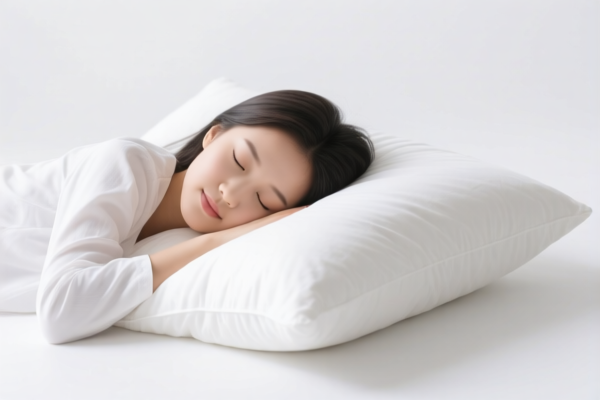
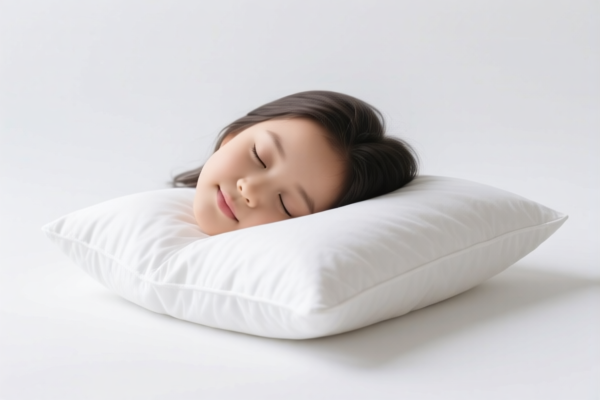
Product Images


AI Analysis
🧸 Baby Teething Pillow (Toy Teething Pillow)
🌐 HS Code Reference & Customs Clearance Guide | 2026 Latest Tariff Analysis | Professional Entry Strategies
📌 I. Product Definition & Classification: Do You Really Know "Teething Pillows"?
A Baby Teething Pillow is a specialized infant accessory designed to soothe gums during teething while often serving as a comfort toy or tummy-time prop. In international trade, its classification is highly sensitive due to the combination of soft materials (fabric/silicone) and intended use (toys/infant care). The ambiguity lies in whether it is viewed primarily as a textile product, a plastic/rubber toy, or a general soft good.
⚠️ Key Distinction Point:
- If primarily fabric/plush with minimal plastic components → Classified under Textiles (6307).
- If primarily silicone/rubber or marketed strictly as a toy → Classified under Toys (9503).
- If contains significant plastic/rubber but not strictly a "toy" → Classified under Plastics (3926) or Other Articles (6307).
📦 II. HS Code Classification Details (2026 Latest Tariff Authority Comparison)
Based on the provided data, here are the five most likely HS Code classifications for a Toy Teething Pillow, along with their tax implications.
| HS Code | Product Description | Rationale from Data | Total Tax Rate |
|---|---|---|---|
9503.00.00.71 |
Toys & Parts/Accessories | Classified as a toy/comfort item for infants; fits "toys" purpose. | 10.0% |
6307.90.75.00 |
Textile Products | Inferred as textile material (fabric/rubber combo); fits textile-made infant toy logic. | 14.3% |
3926.90.99.89 |
Other Plastic Articles | Inferred to contain plastic or rubber; falls under unlisted plastic products. | 22.8% |
9503.00.00.11 |
Toys for Infants (<3 yrs) | Form fits infant products; inferred material is food-grade silicone/rubber for <3 years. | 10.0% |
6307.90.98.91 |
Other Made-up Articles | Classified as a finished article; no material/form conflict (e.g., silicone, fabric). | 24.5% |
🔍 Critical Reminder:
- HS Code 9503 offers the lowest tax burden (10%) if the product can be convincingly argued as a "toy" or "infant care toy."
- HS Code 6307 is the second-lowest (14.3%) if the product is predominantly fabric/textile.
- HS Codes 3926 and 6307.98 result in significantly higher tariffs (22.8% - 24.5%) and should be avoided if the toy/textile argument is stronger.
💰 III. 2026 Latest Tariff Rate Breakdown (Including Surtaxes & Policy Add-ons)
✅ Applicable Country: United States (US)
✅ Origin: China (CN)
✅ Effective Date: Includes subsequent imports (Current Policy Structure)
🎯 1. 9503.00.00.71 & 9503.00.00.11 —— Toy / Infant Comfort Toy
| Item | Content |
|---|---|
| Base Duty Rate | 0.0% (Ad Valorem) |
| USITC Surtax (Section 301) | 0.0% (Note: Data shows 0% for these specific subheadings in the provided dataset) |
| IEEPA Surtax (Section 122) | +10.0% (Against China/HK products) |
| Total Effective Rate | 10.0% |
| Tax Calculation | CIF Value × 10% |
| De Minimis Exemption | ❌ Not Available (Section 122 taxes typically apply regardless of de minimis thresholds for certain categories) |
| Legal Basis Path | IEEPA:122 Clause → USITC:9503.00.00.71/11 |
📌 Explanation:
- These codes benefit from a 0% base duty.
- The 10% tax is applied specifically under the "122 Clause" (IEEPA).
- This is the most cost-effective classification for this product.
🎯 2. 6307.90.75.00 —— Textile-Made Infant Toy
| Item | Content |
|---|---|
| Base Duty Rate | 4.3% (Ad Valorem) |
| USITC Surtax (Section 301) | 0.0% (As per provided data) |
| IEEPA Surtax (Section 122) | +10.0% |
| Total Effective Rate | 14.3% |
| Tax Calculation | CIF Value × 14.3% |
| De Minimis Exemption | ❌ Not Available |
| Legal Basis Path | IEEPA:122 Clause → USITC:6307.90.75.00 |
📌 Explanation:
- Higher base duty (4.3%) compared to toys.
- Still competitive compared to plastic classifications.
🎯 3. 3926.90.99.89 —— Plastic/Rubber Article
| Item | Content |
|---|---|
| Base Duty Rate | 5.3% (Ad Valorem) |
| USITC Surtax (Section 301) | +7.5% |
| IEEPA Surtax (Section 122) | +10.0% |
| Total Effective Rate | 22.8% |
| Tax Calculation | CIF Value × 22.8% |
| De Minimis Exemption | ❌ Not Available |
| Legal Basis Path | USITC:3926.90.99.89 → FOOTNOTE:Section 301 + IEEPA:122 |
📌 Explanation:
- Highest risk category. The combination of base duty, Section 301 surtax, and IEEPA leads to a 22.8% rate.
- Avoid unless the product is predominantly rigid plastic and cannot be classified as a toy or textile.
🎯 4. 6307.90.98.91 —— Other Made-up Articles
| Item | Content |
|---|---|
| Base Duty Rate | 7.0% (Ad Valorem) |
| USITC Surtax (Section 301) | +7.5% |
| IEEPA Surtax (Section 122) | +10.0% |
| Total Effective Rate | 24.5% |
| Tax Calculation | CIF Value × 24.5% |
| De Minimis Exemption | ❌ Not Available |
| Legal Basis Path | USITC:6307.90.98.91 → FOOTNOTE:Section 301 + IEEPA:122 |
📌 Explanation:
- The most expensive classification in the provided data.
- Only use if the product is a generic soft good with no toy or specific textile function.
🛠️ IV. Customs Clearance Practical Advice (Real-World Pitfall Guide)
✅ 1. Preparation Checklist (Essential Documents)
| Document | Required | Notes |
|---|---|---|
| ✅ Product Specification Sheet | ✔️ | Must detail materials (e.g., "100% Cotton Cover, Food-Grade Silicone Filler") |
| ✅ Product Photos | ✔️ | Clear images showing the item as a toy/comfort item, not just a generic pillow |
| ✅ Commercial Invoice | ✔️ | Description should use keywords: "Infant Teething Toy," "Soft Plush Teether Pillow" |
| ✅ Material Composition Proof | ✔️ | If claiming textile (6307), provide fabric composition label. If silicone (9503), provide food-grade certification |
| ✅ Third-Party Test Report | ✔️ | ASTM F963 (Toy Safety) or CPSIA compliance strengthens the "Toy" argument |
✅ 2. Declaration Strategy (Key Tactics)
🔥 “Claim Toy Status, Avoid Plastic Penalty!”
| Scenario | Correct Declaration | Incorrect Practice |
|---|---|---|
| Product is plush with silicone teeth | 9503.00.00.71 (Toy) or 6307.90.75.00 (Textile) |
Misdeclaring as "Bedding" → Higher tax |
| Product is 100% Silicone | 9503.00.00.11 (Toy for <3yrs) |
Misdeclaring as "Plastic Article" → 22.8% |
| Product is generic fabric pillow | 6307.90.75.00 |
Misdeclaring as "Other Made-up" → 24.5% |
✅ 3. Special Handling
| Situation | Recommendation |
|---|---|
| OEM Custom Designs | Provide design drafts to prove it is marketed as a toy/teether, not just a pillow |
| Mixed Materials (Fabric + Silicone) | Argue for HS 9503 (Toy) if the primary function is teething/comfort. This is the lowest tax (10%) |
| High-Value Luxury Teething Pillows | Ensure "Toy" classification to avoid 22-24% tariffs. The 14.3% (Textile) is a safe backup |
🌍 V. Global Market Comparison (2026 Latest)
| Country/Region | Recommended HS Code | Est. Tariff (CN Origin) | Certification Required | Notes |
|---|---|---|---|---|
| 🇺🇸 USA | 9503.00.00.71 |
10.0% (Lowest) | CPSIA, ASTM F963 | Avoid 3926/6307.98 due to high surtaxes |
| 🇨🇳 China | 9503.00.00.71 |
5% - 10% | CCC (if applicable) | Domestic trade has lower barriers |
| 🇪🇺 EU | 9503.00.00.00 |
0% - 4.7% | CE, EN71 | EU generally has lower toy tariffs |
| 🇬🇧 UK | 9503.00.00.00 |
0% - 6.5% | UKCA | Post-Brexit rules apply |
| 🇦🇺 Australia | 9503.00.00.00 |
5% | AS/NZS | No Section 301/IEEPA equivalent |
📌 Conclusion:
- The USA is the most challenging market for this product due to IEEPA Section 122 and potential Section 301 duties.
- Classification as a "Toy" (9503) is crucial to minimize costs to 10%.
- Misclassification as "Plastic" or "Other Textiles" can double or triple your duty costs.
📌 VI. Common Errors & Pitfall Guide (Lessons Learned)
❌ Error 1: Declaring as "Bedding" or "Pillow"
👉 Consequence: May fall under higher duty headings or trigger scrutiny for misclassification.
👉 Result: Potential audit, back taxes, or demurrage.
❌ Error 2: Using "Plastic Article" (3926) when it’s a Soft Toy
👉 Consequence: Tariff jumps from 10% to 22.8%.
👉 Result: Unnecessary cost increase of ~12.8% on CIF value.
❌ Error 3: Ignoring IEEPA Section 122
👉 Consequence: Assuming 0% base duty means 0% total tax.
👉 Result: Unexpected 10% IEEPA tax bill at customs.
❌ Error 4: Inconsistent Material Declaration
👉 Consequence: If invoice says "Silicone" but HS Code is Textile, customs may reject.
👉 Result: Delay, inspection, or forced re-classification.
✅ Correct Approach:
"Soft Silicone & Cotton Baby Teething Toy Pillow, ASTM F963 Compliant, Model XYZ"
🎯 VII. Conclusion: Precision in Classification Saves Money!
🎯 Remember the Golden Rules:
🔹 "Toy Status is King" → Aim for HS 9503 (10% tax).
🔹 "Textile Backup" → If toy argument fails, use HS 6307.90.75 (14.3% tax).
🔹 "Avoid Plastic Penalty" → Stay away from 3926/6307.98 (22-24% tax).
🔹 "IEEPA Applies Everywhere" → Even toy codes have a 10% surcharge from China.
📌 Pro Tip:
If your Toy Teething Pillow originates from Vietnam, Thailand, or Mexico, you may avoid IEEPA Section 122 and Section 301 duties entirely, potentially reducing the tax to 0% - 4.3%.
Recommendation: Consider supply chain diversification if targeting the US market with high volumes.
📣 Immediate Action:
📞 Contact a licensed customs broker + Provide Product Photos + Request HS Code Pre-Ruling
🚀 Ensure your toys pass US customs smoothly, stay profitable, and keep babies happy!
✨ Professional Clearance Starts with Accurate Classification!
💼 Every dollar saved in duty is pure profit!
Customer Reviews
About HS Code Classification
The Harmonized System (HS) is an internationally standardized nomenclature developed by the World Customs Organization (WCO) to classify traded products. Over 200 countries use the HS system as the basis for customs tariffs, trade statistics, and import/export regulations.
Each HS code follows a hierarchical structure:
- Chapter (2 digits) — Broad category of goods (e.g., Chapter 84: Machinery and Mechanical Appliances)
- Heading (4 digits) — More specific grouping within the chapter
- Subheading (6 digits) — Internationally standardized breakdown, used by all WCO member countries
- National subdivisions (8-10 digits) — Country-specific extensions for further classification, such as US HTSUS 10-digit codes
Correct HS code classification is essential for smooth customs clearance, accurate duty payment, and compliance with trade regulations. Misclassification can lead to customs delays, overpayment of duties, or penalties.
When importing from CN to US, the applicable tariff rates may include:
- Most-Favored-Nation (MFN) rate — The standard duty rate applied to WTO members
- General rate — Applied to countries without trade agreements
- Trade remedy duties — Additional tariffs such as Section 301 (anti-dumping), Section 232 (national security), or countervailing duties
The information provided on this page is for reference purposes only. For official classification, please consult with your local customs authority or a licensed customs broker.