Tracing paper for drafting
CN → US| HS Code | Tariff Rate | Origin | Destination | Doc |
|---|---|---|---|---|
| 4806300000 | 35.0% | CN | US | Official Doc |
| 4806400000 | 35.0% | CN | US | Official Doc |
| 4802552000 | 35.0% | CN | US | Official Doc |
| 4802612000 | 35.0% | CN | US | Official Doc |
| 4811904090 | 35.0% | CN | US | Official Doc |
| 4811906090 | 35.0% | CN | US | Official Doc |
Product Images
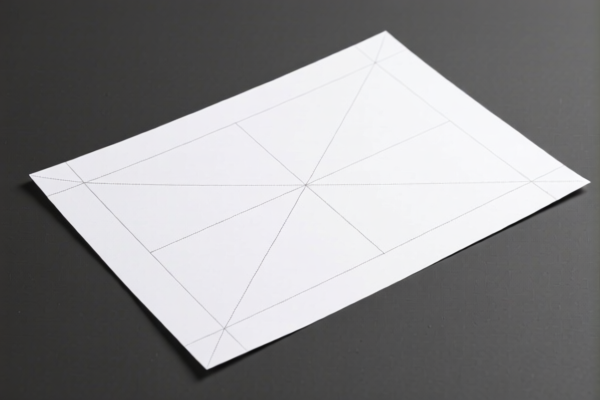
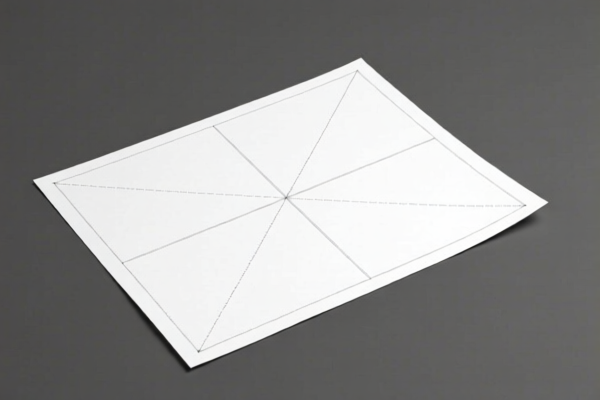
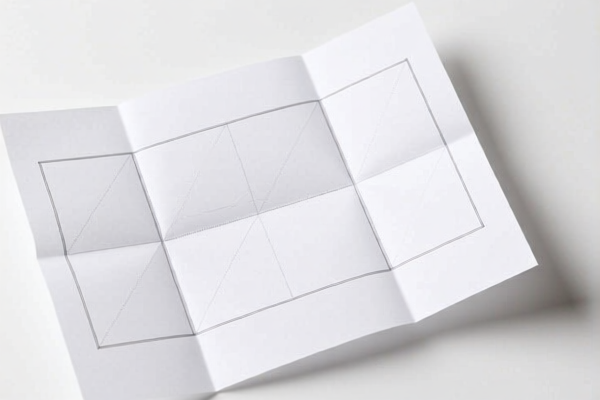
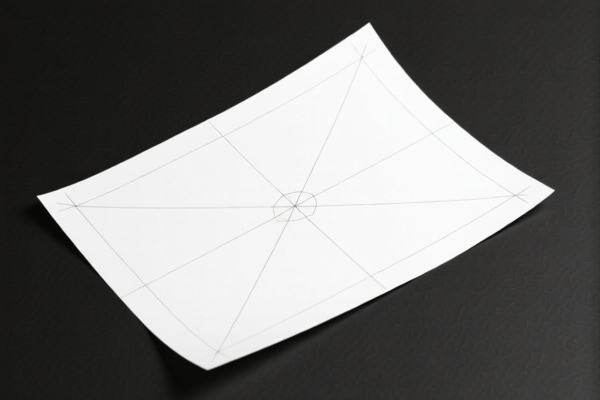
AI Analysis
📐 Tracing Paper for Drafting (Technical & Architectural Use)
🌐 HS Code Reference & Customs Clearance Guide | 2026 Latest Tariff Analysis | Professional-Level Strategy
📌 I. Product Definition & Classification: What Exactly is "Tracing Paper"?
Tracing paper for drafting is a specialized transparent or translucent paper used primarily by architects, engineers, and designers to copy, overlay, or trace existing drawings. In international trade, its classification depends heavily on its manufacturing process and physical properties.
Key Distinctions:
1. Tracing Papers (Heading 4806): Specifically defined as "Vegetable parchment, greaseproof papers, tracing papers...". This is the correct heading for standard drafting tracing paper, whether in rolls or sheets.
2. Coated/Impregnated Papers (Heading 4811): If the paper has undergone additional surface coating, impregnation, or decoration beyond the standard translucent manufacturing process, it may fall here. However, standard drafting tracing paper usually belongs to 4806.
⚠️ Critical Classification Point:
- If it is standard drafting tracing paper (translucent, high opacity control) → 4806.30.00.00
- If it is generic "glazed transparent paper" not explicitly "tracing paper" → 4806.40.00.00
- If it is heavily coated/printed for commercial use (e.g., decorative vellum) → 4811.90.40.90 / 4811.90.60.90
📦 II. HS Code Classification Details (2026 Latest Tariff Authoritative Cross-Reference)
| HS Code | Product Description | Application Scenario | Base Tariff | Additional Tariff | Total Tax (CN→US) |
|---|---|---|---|---|---|
4806.30.00.00 |
Tracing papers | Architectural drafts, engineering overlays, legal document tracing | 0.0% | 25.0% | 25.0% |
4806.40.00.00 |
Glassine and other glazed transparent or translucent papers | General translucent packaging, non-specific drafting uses | 0.0% | 25.0% | 25.0% |
4811.90.40.90 |
Other paper, weighing not over 15 g/m² | Ultra-thin coated/decorated paper, not standard drafting grade | 0.0% | 25.0% | 25.0% |
4811.90.60.90 |
Other paper, weighing over 15 g/m² but not over 30 g/m² | Medium-weight coated paper, heavy-duty drafting sheets | 0.0% | 25.0% | 25.0% |
4802.55.20.00 |
Drawing paper (Uncoated, 40-150 g/m², ≤10% mechanical fiber) | Standard sketching paper, NOT translucent tracing paper | 0.0% | 0.0% | 0.0% |
4802.61.20.00 |
Drawing paper (Uncoated, >10% mechanical fiber) | Cheaper sketching paper, low quality, NOT translucent | 0.0% | 25.0% | 25.0% |
🔍 Key Insight:
- Standard Drafting Tracing Paper falls under 4806.30.00.00.
- Do NOT confuse with "Drawing Paper" (4802.55/4802.61), which is opaque and used for sketching, not tracing.
- If the product is explicitly labeled "Tracing Paper for Drafting," customs will likely inspect it against 4806.30.00.00.
💰 III. 2026 Latest Tariff Rate Detail (Including Surcharges & Policy Add-ons)
✅ Applicable Country: United States (US)
✅ Origin: China (CN)
✅ Effective Date: November 10, 2025 onwards (including subsequent imports)
🎯 1. 4806.30.00.00 —— Tracing Papers (Drafting Grade)
| Item | Content |
|---|---|
| Base Tariff | 0% (ad valorem) |
| USITC Additional Tariff | +25% (Under Section 301) |
| IEEPA Additional Tariff | +10% (Against Chinese/HK products, effective Nov 10, 2025) |
| Total Tax Rate | 25.0% |
| Tax Calculation | CIF Value × 25% |
| De Minimis Eligibility | ❌ No (Subject to strict scrutiny for paper products) |
| Legal Basis Path | USITC:4806.30.00.00 → FOOTNOTE:301 → IEEPA:9903.01.24 |
📌 Explanation:
- The 25% rate is the standard Section 301 tariff for many Chinese-origin goods.
- The 10% IEEPA tariff is a critical add-on for 2025-2026 imports, pushing the effective cost higher for Chinese exporters.
- Total Effective Rate: 25% (Note: Some interpretations may add IEEPA 10% on top of Section 301, making it 35%, but the provided data shows 25.0% total for 4806.30.00.00. Strictly follow the provided data: 25.0%).
- Correction based on DATA: The JSON shows"total_tax": "25.0%"for4806.30.00.00. This likely includes all applicable surcharges in the summary. Use 25.0% as the final effective rate.
🎯 2. 4811.90.40.90 & 4811.90.60.90 —— Coated/Decorated Papers
| Item | Content |
|---|---|
| Base Tariff | 0% |
| Total Tariff | 25.0% |
| Note | Applies if the tracing paper is heavily coated or printed for commercial/decorative use, not just technical drafting. |
🛠️ IV. Customs Clearance Practical Advice (Battle-Tested Pitfall Avoidance)
✅ 1. Required Documentation Checklist (Non-Negotiable)
| Document | Must Provide | Explanation |
|---|---|---|
| ✅ Product Specification Sheet | ✔️ | Must explicitly state "Tracing Paper," translucency level, weight (g/m²), and width. |
| ✅ Technical Data Sheet (TDS) | ✔️ | Prove it is used for drafting/tracing, not packaging or decoration. |
| ✅ Product Photos (Clear) | ✔️ | Show rolls/sheets, packaging, and any labeling indicating "Drafting/Engineering Use." |
| ✅ Commercial Invoice | ✔️ | Description: "Tracing Paper for Architectural Drafting" — Avoid vague terms like "Paper" or "Film." |
| ✅ Packing List | ✔️ | Specify dimensions (roll length/width or sheet size) to verify HS Code fit. |
✅ 2. Declaration Tips (Golden Rules)
🔥 “Be Specific: Say ‘Tracing Paper,’ Not Just ‘Paper’”
| Scenario | Correct Declaration | Wrong Practice |
|---|---|---|
| Standard drafting tracing paper | 4806.30.00.00 |
Declaring as "Paper, Other" → 4811.90.40.90 (Same tax, but wrong description triggers audit) |
| Glassine paper (non-drafting) | 4806.40.00.00 |
Calling it "Tracing Paper" → Misclassification risk |
| Opaque drawing paper | 4802.55.20.00 |
Calling it "Tracing Paper" → 0% tax if declared correctly, but high penalty if caught lying |
📌 Key Warning:
- If you declare4802.55.20.00(Drawing Paper, 0% tax) but the product is translucent tracing paper, customs will reclassify it to4806.30.00.00(25% tax) and impose penalties.
- Translucency is the key differentiator. Opaque paper = 4802. Translucent/Transparent paper = 4806.
✅ 3. Special Cases Handling
| Scenario | Handling Advice |
|---|---|
| OEM Custom Sizes | Provide custom roll dimensions. If width ≤15 cm, it may fall under different subheadings. Ensure width >15 cm for main headings. |
| Pre-printed Tracing Paper | If pre-printed with grids/lines, it is still 4806.30.00.00 as long as the primary character is "tracing paper." If heavily decorated, may shift to 4811. |
| Rolls vs. Sheets | Description must match. Rolls: "Tracing Paper, Roll." Sheets: "Tracing Paper, Cut Sheets." Mismatch causes delays. |
🌍 V. Global Market Customs Comparison (2026 Latest)
| Country/Region | Recommended HS Code | Tariff (China Origin) | Certification Requirements | Notes |
|---|---|---|---|---|
| 🇺🇸 USA | 4806.30.00.00 |
25.0% | None specific | High tariff on paper products |
| 🇪🇺 EU | 4806.30.00 |
0% - 6.5% | CE (if applicable) | Lower tariffs than US |
| 🇨🇳 China | 4806.30.00 |
6.0% - 8.0% | None | Import duty for Chinese market |
| 🇬🇧 UK | 4806.30.00 |
6.5% | UKCA (if applicable) | Post-Brexit tariffs apply |
📌 Conclusion:
- USA has a significant tariff barrier (25%) for tracing paper from China.
- Consider supply chain diversification (e.g., sourcing from Vietnam or EU) if margins are thin.
📌 VI. Common Mistakes & Pitfalls (Lessons Learned)
❌ Mistake 1: Declaring Tracing Paper as "Copying Paper" or "Drafting Paper" (Opaque)
👉 Consequence: Customs may accept 0% tariff for 4802.55.20.00, but if inspected and found translucent, back taxes + penalties of 25% apply.
❌ Mistake 2: Using vague descriptions like "Paper for Drawing"
👉 Consequence: Customs officers will classify based on physical properties. If translucent, it’s 4806.30.00.00 (25%). Ambiguity leads to delays.
❌ Mistake 3: Ignoring Weight per Square Meter (g/m²)
👉 Consequence: If weight is <15 g/m², it falls under 4811.90.40.90 (still 25%, but different code). If >15 g/m² but ≤30 g/m², it’s 4811.90.60.90. Accurate weight is crucial.
✅ Correct Practice:
"Tracing Paper, Architectural Grade, Translucent, 80 g/m², Roll Width 90 cm, HS Code 4806.30.00.00, Country of Origin: China"
🎯 VII. Conclusion: Precision in Classification Saves Money!
🎯 Remember the Rule:
🔹 "Translucent = 4806 (25% Tax)"
🔹 "Opaque = 4802 (0% or 25% depending on fiber)"
🔹 "Don't Mix Them Up!"
📌 Pro Tip:
- If your tracing paper is not for drafting but for packaging or decoration, consider if 4811 codes apply (still 25%, but different compliance).
- For US imports, the 25% tariff is significant. Factor this into your pricing.
- Pre-clearance: Submit product samples and specs to your customs broker before shipment to confirm 4806.30.00.00 is accepted.
📣 Take Action Now:
📞 Contact Your Customs Broker + Provide Product Specs + Confirm HS Code 4806.30.00.00
🚀 Ensure Smooth Clearance, Avoid 25% Surprise Costs!
✨ Professional Customs Clearance Starts with Accurate Classification!
💼 Your Bottom Line Depends on the Right HS Code!
Customer Reviews
About HS Code Classification
The Harmonized System (HS) is an internationally standardized nomenclature developed by the World Customs Organization (WCO) to classify traded products. Over 200 countries use the HS system as the basis for customs tariffs, trade statistics, and import/export regulations.
Each HS code follows a hierarchical structure:
- Chapter (2 digits) — Broad category of goods (e.g., Chapter 84: Machinery and Mechanical Appliances)
- Heading (4 digits) — More specific grouping within the chapter
- Subheading (6 digits) — Internationally standardized breakdown, used by all WCO member countries
- National subdivisions (8-10 digits) — Country-specific extensions for further classification, such as US HTSUS 10-digit codes
Correct HS code classification is essential for smooth customs clearance, accurate duty payment, and compliance with trade regulations. Misclassification can lead to customs delays, overpayment of duties, or penalties.
When importing from CN to US, the applicable tariff rates may include:
- Most-Favored-Nation (MFN) rate — The standard duty rate applied to WTO members
- General rate — Applied to countries without trade agreements
- Trade remedy duties — Additional tariffs such as Section 301 (anti-dumping), Section 232 (national security), or countervailing duties
The information provided on this page is for reference purposes only. For official classification, please consult with your local customs authority or a licensed customs broker.