Track Light
CN → US| HS Code | Tariff Rate | Origin | Destination | Doc |
|---|---|---|---|---|
| 9405426000 | 41.0% | CN | US | Official Doc |
| 9405428440 | 38.9% | CN | US | Official Doc |
| 8536610000 | 37.7% | CN | US | Official Doc |
| 8536698000 | 37.7% | CN | US | Official Doc |
Product Images
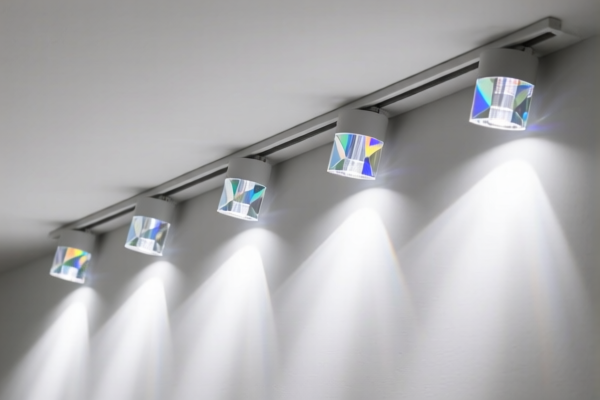
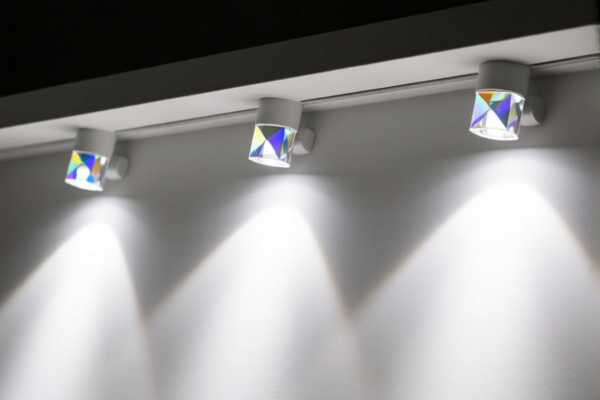
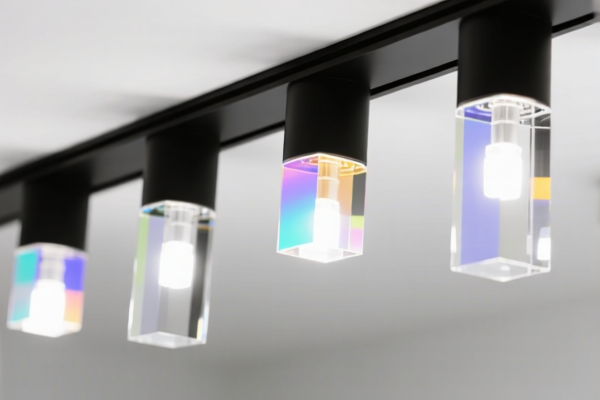

AI Analysis
🌟 Track Light (轨道灯) – The Ultimate 2026 HS Code & Customs Clearance Guide
🌐 HS Code Reference & Clearance Strategy | 2026 Tariff Breakdown | Expert Compliance Tactics
📌 I. Product Definition & Classification: Are You Classifying "Track Lights" Correctly?
Track Lights are directional lighting fixtures mounted on an electrical track system, widely used in retail, galleries, offices, and residential spaces. In international trade, their classification hinges on functionality, component integration, and construction material.
⚠️ Critical Distinction:
- Is it a complete lighting unit (fixture + housing + LED + driver)? → Likely Chapter 94 or 8536.
- Is it a component only (socket, head, plug)? → Likely 8536.
- Is it a raw material assembly (base metal fixture)? → Likely 9405.
📦 II. 2026 HS Code Classification Matrix (Data-Driven & Customs-Compliant)
Based on the latest tariff data, here are the four valid HS Code paths for Track Lights, complete with tax breakdowns.
| HS Code | Product Description | Functional Attributes | Material/Construction |
|---|---|---|---|
| 9405.42.60.00 | Electric Lighting Fixtures | LED lighting application, complete track light system | Base Metal (贱金属) |
| 9405.42.84.40 | Electric Lighting Fixtures | Matches LED lighting category; function matches fixture class | Metal or Plastic (Mixed) |
| 8536.61.00.00 | Lighting Components | Core functional component (Socket/Head), ≤1,000V | Electrical Device (Voltage ≤1kV) |
| 8536.69.80.00 | Lighting Components | Core parts (Socket, Plug, Sockets) within electrical category | Electrical Device (Plug/Socket) |
🔍 Why These Codes?
- 9405 Series: Applied when the item is a finished luminaire (light fixture). The distinction between 60.00 and 84.40 depends on the material (Base Metal vs. Mixed).
- 8536 Series: Applied when the item is a component (e.g., a replacement head, socket, or plug) sold separately, functioning as an electrical switch or connector.
💰 III. 2026 Tariff Rate Breakdown (Detailed Tax Clauses)
✅ Scope: US Import (China Origin)
✅ Effective: Current 2026 Tariff Regime
✅ Applicable to: Track Lights (Finished vs. Components)
🎯 1. 9405.42.60.00 (Base Metal, LED Fixture)
The most common classification for heavy-duty metal track lights.
| Tax Component | Rate | Source/Clause |
|---|---|---|
| Base Tariff | 6.0% | Standard MFN Rate |
| Section 301 (Add-on) | 25.0% | "China Add-on" Tariff |
| Section 122 (Add-on) | 10.0% | Specific China Tariff Clause |
| TOTAL TAX RATE | 41.0% | High Duty Risk |
📌 Explanation:
- 6.0% is the standard duty for lighting fixtures.
- 25.0% is the Section 301 punitive tariff on Chinese electronics.
- 10.0% is the specific "Section 122" clause targeting Chinese lighting exports.
- Result: You pay 41% of the CIF value immediately.
🎯 2. 9405.42.84.40 (Metal/Plastic Mix, LED Fixture)
For lighter, mixed-material track lights.
| Tax Component | Rate | Source/Clause |
|---|---|---|
| Base Tariff | 3.9% | Standard MFN Rate |
| Section 301 (Add-on) | 25.0% | "China Add-on" Tariff |
| Section 122 (Add-on) | 10.0% | Specific China Tariff Clause |
| TOTAL TAX RATE | 38.9% | High Duty Risk |
📌 Explanation:
- Lower base rate (3.9%) due to material mix (plastic components).
- Still carries 35% in punitive tariffs (25% + 10%).
- Total: 38.9%. Significant cost impact on profit margins.
🎯 3. 8536.61.00.00 (Component: ≤1,000V Socket/Head)
For standalone socket heads or voltage-controlled components.
| Tax Component | Rate | Source/Clause |
|---|---|---|
| Base Tariff | 2.7% | Standard MFN Rate |
| Section 301 (Add-on) | 25.0% | "China Add-on" Tariff |
| Section 122 (Add-on) | 10.0% | Specific China Tariff Clause |
| TOTAL TAX RATE | 37.7% | High Duty Risk |
📌 Explanation:
- Even as a "component," the 35% punitive surcharge applies.
- 37.7% is the effective duty for components like voltage-limited sockets.
🎯 4. 8536.69.80.00 (Component: General Plugs/Sockets)
For general purpose track plugs and sockets.
| Tax Component | Rate | Source/Clause |
|---|---|---|
| Base Tariff | 2.7% | Standard MFN Rate |
| Section 301 (Add-on) | 25.0% | "China Add-on" Tariff |
| Section 122 (Add-on) | 10.0% | Specific China Tariff Clause |
| TOTAL TAX RATE | 37.7% | High Duty Risk |
📌 Explanation:
- Identical to 8536.61.00.00 regarding the punitive structure.
- 37.7% total. Do not underestimate the impact of the "Base + 35%" formula.
🛠️ IV. Customs Clearance Strategy (Expert Tips)
✅ 1. Declaration Strategy: "Finish vs. Part"
| Scenario | Correct Classification | Risk if Wrong |
|---|---|---|
| Complete Fixture (Track + Head + Transformer) | 9405.42.60.00 or 9405.42.84.40 | Misclassifying as a component (8536) → Penalty + 2% Base Rate vs. 3-6% Base Rate |
| Replacement Head Only (No track) | 8536.61.00.00 | Misclassifying as a fixture → 41% vs. 37.7% (Overpayment) |
| Track Rail Only (No lights) | Different Code (e.g., 9405.40) | Do NOT use 9405.42.60 if no light source exists! |
🔥 Pro Tip:
"If the item includes the driver, LED chip, and housing, declare as 9405. If it is just the metal head/socket, declare as 8536."
✅ 2. Documentation Checklist
To avoid delays at US Customs (CBP): - Technical Spec Sheet: Must explicitly state "Voltage ≤1,000V" for 8536 codes. - Material Declaration: "Base Metal" vs. "Metal/Plastic Mix" to determine 9405.42.60 vs. 84.40. - Assembly Diagram: Show if the LED driver is internal or external. - Country of Origin: Must be clearly marked "Made in China" to trigger the correct tax calculation (35% surcharge).
✅ 3. Cost Optimization
- Avoid "Component" Classification for complete units: While 8536 has a slightly lower base rate (2.7%), the total effective rate is almost identical (37.7% vs. 38.9%). Focus on accurate classification to avoid audits, not minor tax savings.
- Verify Section 122 Applicability: Ensure your supplier's product type matches the "Section 122" list. If your product is excluded from Section 122 (rare for LED lighting), you could save the 10% (Total ~31%).
🌍 V. Global Market Comparison (2026)
| Region | Typical HS Code | Base Rate | US Surcharge | Effective Rate |
|---|---|---|---|---|
| 🇺🇸 USA | 9405.42.60/84.40 or 8536 | 2.7% - 6.0% | +35% (301+122) | 37.7% - 41.0% |
| 🇪🇺 EU | 9405.40 | 0% - 2.5% | 0% | Low |
| 🇨🇳 China | 9405.40 | 0% - 4.5% | 0% | Low |
📌 Conclusion:
US Market is the Most Expensive for Track Lights due to the叠加 (stacked) tariffs.
- Strategy: If shipping to the US, ensure accurate material declaration to avoid overpaying on the 6.0% vs 3.9% base.
- Warning: No de minimis exemption applies for these codes. All units are taxed.
📌 VI. Common Pitfalls & Avoidance
❌ Mistake 1: Declaring a complete track light as a component (8536).
👉 Consequence: Customs may reject it as "incomplete," or assess the 41% rate if they reclassify it anyway.
✅ Fix: Declare as 9405.42.60.00 for metal fixtures.
❌ Mistake 2: Ignoring Section 122 (10%).
👉 Consequence: You calculate 35% (25%+10%) but forget the 10% is specific to this tariff line.
✅ Fix: Always check the Tax Detail line: "122条款关税10%".
❌ Mistake 3: Misidentifying Material.
👉 Consequence: Declaring "Plastic" for a metal-heavy fixture leads to a 38.9% rate instead of 41% (or vice versa).
✅ Fix: Use the Summary to confirm: "Base Metal" → 9405.42.60.
🎯 VII. Final Verdict: The "Track Light" Tariff Formula
🚀 The Golden Rule:
"Complete Unit = 9405 (41%) | Component = 8536 (37.7%) | Total = Base + 25% + 10%"💡 Action Plan:
1. Identify if your product is a Fixture (9405) or Part (8536).
2. Calculate the exact 41% or 38.9% duty immediately.
3. Prepare specs showing Material (Metal vs. Plastic) and Voltage (<1000V).
4. Budget for the 35% punitive surcharge—it is non-negotiable for Chinese-origin goods.
📣 Ready to Ship?
📞 Consult a Customs Broker to verify your 9405 vs. 8536 split.
📝 Label your invoices: "Track Light (LED), Metal Base, Voltage 120V"
🚀 Protect your margin: Know the 41.0% vs. 37.7% difference before you pack!
✨ Precision Classification = Profit Protection
💼 Don't let a 3% base rate difference cost you thousands!
Customer Reviews
About HS Code Classification
The Harmonized System (HS) is an internationally standardized nomenclature developed by the World Customs Organization (WCO) to classify traded products. Over 200 countries use the HS system as the basis for customs tariffs, trade statistics, and import/export regulations.
Each HS code follows a hierarchical structure:
- Chapter (2 digits) — Broad category of goods (e.g., Chapter 84: Machinery and Mechanical Appliances)
- Heading (4 digits) — More specific grouping within the chapter
- Subheading (6 digits) — Internationally standardized breakdown, used by all WCO member countries
- National subdivisions (8-10 digits) — Country-specific extensions for further classification, such as US HTSUS 10-digit codes
Correct HS code classification is essential for smooth customs clearance, accurate duty payment, and compliance with trade regulations. Misclassification can lead to customs delays, overpayment of duties, or penalties.
When importing from CN to US, the applicable tariff rates may include:
- Most-Favored-Nation (MFN) rate — The standard duty rate applied to WTO members
- General rate — Applied to countries without trade agreements
- Trade remedy duties — Additional tariffs such as Section 301 (anti-dumping), Section 232 (national security), or countervailing duties
The information provided on this page is for reference purposes only. For official classification, please consult with your local customs authority or a licensed customs broker.