Track Pants for Men
CN → US| HS Code | Tariff Rate | Origin | Destination | Doc |
|---|---|---|---|---|
| 6112191050 | 45.7% | CN | US | Official Doc |
| 6103230040 | 0.0% | CN | US | Official Doc |
| 6211335030 | 33.5% | CN | US | Official Doc |
| 6112120050 | 45.7% | CN | US | Official Doc |
| 6103431520 | 45.7% | CN | US | Official Doc |
| 6211339030 | 33.5% | CN | US | Official Doc |
Product Images
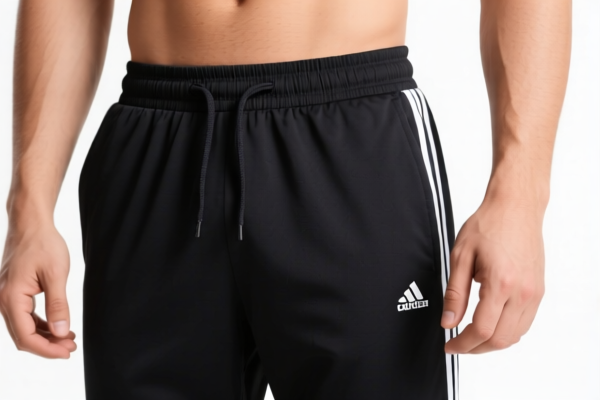
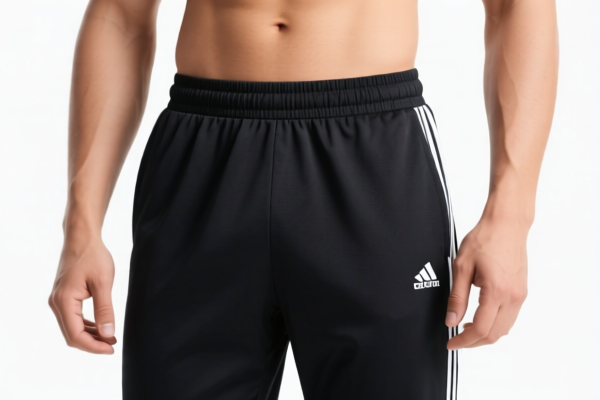
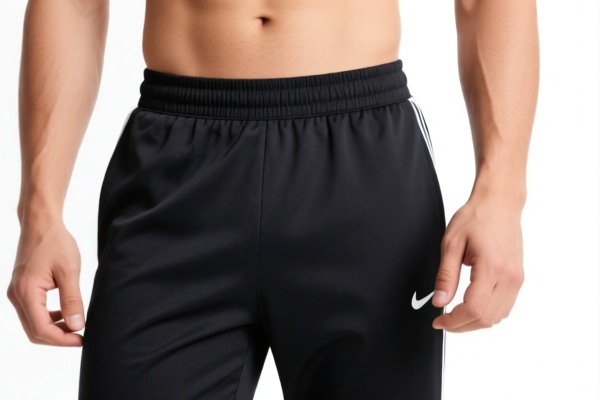
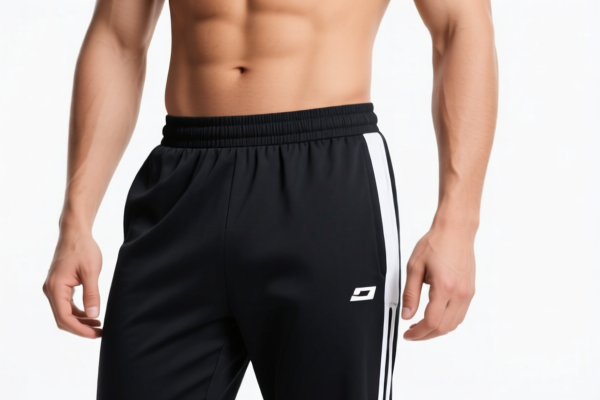
AI Analysis
👖 Men's Polyester Track Pants (Man-made Fibers)
🌐 HS Code Reference & Customs Clearance Guide | 2026 Latest Tariff Breakdown | Strategic Import Strategy for US Market
📌 Part 1: Product Definition & Classification: What Exactly Are "Men's Track Pants"?
Men's track pants, specifically those made of Polyester (Man-made Fibers), occupy a tricky niche in customs classification. They fall between "Knitted/P Crocheted Apparel" (Chapter 61) and "Tailored/Besoke Apparel" (Chapter 62). The key to accurate classification lies in the fabric structure (Knitted vs. Woven) and the specific design (e.g., is it part of a suit? is it a simple pant?).
⚠️ Critical Distinction Points:
- If the pants are Knitted/Crocheted (e.g., sweatpant material, jersey knit): They belong to Chapter 61.
- If the pants are Woven (e.g., track suit material, nylon/polyester weave): They belong to Chapter 62.
- Composition: 100% Polyester falls under "Man-made Fibers" (Subheading 6103.43, 6112.19, 6211.33, etc.).
📦 Part 2: HS Code Classification Matrix (2026 Customs Tariff Authority)
Below are the 6 specific HS Codes from your data, categorized by Chapter and Fabric Type.
| HS Code | Chapter | Fabric Type | Product Description & Logic | Key Classification Trigger |
|---|---|---|---|---|
6112.19.10.50 |
61 (Knitted) | Knitted/Crocheted | Men's Track Pants, Man-made Fibers. Specifically classified under "Other men's track suits/pants of man-made fibers." | Knitted Polyester. Not part of a formal suit set. General track pants. |
6103.23.00.40 |
61 (Knitted) | Knitted/Crocheted | Men's Track Pants, Synthetic Fibers. Classified as "Other men's woven/knitted trousers of synthetic fibers." Note: This code often applies to specific synthetic blends or specific cuts. | Knitted/Specific Synthetic Cut. Often used when the "track suit" designation doesn't fit Chapter 61.12 perfectly. |
6211.33.50.30 |
62 (Woven) | Woven | Men's Track Pants, Man-made Fibers. Classified as "Other men's woven garments of synthetic fibers." Specifically for "Track Suit Trousers" that are Woven. | Woven Polyester. Part of a woven track suit or standalone woven pants. |
6112.12.00.50 |
61 (Knitted) | Knitted/Crocheted | Men's Track Pants, Synthetic Fibers. Specifically for Polypropylene/Polyester Knitted track pants. | Knitted Polyester. Similar to 6112.19 but specific sub-code for synthetic track wear. |
6103.43.15.20 |
61 (Knitted) | Knitted/Crocheted | Men's Track Pants, Synthetic Fibers. Classified under "Trousers, Breeches & Shorts, of synthetic fibers." | Knitted Synthetic Trousers. Broader category if "Track Pants" isn't the primary descriptor. |
6211.33.90.30 |
62 (Woven) | Woven | Men's Track Pants, Man-made Fibers. "Other men's woven garments of synthetic fibers." For woven pants not specified elsewhere. | Woven Polyester. Generic woven men's synthetic pants (if not a full suit). |
🔍 Key Insight:
- Chapter 61 (61xx) = Knitted (Stretchy, jersey-like, sweatpant material).
- Chapter 62 (62xx) = Woven (Stiff, track-suit jacket matching, non-stretch).
- Polyester = Man-made Fibers → Triggers higher base duties (28.2% or 16.0%) compared to cotton.
💰 Part 3: 2026 Latest Tariff Rate Breakdown (Including Surcharges)
✅ Applicable Country: United States (US)
✅ Origin: China (CN)
✅ Effective Date: Current rates apply (including Section 301, Section 232, and IEEPA surcharges)
The tariff structure for these items is complex due to multiple layers of surcharges. Here is the detailed breakdown for each HS Code cluster.
🎯 Cluster A: The 45.7% Total Rate (Most Common for Knitted Polyester)
Applies to: 6112.19.10.50, 6112.12.00.50, 6103.43.15.20
| Component | Rate | Description |
|---|---|---|
| Base Duty | 28.2% | Standard US MFN (Most Favored Nation) duty for men's knitted synthetic pants. |
| Section 301 Surcharge | 7.5% | Tariff imposed on Chinese imports under Trade Act of 1974, Section 301. |
| Section 122 / IEEPA Surcharge | 10.0% | Additional surcharge under International Emergency Economic Powers Act (IEEPA) for specific Chinese textile/apparel categories. |
| TOTAL EFFECTIVE RATE | 45.7% | 28.2% + 7.5% + 10.0% |
📌 Explanation:
- This is the highest tier of taxation.
- It applies to most Knitted (Chapter 61) polyester men's pants.
- De Minimis Exemption (Section 321): ❌ NOT AVAILABLE. These codes are explicitly excluded from the $800 de minimis exemption due to the Section 301 and IEEPA surcharges. You must pay full duty on entry.
🎯 Cluster B: The 33.5% Total Rate (Woven Polyester)
Applies to: 6211.33.50.30, 6211.33.90.30
| Component | Rate | Description |
|---|---|---|
| Base Duty | 16.0% | Lower base duty for woven synthetic garments compared to knitted. |
| Section 301 Surcharge | 7.5% | Same Section 301 surcharge as above. |
| Section 122 / IEEPA Surcharge | 10.0% | Same IEEPA surcharge as above. |
| TOTAL EFFECTIVE RATE | 33.5% | 16.0% + 7.5% + 10.0% |
📌 Explanation:
- Woven (Chapter 62) goods generally have lower base duties.
- However, the surcharges remain the same, so the total is still significant.
- De Minimis Exemption: ❌ NOT AVAILABLE. Same exclusion as Cluster A.
🎯 Special Case: 6103.23.00.40
Total Rate: The rate applicable to each garment in the ensemble if separately classified + 17.5%
| Component | Rate | Description |
|---|---|---|
| Base Duty | Variable | Depends on the specific item in the ensemble (e.g., if it's a shirt + pants set, the shirt might have a different base rate). |
| Section 301 Surcharge | 7.5% | Fixed surcharge. |
| Section 122 / IEEPA Surcharge | 10.0% | Fixed surcharge. |
| TOTAL | Variable + 17.5% | Complex Calculation. |
📌 Explanation:
- This code is used for Ensembles (e.g., a matching top and bottom sold together).
- The base duty is calculated per piece as if they were sold separately, then summed.
- The 17.5% fixed surcharge (7.5% + 10%) applies to the total ensemble value.
- De Minimis Exemption: ❌ NOT AVAILABLE.
🛠️ Part 4: Customs Clearance Practical Advice (Pitfall Avoidance Guide)
✅ 1. Documentation Checklist (Mandatory)
| Document | Required? | Reason |
|---|---|---|
| ✅ Commercial Invoice | ✔️ | Must clearly state: "Men's Track Pants, 100% Polyester, Knitted/Woven." |
| ✅ Packing List | ✔️ | Must match invoice. Include HS Code on each line item. |
| ✅ Bill of Lading/Air Waybill | ✔️ | Must show shipper/consignee details. |
| ✅ Product Photos | ✔️ | Crucial: Show the weave/knit structure. |
| > - Knitted: Stretchy, looped texture. | ||
| > - Woven: Crisp, intersecting threads. | ||
| > This helps customs officers choose between Chapter 61 and 62. | ||
| ✅ Material Test Report | ✔️ | 100% Polyester confirmation. If blended (e.g., 90% Poly/10% Spandex), it may still be "Man-made Fibers," but the exact composition must be declared. |
| ✅ Country of Origin | ✔️ | Must be China. If not, surcharges may not apply (but base duty remains). |
✅ 2. Classification Strategy & Tips
🔥 "Knitted = 61 (45.7%), Woven = 62 (33.5%). Know the Fabric!"
| Scenario | Recommended HS Code | Reason |
|---|---|---|
| Sweatpants (Soft, stretchy, jersey knit) | 6112.19.10.50 or 6112.12.00.50 |
Knitted polyester. Most common for "track pants" in casual wear. |
| Track Suit Trousers (Stiff, matching jacket, woven) | 6211.33.50.30 |
Woven polyester. Often part of a formal track suit. |
| Ensemble (Top + Bottom sold as one unit) | 6103.23.00.40 |
Specific code for synthetic fiber ensembles. |
| Other Synthetic Trousers (Not specifically "track") | 6103.43.15.20 or 6211.33.90.30 |
Generic fallback codes if design doesn't fit "track" definition. |
✅ 3. Critical Warnings & Pitfalls
| ❌ Mistake | ✅ Consequence | 💡 Solution |
|---|---|---|
| Misclassifying Knitted as Woven | Underpayment of Base Duty (16% vs 28.2%) | Provide fabric swatch/photo. Customs will audit. Risk of 25% penalty + interest. |
| Claiming De Minimis ($800) | Goods Seized or Returned. Section 301/IEEPA goods are excluded from 321 exemption. | Pay full duty at entry. Do not attempt to split shipments to avoid de minimis. |
| Incorrect "Ensemble" Declaration | Over/Under payment. If declared as ensemble but shipped separately, classification fails. | Declare as individual items unless sold in a single retail package with a unified SKU. |
| Missing Section 122/IEEPA Code | Customs may hold shipment for tariff verification. | Ensure HS Code suffix includes the correct sub-headings that trigger the surcharge. |
✅ 4. Cost Optimization Tips
- Check for Exclusions: Are there any USITC Exclusions for Section 301? (Currently, most apparel is excluded from exclusions, but verify current list).
- Consider Third-Country Transshipment: ⚠️ Illegal if done to evade tariffs. Do not relabel China-made goods as "Made in Vietnam" unless substantial transformation occurred. This leads to fraud penalties.
- Optimize Fabric:
- If you can use Cotton Blend (e.g., 60% Cotton/40% Polyester), the HS Code may change to Chapter 61.03/62.03 with lower base duties (e.g., 17-20%) and potentially no Section 301 surcharge (if cotton is not subject to 301).
- Action: Consult with a customs broker to see if a cotton blend offers a lower total landed cost despite potentially higher base duty if 301 is removed.
🌍 Part 5: Global Market Comparison (2026)
| Market | HS Code Trend | Base Duty | Surcharge | Total Effective Rate | De Minimis? |
|---|---|---|---|---|---|
| 🇺🇸 USA | 6112.19.10.50 / 6211.33.50.30 |
16-28% | 17.5% (301+IEEPA) | 33.5% - 45.7% | ❌ No |
| 🇨🇳 China (Import) | Similar codes | 0-10% | None | 0-10% | ✅ Yes (if <5000 RMB) |
| 🇪🇺 EU | Similar codes | 12-17% | None | 12-17% | ✅ Yes (if <150 EUR) |
| 🇬🇧 UK | Similar codes | 12-17% | None | 12-17% | ✅ Yes (if <£135) |
| 🇨🇦 Canada | Similar codes | 17-18% | None | 17-18% | ✅ Yes (if <CAD $150) |
📌 Conclusion:
- The US is the most expensive market for Chinese-made polyester track pants due to Section 301 and IEEPA surcharges.
- Base duty differences (Knitted 28.2% vs Woven 16%) create a 12.2% savings if you switch from Knitted to Woven.
- De Minimis is NOT an option for US imports of these items.
📌 Part 6: Common Errors & How to Avoid Them
❌ Error 1: Shipping track pants via postal service claiming "Gift" to avoid duty.
👉 Result: Customs flags "commercial intent" → Seizure + Penalty.
✅ Fix: Declare as commercial shipment with correct HS Code.
❌ Error 2: Using "Sportswear" as a generic description.
👉 Result: Customs officers may choose the wrong HS Code (e.g., misclassifying woven as knitted).
✅ Fix: Use precise terms: "Men's Woven Polyester Track Pants, Model XYZ."
❌ Error 3: Ignoring the Section 122/IEEPA 10% surcharge.
👉 Result: Underpayment of 10% → Balance due + Interest upon audit.
✅ Fix: Always include the 10% IEEPA surcharge in your landed cost calculation.
🎯 Part 7: Conclusion & Action Plan
🎯 Key Takeaway:
"For Men's Polyester Track Pants to the US:
- Knitted = 45.7% Total Duty
- Woven = 33.5% Total Duty
- De Minimis = No Exemption
- Documentation = Fabric Photo + Material Test"
📌 Next Steps for Importers:
1. Confirm Fabric Type: Is it Knitted or Woven?
2. Calculate Landed Cost: Include 45.7% (Knitted) or 33.5% (Woven) duty.
3. Prepare Documentation: Photos, Test Reports, Accurate Descriptions.
4. Consult a Broker: For large volumes, consider pre-ruling or exploring cotton blends to reduce Section 301 exposure.
✨ Smart Customs, Higher Profits!
💼 Your Bottom Line Depends on Accurate Classification!
Customer Reviews
About HS Code Classification
The Harmonized System (HS) is an internationally standardized nomenclature developed by the World Customs Organization (WCO) to classify traded products. Over 200 countries use the HS system as the basis for customs tariffs, trade statistics, and import/export regulations.
Each HS code follows a hierarchical structure:
- Chapter (2 digits) — Broad category of goods (e.g., Chapter 84: Machinery and Mechanical Appliances)
- Heading (4 digits) — More specific grouping within the chapter
- Subheading (6 digits) — Internationally standardized breakdown, used by all WCO member countries
- National subdivisions (8-10 digits) — Country-specific extensions for further classification, such as US HTSUS 10-digit codes
Correct HS code classification is essential for smooth customs clearance, accurate duty payment, and compliance with trade regulations. Misclassification can lead to customs delays, overpayment of duties, or penalties.
When importing from CN to US, the applicable tariff rates may include:
- Most-Favored-Nation (MFN) rate — The standard duty rate applied to WTO members
- General rate — Applied to countries without trade agreements
- Trade remedy duties — Additional tariffs such as Section 301 (anti-dumping), Section 232 (national security), or countervailing duties
The information provided on this page is for reference purposes only. For official classification, please consult with your local customs authority or a licensed customs broker.