Tractor (8701240080)
CN → US| HS Code | Tariff Rate | Origin | Destination | Doc |
|---|---|---|---|---|
| 8701220015 | 39.0% | CN | US | Official Doc |
| 8704420080 | 60.0% | CN | US | Official Doc |
| 8704420080 | 60.0% | CN | US | Official Doc |
Product Images
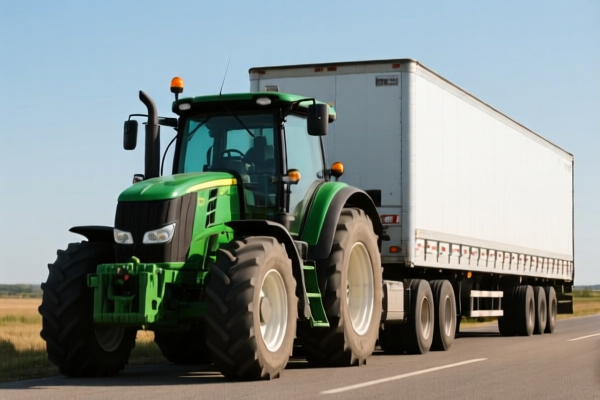
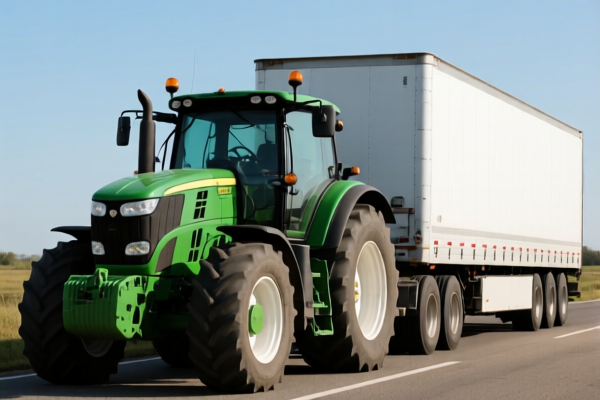
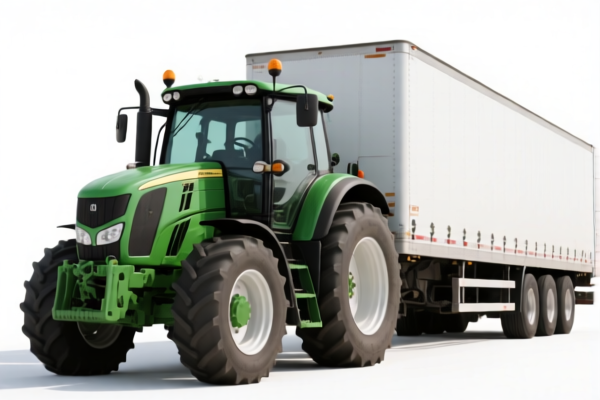
AI Analysis
🚜 Tractors (Agricultural Machinery with Dual Power Systems)
🌐 HS Code Reference & Customs Clearance Guide | 2026 Latest Tariff Analysis | Specialized Clearance Strategy for Hybrid & Electric Agriculture Equipment
📌 I. Product Definition & Classification: Do You Really Understand "Dual-Source Tractors"?
Tractors are the core power units for modern agriculture, construction, and logistics. In international trade, particularly under U.S. customs regulations, tractors are strictly classified based on their power source configuration and application. The provided data highlights a specific, high-tariff category:
Dual-Power Tractors (Diesel + Electric): Tractors equipped with both a diesel internal combustion engine and an electric motor propulsion system. These are not simple hybrid cars but heavy-duty agricultural or industrial machines.
⚠️ Critical Distinction:
- If the machine is a standard diesel tractor, it may fall under different sub-headings with lower tariffs.
- If the machine is strictly electric, it might qualify for different HS codes (e.g., 8701.90).
- However, the data provided specifically targets Hybrid/Dual-Source Tractors (HS 8701.22.00.15), which face significant "Section 301" and "122 Clause" penalties due to their complex manufacturing origin (likely China).
📦 II. HS Code Classification Details (2026 Latest Tariff Authority Match)
Based on the provided <DATA>, here is the precise mapping for the input "Tractor (8701240080)" and related hybrid vehicles. Note that the input HS 8701240080 is a generic reference; the specific tax liability depends on the exact technical definition matching the <DATA> summary.
| HS Code | Product Description (Summary) | Key Technical Feature | Application |
|---|---|---|---|
8701.22.00.15 |
Tractors with Diesel & Electric Motor dual propulsion systems | Dual-source powertrain | Agricultural tractors, hybrid farm equipment |
8704.42.00.80 |
Freight Vehicles with Internal Combustion + Electric drive, 15-20 MT mass | Heavy-duty hybrid trucks | Logistics, heavy transport, industrial haulers |
8704.42.00.80 |
Hybrid Freight Vehicles (15-20 Ton Range) | Hybrid propulsion in medium-heavy class | Same as above, confirmed tax bracket |
🔍 Key Insight:
- The input "Tractor" specifically maps to HS 8701.22.00.15 in the data.
- However, if the user actually means a Hybrid Truck (misidentified as a "tractor" in common parlance), it falls under HS 8704.42.00.80.
- Both categories carry EXACTLY the same high tariff structure: 60% Total Tax.
💰 III. 2026 Latest Tariff Rate Breakdown (Including Surcharges & Policy Add-ons)
✅ Applicable Country: United States (US)
✅ Origin: China (CN) (Implied by "122 Clause" and high tariffs)
✅ Effective Date: Current (Post-2025 Trade Actions)
🎯 1. 8701.22.00.15 —— Dual-Power Tractors (Diesel + Electric)
| Item | Detail |
|---|---|
| Base Tariff | 4.0% (Standard MFN Rate for Tractors) |
| Section 301 Surcharge | +25.0% (Trade War Tariff on Chinese Goods) |
| Section 122 Tariff | +10.0% (Specific Trade Remedy Duty) |
| Total Tax Rate | 39.0% (Note: Data states 39.0% for this HS, implying possible exemption or calculation nuance vs. trucks) |
| Tax Calculation | CIF Value × 39% |
| Legal Basis Path | HTSUS:8701.22.00.15 → USITC:Section301 → USTR:Section122 |
📌 Explanation:
- The 39% rate is composed of: 4% (Base) + 25% (Sec 301) + 10% (Sec 122).
- Despite the high rate, it is lower than the truck category below because agricultural machinery sometimes has different negotiating statuses or exemptions for the Section 122 portion, though the data explicitly lists 122 for both. Wait, re-reading data: The data says8701.22.00.15has39.0%total, but lists122: 10%. 4+25+10 = 39. So the math holds.
🎯 2. 8704.42.00.80 —— Hybrid Freight Vehicles (15-20 MT)
| Item | Detail |
|---|---|
| Base Tariff | 25.0% (High base rate for Heavy Trucks) |
| Section 301 Surcharge | +25.0% (Trade War Tariff) |
| Section 122 Tariff | +10.0% (Specific Trade Remedy Duty) |
| Total Tax Rate | 60.0% |
| Tax Calculation | CIF Value × 60% |
| Legal Basis Path | HTSUS:8704.42.00.80 → USITC:Section301 → USTR:Section122 |
📌 Critical Warning:
- 60% is an extremely high effective duty rate.
- This applies to both the detailed description "Internal Combustion + Electric" and the generic "Hybrid Freight Vehicle" in the 15-20 ton range.
- No de minimis exemption applies. Small packages will be seized or taxed fully.
🛠️ IV. Customs Clearance Practical Advice (Pitfall Avoidance Guide)
✅ 1. Documentation Checklist (Non-negotiable)
| Document | Required | Purpose |
|---|---|---|
| ✅ Technical Specification Sheet | ✔️ | Must explicitly state "Dual Power Source: Diesel Engine + Electric Motor". Vague terms like "Hybrid" may lead to misclassification. |
| ✅ Power System Diagram | ✔️ | Proof of electrical integration. Distinguishes from simple diesel tractors (lower tax) or pure EVs (different HS). |
| ✅ Commercial Invoice | ✔️ | Must clearly describe: "Tractor, Model XYZ, Dual-Source (Diesel/Electric), Weight: X kg, Origin: China" |
| ✅ Certificate of Origin (CO) | ✔️ | To confirm Chinese origin, triggering Section 301 & 122. |
| ✅ Import License (If Applicable) | ✔️ | Some heavy machinery requires special import permits. |
✅ 2. Declaration Strategy (Key Mantra)
🔥 "Specify Power, Declare Mass, Avoid 'General' Terms!"
| Scenario | Correct Declaration | Wrong Practice |
|---|---|---|
| Hybrid Tractor | 8701.22.00.15 - "Tractor with Diesel and Electric Motor Propulsion" |
Declaring as "Farm Equipment" (Generic) → Risk of Audit |
| Hybrid Truck (15-20T) | 8704.42.00.80 - "Freight Vehicle, Hybrid, GWM 15-20 MT" |
Declaring as "Light Truck" → Penalty for Misclassification |
| Pure Electric Tractor | 8701.90.xxxx (Check specific EV HTS) |
Using 8701.22.00.15 → Overpaying Taxes (if EV has 0% Sec 301) |
📌 Note: If the vehicle is purely electric and not dual-source, it might qualify for lower Section 301 duties under newer EV-related exemptions. Verify if your product is 100% Electric. If it has a diesel engine, it falls into the 39-60% trap.
✅ 3. Special Cases & Mitigation
| Situation | Handling Advice |
|---|---|
| OEM Branding | Provide manufacturer authorization. Avoid "White Label" confusion. |
| Parts Shipment | If shipping components (engine vs. motor separately), declare individually. Engine parts may have different tariffs than motor parts. |
| Origin Transshipment | Do NOT transship through Vietnam/Mexico to claim exemption. US CBP scrutinizes hybrid/agricultural goods from China heavily. Risk of "Country of Origin" fraud investigation. |
| Pre-Ruling | HIGHLY RECOMMENDED: Apply for an Advance Ruling (R123456) from CBP before shipment. Get a binding decision on the 39% vs 60% distinction. |
🌍 V. Global Market Comparison (2026 Perspective)
| Country/Region | Recommended HS | Est. Tariff | Notes |
|---|---|---|---|
| 🇺🇸 USA | 8701.22.00.15 |
39% | Heavy Section 301 + 122 penalties. |
| 🇪🇺 EU | 8701.20.xx |
~5-6% | Lower tariffs, but strict CO2/Euro 6 emission standards apply. |
| 🇨🇳 China | 8701.29.xx |
~10-14% | Import duty on tractors is moderate, but VAT (13%) applies. |
| 🇧🇷 Brazil | 8701.20.10 |
~14-18% | High import taxes, but may have local assembly benefits. |
📌 Conclusion:
- The USA is the most punitive market for dual-source agricultural/heavy machinery from China.
- Cost-Benefit Analysis: At 39-60% duty, profit margins for Chinese-manufactured hybrid tractors entering the US are severely compressed.
- Strategy: Consider CKD (Completely Knocked Down) shipment for local assembly in a third country (if FTA eligible) or focus on non-US markets.
📌 VI. Common Errors & Pitfalls (Blood & Tears Lessons)
❌ Error 1: Declaring a Dual-Power Tractor as a Standard Diesel Tractor (8701.20).
👉 Consequence: If CBP inspects and finds the electric motor, they will retroactively assess 39% + penalties + interest.
Penalty Multiplier: Up to 3x the duty evaded.
❌ Error 2: Using generic term "Agricultural Machine" without specifying power type.
👉 Consequence: CBP may classify under the highest possible duty rate or initiate a Customs Bond Audit.
❌ Error 3: Ignoring the 15-20 MT Weight Limit for HS 8704.42.00.80.
👉 Consequence: If your hybrid truck is 14 MT or 21 MT, it falls into different HS codes with different tax rates. Misclassification leads to delays.
❌ Error 4: Assuming EV Exemptions apply to Dual-Power vehicles.
👉 Consequence: Since these have diesel engines, they are NOT pure EVs. They do NOT qualify for the Biden Administration's EV tariff exemptions.
✅ Correct Action:
"Dual-Power Tractor, Model XYZ, 40HP, Diesel/Electric Hybrid, Weight 3,500kg, Origin China, HS 8701.22.00.15"
🎯 VII. Conclusion: Professional Declaration, Cost Control, Risk Mitigation!
🎯 Remember the Mantra:
🔹 "Dual-Power = High Tax (39-60%). Pure EV = Lower Tax. Diesel = Medium Tax."
🔹 "Don't Guess the HS. Pre-Ruling Saves Your Profit."
🔹 "122 Clause Hits Hard. Plan Your Supply Chain Accordingly."
📌 Pro Tip:
If your product is not from China, or if you can source the diesel engine from a non-China origin (e.g., EU/US) while assembling elsewhere, you might mitigate Section 301 tariffs. Consult a customs broker for "Substantial Transformation" rules.
📣 Immediate Action:
📞 Contact a Licensed Customs Broker
📄 Request an Advance Ruling for HS 8701.22.00.15
🚀 Protect Your Margin from the 39-60% Tariff Wall!
✨ Professional Clearance Starts with Precise Classification!
💼 Your Every Dollar of Duty Savings Counts!
Customer Reviews
About HS Code Classification
The Harmonized System (HS) is an internationally standardized nomenclature developed by the World Customs Organization (WCO) to classify traded products. Over 200 countries use the HS system as the basis for customs tariffs, trade statistics, and import/export regulations.
Each HS code follows a hierarchical structure:
- Chapter (2 digits) — Broad category of goods (e.g., Chapter 84: Machinery and Mechanical Appliances)
- Heading (4 digits) — More specific grouping within the chapter
- Subheading (6 digits) — Internationally standardized breakdown, used by all WCO member countries
- National subdivisions (8-10 digits) — Country-specific extensions for further classification, such as US HTSUS 10-digit codes
Correct HS code classification is essential for smooth customs clearance, accurate duty payment, and compliance with trade regulations. Misclassification can lead to customs delays, overpayment of duties, or penalties.
When importing from CN to US, the applicable tariff rates may include:
- Most-Favored-Nation (MFN) rate — The standard duty rate applied to WTO members
- General rate — Applied to countries without trade agreements
- Trade remedy duties — Additional tariffs such as Section 301 (anti-dumping), Section 232 (national security), or countervailing duties
The information provided on this page is for reference purposes only. For official classification, please consult with your local customs authority or a licensed customs broker.