Trading Card
CN → US| HS Code | Tariff Rate | Origin | Destination | Doc |
|---|---|---|---|---|
| 4911914040 | 17.5% | CN | US | Official Doc |
| 4911912040 | 10.0% | CN | US | Official Doc |
Product Images
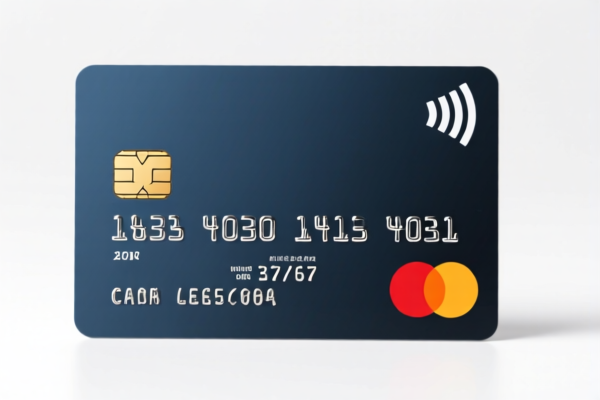
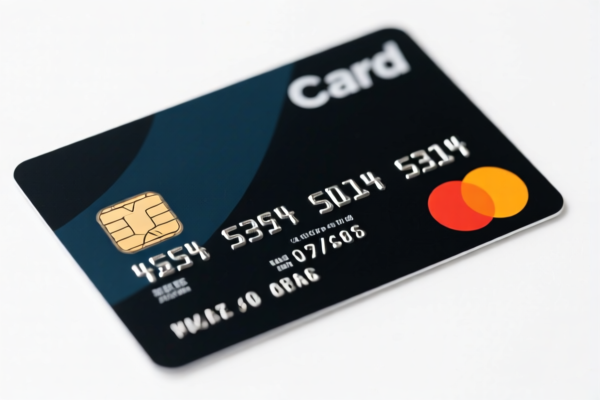
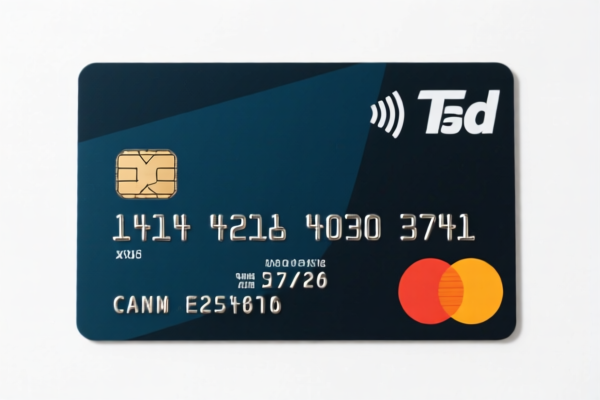

AI Analysis
🃏 Trading Cards (Printed Pictures and Designs)
🌐 HS Code Reference & Clearance Guide | 2026 Latest Tariff Analysis | Strategic Import Strategy
📌 I. Product Definition & Classification: What Exactly Are "Trading Cards"?
Trading cards, encompassing sports cards, collectible cards, and game cards, are classified under Chapter 49 of the Harmonized System as printed matter. Specifically, they fall under the category of printed pictures, designs, and photographs.
In international trade, the critical distinction for these items is not their material (paper vs. cardboard) alone, but their physical thickness and production date.
Key Classification Logic: 1. Material Base: They are printed on paper or paperboard. 2. Visual Content: They feature designs, pictures, or photographs. 3. Age Constraint: The classification provided assumes the items are printed not over 20 years at the time of importation (standard for modern collectibles). 4. Physical Thickness: This is the decisive factor determining the HS Code and Tax Rate. * Thin Cards (≤ 0.51 mm): Treated as standard paper products with lower duties. * Thicker Cards (> 0.51 mm): Treated as "other" printed matter with potentially different duty structures (though the provided data focuses on specific sub-categories).
⚠️ Critical Distinction Point:
- If the card is thin (standard business card or trading card thickness, ≤ 0.51 mm) → HS 4911.91.20.40 (0% Total Tax)
- If the card is thicker or categorized generally as "Other" without meeting the specific thickness exclusion → HS 4911.91.40.40 (7.5% Total Tax)
📦 II. HS Code Classification Details (2026 Latest Tariff Authority对照)
Based strictly on the provided data, two specific HS Codes are relevant for Trading Cards.
| HS Code | Product Description | Applicable Scenario | Thickness Criteria | Tax Rate |
|---|---|---|---|---|
4911.91.20.40 |
Lithographs on paper or paperboard: Not over 0.51 mm in thickness | Standard Pokémon, Magic: The Gathering, Sports Cards (Base Set), thin promotional cards | ≤ 0.51 mm | 0.0% |
4911.91.40.40 |
Other printed matter: Pictures, designs, photographs | "Other" printed matter not fitting specific thin lithograph definitions, thicker cardboard-backed cards, or specific "other" sub-category | > 0.51 mm or "Other" | 7.5% |
🔍 Key Reminder:
- The 0.51 mm thickness threshold is the legal dividing line.
- Standard Trading Cards (like Magic: The Gathering or Pokémon) are typically printed on high-quality cardstock that often falls under 0.51 mm, qualifying for the 0.0% tax rate under4911.91.20.40.
- Thicker Collectibles (e.g., large poster cards, heavy cardboard backing, or specific "Other" classifications) may fall under4911.91.40.40, incurring the 7.5% tax.
- Do not guess: If the thickness is borderline, provide precise measurement data to Customs.
💰 III. 2026 Latest Tariff Rate Breakdown (Including Surtaxes)
✅ Applicable Country: United States (US)
✅ Origin: China (CN)
✅ Effective Time: Current as per provided data
🎯 1. 4911.91.20.40 —— Lithographs on Paper or Paperboard (≤ 0.51 mm)
| Item | Content |
|---|---|
| Base Tariff | 0.0% (Ad Valorem) |
| Surtax (Section 301/Other) | 0.0% |
| Total Tax Rate | 0.0% |
| Tax Calculation | CIF Value × 0% = $0 |
| De Minimis Eligibility | ✅ Yes (If shipped under $800 per person per day) |
| Legal Basis Path | Chapter 49 → Heading 4911 → Subheading 4911.91 → Lithographs ≤ 0.51mm |
📌 Explanation:
- This is the most favorable classification for standard trading cards.
- Both the base tariff and any potential surtaxes are 0.0%.
- Crucial Benefit: Since the total tax is 0%, these items may also qualify for De Minimis entry (Section 321) if shipped via express courier (e.g., DHL, FedEx) with a value under $800, allowing duty-free and tax-free entry for personal use or low-value commercial samples.
🎯 2. 4911.91.40.40 —— Other Printed Matter (Other)
| Item | Content |
|---|---|
| Base Tariff | 0.0% (Ad Valorem) |
| Surtax (Section 301/Other) | 7.5% |
| Total Tax Rate | 7.5% |
| Tax Calculation | CIF Value × 7.5% |
| De Minimis Eligibility | ❌ Depends (If total tax > $0, De Minimis exemption for duty may not apply if duties are owed, though $0 de minimis threshold for duty is different from tax. However, since base is 0%, only the surtax applies. Check current CBP rules on surtax applicability to de minimis). |
| Legal Basis Path | Chapter 49 → Heading 4911 → Subheading 4911.91 → Other → Other |
📌 Explanation:
- This code applies to "Other" printed pictures/designs, likely including thicker cards or those not meeting the specific "Lithograph" definition.
- The 7.5% surtax is applied on top of the 0% base rate.
- Cost Impact: For every $1,000 of goods, you pay $75 in duties.
🛠️ IV. Clearance Practical Advice (Real-World Pitfall Avoidance)
✅ 1. Document Checklist (Essential for Smooth Clearance)
| Document | Required | Explanation |
|---|---|---|
| ✅ Product Specifications | ✔️ | Must include exact thickness in millimeters (e.g., 0.3 mm, 0.5 mm). This is the #1 factor for HS Code accuracy. |
| ✅ Material Composition | ✔️ | Specify "Paper/Cardboard" and "Coated/Uncoated". |
| ✅ Product Photos | ✔️ | Clear images of the card, including side view to show thickness and edge quality. |
| ✅ Commercial Invoice | ✔️ | Clearly state "Trading Cards, Paper, Printed" and model numbers. Avoid vague terms like "Collectibles". |
| ✅ Packing List | ✔️ | Detail quantity and weight. |
✅ 2. Declaration Tips (Key Mantras)
🔥 "Measure Thickness, Declare Lithograph, Get Zero Duty!"
| Scenario | Correct Declaration | Wrong Declaration | Consequence |
|---|---|---|---|
| Standard Card (≤ 0.51 mm) | 4911.91.20.40 |
4911.91.40.40 |
Unnecessary 7.5% tax! |
| Thick Card (> 0.51 mm) | 4911.91.40.40 |
4911.91.20.40 |
Misclassification penalty + back taxes |
| Vintage Card (> 20 years old) | Not Covered in Data | 4911.91.20.40 |
Incorrect HS Code (May fall under different vintage rules) |
| Non-Paper Cards (Plastic/Metal) | Not Applicable | 4911.91.20.40 |
Major Misclassification (May be 9503 or 3926) |
✅ 3. Special Cases Handling
| Case | Handling Advice |
|---|---|
| Bundles/Boosters | Declare as "Trading Cards" not "Gaming Equipment". The content is printed paper. |
| Thick Inserts/Parallels | If a card set includes thick foil inserts (> 0.51 mm), ensure the average or primary item's thickness is declared, or consult a customs broker for mixed classification. |
| De Minimis Shipment | For shipments under $800, if classified under 4911.91.20.40, entry is often duty-free and tax-free. If 4911.91.40.40, duty may still be waived under de minimis depending on current CBP enforcement on surtaxes. Verify latest CBP ruling. |
| Counterfeit Risk | Ensure all cards are legally licensed. Copyright infringement can lead to seizure regardless of HS Code. |
🌍 V. Global Market Clearance Comparison (2026 Latest)
| Country/Region | Recommended HS Code | Tariff | Notes |
|---|---|---|---|
| 🇺🇸 USA | 4911.91.20.40 |
0.0% | Best for thin cards. Requires precise thickness declaration. |
| 🇨🇳 China | 4911.91.20.40 |
Variable | Check local tariff schedule. Import duties may differ. |
| 🇪🇺 EU | 4911.91.20.40 |
Variable | VAT applies regardless of duty. Duty may be 0% or 4.5% depending on exact sub-heading. |
| 🇬🇧 UK | 4911.91.20.40 |
Variable | Post-Brexit rules apply. Check UK Tariff. |
📌 Conclusion:
- The USA offers a significant advantage for standard trading cards with 0% total duty if correctly classified under4911.91.20.40.
- Precision is key: A difference of 0.01 mm in thickness can change the tax rate from 0% to 7.5%.
📌 VI. Common Mistakes & Pitfalls (Lessons Learned)
❌ Mistake 1: Assuming all "Paper Products" have the same tax rate.
👉 Consequence: Misclassifying a 0.6 mm card as 0.4 mm → 7.5% back tax + penalties.
❌ Mistake 2: Failing to declare thickness.
👉 Consequence: Customs may reject the declaration or assign a default higher-rate code.
❌ Mistake 3: Using "Games" or "Toys" as the product name.
👉 Consequence: Might be misdirected to Chapter 95 (Toys), leading to complex classification and higher duties.
❌ Mistake 4: Ignoring the "20 Years" rule.
👉 Consequence: Vintage cards (>20 years) do not fit the "Printed not over 20 years" description. They may fall under "Antiques" or other categories with different rules.
✅ Correct Practice:
"Trading Cards, Paper, Printed, Lithograph, Thickness 0.3mm, Not Over 20 Years Old, Model XYZ, Licensed"
🎯 VII. Conclusion: Professional Declaration Saves Money!
🎯 Remember the Mantra:
🔹 "Thin is Golden: Under 0.51 mm = 0% Duty!"
🔹 "Measure Twice, Declare Once: Thickness Determines Tax!"
🔹 "0.0% is the Goal, 7.5% is the Penalty for Wrong Measurement!"
📌 Pro Tip:
If you are shipping bulk orders to retailers, ensure all cards in the shipment are uniform in thickness. If mixing thick and thin cards, split the shipment or consult a customs broker for a complex entry. For small packages under $800, leveraging the 0% duty on 4911.91.20.40 can make your business highly competitive.
📣 Immediate Action:
📞 Measure your cards! Get an exact thickness measurement.
📋 Prepare a spec sheet highlighting "Thickness ≤ 0.51 mm".
🚀 Declare accurately as4911.91.20.40to enjoy 0% Duty.
✨ Professional Clearance Starts with Precision!
💼 Your Bottom Line Depends on Millimeters!
Customer Reviews
About HS Code Classification
The Harmonized System (HS) is an internationally standardized nomenclature developed by the World Customs Organization (WCO) to classify traded products. Over 200 countries use the HS system as the basis for customs tariffs, trade statistics, and import/export regulations.
Each HS code follows a hierarchical structure:
- Chapter (2 digits) — Broad category of goods (e.g., Chapter 84: Machinery and Mechanical Appliances)
- Heading (4 digits) — More specific grouping within the chapter
- Subheading (6 digits) — Internationally standardized breakdown, used by all WCO member countries
- National subdivisions (8-10 digits) — Country-specific extensions for further classification, such as US HTSUS 10-digit codes
Correct HS code classification is essential for smooth customs clearance, accurate duty payment, and compliance with trade regulations. Misclassification can lead to customs delays, overpayment of duties, or penalties.
When importing from CN to US, the applicable tariff rates may include:
- Most-Favored-Nation (MFN) rate — The standard duty rate applied to WTO members
- General rate — Applied to countries without trade agreements
- Trade remedy duties — Additional tariffs such as Section 301 (anti-dumping), Section 232 (national security), or countervailing duties
The information provided on this page is for reference purposes only. For official classification, please consult with your local customs authority or a licensed customs broker.