Trading Card Binder
CN → US| HS Code | Tariff Rate | Origin | Destination | Doc |
|---|---|---|---|---|
| 482020 | 0.0% | CN | US | Official Doc |
| 392690 | 0.0% | CN | US | Official Doc |
| 3926904800 | 13.4% | CN | US | Official Doc |
| 3926908800 | 0.0% | CN | US | Official Doc |
| 4820300020 | 35.0% | CN | US | Official Doc |
| 4820300040 | 35.0% | CN | US | Official Doc |
Product Images
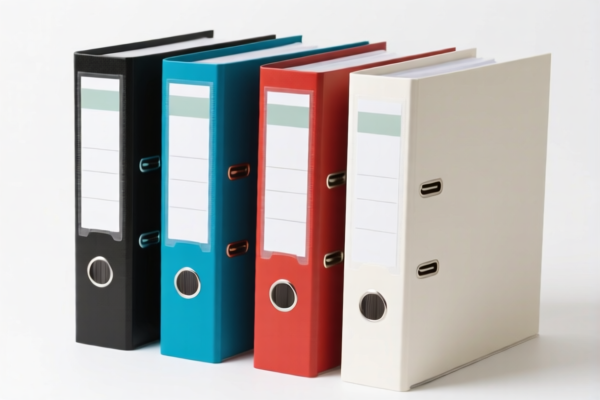
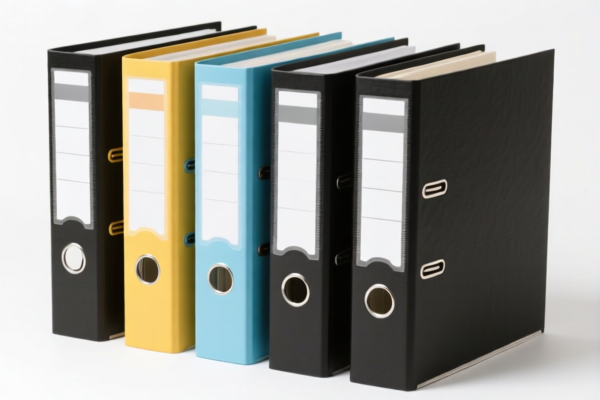
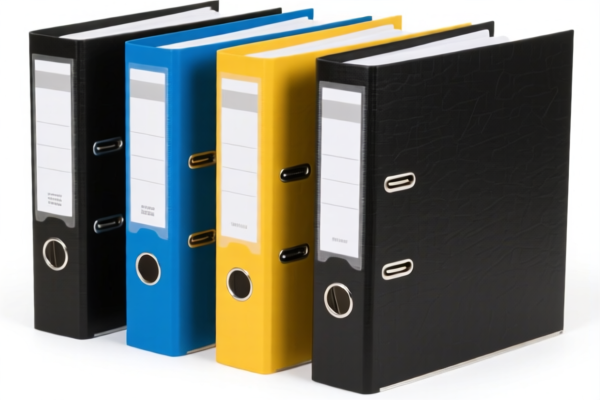
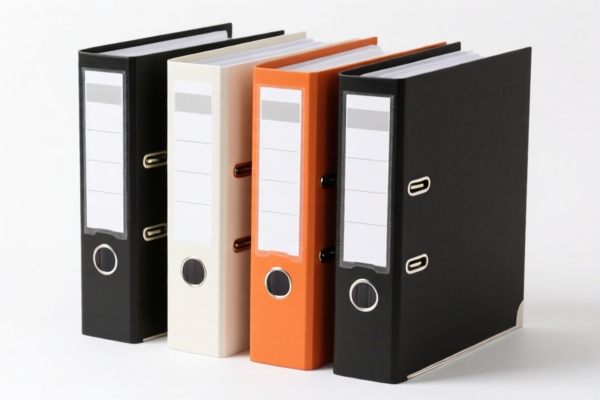
AI Analysis
🃏 Trading Card Binder (Plastic Card Storage & Organization)
🌐 HS Code Reference & Customs Clearance Guide | 2026 Latest Tariff Analysis | Professional Clearance Strategy
📌 I. Product Definition & Classification: Do You Really Know What a "Trading Card Binder" Is?
Trading Card Binders are specialized storage solutions designed for organizing, protecting, and displaying collectible cards (e.g., Pokémon, Magic: The Gathering, sports cards). In international trade, their classification depends heavily on the material and structure:
- Paper/Cardboard Binders: Traditional ring binders with paper or cardboard covers and interleaved card sleeves.
- Classification Logic: Treated as "Stationery" or "Paper Products."
- Plastic Binders/Portfolios: Flexible or rigid binders made primarily of plastics (PVC, PE, PP) with plastic pockets/sleeves.
- Classification Logic: Treated as "Articles of Plastics" under Chapter 39.
⚠️ Key Distinction:
- If the primary structure is paper/cardboard with rings/folders →归入 4820 (Paper Stationery).
- If the primary structure is plastic (even if it has some paper inserts) → 归入 3926 (Plastic Articles).
- Flexible plastic document binders with tabs are distinct from photo albums or rigid plastic binders.
📦 II. HS Code Classification Details (2026 Latest Tariff Authority Comparison)
| HS Code | Product Description | Material | Applicable Scenario | Key Characteristics |
|---|---|---|---|---|
4820.30.00.20 |
Looseleaf binders (Paper/Cardboard) | Paper/Paperboard | Traditional ring binders for trading cards, with paper covers and metal/plastic rings. | ✅ Paper Primary ✅ Looseleaf mechanism |
4820.30.00.40 |
Other binders (Paper/Cardboard) | Paper/Paperboard | Binders not specifically "looseleaf," e.g., pocket-style paper binders for cards. | ✅ Paper Primary ✅ Non-looseleaf |
3926.90.48.00 |
Other plastic articles: Photo albums | Plastic | Rigid or semi-rigid plastic albums designed for displaying photos or cards, often with clear plastic pages. | ✅ Plastic Primary ✅ Album style |
3926.90.88.00 |
Other plastic articles: Flexible plastic document binders with tabs | Plastic | Most Common for Trading Cards: Flexible plastic binders with pockets, rolled or flat, often with dividers/tabs. | ✅ Plastic Primary ✅ Flexible/Foldable |
4820.20 |
Binding materials for books/papers | Paper/Paperboard | Card binders made of paper/paperboard intended for organizing loose sheets or cards (general stationery). | ✅ Paper Primary ✅ General binding |
3926.90 |
Other plastic articles, n.e.s. | Plastic | Plastic card binders for trading cards, if not specifically classified elsewhere. | ✅ Plastic Primary ✅ Generic plastic |
🔍 Critical Note:
-3926.90.88.00is the most frequent code for modern, flexible plastic trading card binders (e.g., "TopLoader" style portfolios or flexible 9-pocket pages bound together).
-4820.30.00.20applies to paper-based ring binders that hold card sleeves.
- Misclassification between Chapter 48 (Paper) and Chapter 39 (Plastic) is a common customs audit trigger.
💰 III. 2026 Latest Tariff Rate Details (Including Additional Duties)
✅ Applicable Country: United States (US)
✅ Origin: China (CN)
✅ Effective Time: 2025-11-10 onwards (for subsequent imports)
🎯 1. 4820.30.00.20 & 4820.30.00.40 —— Paper Card Binders (Looseleaf/Other)
| Item | Content |
|---|---|
| Base Tariff | 0.0% (ad valorem) |
| Section 301 Additional Duty | +25.0% |
| IEEPA Additional Duty | Not explicitly listed in provided data for this code, but Section 301 is the primary factor here. |
| Total Tax Rate | 25.0% |
| Tax Calculation | CIF Value × 25% |
| De Minimis Exemption | ❌ Not Eligible (Deny de minimis for Section 301 goods from China) |
| Legal Basis Path | USITC:4820.30.00.20 → FOOTNOTE:301-Section → Total: 25% |
📌 Explanation:
- These items are classified under Chapter 48 (Paper).
- All paper stationery products from China are subject to the 25% Section 301 tariff.
- No base duty, but the additional tariff makes the effective rate 25%.
🎯 2. 3926.90.48.00 —— Plastic Photo Albums/Card Albums
| Item | Content |
|---|---|
| Base Tariff | 3.4% |
| Additional Duty | 0.0% |
| Total Tax Rate | 3.4% |
| Tax Calculation | CIF Value × 3.4% |
| De Minimis Exemption | ❓ Check current thresholds, but generally lower risk. |
| Legal Basis Path | USITC:3926.90.48.00 → Base Rate 3.4% |
📌 Explanation:
- If the binder is classified as a "Photo Album" (rigid, album-style), it attracts only the base tariff of 3.4%.
- Crucial: You must prove it is an "album" and not a "document binder" to avoid the 25% penalty.
🎯 3. 3926.90.88.00 —— Flexible Plastic Document Binders with Tabs
| Item | Content |
|---|---|
| Base Tariff | Error/Failed to Retrieve |
| Additional Duty | Error/Failed to Retrieve |
| Total Tax Rate | Error / Pending Verification |
| Tax Calculation | N/A |
| De Minimis Exemption | ❓ Unclear |
| Legal Basis Path | USITC:3926.90.88.00 → Data Missing |
📌 Critical Warning:
- The system returned an Error for this HS Code.
- Recommendation: Do NOT use3926.90.88.00for final clearance without manual verification.
- Alternative: Many flexible plastic binders are argued to fall under3926.90.48.00(Photo Albums) or3926.90.90(Other) with varying rates.
- Risk: If misclassified as "Other Plastic Articles" (3926.90.88.00), you may face higher base duties or audits.
- Action: Contact a customs broker to confirm if3926.90.88.00attracts 0% base duty or higher. Do not assume 0%.
🎯 4. 4820.20 & 3926.90 —— General Binding Materials / Other Plastic Articles
| Item | Content |
|---|---|
| Status | Error / Failed to Retrieve |
| Total Tax Rate | Error |
| Recommendation | ❌ Avoid Using These Generic Codes for specific binding products. |
📌 Warning:
- Generic codes like4820.20(Binding materials) and3926.90(Other plastic articles) are too broad.
- Customs may reclassify these into specific subheadings (e.g.,4820.30.00.20or3926.90.88.00) upon inspection, leading to delays and penalties.
- Always use the most specific 8-digit or 10-digit HS Code available.
🛠️ IV. Customs Clearance Practical Advice (Battle-Tested Pitfall Avoidance Guide)
✅ 1. Documentation Checklist (Essential)
| Document | Required | Description |
|---|---|---|
| ✅ Product Specifications | ✔️ | Material composition (e.g., "90% PVC, 10% Cardboard Cover"). |
| ✅ Product Photos | ✔️ | Clear images showing: rings, pockets, tabs, flexibility, and structure. |
| ✅ Commercial Invoice | ✔️ | Must describe as "Plastic Trading Card Binder" or "Paper Card Binder" accurately. |
| ✅ Packing List | ✔️ | Include quantity, weight, and dimensions. |
| ✅ Certificate of Origin | ✔️ | To verify China origin and apply 301 tariffs correctly. |
✅ 2. Declaration Tips (Key Mnemonics)
🔥 “Material is King, Structure is Queen!”
| Scenario | Correct Declaration | Incorrect Declaration |
|---|---|---|
| Paper Binder with Rings | 4820.30.00.20 - "Looseleaf Binder, Paper Cover" |
"Plastic Binder" → Wrong, higher audit risk |
| Flexible Plastic Binder | 3926.90.88.00 (Verify Rate) OR 3926.90.48.00 (if Album) |
"Other Plastic Article" → Too vague |
| Plastic Card Sleeves (Bulk) | 3926.90.90 or specific pocket code |
"Binder" → Wrong, different duty |
| Hybrid (Plastic Pockets + Paper Cover) | Classify by Principal Material/Function | Mix codes → Customs Rejection |
✅ 3. Special Case Handling
| Situation | Recommendation |
|---|---|
| Plastic Binder with Paper Inserts | If the plastic component defines the function (flexibility, durability), use 3926. |
| Photo Album vs. Binder | If it has a spine, cover, and display pages, argue for 3926.90.48.00 (Album) to avoid 25% if possible. |
Customs Audit on 3926.90.88.00 |
Provide technical datasheet showing it is a "flexible document binder." Be prepared for rate confirmation. |
| De Minimis (Section 321) | ❌ Not Eligible for Section 301 goods (China origin) under current rules. Do not ship under $800 claiming exemption. |
🌍 V. Global Main Market Comparison (2026 Latest)
| Country/Region | Recommended HS Code | Tariff (China Origin) | Certification | Notes |
|---|---|---|---|---|
| 🇺🇸 USA | 4820.30.00.20 (Paper)3926.90.48.00 (Plastic Album) |
25% (Paper) 3.4% (Plastic Album) |
None required | Avoid 3926.90.88.00 without verification. |
| 🇪🇺 EU | 4820.10 (Paper)3926.90 (Plastic) |
~0-6% | CE (if plastic toys?) | Plastics may require REACH compliance. |
| 🇨🇳 China | 4820.103926.90 |
Varies | None | Low duty, focus on VAT. |
📌 Conclusion:
- USA: Paper binders = 25% Tax. Plastic Albums = 3.4% Tax.
- Strategy: If possible, classify flexible plastic binders as "Plastic Photo Albums" (3926.90.48.00) to save ~21.6% in duty.
- Risk: Customs may challenge "Album" classification for binders with pockets. Ensure product has album-like features (cover, spine, display function).
📌 VI. Common Mistakes & Pitfalls (Blood & Tears Lessons)
❌ Mistake 1: Declaring a Plastic Binder as Paper Binder (4820.30.00.20)
👉 Consequence: Customs Seizure for misdeclaration. Penalties apply.
❌ Mistake 2: Declaring a Paper Binder as Plastic Album (3926.90.48.00)
👉 Consequence: Underpayment of Duty. You owe the 25% difference + interest.
❌ Mistake 3: Using Generic Code 3926.90 or 4820.20
👉 Consequence: Customs Rejection. Must provide specific 10-digit code.
❌ Mistake 4: Assuming De Minimis ($800) Applies
👉 Consequence: Shipment Held/Returned. Section 301 goods from China are excluded from de minimis.
✅ Correct Declaration Example:
"Trading Card Binder, Plastic, Flexible, with 9-Pocket Pages, for Collectible Cards, Model XYZ" →
3926.90.88.00(Verify Rate) OR3926.90.48.00(if Album).
🎯 VII. Conclusion: Professional Declaration Saves Money!
🎯 Remember the Mantra:
🔹 "Paper = 25%, Plastic Album = 3.4%, Generic = Risk."
🔹 "Material Defines Code, Code Defines Cost!"
📌 Tips:
- If your binder is flexible plastic, try to argue it is a "Plastic Photo Album" (3926.90.48.00) for lower duty, but ensure it matches the definition.
- For paper binders, accept the 25% duty as unavoidable.
- Never use generic HS codes. Always use the most specific 8-digit or 10-digit code available.
- Verify 3926.90.88.00 with a customs broker before shipping. The "Error" in data suggests high risk.
📣 Immediate Action:
📞 Contact a Customs Broker to verify the tax rate for
3926.90.88.00.
🚀 Choose4820.30.00.20for Paper or3926.90.48.00for Plastic Albums to minimize risk and cost.
✨ Professional Clearance Starts with Precise Classification!
💼 Every Dollar of Duty Matters!
Customer Reviews
About HS Code Classification
The Harmonized System (HS) is an internationally standardized nomenclature developed by the World Customs Organization (WCO) to classify traded products. Over 200 countries use the HS system as the basis for customs tariffs, trade statistics, and import/export regulations.
Each HS code follows a hierarchical structure:
- Chapter (2 digits) — Broad category of goods (e.g., Chapter 84: Machinery and Mechanical Appliances)
- Heading (4 digits) — More specific grouping within the chapter
- Subheading (6 digits) — Internationally standardized breakdown, used by all WCO member countries
- National subdivisions (8-10 digits) — Country-specific extensions for further classification, such as US HTSUS 10-digit codes
Correct HS code classification is essential for smooth customs clearance, accurate duty payment, and compliance with trade regulations. Misclassification can lead to customs delays, overpayment of duties, or penalties.
When importing from CN to US, the applicable tariff rates may include:
- Most-Favored-Nation (MFN) rate — The standard duty rate applied to WTO members
- General rate — Applied to countries without trade agreements
- Trade remedy duties — Additional tariffs such as Section 301 (anti-dumping), Section 232 (national security), or countervailing duties
The information provided on this page is for reference purposes only. For official classification, please consult with your local customs authority or a licensed customs broker.