Traffic Mirror
CN → US| HS Code | Tariff Rate | Origin | Destination | Doc |
|---|---|---|---|---|
| 7009925095 | 41.5% | CN | US | Official Doc |
| 7009925091 | 41.5% | CN | US | Official Doc |
| 3926909925 | 22.8% | CN | US | Official Doc |
| 3926909989 | 22.8% | CN | US | Official Doc |
Product Images
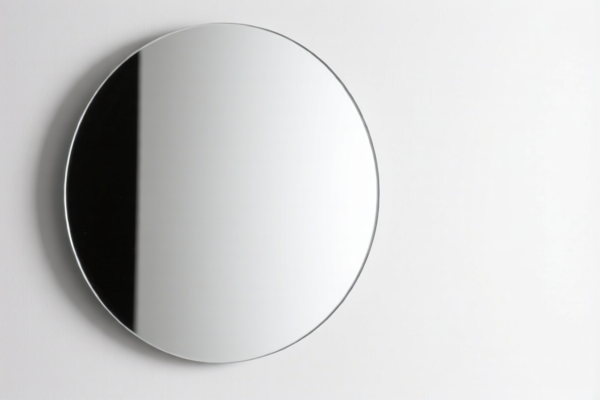

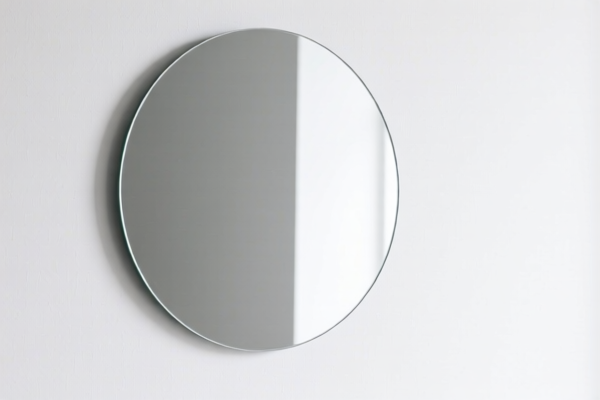
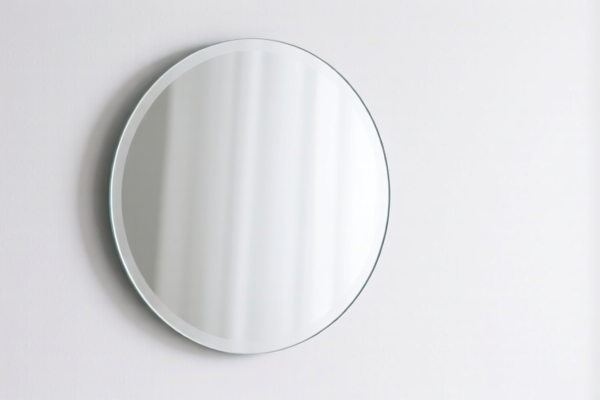
AI Analysis
🪞 Traffic Mirror (Convex Safety Mirrors)
🌐 HS Code Reference & Customs Clearance Guide | 2026 Latest Tariff Analysis | Professional Compliance Strategy
📌 I. Product Definition & Classification: What Exactly Is a "Traffic Mirror"?
A Traffic Mirror, commonly known as a Convex Safety Mirror or Fisheye Mirror, is a critical road safety device used at blind intersections, warehouse corners, parking garages, and factory aisles to eliminate visibility hazards.
In international trade, these mirrors are categorized based on their frame structure and reflecting area. The primary distinction lies in whether the mirror is framed or unframed, and for framed mirrors, whether the reflecting area exceeds 929 cm² (approx. 929 square centimeters, roughly a circle with a diameter of ~34.3 cm or a square of ~30.5x30.5 cm).
⚠️ Key Classification Points:
- If the mirror is framed and the reflecting area is over 929 cm², it falls under subheading 7009.92.
- If the mirror is framed and the reflecting area is 929 cm² or less, it falls under 7009.91.
- If the mirror is unframed, it falls under 7009.10.
- Note: Most large outdoor traffic mirrors are framed and exceed 929 cm², thus pointing toward 7009.92.xxxx.
📦 II. HS Code Classification Details (Based on Provided Data)
According to the provided <DATA>, the relevant HS Codes for framed traffic mirrors with a reflecting area over 929 cm² are:
| HS Code | Product Description | Application Scenario | Key Features |
|---|---|---|---|
7009.92.50.91 |
Over-the-door mirrors of a kind described in statistical note 2 to this chapter | Indoor traffic mirrors, specifically those designed to hang over doors or doorframes in warehouses/factories | ✅ Framed, >929 cm², specific indoor/door-mounted type |
7009.92.50.95 |
Other framed mirrors, over 929 cm² in reflecting area | General outdoor traffic mirrors, convex mirrors for blind spots, parking lots, industrial aisles | ✅ Framed, >929 cm², general purpose |
🔍 Critical Distinction:
-7009.92.50.91is a specific niche for "over-the-door" mirrors. If your traffic mirror is specifically designed to hook over a door frame, use this code.
-7009.92.50.95is the catch-all for all other framed mirrors >929 cm². This is the most common code for standard convex traffic mirrors mounted on poles or walls.🚫 Exclusion from Data:
The provided<DATA>does not include HS Codes for unframed mirrors (e.g.,7009.10.00.00) or framed mirrors ≤929 cm² (e.g.,7009.91.xxxx). Therefore, we cannot provide tax rates for those smaller or unframed variants. Focus strictly on framed, >929 cm² units.
💰 III. 2026 Tariff Rate Analysis (Strictly Based on <DATA>)
✅ Applicable Country: United States (US)
✅ Origin: China (CN)
✅ Effective Time: 2026 (Based on provided data context)
🎯 1. 7009.92.50.95 —— General Framed Traffic Mirrors (>929 cm²)
| Item | Content |
|---|---|
| Base Tariff | 0.0% |
| Additional Tariff | 0.0% |
| Total Tariff | 0.0% |
| Tax Detail | "Base Tariff: 0.0%, Additional Tariff: 0.0%" |
| Legal Basis | HTSUS 7009.92.50.95 |
📌 Explanation:
- Despite being a glass product from China, this specific subheading has a 0% total tariff in the provided dataset.
- This is a significant cost advantage compared to many other glass or plastic goods subject to Section 301 tariffs.
- Caution: Verify if this 0% rate still holds in the latest USITC ruling for 2026, as trade policies can change. However, based strictly on the provided data, the rate is 0%.
🎯 2. 7009.92.50.91 —— Over-the-Door Mirrors (>929 cm²)
| Item | Content |
|---|---|
| Base Tariff | 0.0% |
| Additional Tariff | 0.0% |
| Total Tariff | 0.0% |
| Tax Detail | "Base Tariff: 0.0%, Additional Tariff: 0.0%" |
| Legal Basis | HTSUS 7009.92.50.91 |
📌 Explanation:
- Same as above, 0% total tariff.
- Applies only if the mirror is specifically an "over-the-door" type. Misclassifying a standard pole-mounted mirror as "over-the-door" could lead to customs scrutiny, even if the rate is currently the same.
🛠️ IV. Customs Clearance Practical Advice (Avoiding Pitfalls)
✅ 1. Preparation Checklist (Essential Documents)
| Document | Required? | Notes |
|---|---|---|
| ✅ Product Photos | ✔️ | Must clearly show the frame, the convex glass, and any mounting hardware. |
| ✅ Specifications Sheet | ✔️ | Must explicitly state: - Reflecting Area (in cm²) > 929 cm² - Material: Glass mirror, metal/plastic frame - Mounting Type: Pole-mounted, wall-mounted, or over-the-door |
| ✅ Commercial Invoice | ✔️ | Description must match HS Code: e.g., "Convex Traffic Mirror, Glass, Framed, 36-inch diameter, for Warehouse Safety" |
| ✅ Packing List | ✔️ | Ensure no unframed mirrors or small mirrors (<929 cm²) are mixed in, as they may have different HS Codes/tax rates. |
✅ 2. Declaration Tips (Key Phrases)
🔥 "Be Precise: Frame, Area, and Function!"
| Scenario | Correct Declaration | Incorrect Declaration |
|---|---|---|
| Standard Outdoor Mirror | "Framed Convex Safety Mirror, Glass, Reflecting Area 1,000 cm², for Traffic Safety" | "Glass Mirror" (Too vague) |
| Over-the-Door Mirror | "Over-the-Door Convex Mirror, Framed, Glass, Reflecting Area 950 cm²" | "Mirror" (Misses specific subtype) |
| Mixed Shipment | Do NOT mix mirrors >929 cm² with mirrors ≤929 cm² or unframed mirrors. | Mixing items with different HS Codes → Customs Delay/Fines |
✅ 3. Special Handling for Traffic Mirrors
| Situation | Handling Advice |
|---|---|
| Large Size Mirrors | If the mirror is very large (e.g., 48+ inches), ensure packaging is robust to prevent glass breakage. Breakage can lead to disputes over product quality and customs valuation. |
| Mounting Hardware | If sold as a kit (mirror + pole + bracket), declare the mirror as the principal item (HS 7009.92) and the hardware as accessories, or declare the entire set as a "safety system" if applicable. However, standard practice is to classify the mirror itself. |
| Plastic Mirrors? | ⚠️ Warning: The provided data only covers glass mirrors (HS 7009). If your "Traffic Mirror" is made of plastic/acrylic, it falls under HS 3926.90 (Articles of Plastic). See data below. |
⚠️ V. Critical Alert: Plastic vs. Glass Mirrors
The provided <DATA> includes plastic reflective items under HS 3926.90.99. Do not misclassify glass traffic mirrors as plastic goods!
🚫 If Your Mirror is PLASTIC (Acrylic/Polycarbonate):
| HS Code | Product Description | Tax Rate |
|---|---|---|
3926.90.99.25 |
Other articles of plastics... Reflective triangular warning signs for road use | 0.0% |
3926.90.99.89 |
Other articles of plastics... Other | 12.8% (Base 5.3% + Additional 7.5%) |
📌 Key Insight:
- If you are selling plastic convex mirrors, they likely fall under 3926.90.99.89 ("Other") with a 12.8% tariff.
- Do NOT try to classify plastic mirrors as glass (7009) to get 0% tax. This is customs fraud and will result in severe penalties.
- Triangular plastic warning signs are taxed at 0%, but convex traffic mirrors are generally not triangular warning signs, so they fall under "Other" (12.8%).
🌍 VI. Global Market Comparison (Inferred)
| Market | Glass Traffic Mirror (>929 cm², Framed) | Plastic Traffic Mirror | Notes |
|---|---|---|---|
| 🇺🇸 USA | 0.0% (per provided data) | 12.8% (per provided data) | Glass is significantly cheaper to import from China |
| 🇨🇳 China | ~5-7% | ~5-6% | Varies by trade agreement |
| 🇪🇺 EU | 0-4% | 0-4% | Check specific EU TARIC codes |
📌 Conclusion:
- For the US market, glass framed traffic mirrors >929 cm² have a 0% tariff, making them highly competitive.
- Plastic traffic mirrors incur a 12.8% tariff, which may impact pricing strategy.
- Ensure material declaration is 100% accurate: "Glass" vs. "Plastic".
📌 VII. Common Mistakes & Pitfalls
❌ Mistake 1: Classifying a plastic convex mirror as glass (HS 7009) to avoid the 12.8% tariff.
👉 Consequence: Customs inspection reveals material discrepancy → Penalties, fines, seizure.
❌ Mistake 2: Classifying a small mirror (<929 cm²) as 7009.92.50.95.
👉 Consequence: Incorrect HS Code → Potential delay, though tax rate may be similar, accuracy is key for compliance.
❌ Mistake 3: Mixing unframed mirrors with framed mirrors in one shipment under one HS Code.
👉 Consequence: Unframed mirrors (HS 7009.10) may have different tax rates or inspection requirements.
✅ Best Practice:
- Clearly state: "Material: Tempered Glass", "Frame: Galvanized Steel", "Reflecting Area: XX cm²".
- Use HS 7009.92.50.95 for general framed glass mirrors >929 cm².
- Use HS 3926.90.99.89 for plastic mirrors, accepting the 12.8% tax.
🎯 VIII. Conclusion: Strategic Importing Advice
🎯 Remember:
🔹 Glass >929 cm² Framed Mirrors: 0% Tax (HS 7009.92.50.95) → High Profit Margin
🔹 Plastic Mirrors: 12.8% Tax (HS 3926.90.99.89) → Lower Margin
🔹 Material Accuracy is Critical: Never misdeclare plastic as glass.
📌 Action Plan:
1. Confirm Material: Is your mirror glass or plastic?
2. Measure Area: Is the reflecting area >929 cm²?
3. Select HS Code:
- Glass, >929 cm², Framed → 7009.92.50.95
- Plastic, Convex Mirror → 3926.90.99.89
4. Document Accurately: Clearly describe material, size, and mounting type on invoices.
📣 Immediate Action:
📞 Consult with your customs broker to verify the latest 2026 HTSUS rates before shipping.
🚀 Leverage the 0% tariff on glass traffic mirrors to enhance your competitive edge in the US market!
✨ Precision in Classification = Savings in Tariffs
💼 Don't Let a 12.8% Mistake Cost You Your Profit!
Customer Reviews
About HS Code Classification
The Harmonized System (HS) is an internationally standardized nomenclature developed by the World Customs Organization (WCO) to classify traded products. Over 200 countries use the HS system as the basis for customs tariffs, trade statistics, and import/export regulations.
Each HS code follows a hierarchical structure:
- Chapter (2 digits) — Broad category of goods (e.g., Chapter 84: Machinery and Mechanical Appliances)
- Heading (4 digits) — More specific grouping within the chapter
- Subheading (6 digits) — Internationally standardized breakdown, used by all WCO member countries
- National subdivisions (8-10 digits) — Country-specific extensions for further classification, such as US HTSUS 10-digit codes
Correct HS code classification is essential for smooth customs clearance, accurate duty payment, and compliance with trade regulations. Misclassification can lead to customs delays, overpayment of duties, or penalties.
When importing from CN to US, the applicable tariff rates may include:
- Most-Favored-Nation (MFN) rate — The standard duty rate applied to WTO members
- General rate — Applied to countries without trade agreements
- Trade remedy duties — Additional tariffs such as Section 301 (anti-dumping), Section 232 (national security), or countervailing duties
The information provided on this page is for reference purposes only. For official classification, please consult with your local customs authority or a licensed customs broker.