Traffic Road Reflective Tape
CN → US| HS Code | Tariff Rate | Origin | Destination | Doc |
|---|---|---|---|---|
| 5907006000 | 35.0% | CN | US | Official Doc |
| 3919901000 | 41.5% | CN | US | Official Doc |
| 3919905010 | 40.8% | CN | US | Official Doc |
| 5907001500 | 43.0% | CN | US | Official Doc |
| 3926909925 | 22.8% | CN | US | Official Doc |
Product Images

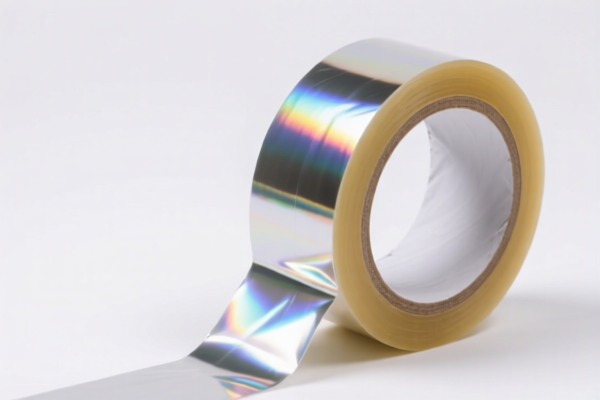
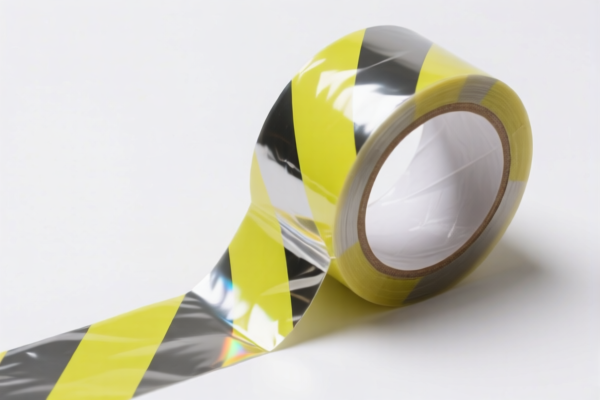

AI Analysis
🚧 Traffic Road Reflective Tape (反光警示带)
🌐 HS Code Reference & Customs Clearance Guide | 2026 Latest Tariff Analysis | Professional Clearance Strategy
📌 I. Product Definition & Classification: What is "Reflective Tape" Really?
Traffic Road Reflective Tape is a critical safety component used in road signage, vehicle markings, and construction zones. In international trade, its classification depends heavily on its base material (textile vs. plastic) and form (self-adhesive strip vs. coated fabric). Misclassification can lead to significant tariff differences due to Section 301 and IEEPA provisions.
⚠️ Key Distinction Point:
- If the base is textile/fabric (synthetic/man-made fibers) with reflective coating → Classified under Chapter 59.
- If the base is plastic/resin in strip form → Classified under Chapter 39.
- The specific subheading depends on whether it is self-adhesive, its plastic composition, or its textile coating type.
📦 II. HS Code Classification Details (2026 Latest Tariff Authoritative Comparison)
| HS Code | Product Description | Application Scenario | Material Basis |
|---|---|---|---|
5907.00.60.00 |
Textile fabrics, impregnated, coated, covered or laminated with plastics or rubber; Reflective strips on textile base | Textile-based reflective tape, often used for clothing or heavy-duty road markings where fabric strength is needed | ✅ Textile (Synthetic/Man-made fibers) |
3919.90.10.00 |
Self-adhesive plates, sheets, film, foil, tape, strip and other flat shapes, of plastics: Other | Self-adhesive plastic reflective tape, general use | ✅ Plastic (Self-adhesive) |
3919.90.50.10 |
Self-adhesive plates, sheets, film, foil, tape, strip and other flat shapes, of plastics: Reflecting film, self-adhesive | Reflective plastic film/tape, specifically for reflection purposes | ✅ Plastic (Reflective Film/Tape) |
5907.00.15.00 |
Textile fabrics, impregnated, coated, covered or laminated with plastics or rubber: With textile facing | Other coated textile fabrics, generic reflective textile strips | ✅ Textile (Coated) |
3926.90.99.25 |
Other articles of plastics and articles of other materials of heading 3901 to 3914: Other | Plastic road warning devices/bands, general plastic articles for road use | ✅ Plastic (General Article) |
🔍 Key Reminder:
- Textile Base: If the primary structural material is woven or knitted fabric (even if coated), it falls under 5907.
- Plastic Base: If the primary material is a plastic film or sheet (especially self-adhesive), it falls under 3919 or 3926.
- Self-Adhesive: Most road tapes are self-adhesive; this strongly points to 3919.90 if plastic-based.
💰 III. 2026 Latest Tariff Rate Breakdown (Including Additional Taxes & Policy Add-ons)
✅ Applicable Country: United States (US)
✅ Origin: China (CN)
✅ Effective Date: From November 10, 2025 (and subsequent imports)
🎯 1. 5907.00.60.00 —— Reflective Tape on Textile Base
| Item | Content |
|---|---|
| Base Tariff | 0.0% (ad valorem) |
| Section 301 Additional Tax | +25.0% |
| IEEPA Additional Tax (Section 122) | +10.0% |
| Total Tariff Rate | 35.0% |
| Tax Calculation | CIF Value × 35% |
| De Minimis Exemption | ❌ Not Eligible (deny_de_minimis) |
| Legal Basis Path | IEEPA:9903.01.25 → USITC:5907.00.60.00 → SECTION_301:9903.01.25 |
📌 Explanation:
- Although the base tariff is 0%, the 35% total rate applies due to the combination of Section 301 (25%) and IEEPA (10%).
- This is a high-tariff category for textile-based reflective products from China.
🎯 2. 3919.90.10.00 —— Self-Adhesive Plastic Reflective Tape
| Item | Content |
|---|---|
| Base Tariff | 6.5% |
| Section 301 Additional Tax | +25.0% |
| IEEPA Additional Tax (Section 122) | +10.0% |
| Total Tariff Rate | 41.5% |
| Tax Calculation | CIF Value × 41.5% |
| De Minimis Exemption | ❌ Not Eligible (deny_de_minimis) |
| Legal Basis Path | IEEPA:9903.01.25 → USITC:3919.90.10.00 → SECTION_301:9903.01.25 |
📌 Note:
- This is the highest tariff scenario among plastic-based options.
- Even if the product is simple "strip" form, the self-adhesive nature and plastic material trigger this rate.
🎯 3. 3919.90.50.10 —— Reflective Plastic Film/Tape (Self-Adhesive)
| Item | Content |
|---|---|
| Base Tariff | 5.8% |
| Section 301 Additional Tax | +25.0% |
| IEEPA Additional Tax (Section 122) | +10.0% |
| Total Tariff Rate | 40.8% |
| Tax Calculation | CIF Value × 40.8% |
| De Minimis Exemption | ❌ Not Eligible (deny_de_minimis) |
| Legal Basis Path | IEEPA:9903.01.25 → USITC:3919.90.50.10 → SECTION_301:9903.01.25 |
📌 Note:
- Slightly lower than3919.90.10.00due to a lower base rate (5.8% vs 6.5%).
- Specifically targets "reflecting film" or reflective tape forms.
🎯 4. 5907.00.15.00 —— Coated Textile Fabric (Generic)
| Item | Content |
|---|---|
| Base Tariff | 8.0% |
| Section 301 Additional Tax | +25.0% |
| IEEPA Additional Tax (Section 122) | +10.0% |
| Total Tariff Rate | 43.0% |
| Tax Calculation | CIF Value × 43.0% |
| De Minimis Exemption | ❌ Not Eligible (deny_de_minimis) |
| Legal Basis Path | IEEPA:9903.01.25 → USITC:5907.00.15.00 → SECTION_301:9903.01.25 |
📌 Note:
- This is the most expensive classification if the product is deemed a generic coated textile.
- Avoid this if possible; prefer5907.00.60.00if the product is specifically a "reflective strip."
🎯 5. 3926.90.99.25 —— Plastic Road Warning Articles (Other)
| Item | Content |
|---|---|
| Base Tariff | 5.3% |
| Section 301 Additional Tax | +7.5% |
| IEEPA Additional Tax (Section 122) | +10.0% |
| Total Tariff Rate | 22.8% |
| Tax Calculation | CIF Value × 22.8% |
| De Minimis Exemption | ❌ Not Eligible (deny_de_minimis) |
| Legal Basis Path | IEEPA:9903.01.25 → USITC:3926.90.99.25 → SECTION_301:9903.01.25 |
📌 Note:
- This is the LOWEST TARIFF option among all listed HS codes.
- Why so low? Section 301 additional tax for this specific subheading is only +7.5% instead of 25%.
- Risk: This classification is for "other articles of plastics." If customs determines the product is clearly "tape" or "film" (Ch 3919), they may reclassify it to 3919 (higher tax). However, if the product is a rigid plastic band or non-standard form, this may apply.
🛠️ IV. Customs Clearance Practical Advice (Battle-Tested Pitfall Guide)
✅ 1. Required Documentation Checklist (Missing Items Not Allowed)
| Document | Must Provide | Description |
|---|---|---|
| ✅ Product Specifications | ✔️ | Material composition (50% plastic vs 50% textile), adhesive type, width, length |
| ✅ Product Photos (Clear) | ✔️ | Front/back view, showing reflective layer and adhesive backing |
| ✅ Material Test Report | ✔️ | Certificate of Composition (to prove plastic vs. textile base) |
| ✅ Commercial Invoice | ✔️ | Clearly state "Traffic Road Reflective Tape" and HS Code |
| ✅ Packing List | ✔️ | Weight, dimensions, number of rolls |
| ✅ Originality Certificate | ✔️ | If claiming any preferential treatment (rare for US from CN) |
✅ 2. Declaration Strategy (Key Mantra)
🔥 “Material Dictates Code, Form Defines Subheading, Tariff Varies Widely!”
| Scenario | Correct Declaration Approach | Wrong Approach |
|---|---|---|
| Plastic Base, Self-Adhesive | 3919.90.10.00 or 3919.90.50.10 |
Misclassify as textile → 35% |
| Textile Base, Coated | 5907.00.60.00 |
Misclassify as plastic → 40-41% |
| Non-Tape Plastic Band | 3926.90.99.25 (Lowest Tax) |
Declare as "Tape" → Higher tax |
| Generic Coated Fabric | 5907.00.15.00 (Avoid if possible) |
Use vague description → Audit risk |
💡 Pro Tip: If your product is a plastic strip and not a flexible "film" or "tape" in the traditional sense, argue for 3926.90.99.25 to achieve the 22.8% total rate. However, ensure it doesn't fit the definition of "self-adhesive plastic tape" (3919) to avoid penalties.
✅ 3. Special Case Handling
| Situation | Handling Advice |
|---|---|
| Mixed Material | If 50% textile, 50% plastic, base material usually dictates. If reflective layer is dominant, consider 3919. |
| OEM Custom Tapes | Provide design specs to prove it's a standard reflective tape, not a custom "article" under 3926. |
| Road Safety Compliance | Include DOT/RET screen approval docs to prove it's for road use, not industrial decoration. |
| De Minimis Exemption | ❌ None of these HS codes qualify for de minimis exemption under current IEEPA/Section 301 rules. All shipments are subject to full tariff. |
🌍 V. Global Market Clearance Comparison (2026 Latest)
| Country/Region | Recommended HS Code | Tariff (China Origin) | Certification Requirements | Notes |
|---|---|---|---|---|
| 🇺🇸 USA | 3926.90.99.25 (If eligible) |
22.8% | No specific | Lowest rate if classified as "other plastic article" |
| 🇺🇸 USA | 5907.00.60.00 |
35.0% | N/A | Standard textile-based reflective tape |
| 🇺🇸 USA | 3919.90.10.00 |
41.5% | N/A | Standard plastic self-adhesive tape |
| 🇨🇳 China | 3919.90.10.00 |
6.5% | CCC (if applicable) | No additional US tariffs |
| 🇪🇺 EU | 3919.90.10.00 |
0-6% (depends) | CE (if applicable) | No Section 301/IEEPA |
| 🇦🇺 Australia | 3919.90.10.00 |
5% | N/A | No additional tariffs |
📌 Conclusion:
- USA is the most expensive market due to Section 301 and IEEPA tariffs.
- 3926.90.99.25 offers a strategic loophole for 22.8% if the product structure allows.
- Textile-based tapes are cheaper (35%) than plastic tapes (40.8-41.5%).
📌 VI. Common Mistakes & Pitfall Guide (Lessons Learned)
❌ Mistake 1: Declaring plastic tape as "Textile Tape" to get 35%
👉 Consequence: Customs lab test proves plastic → Reclassified to 41.5% + Penalties!
❌ Mistake 2: Declaring tape as "General Plastic Article" (3926) when it's clearly a "Tape" (3919)
👉 Consequence: Risk of audit. If deemed inaccurate, back taxes of ~18% (41.5% - 22.8%) apply.
❌ Mistake 3: Ignoring IEEPA 10% Tax
👉 Consequence: All HS codes above include the 10% IEEPA tax. Do not forget to add it to your cost calculation.
❌ Mistake 4: Assuming De Minimis Exemption Applies
👉 Consequence: Shipment delayed/confiscated. All these HS codes are denied de minimis exemption for Chinese origin.
✅ Correct Practice:
"Reflective Road Tape, 3-inch width, Self-Adhesive, PET Plastic Base, Retro-Reflective Layer, Model RT-300, DOT Compliant"
🎯 VII. Conclusion: Professional Declaration Saves Money!
🎯 Remember the Mantra:
🔹 "Plastic Tape = 3919 (High Tax), Textile Tape = 5907 (Med Tax), Other Plastic = 3926 (Low Tax)"
🔹 "10% IEEPA is always on top, 301 varies by HS Code, Check before you ship!"
📌 Pro Tip:
If your product is flexible, self-adhesive, and plastic-based, it is likely 3919. If it is a rigid plastic strip or non-standard form, argue for 3926.90.99.25 to save ~18% in duties.
Consult a customs broker for a Pre-Ruling if the product structure is ambiguous.
📣 Immediate Action:
📞 Contact Professional Customs Broker + Provide Product Samples + Request HS Code Pre-Ruling
🚀 Let your Reflective Tape, Clear Smoothly, Maximize Profit!
✨ Professional Clearance Starts with Accurate Classification!
💼 Every Percentage Point Matters!
Customer Reviews
About HS Code Classification
The Harmonized System (HS) is an internationally standardized nomenclature developed by the World Customs Organization (WCO) to classify traded products. Over 200 countries use the HS system as the basis for customs tariffs, trade statistics, and import/export regulations.
Each HS code follows a hierarchical structure:
- Chapter (2 digits) — Broad category of goods (e.g., Chapter 84: Machinery and Mechanical Appliances)
- Heading (4 digits) — More specific grouping within the chapter
- Subheading (6 digits) — Internationally standardized breakdown, used by all WCO member countries
- National subdivisions (8-10 digits) — Country-specific extensions for further classification, such as US HTSUS 10-digit codes
Correct HS code classification is essential for smooth customs clearance, accurate duty payment, and compliance with trade regulations. Misclassification can lead to customs delays, overpayment of duties, or penalties.
When importing from CN to US, the applicable tariff rates may include:
- Most-Favored-Nation (MFN) rate — The standard duty rate applied to WTO members
- General rate — Applied to countries without trade agreements
- Trade remedy duties — Additional tariffs such as Section 301 (anti-dumping), Section 232 (national security), or countervailing duties
The information provided on this page is for reference purposes only. For official classification, please consult with your local customs authority or a licensed customs broker.