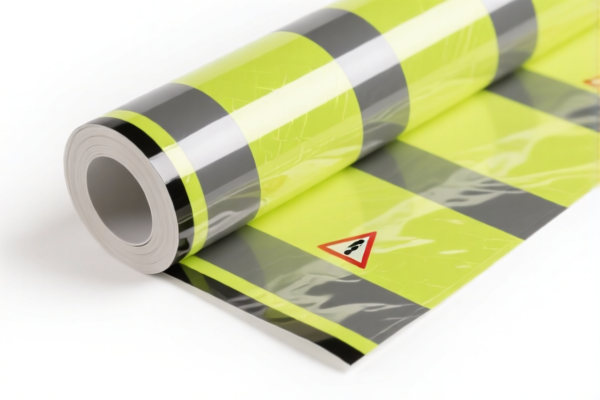
Traffic Safety Reflective Self Adhesive Film
CN → US| HS Code | Tariff Rate | Origin | Destination | Doc |
|---|---|---|---|---|
| 3919905010 | 40.8% | CN | US | Official Doc |
| 3919901000 | 41.5% | CN | US | Official Doc |
Product Images



AI Analysis
🚧 Traffic Safety Reflective Self-Adhesive Film (High-Visibility Road Safety Gear)
🌐 HS Code Reference & Customs Clearance Guide | 2026 Latest Tariff Analysis | Professional Clearance Strategy
📌 I. Product Definition and Classification: What Exactly is "Reflective Film"?
Traffic Safety Reflective Self-Adhesive Film is a specialized plastic material coated with glass beads or prismatic structures that reflect light back to its source (such as vehicle headlights). It is widely used on road signs, license plates, safety vests, and traffic markings to enhance visibility at night.
In international trade, the classification depends heavily on the method of light reflection production:
1. Reflectorized Sheeting (General)
Plastic sheets/films with reflective properties, but not specifically relying on glass beads as the primary surface characteristic for customs distinction.
2. Glass Grain Reflective Sheeting (Ballotini)
Sheets where the light-reflecting surface is produced in whole or in part by glass grains (ballotini). This is a distinct sub-category under heading 3919 due to the specific raw material composition of the reflective layer.
⚠️ Key Distinction Point:
- If the reflective surface is created using prismatic structures or general reflective coatings (without specifying glass beads as the dominant material feature) → Often falls under Other Reflectorized Sheeting.
- If the reflective surface is explicitly produced by glass grains (ballotini) → Must fall under Having a light-reflecting surface produced in whole or in part by glass grains.
📦 II. HS Code Classification Details (2026 Latest Tariff Authority Comparison)
Based on the provided data, the product falls under Chapter 39 (Plastics and Articles Thereof), specifically Heading 3919 (Self-adhesive plates, sheets, film, foil, tape, strip and other flat shapes, of plastics, whether or not in rolls).
| HS Code | Product Description | Applicable Scenario | Reflective Mechanism |
|---|---|---|---|
3919.90.50.10 |
Other Reflectorized Sheeting | General reflective films, prismatic sheets, or those not specifically classified under glass beads. | General reflection / Prismatic / Coated |
3919.90.10.00 |
Having a light-reflecting surface produced in whole or in part by glass grains (ballotini) | Traditional retroreflective sheets using glass bead technology. | Glass Beads (Ballotini) |
🔍 Critical Reminder:
- Customs authorities strictly distinguish between "general reflectorized" and "glass grain reflectorized."
- If your product uses prismatic lenses (common in modern high-intensity films), it may still be classified under 3919.90.50.10 unless specified otherwise.
- If it uses micro-glass beads, it MUST be classified under 3919.90.10.00.
- Do not confuse with Chapter 90 (Optical Instruments) or Chapter 32 (Paints); plastic-based self-adhesive reflective films remain in Chapter 39.
💰 III. 2026 Latest Tariff Rate Details (Including Surcharges & Policy Add-ons)
✅ Applicable Country: United States (US)
✅ Country of Origin: China (CN)
✅ Effective Date: 2025/2026 (Current Policy)
🎯 1. 3919.90.50.10 —— Other Reflectorized Sheeting
| Item | Content |
|---|---|
| Base Tariff Rate | 0.0% (Ad Valorem) |
| Section 301 Surcharge | 0.0% |
| Total Tax Rate | 0.0% |
| Tax Calculation | CIF Value × 0% = $0 |
| De Minimis Eligibility | ✅ Yes (If under $800 per person per day, no duty entered) |
| Legal Basis Path | HTSUS:3919.90.50.10 → Section 301 List 4B (Exempted) |
📌 Explanation:
- This specific subheading under "Other" reflectorized sheets currently has a 0% base tariff and 0% additional surcharge for Chinese origin goods in the current dataset.
- Note: This is favorable compared to many other plastic products. However, always verify if the product is considered "essential" or if policy changes affect "general" vs. "glass bead" categories differently.
🎯 2. 3919.90.10.00 —— Having a light-reflecting surface produced in whole or in part by glass grains (ballotini)
| Item | Content |
|---|---|
| Base Tariff Rate | 0.0% (Ad Valorem) |
| Section 301 Surcharge | 0.0% |
| Total Tax Rate | 0.0% |
| Tax Calculation | CIF Value × 0% = $0 |
| De Minimis Eligibility | ✅ Yes (If under $800 per person per day) |
| Legal Basis Path | HTSUS:3919.90.10.00 → Section 301 List 4B (Exempted) |
📌 Explanation:
- Similar to the above, glass bead reflective sheets also enjoy a 0% total tariff rate for Chinese imports under the provided data.
- This low tariff rate makes China a highly competitive source for both prismatic and glass-bead reflective films for the US market.
🛠️ IV. Customs Clearance Practical Advice (Avoid Pitfalls Guide)
✅ 1. Document Checklist (All Required)
| Document | Required? | Notes |
|---|---|---|
| ✅ Product Specification Sheet | ✔️ | Must clearly state: Material (Plastic), Reflective Type (Glass Bead vs. Prismatic), Adhesive Type. |
| ✅ Commercial Invoice | ✔️ | Describe as "Reflective Self-Adhesive Film" or "Traffic Safety Reflective Sheet." Avoid vague terms like "Sticker." |
| ✅ Packing List | ✔️ | Detail roll dimensions (width, length, diameter) and weight. |
| ✅ Certificate of Origin (CO) | ✔️ | Essential for proving Chinese origin. |
| ✅ Photo of Product & Label | ✔️ | Show the reflective surface structure (beads or prisms) if possible. |
✅ 2. Declaration Tips (Key Mnemonics)
🔥 “Be Specific: Glass Bead or Prismatic? Clear Description, Zero Duty!”
| Scenario | Correct Declaration | Wrong Practice |
|---|---|---|
| Glass Bead Reflective Film | 3919.90.10.00 – "Plastic reflective sheeting with glass grain surface" |
Misdeclaring as generic plastic film → May trigger inspection or wrong duty. |
| Prismatic/Other Reflective Film | 3919.90.50.10 – "Other reflectorized plastic sheeting" |
Misdeclaring as glass bead → Potential mismatch if lab tests show prismatic structure. |
| Cut-to-Size Pieces | Still 3919.90.x0.xx if self-adhesive and flat |
Declaring as "signs" (Chapter 39 or 94) → Wrong chapter, higher risk. |
⚠️ Critical Warning:
- Do NOT declare as "Signs" or "Traffic Devices" if it’s just the film/material. Signs fall under different headings (e.g., 9405 or 3926) with different duty rates.
- The product must be self-adhesive and in flat shapes (rolls/sheets) to qualify for 3919.
✅ 3. Special Circumstances Handling
| Scenario | Handling Advice |
|---|---|
| OEM for Traffic Authorities | Provide end-user statement; still classified as material, not final good. |
| Mixed Packaging (Film + Signs) | Split Declaration: Film under 3919, Signs under their respective HS Code. Do not lump together. |
| High-Intensity Prismatic Film | Confirm with supplier if it contains glass beads. If pure prismatic, use 3919.90.50.10. |
| Sample Shipments | Eligible for De Minimis ($800 threshold) if for testing, no duty. |
🌍 V. Global Market Comparison (2026 Latest)
| Country/Region | Recommended HS Code | Tariff Rate (China Origin) | Certification Requirements | Notes |
|---|---|---|---|---|
| 🇺🇸 USA | 3919.90.10.00 / 3919.90.50.10 |
0.0% | None (General) | Favorable tariff. |
| 🇨🇳 China (Import) | 3919.90.10.00 / 3919.90.50.10 |
0.0% ~ 5% | CCC (if for safety signs) | Low import duty. |
| 🇪🇺 EU | 3919.90.10.00 / 3919.90.50.10 |
0.0% | CE (if part of final product) | Free trade in plastics generally. |
| 🇬🇧 UK | 3919.90.10.00 / 3919.90.50.10 |
0.0% | UKCA | Post-Brexit rules align with EU mostly. |
| 🇦🇺 Australia | 3919.90.10.00 / 3919.90.50.10 |
5.0% | None | Slightly higher than US/EU. |
📌 Conclusion:
- The USA offers the best tariff advantage (0%) for both types of reflective films from China.
- No complex anti-dumping duties apply to these specific HS codes in the current dataset.
📌 VI. Common Errors & Pitfall Guide (Lessons Learned)
❌ Error 1: Declaring "Reflective Film" as "Plastic Tape" (3919.90.90)
👉 Consequence: May be rejected for lacking "reflective" specificity; potential duty reclassification.
✅ Fix: Use specific subheadings 3919.90.10.00 or 3919.90.50.10.
❌ Error 2: Ignoring the "Glass Grain" vs. "Prismatic" distinction
👉 Consequence: Customs may request lab tests, causing delays.
✅ Fix: Provide technical datasheet explicitly stating the reflective technology.
❌ Error 3: Declaring as "Signs" when it’s just the material
👉 Consequence: Wrong HS Code, potential penalties for misdeclaration.
✅ Fix: Declare as "Sheets/Films" if not assembled into signs.
🎯 VII. Conclusion: Professional Declaration, Smooth Clearance, Cost Efficiency!
🎯 Remember the Key Points:
🔹 “Glass Beads = 3919.90.10.00”
🔹 “Other Reflective = 3919.90.50.10”
🔹 “Both 0% Duty from China to USA”
🔹 “Clear Description is Key to Fast Clearance!”
📌 Pro Tip:
If you are exporting large volumes, consider applying for a Binding Ruling with US Customs (CBP) to lock in the classification, especially if the reflective technology is hybrid (both glass beads and prisms).
📣 Immediate Action:
📞 Verify with your supplier: "Does the reflective surface use glass beads (ballotini) or prismatic lenses?"
🚀 Accurate classification now saves time and ensures 0% duty on your traffic safety films.
✨ Professional Clearance Starts with Precise Classification!
💼 Your Safety Film, Your Competitive Edge!
Customer Reviews
About HS Code Classification
The Harmonized System (HS) is an internationally standardized nomenclature developed by the World Customs Organization (WCO) to classify traded products. Over 200 countries use the HS system as the basis for customs tariffs, trade statistics, and import/export regulations.
Each HS code follows a hierarchical structure:
- Chapter (2 digits) — Broad category of goods (e.g., Chapter 84: Machinery and Mechanical Appliances)
- Heading (4 digits) — More specific grouping within the chapter
- Subheading (6 digits) — Internationally standardized breakdown, used by all WCO member countries
- National subdivisions (8-10 digits) — Country-specific extensions for further classification, such as US HTSUS 10-digit codes
Correct HS code classification is essential for smooth customs clearance, accurate duty payment, and compliance with trade regulations. Misclassification can lead to customs delays, overpayment of duties, or penalties.
When importing from CN to US, the applicable tariff rates may include:
- Most-Favored-Nation (MFN) rate — The standard duty rate applied to WTO members
- General rate — Applied to countries without trade agreements
- Trade remedy duties — Additional tariffs such as Section 301 (anti-dumping), Section 232 (national security), or countervailing duties
The information provided on this page is for reference purposes only. For official classification, please consult with your local customs authority or a licensed customs broker.