Traffic Sign Reflective Plastic
CN → US| HS Code | Tariff Rate | Origin | Destination | Doc |
|---|---|---|---|---|
| 3926909925 | 22.8% | CN | US | Official Doc |
| 3926909989 | 22.8% | CN | US | Official Doc |
| 3920991000 | 41.0% | CN | US | Official Doc |
| 3920591000 | 41.0% | CN | US | Official Doc |
| 3919101050 | 41.5% | CN | US | Official Doc |
Product Images
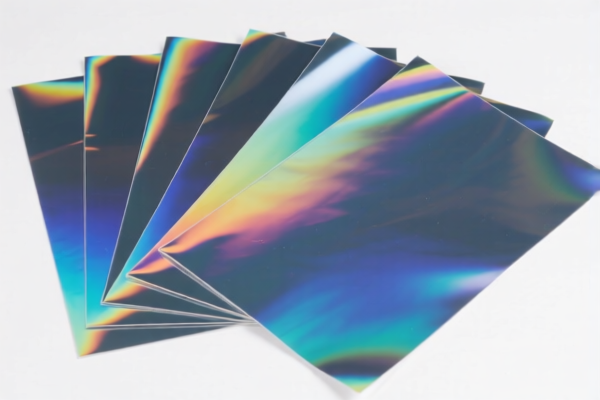
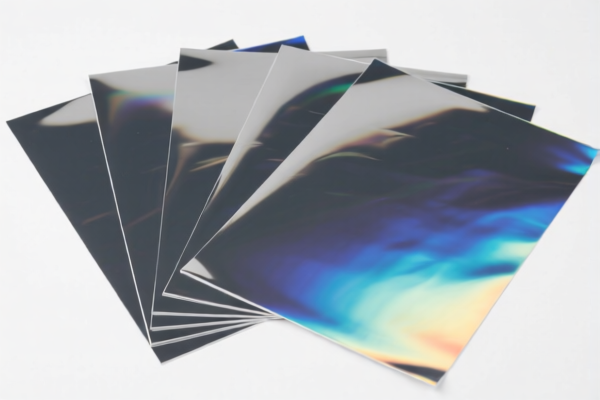
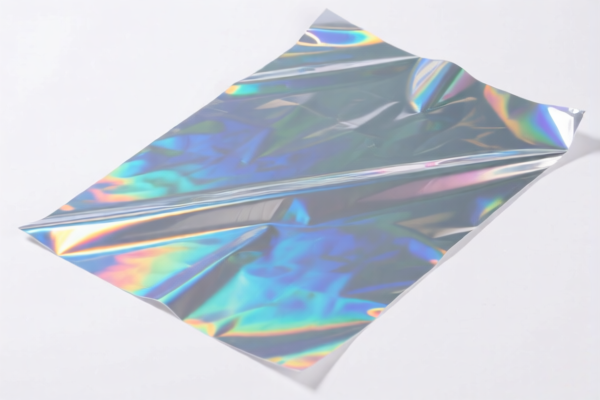
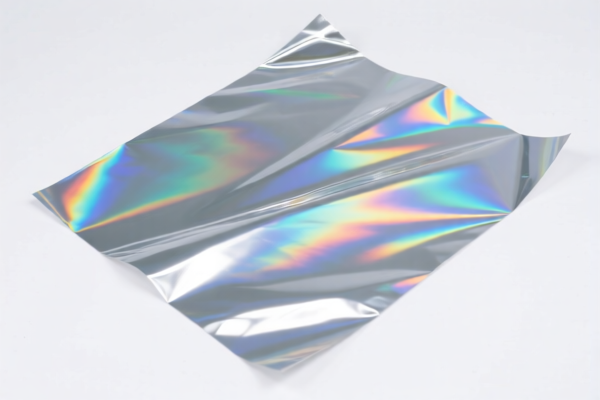
AI Analysis
🚦 Traffic Sign Reflective Plastic (Plastic Reflective Sign Boards)
🌐 HS Code Reference & Customs Clearance Guide | 2024/2025 Latest Tariff Analysis | Strategic Classification for Compliance
📌 I. Product Definition & Classification: What Exactly Is “Traffic Sign Reflective Plastic”?
Traffic sign reflective plastic plates are high-visibility safety components used for road signs, construction barriers, and industrial safety markings. In international trade, they are primarily classified based on material composition, structural form, and manufacturing process.
The core distinction lies in whether the product is: 1. A finished sign board (often with adhesive backing or pre-drilled holes) → Typically falls under 3926.90 (Other articles of plastic). 2. A raw material sheet/film (composite layers without finishing) → Typically falls under 3920 or 3919 (Plastic plates, sheets, film, tape, strip, and other shapes).
⚠️ Key Distinction Point:
- If the product is a composite laminate (e.g., acrylic sheet + reflective film) intended for further fabrication → Often 3920 or 3919. - If the product is a finished article (e.g., a cut-to-size sign with adhesive or mounting features) → Often 3926.
📦 II. HS Code Classification Details (Latest Tariff Authority Comparison)
| HS Code | Product Description | Applicable Scenario | Manufacturing Form |
|---|---|---|---|
3926.90.99.25 |
Plastic reflective sign boards; material is plastic; purpose is reflective marking | Finished signs for traffic/safety; cut to size; may have adhesive | Finished Article |
3926.90.99.89 |
Plastic reflective sign boards; classified as other unlisted plastic articles | Generic plastic reflective signs not fitting other specific 3926 subheadings | Finished Article |
3920.99.10.00 |
Plastic reflective sign boards; material is plastic; form is plate/sheet/film composite | Raw composite sheets; multi-layer laminate; not yet cut/finished as a sign | Semi-finished / Raw Material |
3920.59.10.00 |
Plastic reflective sign boards; material is acrylic polymer; form is plate/sheet/film | Acrylic-based reflective sheets; single or multi-layer but not final article | Raw Material (Acrylic) |
3919.10.10.50 |
Reflective plastic safety labels; material is plastic; has reflective surface; form is flat strip/sheet | Self-adhesive reflective strips/rolls; tape-like form; easy application | Self-Adhesive Tape/Label |
🔍 Critical Reminder:
- Finished signs (rigid, cut, ready-to-install) are generally 3926. - Sheets/Films (rolls or large sheets for further processing) are generally 3920 or 3919. - Misclassification Risk: Declaring a raw acrylic sheet as a "finished sign" (3926) when it’s actually a raw material (3920) can lead to duty discrepancies.
💰 III. 2024/2025 Latest Tariff Rate Breakdown (Including Surcharges & Policy Add-ons)
✅ Applicable Country: United States (US)
✅ Origin: China (CN)
✅ Effective Date: Current rates apply (Section 301 & IEEPA measures)
🎯 1. 3926.90.99.25 & 3926.90.99.89 — Finished Plastic Reflective Sign Boards
| Item | Content |
|---|---|
| Base Duty Rate | 5.3% |
| Section 301 Surcharge | +7.5% |
| IEEPA 122 Clause Surcharge | +10% |
| Total Duty Rate | 22.8% |
| Calculation Basis | CIF Value × 22.8% |
| De Minimis Exemption | ❌ Not Applicable (Value exceeds $800 threshold for most commercial shipments) |
| Legal Path | HTSUS 3926.90.99.25/89 → Section 301: 9903.01.31 → IEEPA: 9903.01.25 |
📌 Explanation:
- These codes cover finished plastic sign boards. - The 22.8% rate is a combination of MFN (5.3%) + Section 301 (7.5%) + IEEPA (10%). - Note: If the sign includes metal parts (e.g., posts), the classification may change entirely (e.g., to 7326 for metal parts).
🎯 2. 3920.99.10.00 & 3920.59.10.00 — Plastic Sheets/Films (Acrylic/Composite)
| Item | Content |
|---|---|
| Base Duty Rate | 6.0% |
| Section 301 Surcharge | +25.0% |
| IEEPA 122 Clause Surcharge | +10% |
| Total Duty Rate | 41.0% |
| Calculation Basis | CIF Value × 41.0% |
| De Minimis Exemption | ❌ Not Applicable |
| Legal Path | HTSUS 3920.99.10.00 / 3920.59.10.00 → Section 301: 9903.01.33 → IEEPA: 9903.01.25 |
📌 Explanation:
- These codes cover raw plastic sheets/films. - The 41.0% rate is significantly higher due to the 25% Section 301 surcharge on plastic plates/sheets. - Crucial: If you import raw acrylic sheets to cut into signs in the US, you pay 41%. If you import finished signs, you pay 22.8%. Design for duty optimization!
🎯 3. 3919.10.10.50 — Reflective Plastic Safety Labels (Self-Adhesive)
| Item | Content |
|---|---|
| Base Duty Rate | 6.5% |
| Section 301 Surcharge | +25.0% |
| IEEPA 122 Clause Surcharge | +10% |
| Total Duty Rate | 41.5% |
| Calculation Basis | CIF Value × 41.5% |
| De Minimis Exemption | ❌ Not Applicable |
| Legal Path | HTSUS 3919.10.10.50 → Section 301: 9903.01.33 → IEEPA: 9903.01.25 |
📌 Explanation:
- Covers self-adhesive reflective tapes/strips. - Highest duty rate (41.5%) due to being classified under “Self-adhesive plates, sheets, film, tape, tape, tape, and other flat shapes.” - Note: Ensure the product is indeed self-adhesive. If it’s a rigid board with adhesive backing, 3926 may still apply.
🛠️ IV. Customs Clearance Practical Advice (Real-World Pitfall Guide)
✅ 1. Documentation Checklist (Mandatory)
| Document | Required | Purpose |
|---|---|---|
| ✅ Product Specification Sheet | ✔️ | Define material (Acrylic? PVC?), thickness, reflectivity class |
| ✅ Product Photos (Front/Back) | ✔️ | Show if it’s a finished sign or raw sheet |
| ✅ Certificate of Origin (CO) | ✔️ | Confirm Chinese origin for duty calculation |
| ✅ Commercial Invoice | ✔️ | Clearly state “Plastic Reflective Sign Board” or “Acrylic Sheet” |
| ✅ Packing List | ✔️ | Detail weight/volume, avoid mixing categories |
| ✅ FCC/CE Compliance (if applicable) | ✔️ | For electronic integrated signs (rare for passive plastic) |
✅ 2. Declaration Tips (Key Mnemonic)
🔥 “Finished Sign 3926 (22.8%), Raw Sheet 3920 (41%), Tape 3919 (41.5%)!”
| Scenario | Correct HS Code | Wrong Approach | Result |
|---|---|---|---|
| Pre-cut, pre-drilled sign board | 3926.90.99.25 |
Declare as “Plastic Sheet” → Risk of audit | ✅ 22.8% |
| Large roll/sheet of acrylic with reflective film | 3920.99.10.00 |
Declare as “Sign” → Duty overpayment | ❌ 41% (Overpaid) |
| Self-adhesive reflective strip | 3919.10.10.50 |
Declare as “Plastic Plate” → Classification error | ❌ 41.5% |
| Sign with metal post | Not Plastic (Check 7326/7616) | Declare all as plastic | ❌ Misclassification |
✅ 3. Special Handling Cases
| Case | Recommendation |
|---|---|
| OEM Custom Shapes | Provide CAD drawings to prove it’s a “finished article” (3926) rather than a generic sheet. |
| Multi-Layer Composite | If layers are bonded during import, clarify if it’s a “composite sheet” (3920) or “finished sign” (3926). |
| Adhesive Backing | If adhesive is the primary feature, consider 3919. If rigid plate is primary, consider 3926. |
| Metal-Plastic Hybrid | If >50% value or essential character is metal, classify under metal section (e.g., 7326). |
🌍 V. Global Market Comparison (2024/2025)
| Country/Region | Recommended HS Code | Duty Rate (China Origin) | Certification Required | Notes |
|---|---|---|---|---|
| 🇺🇸 USA | 3926.90.99.25 |
22.8% | None (Passive) | High duty due to Section 301 |
| 🇨🇳 China | 3926.90.99.25 |
5.3% | RoHS (if electronic) | Low duty, easy entry |
| 🇪🇺 EU | 3926.90.99.90 |
6.5% | CE (if electronic), REACH | No Section 301 equivalent |
| 🇬🇧 UK | 3926.90.90 |
6.5% | UKCA | Post-Brexit rules apply |
| 🇦🇺 Australia | 3926.90.90 |
5% | SAA (if electrical) | Moderate duty |
📌 Conclusion:
- USA has the highest effective duty for plastic reflective signs/sheets due to Section 301 + IEEPA. - Duty Optimization Strategy: Import finished signs (3926) if possible, as it incurs 22.8% vs. 41% for raw sheets (3920). - Supply Chain Adjustment: Consider sourcing from Vietnam, Thailand, or Malaysia to avoid China-specific surcharges.
📌 VI. Common Errors & Pitfalls (Lessons Learned)
❌ Error 1: Declaring raw acrylic sheets as “Finished Signs” to avoid 25% Section 301
👉 Consequence: CBP audit → Penalty + Back Duties + Possible seizure
❌ Error 2: Mixing self-adhesive tape with rigid plates in one shipment
👉 Consequence: Misclassification → Higher duty (41.5% vs. 22.8%) → Financial loss
❌ Error 3: Ignoring metal components (e.g., brackets, posts)
👉 Consequence: If metal is essential character, plastic HS code is invalid → Complete reclassification
❌ Error 4: Using vague descriptions like “Plastic Sign”
👉 Consequence: Customs delay for clarification → Demurrage charges + Storage fees
✅ Best Practice:
“Reflective Plastic Traffic Sign Board, PVC/Acrylic, 60x60cm, Pre-drilled, with 3M Adhesive Backing, Model XYZ”
🎯 VII. Conclusion: Precise Classification, Cost Savings, Smooth Clearance!
🎯 Remember This Mnemonic:
🔹 “Finished Sign 3926 (22.8%), Raw Sheet 3920 (41%), Tape 3919 (41.5%)!”
🔹 “Structure Defines Duty, Description Dictates Speed!”
🔹 “Hybrid Goods? Check Metal First!”
📌 Pro Tip:
If your product is shipped from Vietnam, Thailand, or Malaysia, you may qualify for Section 301 exemption or lower tariffs under USMCA (if applicable to components).
Recommend applying for a Customs Ruling (CBP Ruling) before shipment to confirm HS Code and duty rate.
📣 Immediate Action:
📞 Contact a licensed customs broker + Provide product specs + Request CBP Advance Ruling
🚀 Ensure compliant clearance, minimize duty, and maximize profit!
✨ Professional clearance starts with accurate classification!
💼 Every percentage point of duty matters in global trade!
Customer Reviews
About HS Code Classification
The Harmonized System (HS) is an internationally standardized nomenclature developed by the World Customs Organization (WCO) to classify traded products. Over 200 countries use the HS system as the basis for customs tariffs, trade statistics, and import/export regulations.
Each HS code follows a hierarchical structure:
- Chapter (2 digits) — Broad category of goods (e.g., Chapter 84: Machinery and Mechanical Appliances)
- Heading (4 digits) — More specific grouping within the chapter
- Subheading (6 digits) — Internationally standardized breakdown, used by all WCO member countries
- National subdivisions (8-10 digits) — Country-specific extensions for further classification, such as US HTSUS 10-digit codes
Correct HS code classification is essential for smooth customs clearance, accurate duty payment, and compliance with trade regulations. Misclassification can lead to customs delays, overpayment of duties, or penalties.
When importing from CN to US, the applicable tariff rates may include:
- Most-Favored-Nation (MFN) rate — The standard duty rate applied to WTO members
- General rate — Applied to countries without trade agreements
- Trade remedy duties — Additional tariffs such as Section 301 (anti-dumping), Section 232 (national security), or countervailing duties
The information provided on this page is for reference purposes only. For official classification, please consult with your local customs authority or a licensed customs broker.