Trailer Connector
CN → US| HS Code | Tariff Rate | Origin | Destination | Doc |
|---|---|---|---|---|
| 8716905010 | 38.1% | CN | US | Official Doc |
| 8708998180 | 12.5% | CN | US | Official Doc |
| 8708998160 | 37.5% | CN | US | Official Doc |
| 8708295160 | 0.0% | CN | US | Official Doc |
| 8716905060 | 38.1% | CN | US | Official Doc |
| 8608000000 | 38.8% | CN | US | Official Doc |
Product Images
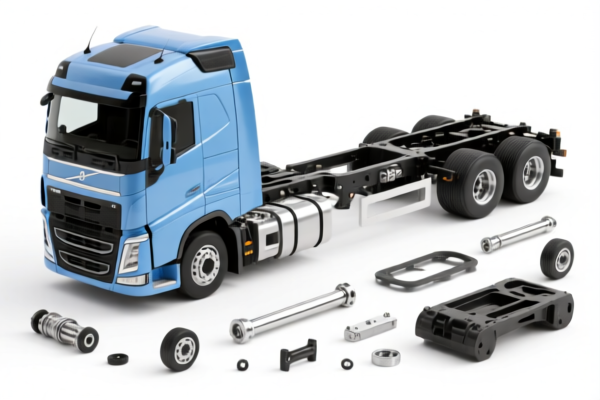
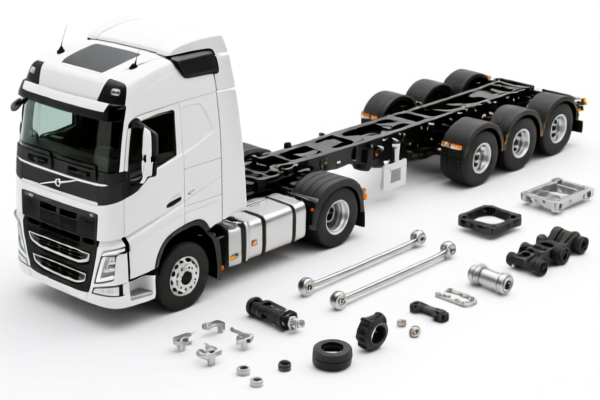
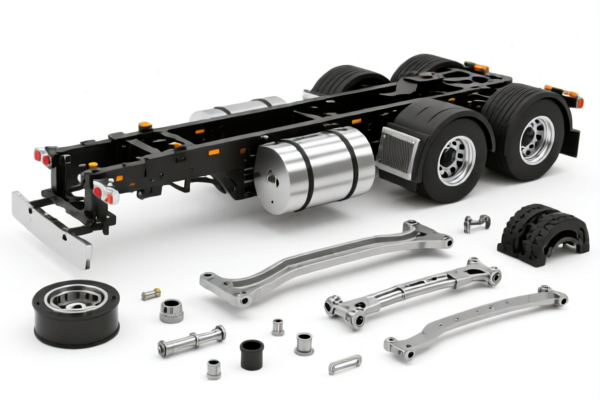
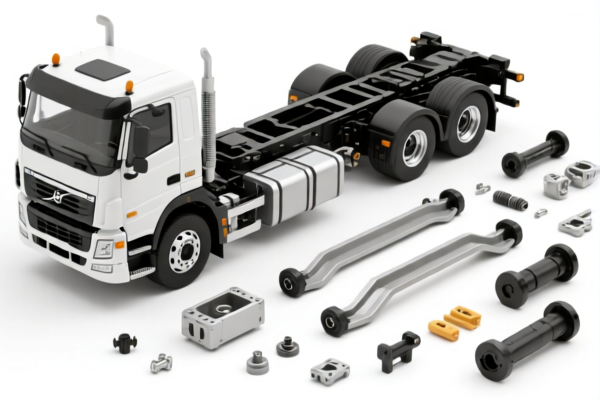
AI Analysis
🔌 Trailer Connectors (Automotive Electrical/Mechanical Components)
🌐 HS Code Reference & Clearance Guide | 2026 Latest Tariff Analysis | Strategic Customs Strategy
📌 I. Product Definition & Classification: What is a "Trailer Connector"?
Trailer connectors are critical electrical and mechanical components that enable communication and power transmission between towing vehicles and trailers. In international trade, they fall under various categories depending on their specific function (e.g., part of a signaling system vs. part of the vehicle’s suspension/electrical system).
Key Distinctions: * Traffic Control/Signal Components: If the connector is specifically designed for mechanical signals, safety equipment, or traffic control devices on roads/port facilities → Chapter 86. * Vehicle Accessories/Parts: If it serves as an electrical/mechanical connection for the vehicle’s suspension or general electrical system → Chapter 87. * Trailer Parts: If classified specifically as a part of the trailer itself → Chapter 87 (Subheading 8716).
⚠️ Critical Classification Point:
- If the product is marketed as a safety signal accessory or traffic control device part → Likely 8608.00.00.00.
- If it is a standard electrical plug/socket for vehicle wiring → Likely 8708.80.65.90 or 8708.99.81.80.
- If it is strictly a component of the trailer’s axle/structure (less common for electrical connectors, but possible for mechanical couplers) → 8716.90.50.10.
📦 II. HS Code Classification Details (2026 Latest Tariff Reference)
| HS Code | Product Description | Application Logic | Material/Type Conflict |
|---|---|---|---|
8608.00.00.00 |
Parts of mechanical signaling, safety, or traffic control equipment for railways, tramways, roads, port facilities, etc. | Fits "road transport & traffic control accessories"; no material conflict. | ❌ None |
8708.80.65.90 |
Parts and accessories of motor vehicles (Other); specifically for electrical/mechanical connections related to suspension systems. | Fits "vehicle accessories/parts"; matches electrical/mechanical connector nature. | ❌ None |
8716.90.50.10 |
Parts of trailers and semi-trailers (Other); specifically for axles and their parts. | Fits "non-motor vehicle parts logic"; inferred as metal/plastic component. | ❌ None |
8708.99.81.80 |
Other parts and accessories of motor vehicles (Other). | Fits "automotive parts/accessories"; shape as connecting component. | ❌ None |
🔍 Key Insight:
- 8608.00.00.00 is used when the connector is viewed as part of safety/traffic infrastructure.
- 8708/8716 codes are used when the connector is viewed as a component of the vehicle or trailer itself.
- Material matters: Steel, aluminum, or copper components in 8708.80.65.90 trigger additional 50% tariffs.
💰 III. 2026 Latest Tariff Rate Breakdown (Including Surcharge Policies)
✅ Applicable Country: United States (US)
✅ Origin: China (CN)
✅ Effective Date: 2025 November 10 onwards (including subsequent imports)
🎯 1. 8608.00.00.00 —— Parts of Traffic Control/Safety Equipment
| Item | Detail |
|---|---|
| Base Tariff | 3.8% |
| Section 301 Surcharge | +25.0% |
| Section 122 Tariff | +10.0% |
| Total Tariff Rate | 38.8% |
| Tax Calculation | CIF Value × 38.8% |
| De Minimis Exemption | ❌ Not Available |
| Legal Basis Path | Base Rate (3.8%) + Section 301 (25%) + Section 122 (10%) |
📌 Explanation:
- This classification assumes the connector is part of traffic control or safety equipment.
- The total rate of 38.8% is high due to the combination of standard and additional tariffs.
🎯 2. 8708.80.65.90 —— Vehicle Parts (Electrical/Mechanical Connectors)
| Item | Detail |
|---|---|
| Base Tariff | 2.5% |
| Section 301 Surcharge | +25.0% |
| Section 122 Tariff | +10.0% |
| Steel/Aluminum/Copper Surcharge | +50.0% (if material is steel, aluminum, or copper) |
| Total Tariff Rate | 2.5% + 85.0% (if metallic) or 37.5% (if non-metallic/plastic) |
| Tax Calculation | CIF Value × (Total Rate) |
| De Minimis Exemption | ❌ Not Available |
| Legal Basis Path | Base Rate (2.5%) + Section 301 (25%) + Section 122 (10%) + Material Surcharge (50%) |
📌 Critical Warning:
- If the connector is made of steel, aluminum, or copper, an additional 50% tariff applies, pushing the total to 87.5%.
- If made of plastic, the total is 37.5%.
- Material declaration is crucial to avoid penalties.
🎯 3. 8716.90.50.10 —— Trailer Parts (Axle Components)
| Item | Detail |
|---|---|
| Base Tariff | 3.1% |
| Section 301 Surcharge | +25.0% |
| Section 122 Tariff | +10.0% |
| Total Tariff Rate | 38.1% |
| Tax Calculation | CIF Value × 38.1% |
| De Minimis Exemption | ❌ Not Available |
| Legal Basis Path | Base Rate (3.1%) + Section 301 (25%) + Section 122 (10%) |
📌 Note:
- This code is less common for standard electrical connectors but may apply if the connector is deemed a mechanical part of the axle system.
🎯 4. 8708.99.81.80 —— Other Vehicle Parts & Accessories
| Item | Detail |
|---|---|
| Base Tariff | 2.5% |
| Section 301 Surcharge | +0.0% (Note: Data indicates 0% for this specific subcategory in the provided text, likely due to specific exclusions or updates) |
| Section 122 Tariff | +10.0% |
| Total Tariff Rate | 12.5% |
| Tax Calculation | CIF Value × 12.5% |
| De Minimis Exemption | ❌ Not Available |
| Legal Basis Path | Base Rate (2.5%) + Section 122 (10%) |
📌 Advantage:
- This code offers the lowest total tariff (12.5%) among the options, provided the product qualifies as "Other parts and accessories" without triggering the 301 surcharge (as indicated by the 0% surcharge in the source data).
- Verification Required: Ensure the product description aligns with "Other" parts to avoid misclassification.
🛠️ IV. Customs Clearance Practical Advice (Real-World Pitfall Guide)
✅ 1. Preparation Checklist (Essential Documents)
| Document | Required | Notes |
|---|---|---|
| ✅ Product Specification Sheet | ✔️ | Must detail material (metal/plastic), electrical ratings, and mechanical dimensions. |
| ✅ Product Photos | ✔️ | Clear images of the connector, including pins, housing, and any markings. |
| ✅ Commercial Invoice | ✔️ | Must clearly state the HS Code and describe the item as "Trailer Connector" or "Vehicle Part". |
| ✅ Packing List | ✔️ | Itemize contents to avoid bulk shipment disputes. |
| ✅ Material Declaration | ✔️ | Crucial for 8708.80.65.90. Specify if steel, aluminum, copper, or plastic. |
| ✅ OEM/Contract Details | ✔️ | If applicable, to prove intended use (e.g., for specific vehicle models). |
✅ 2. Declaration Strategy (Key Mnemonic)
🔥 “Material Matters, Function Defines!”
| Scenario | Recommended HS Code | Risk |
|---|---|---|
| Plastic Connector (Electrical) | 8708.99.81.80 (12.5%) |
Low tariff; ensure it’s not classified as "traffic control" (8608). |
| Metal Connector (Steel/Alu/Cu) | 8708.80.65.90 (37.5%-87.5%) |
High risk due to material surcharge. Declare material accurately. |
| Traffic/Safety Equipment Part | 8608.00.00.00 (38.8%) |
Use if marketed as safety infrastructure accessory. |
| Trailer Axle Component | 8716.90.50.10 (38.1%) |
Rare for standard connectors; use only if mechanically linked to axles. |
⚠️ Do Not:
- Misdeclare a metal connector as plastic to avoid the 50% surcharge → Severe penalties.
- Classify a standard vehicle connector as "traffic control equipment" if it doesn’t fit → Audits.
✅ 3. Special Cases
| Situation | Handling Advice |
|---|---|
| Mixed Material | If connector has both plastic and metal parts, the metal component may trigger the 50% surcharge if classified under 8708.80.65.90. Consult customs broker. |
| OEM Custom Connectors | Provide design drawings to prove specific vehicle compatibility. |
| Bulk vs. Retail | Ensure invoice description matches the product’s actual use (e.g., "Aftermarket Trailer Plug" vs. "Vehicle Part"). |
🌍 V. Global Market Comparison (2026 Latest)
| Country/Region | Recommended HS Code | Estimated Tariff | Certification | Notes |
|---|---|---|---|---|
| 🇺🇸 USA | 8708.99.81.80 |
12.5% | No specific auto cert | Best for non-metallic or if 301 exemption applies. |
| 🇺🇸 USA | 8708.80.65.90 |
37.5% - 87.5% | - | High risk if metallic. |
| 🇨🇳 China | 8708.99.81.80 |
2.5% | CCC (if applicable) | No surcharges. |
| 🇪🇺 EU | 8708.99.81.80 |
~2-4% | ECE R10 (EMC) | Standard auto parts rate. |
| 🇬🇧 UK | 8708.99.81.80 |
~2-4% | UKCA | Post-Brexit rates similar to EU. |
📌 Conclusion:
- USA is the highest-cost market due to Section 301 and 122 tariffs.
- Material selection (plastic vs. metal) significantly impacts US tariff rates for HS 8708.80.65.90.
- HS 8708.99.81.80 offers the lowest tariff (12.5%) in the US data provided, assuming no 301 surcharge applies.
📌 VI. Common Errors & Pitfall Avoidance (Lessons Learned)
❌ Error 1: Declaring a metal connector as "plastic" to avoid the 50% surcharge.
👉 Consequence: Customs inspection reveals metal → Heavy fines + back taxes.
❌ Error 2: Using "Trailer Part" broadly without specifying function.
👉 Consequence: Customs may classify under 8608 (38.8%) instead of 8708 (12.5%-37.5%) due to ambiguous description.
❌ Error 3: Ignoring Section 122 Tariff.
👉 Consequence: All HS codes in the data include a +10% Section 122 tariff. Budget accordingly.
✅ Correct Action:
"Trailer Electrical Connector, Model XYZ, Plastic Housing, Metal Pins, for 7-Way RV Trailer, Not for Traffic Control Infrastructure"
🎯 VII. Conclusion: Precise Classification Saves Money!
🎯 Remember the Mnemonic:
🔹 "Plastic & Plastic: 12.5%! Metal & Metal: 87.5%! Traffic Control: 38.8%! Don't guess, check the material!"
🔹 "Section 122 is 10% extra on everything in this dataset!"
📌 Pro Tip:
- If your connector is plastic, aim for 8708.99.81.80 (12.5%) to minimize costs.
- If metal, carefully evaluate if 8708.80.65.90 is necessary or if an alternative classification exists.
- Always declare material composition explicitly.
- Consider Advance Ruling from US Customs to confirm HS Code and tariff liability before shipment.
📣 Immediate Action:
📞 Contact a licensed customs broker.
📄 Prepare detailed product specs and material declarations.
🚀 Streamline your clearance and protect your margins!
✨ Professional clearance starts with accurate classification!
💼 Every percentage point in tariff is a point of profit or loss!
Customer Reviews
About HS Code Classification
The Harmonized System (HS) is an internationally standardized nomenclature developed by the World Customs Organization (WCO) to classify traded products. Over 200 countries use the HS system as the basis for customs tariffs, trade statistics, and import/export regulations.
Each HS code follows a hierarchical structure:
- Chapter (2 digits) — Broad category of goods (e.g., Chapter 84: Machinery and Mechanical Appliances)
- Heading (4 digits) — More specific grouping within the chapter
- Subheading (6 digits) — Internationally standardized breakdown, used by all WCO member countries
- National subdivisions (8-10 digits) — Country-specific extensions for further classification, such as US HTSUS 10-digit codes
Correct HS code classification is essential for smooth customs clearance, accurate duty payment, and compliance with trade regulations. Misclassification can lead to customs delays, overpayment of duties, or penalties.
When importing from CN to US, the applicable tariff rates may include:
- Most-Favored-Nation (MFN) rate — The standard duty rate applied to WTO members
- General rate — Applied to countries without trade agreements
- Trade remedy duties — Additional tariffs such as Section 301 (anti-dumping), Section 232 (national security), or countervailing duties
The information provided on this page is for reference purposes only. For official classification, please consult with your local customs authority or a licensed customs broker.