Trailer Hitch
CN → US| HS Code | Tariff Rate | Origin | Destination | Doc |
|---|---|---|---|---|
| 7326190080 | 87.9% | CN | US | Official Doc |
| 8708106050 | 87.5% | CN | US | Official Doc |
| 8716905010 | 38.1% | CN | US | Official Doc |
| 7326908688 | 87.9% | CN | US | Official Doc |
| 8716905060 | 38.1% | CN | US | Official Doc |
| 8708996890 | 87.5% | CN | US | Official Doc |
Product Images
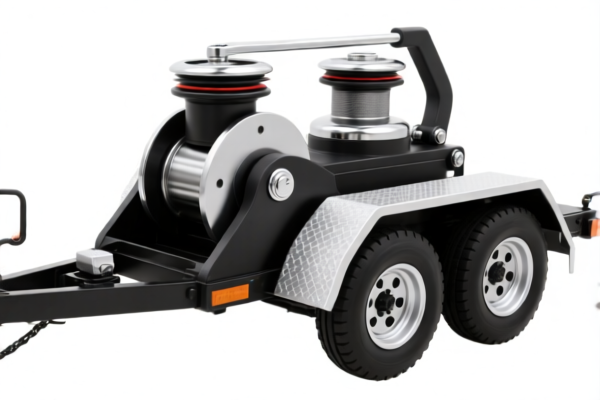
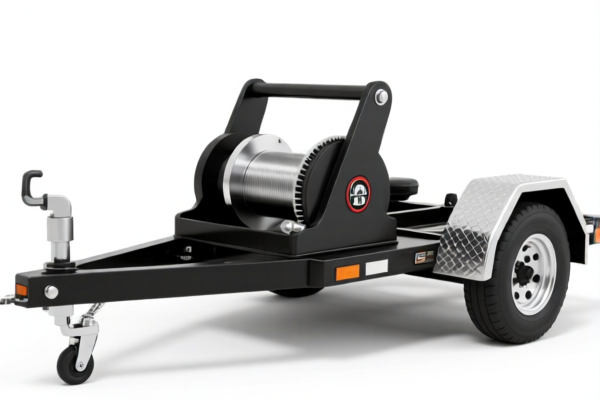
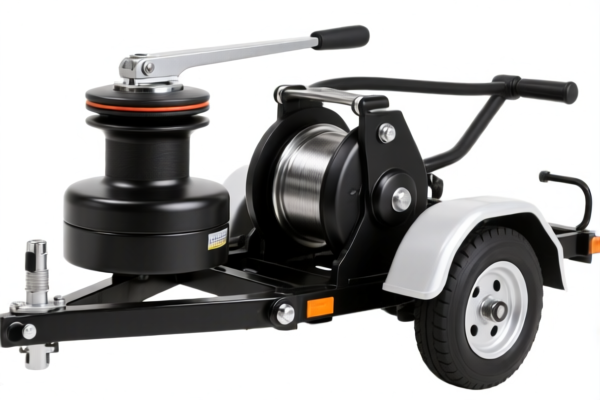
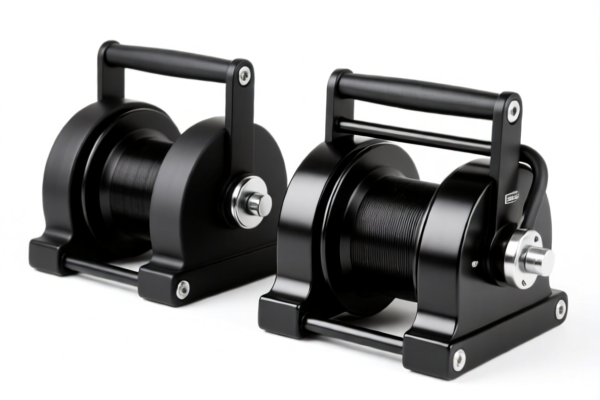
AI Analysis
🚙 Trailer Hitch (Towing Hooks & Accessories)
🌐 HS Code Reference & Customs Clearance Guide | 2026 Latest Tariff Analysis | Professional Strategy for US Imports
📌 Part 1: Product Definition & Classification: What Exactly is a "Trailer Hitch"?
A Trailer Hitch (also known as a Towing Hook or Tow Bar) is a critical mechanical component used to connect a towing vehicle to a trailer or towed load. In international trade, its classification is highly sensitive because it bridges two major categories: Automotive Parts and General Iron/Steel Articles.
Key Distinctions for Classification: * Vehicle Accessory (Chapter 87): If the hitch is specifically designed for and installed on a motor vehicle (car, truck, SUV) as a permanent or semi-permanent attachment, it falls under "Parts and Accessories of Motor Vehicles." * Iron/Steel Product (Chapter 73): If the hitch is classified simply as a "general purpose steel fitting" without specific vehicle integration features, it may fall under "Other Articles of Iron or Steel." * Trailer Part (Chapter 87/86): If it is specifically identified as a part of the trailer itself (rather than the towing vehicle), it may be classified under trailer parts.
⚠️ Critical Risk Point:
The tariff rate difference is massive (38.1% vs. 87.9%). Misclassification can lead to significant duty overpayment or customs audits. The determining factor is the primary function and specificity to the vehicle type.
📦 Part 2: HS Code Classification Details (2026 Latest Tariff Alignment)
Based on the provided data, there are four distinct classification pathways. Please match your product's specific design and usage to the correct code.
| HS Code | Product Description & Logic | Applicable Scenario | Total Tax Rate (CN→US) |
|---|---|---|---|
8708.99.68.90 |
Motor Vehicle Part (Other): Classified as a general part of motor vehicles. | Universal hitches, aftermarket tow hooks for SUVs/Trucks not covered by bumper codes. | 87.5% |
7326.19.00.80 |
Iron/Steel Article (Cast): Infers the material is cast iron/steel, classified as other cast iron articles. | Heavy-duty hitches where material composition is the primary descriptor (less common for finished auto parts). | 87.9% |
8708.10.60.50 |
Bumper & Component: Classified as a component of bumpers or related safety attachments. | Hitches integrated into the rear bumper assembly or those serving a structural/safety role similar to a bumper. | 87.5% |
8716.90.50.10 |
Trailer Part (Axle/Other): Classified specifically as a part of the trailer (not the towing vehicle). | Hitches designed for the trailer end (e.g., fifth-wheel connectors, gooseneck hitches on the trailer body). | 38.1% |
7326.90.86.88 |
Iron/Steel Article (Other): General category for other fabricated iron/steel articles. | Generic steel towing hooks not specifically tailored to a vehicle model, falling under "other" steel goods. | 87.9% |
🔍 Key Insight:
- Lowest Duty:8716.90.50.10(38.1%) is ONLY applicable if the product is clearly identified as a part of the trailer.
- Highest Duty:7326.19.00.80and7326.90.86.88(87.9%) apply if classified under Chapter 73 (Iron/Steel articles), which triggers the highest "122 Clause" penalties.
- Standard Auto Part:8708.99.68.90and8708.10.60.50(87.5%) are the most common for standard vehicle-mounted hitches.
💰 Part 3: 2026 Latest Tariff Rate Breakdown (Including Add-ons)
✅ Applicable Country: United States (US)
✅ Origin: China (CN)
✅ Effective Date: Current tariffs apply (Section 301, Section 232/122, etc.)
🎯 1. 8716.90.50.10 —— TRAILER PARTS (The "Sweet Spot" for Savings)
| Item | Detail |
|---|---|
| Base Rate | 3.1% (Ad Valorem) |
| Section 301 Tariff | +25.0% (Trade Act of 1974, Section 301) |
| Section 122 Tariff | +10.0% (Specific to certain steel/iron products under specific conditions) |
| Total Effective Rate | 38.1% |
| Calculation | CIF Value × 38.1% |
| De Minimis Exemption | ❌ NOT Eligible (Deny de_minimis). All shipments are subject to full duty. |
| Legal Basis | Section 301: 1351.5 → Section 122: 10% → HS: 8716.90.50.10 |
📌 Explanation:
- This is the most cost-effective classification if your product can be legally defined as a Trailer Part (e.g., installed on the trailer itself, not the tow vehicle). - It avoids the "Iron/Steel" penalty brackets that push taxes to ~88%.
🎯 2. 8708.99.68.90 & 8708.10.60.50 —— MOTOR VEHICLE PARTS (Most Common)
| Item | Detail |
|---|---|
| Base Rate | 2.5% (Ad Valorem) |
| Section 301 Tariff | +25.0% (Trade Act of 1974, Section 301) |
| Section 122 Tariff | +10.0% (Steel/Aluminum/Copper Products Penalty) |
| Additional Steel Penalty | +50.0% (Specific to steel articles under Section 232/122 overlap) |
| Total Effective Rate | 87.5% |
| Calculation | CIF Value × 87.5% |
| De Minimis Exemption | ❌ NOT Eligible |
| Legal Basis | Section 301: 1351.5 → Section 122: 10% + Section 232: 50% → HS: 8708.xx |
📌 Explanation:
- This is the standard high-tax bracket for vehicle parts made of steel/aluminum. - The "50% Additional Tax" is a critical penalty for steel/aluminum products imported from China. - Note: Even though the base rate is low (2.5%), the叠加 (stacking) of Section 301 (25%) and the Steel/Aluminum penalty (50%) creates a massive burden.
🎯 3. 7326.19.00.80 & 7326.90.86.88 —— IRON/STEEL ARTICLES (Highest Risk)
| Item | Detail |
|---|---|
| Base Rate | 2.9% (Ad Valorem) |
| Section 301 Tariff | +25.0% |
| Section 122 Tariff | +10.0% |
| Additional Steel Penalty | +50.0% |
| Total Effective Rate | 87.9% |
| Calculation | CIF Value × 87.9% |
| De Minimis Exemption | ❌ NOT Eligible |
| Legal Basis | Section 301: 1351.5 → Section 122: 10% + Steel Penalty: 50% → HS: 7326.xx |
📌 Explanation:
- This is the wor-case scenario. If customs determines the hitch is not a "vehicle part" but a "general steel article," it falls under Chapter 73. - The 50% steel penalty still applies, leading to the highest total tax. - Avoid this classification if possible by providing proof of vehicle-specific design.
🛠️ Part 4: Customs Clearance Practical Advice (Avoiding Pitfalls)
✅ 1. Documentation Checklist (Non-Negotiable)
| Document | Required? | Description |
|---|---|---|
| ✅ Product Specifications | ✔️ | Must detail material (Steel/Aluminum), weight, dimensions, and intended use. |
| ✅ Installation Manual | ✔️ | Proof that it is installed on a vehicle or trailer. |
| ✅ Product Photos | ✔️ | Clear images showing branding, model number, and mounting points. |
| ✅ Commercial Invoice | ✔️ | Must state: "Trailer Hitch for [Vehicle/Trailer Model], Material: Steel." |
| ✅ Bill of Lading | ✔️ | Accurate description matching the invoice. |
| ✅ Certificate of Origin | ✔️ | To determine if any exemptions apply (though unlikely for China origin). |
✅ 2. Declaration Strategy (Key Mnemonic)
🔥 "Define the Host, Choose the Chapter, Steel Penalty Hits Hard!"
| Scenario | Correct Classification | Why? | Tax Rate |
|---|---|---|---|
| Hitch installed on a Car/Truck | 8708.99.68.90 or 8708.10.60.50 |
It is a part of the motor vehicle. | 87.5% |
| Hitch attached to the Trailer Body | 8716.90.50.10 |
It is a part of the trailer, not the tow vehicle. | 38.1% |
| Generic Steel Hook (No Vehicle Context) | 7326.19.00.80 or 7326.90.86.88 |
Classified as general iron/steel goods. | 87.9% |
| OEM Part for Specific Brand | 8708.10.60.50 |
Often falls under bumper/structural components. | 87.5% |
⚠️ Critical Warning:
Do NOT simply label the invoice as "Iron Hook" or "Tow Bar" without context. Customs will likely default to Chapter 73 (Iron/Steel), resulting in the 87.9% tax. Always specify: "Trailer Hitch for [Vehicle Model]" or "Part of Trailer for [Trailer Type]".
✅ 3. Special Handling for Steel/Aluminum
- Material Declaration: Clearly state if the hitch is made of Steel or Aluminum. Both trigger the 50% additional penalty under the "122 Clause" (Section 232/122 overlap).
- Exemptions: There are NO de minimis exemptions for these items. Even small shipments (under $800) may be scrutinized if declared as high-duty goods.
- Pre-Ruling: For high-volume imports, apply for an ACE Pre-Ruling (CBP Ruling) to confirm whether your specific hitch qualifies as a "Trailer Part" (38.1%) vs. "Vehicle Part" (87.5%). This can save ~50% in duties.
🌍 Part 5: Global Market Comparison (2026 Overview)
| Country/Region | Recommended HS Code | Estimated Duty (CN Origin) | Key Requirement | Notes |
|---|---|---|---|---|
| 🇺🇸 USA | 8716.90.50.10 (if Trailer Part) |
38.1% | Section 301 + 122 | Cheapest if classified as trailer part. |
| 🇺🇸 USA | 8708.xx (Vehicle Part) |
87.5% | Section 301 + 122 + Steel Penalty | High cost. Avoid if possible. |
| 🇨🇳 China | 8708.99.00.00 |
~5-10% | CCC Certification | Lower import duty, but check domestic policies. |
| 🇪🇺 EU | 8708.99.00.00 |
~0-4.5% | CE/E-mark | No Section 301/122 penalties. |
| 🇬🇧 UK | 8708.99.00.00 |
~0-4.5% | UKCA Mark | Post-Brexit tariffs apply. |
| 🇯🇵 Japan | 8708.99.00.00 |
~0-10% | JIS Standard | Varies by specific part type. |
📌 Conclusion:
- The US market is the most punitive for steel/aluminum auto parts due to Section 301 and 122 tariffs.
- Strategy: If your product is a trailer hitch, aggressively argue for classification under 8716.90.50.10 (Trailer Parts) to reduce duties from 87.5% to 38.1%.
📌 Part 6: Common Mistakes & Pitfalls (Lessons Learned)
❌ Mistake 1: Labeling a vehicle-mounted hitch as "Iron Hardware" on the invoice.
👉 Result: Customs assigns Chapter 73 code → 87.9% Tax.
✅ Fix: Always specify "Motor Vehicle Part" or "Trailer Part."
❌ Mistake 2: Assuming all hitches are "Vehicle Parts."
👉 Result: Overpaying 50% in duties.
✅ Fix: If the hitch is designed for the trailer (e.g., gooseneck, fifth wheel on trailer), classify under 8716 (38.1%).
❌ Mistake 3: Ignoring the "Steel/Aluminum" penalty.
👉 Result: Unexpected 50% additional tax even with correct HS code.
✅ Fix: Budget for the 50% steel penalty regardless of classification. It applies to both Chapter 73 and Chapter 87 steel parts.
🎯 Part 7: Final Recommendations for Importers
🎯 Remember the Golden Rules:
🔹 "Trailer Part = 38.1% | Vehicle Part = 87.5% | Steel Article = 87.9%"
🔹 "Steel is Expensive: 50% Penalty is Inevitable for US Imports"
🔹 "Never Guess the HS Code: Get a Pre-Ruling!"
📌 Pro Tip:
If you are importing large volumes, consider:
1. Design Modification: Can the hitch be classified as a "Trailer Part" (8716) instead of a "Vehicle Part" (8708)?
2. Supply Chain Diversification: Sourcing from non-China countries (e.g., Vietnam, Mexico) may allow for IEEPA Exemptions or lower Section 301 rates.
3. Customs Broker Consultation: Always engage a licensed US customs broker to review your invoice descriptions and HS codes before shipment.
📣 Immediate Action:
📞 Contact Your Customs Broker: Provide product drawings and ask: "Can this be classified under 8716.90.50.10 as a Trailer Part to save 49.4% in duties?"
🚀 Save Cost: A correct classification can reduce your landed cost by almost half.
✨ Professional Clearance Starts with Precise Classification!
💼 Every Dollar Saved in Duties is Pure Profit!
Customer Reviews
About HS Code Classification
The Harmonized System (HS) is an internationally standardized nomenclature developed by the World Customs Organization (WCO) to classify traded products. Over 200 countries use the HS system as the basis for customs tariffs, trade statistics, and import/export regulations.
Each HS code follows a hierarchical structure:
- Chapter (2 digits) — Broad category of goods (e.g., Chapter 84: Machinery and Mechanical Appliances)
- Heading (4 digits) — More specific grouping within the chapter
- Subheading (6 digits) — Internationally standardized breakdown, used by all WCO member countries
- National subdivisions (8-10 digits) — Country-specific extensions for further classification, such as US HTSUS 10-digit codes
Correct HS code classification is essential for smooth customs clearance, accurate duty payment, and compliance with trade regulations. Misclassification can lead to customs delays, overpayment of duties, or penalties.
When importing from CN to US, the applicable tariff rates may include:
- Most-Favored-Nation (MFN) rate — The standard duty rate applied to WTO members
- General rate — Applied to countries without trade agreements
- Trade remedy duties — Additional tariffs such as Section 301 (anti-dumping), Section 232 (national security), or countervailing duties
The information provided on this page is for reference purposes only. For official classification, please consult with your local customs authority or a licensed customs broker.