Trailer Rubber Tire
CN → US| HS Code | Tariff Rate | Origin | Destination | Doc |
|---|---|---|---|---|
| 4012118000 | 38.4% | CN | US | Official Doc |
| 4012124035 | 39.0% | CN | US | Official Doc |
| 4013100010 | 38.7% | CN | US | Official Doc |
| 4011700050 | 35.0% | CN | US | Official Doc |
| 4011802010 | 39.0% | CN | US | Official Doc |
Product Images
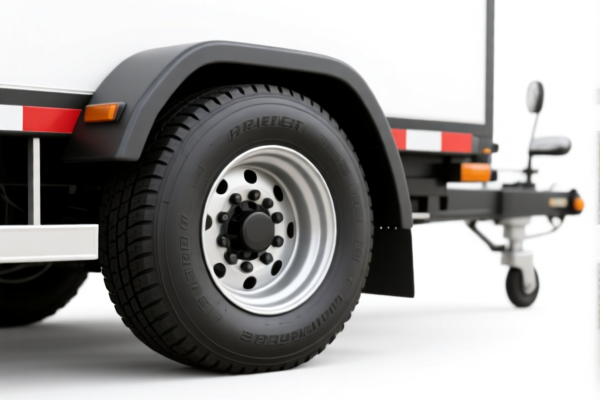
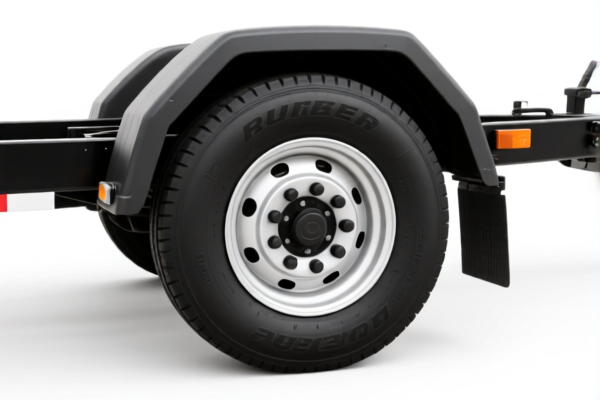
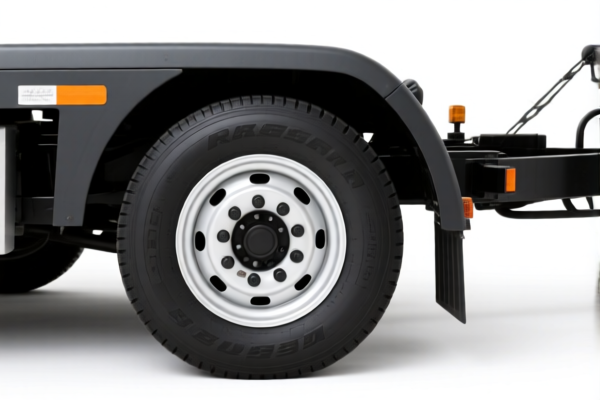
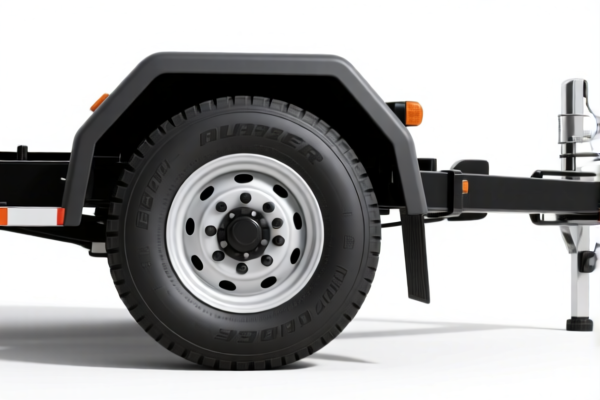
AI Analysis
🚛 Trailer Rubber Tire (Trailers, Towed Vehicles)
🌐 HS Code Reference & Customs Clearance Guide | 2026 Latest Tariff Analysis | Professional Clearance Strategy
📌 I. Product Definition & Classification: Do You Really Understand "Trailer Tires"?
Trailer rubber tires are critical components for towed vehicles, trailers, and semi-trailers. Unlike passenger car tires (which are often radial and designed for speed/stability), trailer tires are engineered for load-bearing capacity, durability, and safety under static loads.
In international trade, classification depends heavily on: 1. Material: Specifically Rubber. 2. Form: Pneumatic (air-filled) vs. Solid. 3. Specific Use: Agricultural, Industrial (e.g., forklifts), or General Trailer use.
⚠️ Key Distinction:
- If the tire is for agricultural vehicles (tractors, harvesters) → Chapter 4013 or specific 4011 subheadings.
- If the tire is for industrial vehicles (e.g., forklifts) → Specific 4011 subheadings.
- If it is a general-purpose trailer tire (not fitting the above specific exclusions) → It falls under the "Other" or "Treaded" categories in 4011.
📦 II. HS Code Classification Details (2026 Latest Tariff Authority Comparison)
Based on the provided data, here are the 5 possible HS Codes for "Trailer Rubber Tires" with their corresponding tax rates and rationales.
| HS Code | Product Description | Rationale for Classification | Total Tax Rate (CN→US) |
|---|---|---|---|
| 4012.11.80.00 | Retreaded Pneumatic Tires of Rubber | Fallback Rule: Matches material (Rubber) + Form (Tire). Classified as "Other" tires where specific type doesn't match primary exclusions. Often used for retreaded or non-standard trailer tires. | 38.4% |
| 4012.12.40.35 | Other Pneumatic Tires of Rubber (Other) | Other Category Rule: Based on material (Rubber) + Form (Tire). Classified under "Other pneumatic tires" not specified elsewhere (e.g., not for cars/trucks/bikes). | 39.0% |
| 4013.10.00.10 | Pneumatic Tires of Rubber (Other) | Core Element Match: Material (Rubber) + Usage (Tire). Core elements align with Chapter 4013 (Pneumatic tires). Note: 4013 is a broad heading for pneumatic tires. | 38.7% |
| 4011.70.00.50 | Tires for Agricultural or Forestry Vehicles | Inferred Use: Matches "Agricultural Vehicle" use. Infers material as Rubber. If the trailer is an agricultural implement, this code applies. | 35.0% |
| 4011.80.20.10 | Radial Tires for Earthmoving & Industrial Vehicles | Application Match: Material (Rubber) + Industrial Vehicle Use (e.g., trailers for construction/earthmoving). Matches radial tire category for industrial use. | 39.0% |
🔍 Critical Insight:
- 4011.70.00.50 offers the lowest tax rate (35.0%) but requires proof that the trailer is used for Agricultural/Forestry purposes.
- 4012.x.x codes are often used as fallbacks for tires that don't fit the strict definitions of 4011 (which is primarily for trucks, cars, buses, etc.) or if they are retreaded/modified.
- 4013.10.00.10 is a broad "Pneumatic Tire" code, often used when specific subheadings don't apply.
💰 III. 2026 Latest Tariff Rate Breakdown (Including Surtaxes & Policy Add-ons)
✅ Applicable Country: United States (US)
✅ Origin: China (CN)
✅ Effective Date: Post-November 2025 (Current Trade Regime)
🎯 1. 4012.11.80.00 —— Other Pneumatic Tires (Retreaded/Fallback)
| Item | Details |
|---|---|
| Base Tariff | 3.4% |
| Section 301 Surcharge | +25.0% |
| Section 122 Tariff | +10.0% |
| Total Effective Rate | 38.4% |
| Calculation | CIF Value × 38.4% |
| De Minimis Exemption | ❌ Not Available (Deny de minimis) |
| Legal Basis | USITC:4012.11.80.00 → 301Footnote → Section122 |
📌 Explanation:
- The 25% Section 301 tariff is the standard surcharge for many Chinese rubber products.
- The 10% Section 122 tariff applies to goods deemed critical for national security or supply chain stability.
- Total 38.4% is a significant cost driver. Misclassification could lead to penalties.
🎯 2. 4012.12.40.35 —— Other Pneumatic Tires (Other)
| Item | Details |
|---|---|
| Base Tariff | 4.0% |
| Section 301 Surcharge | +25.0% |
| Section 122 Tariff | +10.0% |
| Total Effective Rate | 39.0% |
| Calculation | CIF Value × 39.0% |
| De Minimis Exemption | ❌ Not Available |
| Legal Basis | USITC:4012.12.40.35 → 301Footnote → Section122 |
📌 Note:
- This is the highest base tariff (4.0%) among the options.
- Use only if the tire is clearly "Other" and doesn't fit agricultural or industrial vehicle definitions.
🎯 3. 4013.10.00.10 —— Pneumatic Tires of Rubber
| Item | Details |
|---|---|
| Base Tariff | 3.7% |
| Section 301 Surcharge | +25.0% |
| Section 122 Tariff | +10.0% |
| Total Effective Rate | 38.7% |
| Calculation | CIF Value × 38.7% |
| De Minimis Exemption | ❌ Not Available |
| Legal Basis | USITC:4013.10.00.10 → 301Footnote → Section122 |
📌 Note:
- A middle-ground option. Ensure the product description strictly matches "Pneumatic Tires of Rubber" without specific vehicle association.
🎯 4. 4011.70.00.50 —— Tires for Agricultural Vehicles
| Item | Details |
|---|---|
| Base Tariff | 0.0% |
| Section 301 Surcharge | +25.0% |
| Section 122 Tariff | +10.0% |
| Total Effective Rate | 35.0% |
| Calculation | CIF Value × 35.0% |
| De Minimis Exemption | ❌ Not Available |
| Legal Basis | USITC:4011.70.00.50 → 301Footnote → Section122 |
📌 Strategy:
- Lowest Total Tax (35.0%).
- Risk: Requires strong evidence that the tire is intended for agricultural trailers (e.g., grain carts, hay wagons).
- If the trailer is for general transport, this code may be rejected by customs.
🎯 5. 4011.80.20.10 —— Radial Tires for Industrial/Earthmoving
| Item | Details |
|---|---|
| Base Tariff | 4.0% |
| Section 301 Surcharge | +25.0% |
| Section 122 Tariff | +10.0% |
| Total Effective Rate | 39.0% |
| Calculation | CIF Value × 39.0% |
| De Minimis Exemption | ❌ Not Available |
| Legal Basis | USITC:4011.80.20.10 → 301Footnote → Section122 |
📌 Strategy:
- Use only if the trailer is for industrial/earthmoving purposes (e.g., construction sites, mining) AND the tire is Radial.
- If the tire is Bias-Ply, this code is incorrect.
🛠️ IV. Customs Clearance Practical Advice (Avoid Pitfalls)
✅ 1. Required Documentation Checklist
| Document | Mandatory? | Notes |
|---|---|---|
| ✅ Product Specification Sheet | ✔️ | Must state: Material (Rubber), Type (Pneumatic/Solid), Use (Agricultural/Industrial/General). |
| ✅ Commercial Invoice | ✔️ | Clearly describe as "Trailer Tires, Rubber, Pneumatic." Avoid vague terms like "Auto Parts." |
| ✅ Bill of Lading | ✔️ | Ensure HS Code matches invoice. |
| ✅ Proof of End-Use | ✔️ | Critical for 4011.70.00.50: Provide contract or declaration showing tires are for agricultural trailers. |
| ✅ Radial/Bias Confirmation | ✔️ | Required for 4011.80.20.10. Specify construction type. |
✅ 2. Declaration Tips (Key Mantra)
🔥 "Be Specific on Use, Precise on Structure!"
| Scenario | Correct Declaration | Wrong Declaration |
|---|---|---|
| Agricultural Trailer | "Trailer Tire, Rubber, Pneumatic, for Agricultural Use" → 4011.70.00.50 |
"Trailer Tire" → Risk of 4012 code (38-39%) |
| General Transport Trailer | "Trailer Tire, Rubber, Pneumatic, Non-Specific Use" → 4012.11.80.00 |
"Car Tire" → Misclassification |
| Industrial/Construction | "Radial Trailer Tire, for Earthmoving Equipment" → 4011.80.20.10 |
"Truck Tire" → Different code, different rate |
| Retreaded Tires | "Retreaded Pneumatic Tire, Rubber" → 4012.11.80.00 |
"New Tire" → Penalty for false declaration |
✅ 3. Special Cases
| Case | Recommendation |
|---|---|
| OEM for Agricultural Equipment | Provide OEM contract + Buyer’s Declaration of End-Use to qualify for 0% base tariff. |
| Mixed Load (Agricultural + Industrial) | Split shipments or declare based on majority use. Misdeclaration risks audits. |
| Radial vs. Bias-Ply | Radial is explicitly mentioned in 4011.80.20.10. If unsure, default to 4012 categories to avoid error. |
| Solid Tires | Not covered in the provided data (likely different HS Code). Ensure you are importing Pneumatic tires. |
🌍 V. Global Market Comparison (2026 Latest)
| Country/Region | Recommended HS Code | Tariff (China Origin) | Notes |
|---|---|---|---|
| 🇺🇸 USA | 4011.70.00.50 |
35.0% (Best if Agri) | Highest complexity due to Section 301/122. |
| 🇨🇳 China | 4011.70.00.50 |
~5-10% (Import) | Domestic production is common. |
| 🇪🇺 EU | 4011.70.00.00 |
0% (Most FTA) | Check EORI and CE marking requirements. |
| 🇬🇧 UK | 4011.70.00.00 |
0% (Post-Brexit FTA) | Verify UK-specific origin rules. |
📌 Conclusion:
- The USA is the most challenging market due to Section 301 and 122 tariffs.
- Proper classification can save 3.4-4.0% in base tariffs, but the 25%+10% surcharges are unavoidable for Chinese goods.
- Strategy: If possible, structure the supply chain to export from non-China countries (e.g., Vietnam, Thailand) to potentially avoid IEEPA/301 tariffs (subject to current rules).
📌 VI. Common Errors & Pitfalls (Blood & Tears Lessons)
❌ Error 1: Declaring "Trailer Tires" as "Car Tires" (4011.10)
👉 Consequence: Misclassification. If the tire is not for cars, customs will reject and apply back duties + penalties.
❌ Error 2: Claiming Agricultural Use (4011.70) for General Trailers
👉 Consequence: Audits. Customs will request proof. If none is provided, reclassified to 4012 or 4011.80, leading to higher taxes and delays.
❌ Error 3: Ignoring "Radial" Specification
👉 Consequence: If the tire is radial but declared as non-specific, you might miss the correct 4011.80 code, leading to underpayment or overpayment.
✅ Correct Practice:
"Rubber Pneumatic Trailer Tire, Radial, 205/75R14C, for Agricultural Implement, Model TR-100, Made in China"
🎯 VII. Conclusion: Professional Declaration, Cost Savings, Risk Mitigation!
🎯 Remember the Mantra:
🔹 "Agricultural Use = 0% Base; General Use = 3-4% Base; Always Pay 25%+10% Surcharges."
🔹 "Specify Use! Specify Structure! Avoid 'Other' Codes if Specific Codes Apply!"
📌 Pro Tip:
If your trailer tires are radial and for industrial/earthmoving trailers, check 4011.80.20.10. If they are for agricultural trailers, push for 4011.70.00.50 to save 3.4-4.0% on the base tariff.
📣 Immediate Action:
📞 Contact your freight forwarder with the exact tire specifications (Radial/Bias, Use, Dimensions).
🚀 Apply for Pre-Ruling if the shipment value is high to secure the correct HS Code and avoid customs delays.
✨ Professional Clearance Starts with Accurate Classification!
💼 Your Bottom Line Depends on These Details!
Customer Reviews
About HS Code Classification
The Harmonized System (HS) is an internationally standardized nomenclature developed by the World Customs Organization (WCO) to classify traded products. Over 200 countries use the HS system as the basis for customs tariffs, trade statistics, and import/export regulations.
Each HS code follows a hierarchical structure:
- Chapter (2 digits) — Broad category of goods (e.g., Chapter 84: Machinery and Mechanical Appliances)
- Heading (4 digits) — More specific grouping within the chapter
- Subheading (6 digits) — Internationally standardized breakdown, used by all WCO member countries
- National subdivisions (8-10 digits) — Country-specific extensions for further classification, such as US HTSUS 10-digit codes
Correct HS code classification is essential for smooth customs clearance, accurate duty payment, and compliance with trade regulations. Misclassification can lead to customs delays, overpayment of duties, or penalties.
When importing from CN to US, the applicable tariff rates may include:
- Most-Favored-Nation (MFN) rate — The standard duty rate applied to WTO members
- General rate — Applied to countries without trade agreements
- Trade remedy duties — Additional tariffs such as Section 301 (anti-dumping), Section 232 (national security), or countervailing duties
The information provided on this page is for reference purposes only. For official classification, please consult with your local customs authority or a licensed customs broker.