Train Toy
CN → US| HS Code | Tariff Rate | Origin | Destination | Doc |
|---|---|---|---|---|
| 9503000073 | 10.0% | CN | US | Official Doc |
| 9503000071 | 10.0% | CN | US | Official Doc |
| 3926400090 | 15.3% | CN | US | Official Doc |
| 3926909989 | 22.8% | CN | US | Official Doc |
| 9503000073 | 10.0% | CN | US | Official Doc |
Product Images
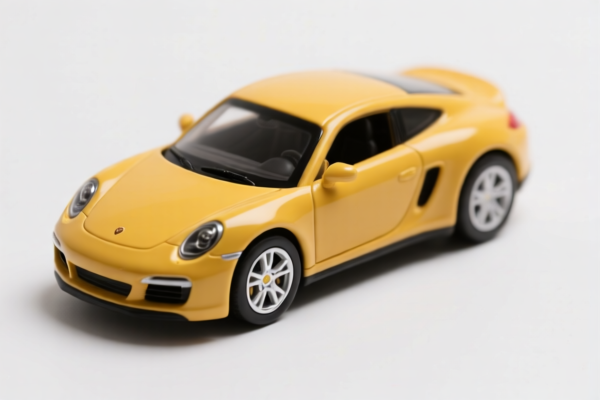
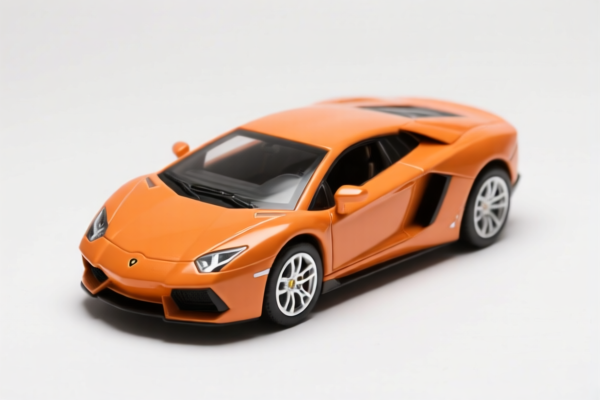
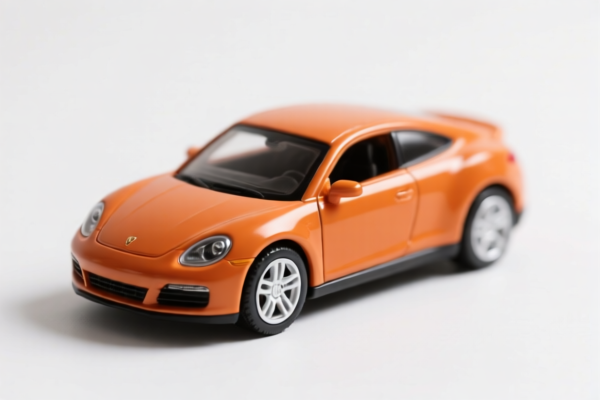
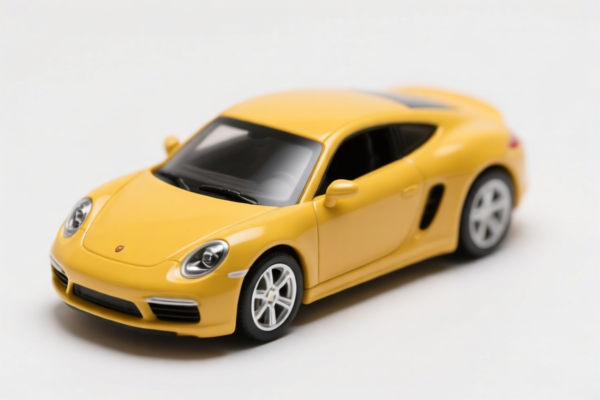
AI Analysis
🚂 Train Toy (Toys Trains)
🌐 HS Code Reference & Customs Clearance Guide | 2026 Latest Tariff Analysis | Professional Entry Strategy
📌 I. Product Definition & Classification: Do You Really Understand "Train Toys"?
A Train Toy is a recreational model of a railway train, typically designed for children or collectors. In international trade, its classification depends heavily on material composition and form factor. While most are naturally classified under Chapter 95 (Toys), plastic variants can sometimes be misclassified under Chapter 39 (Plastics), leading to significant tariff discrepancies.
⚠️ Key Distinction:
- If the item is primarily recognized as a toy/plaything → It falls under 9503 (Toys, models, puzzles).
- If the item is viewed as a plastic decorative/entertainment article without strong "toy" characteristics in specific jurisdictions → It may fall under 3926 (Articles of plastic).
- Note: Even if made of plastic, if it is clearly a toy, 9503 is the preferred classification in most contexts, but customs may challenge this based on material dominance.
📦 II. HS Code Classification Details (2026 Latest Tariff Authority Cross-Reference)
| HS Code | Product Description | Applicable Scenario | Material/Conflict Check |
|---|---|---|---|
9503.00.00.73 |
Toys, including reconstructed kits and scale models (miniature models & similar recreational models); fitting together construction sets; toys representing animals or non-human creatures; toy vehicles | Toys, puzzles, recreational models; scale models | ✅ No Conflict: Fits "toy" category; default material assumption does not conflict with toy classification. |
9503.00.00.71 |
Other toys; reduced-size ("scale") models and similar recreational models working or not working; puzzles of all kinds | Scale models and similar entertainment models; form and use conform to toy definition | ✅ No Conflict: Form and function clearly meet toy definition. |
3926.40.00.90 |
Other articles of plastics | Plastic toy trains; material conforms to Chapter 39 scope; form is decorative or entertaining, fitting "other plastic articles" | ✅ No Conflict: Plastic material fits Chapter 39; form is recreational. |
3926.90.99.89 |
Other articles of plastics and articles of other materials of headings 3901 to 3914 | Plastic toy trains; explicitly includes plastic material; fits "other plastic articles" catch-all category | ✅ No Conflict: Explicitly includes plastic; no material/form conflict. |
9503.00.00.73 |
(Duplicate Entry) Toys, including reconstructed kits... | Plastic toy trains; material is plastic, conforming to common toy material inference; no user/purpose conflict | ✅ No Conflict: Plastic is a common toy material; no conflict with toy category. |
🔍 Important Reminder:
- Plastic does not automatically disqualify a product from Chapter 95. Many plastic items are still classified as toys if their primary purpose is play/recreation.
- However, 3926 classifications carry higher base tariffs and higher total tax rates in this dataset, making 9503 the more favorable classification for cost-saving, provided the product is clearly a "toy."
- Misclassification risk: If customs determines the item is not primarily a "toy" but a "plastic model/decoration," it may shift to 3926.
💰 III. 2026 Latest Tariff Rate Breakdown (Including Additional Duties & Policy Surcharges)
✅ Applicable Country: United States (US)
✅ Country of Origin: China (CN)
✅ Effective Date: Includes imports from 2025 onwards (as per dataset context)
🎯 1. 9503.00.00.73 & 9503.00.00.71 —— Toy Trains & Scale Models (Chapter 95)
| Item | Content |
|---|---|
| Base Tariff Rate | 0% (ad valorem) |
| Section 301 (Additional Tariff) | 0% (No additional duty under Section 301 for these sub-headings in this dataset) |
| Section 122 Tariff | +10% (Specific provision applied) |
| Total Tax Rate | 10.0% |
| Tax Calculation | CIF Value × 10% |
| De Minimis Exemption | ❌ Not Applicable (Generally, toys under 301 are subject to full assessment) |
| Legal Basis Path | USITC:9503.00.00.73 → Section 122 Tariff 10% |
📌 Explanation:
- These codes fall under Chapter 95 (Toys), which generally enjoys low or zero base duties.
- The 10% total tax is driven solely by the Section 122 Tariff, which appears to be a specific surcharge applied in this context.
- No Section 301 (25%) or IEEPA (10%) is applied here according to the provided data, making this the most cost-effective classification.
🎯 2. 3926.40.00.90 —— Plastic Articles (Chapter 39 - Specific)
| Item | Content |
|---|---|
| Base Tariff Rate | 5.3% |
| Section 301 (Additional Tariff) | 0% |
| Section 122 Tariff | +10% |
| Total Tax Rate | 15.3% |
| Tax Calculation | CIF Value × 15.3% |
| De Minimis Exemption | ❌ Not Applicable |
| Legal Basis Path | USITC:3926.40.00.90 → Section 122 Tariff 10% |
📌 Note:
- This classification applies when the item is viewed primarily as a plastic article rather than a toy.
- The base duty of 5.3% is already higher than the 0% for toys, and adding the 10% Section 122 tariff results in a 50% higher total tax compared to Chapter 95 codes.
🎯 3. 3926.90.99.89 —— Plastic Articles (Chapter 39 - Catch-All)
| Item | Content |
|---|---|
| Base Tariff Rate | 5.3% |
| Section 301 (Additional Tariff) | +7.5% |
| Section 122 Tariff | +10% |
| Total Tax Rate | 22.8% |
| Tax Calculation | CIF Value × 22.8% |
| De Minimis Exemption | ❌ Not Applicable |
| Legal Basis Path | USITC:3926.90.99.89 → Section 301 7.5% + Section 122 10% |
📌 Warning:
- This is the most expensive classification in the dataset.
- It incurs a 7.5% Section 301 duty on top of the base 5.3% and 10% Section 122 duty.
- Only apply if the product cannot be classified as a toy (9503) and is deemed a general plastic article.
🛠️ IV. Customs Clearance Practical Advice (Battle-Tested Pitfall Guide)
✅ 1. Documentation Checklist (Mandatory)
| Document | Required? | Description |
|---|---|---|
| ✅ Product Specification Sheet | ✔️ | Must detail: Material (e.g., ABS plastic), Age Recommendation, Function (Play vs. Display) |
| ✅ Product Photos (Clear) | ✔️ | Show the toy in use, with packaging, and any branding. Highlight "Toy" features. |
| ✅ Commercial Invoice | ✔️ | Declare as "Toy Train Set" or "Scale Model Toy", NOT "Plastic Model" or "Decorative Item" |
| ✅ Packaging List | ✔️ | Include all accessories (tracks, locomotives, figures) |
| ✅ Certifications (If Applicable) | ✔️ | ASTM F963 (US), CPSIA compliance for toys |
✅ 2. Declaration Tips (Key Mantra)
🔥 "Declare as Toy, Not Plastic! Name it Right, Save 7.8%!"
| Scenario | Correct Declaration | Wrong Declaration |
|---|---|---|
| Plastic Train Toy | 9503.00.00.73 (Toy) |
3926.90.99.89 (Plastic Article) → 22.8% Tax |
| Metal/Wood Train Toy | 9503.00.00.73 (Toy) |
N/A (Not in dataset, but similar logic) |
| Decorative Plastic Train (No Play Function) | 3926.40.00.90 or 3926.90.99.89 |
Declaring as "Toy" → Customs Rejection/Reclassification |
📌 Strategy:
- Emphasize "Play Value" and "Entertainment Purpose" in your description.
- Use keywords like "Toy," "Play Set," "Recreational Model" instead of "Plastic Component" or "Decoration."
✅ 3. Special Circumstances Handling
| Situation | Handling Advice |
|---|---|
| Hybrid Material (Plastic + Metal) | If plastic is the dominant material by volume/value, customs may push for 3926. However, if the item is clearly a toy, argue for 9503 based on Essential Character (play function). |
| Collector's Scale Model | If marketed as a collectible (not for play), customs might challenge Chapter 95. Ensure marketing materials specify "For Play" or "Ages 3+" to support toy classification. |
| Complete Set vs. Single Part | Declare the complete set under one HS Code (9503) to avoid splitting duties. Do not declare tracks, trains, and figures separately. |
🌍 V. Global Market Customs Comparison (2026 Latest)
| Country/Region | Recommended HS Code | Tariff (China Origin) | Certification Requirement | Notes |
|---|---|---|---|---|
| 🇺🇸 USA | 9503.00.00.73 |
10% (Total) | CPSIA, ASTM F963 | Lowest tax among options. Avoid 3926 codes. |
| 🇨🇳 China | 9503.00.00.73 |
~10-15% (Import Duty) | CCC (if applicable) | Domestic market differs; focus on export data. |
| 🇪🇺 EU | 9503.00.70 |
4.9% | CE, EN71 | No Section 122 equivalent. Lower base duty. |
| 🇬🇧 UK | 9503.00.00 |
4% | UKCA | Post-Brexit rules apply. |
📌 Conclusion:
- USA is the most complex market due to the Section 122 Tariff and potential for higher duties if misclassified as plastic.
- Chapter 95 (Toys) is significantly cheaper (10%) compared to Chapter 39 (15.3% - 22.8%).
- Always prioritize 9503 if the item is intended for play.
📌 VI. Common Errors & Pitfall Guide (Lessons Learned)
❌ Error 1: Declaring a Toy Train as "Plastic Model Kit" (3926.90.99.89)
👉 Consequence: Tax jumps from 10% to 22.8% → 12.8% extra cost!
❌ Error 2: Not specifying "Toy" in the product name
👉 Consequence: Customs may classify under 3926 due to material (plastic) → Higher Duty + Audit Risk
❌ Error 3: Splitting a train set into multiple line items (locomotive, cars, tracks)
👉 Consequence: Potential for inconsistent classification or higher cumulative duties. Declare as One Unit.
✅ Correct Practice:
"Plastic Toy Train Set, Battery Operated, Ages 3+, Includes Locomotive & Cars, Model XYZ"
🎯 VII. Conclusion: Smart Classification, Save Money, Clear Faster!
🎯 Remember the Mantra:
🔹 "Toys First, Plastic Second! 9503 Saves You 7.8%!"
🔹 "Section 122 is 10%, Section 301 is 7.5% - Know Your Code!"
📌 Pro Tip:
- If your train is primarily for display/collecting (not play), consider 3926 codes, but be prepared for higher duties.
- If it is for play, always use 9503 to minimize tax burden.
- Request a Pre-Ruling from US Customs (CBP) if the product is ambiguous.
📣 Immediate Action:
📞 Contact Your Freight Forwarder + Provide Product Photos + Confirm "Toy" Status
🚀 Get Your Toy Train Cleared Fast & Cheaply!
✨ Professional Clearance Starts with Accurate Classification!
💼 Every Percentage Point Matters!
Customer Reviews
About HS Code Classification
The Harmonized System (HS) is an internationally standardized nomenclature developed by the World Customs Organization (WCO) to classify traded products. Over 200 countries use the HS system as the basis for customs tariffs, trade statistics, and import/export regulations.
Each HS code follows a hierarchical structure:
- Chapter (2 digits) — Broad category of goods (e.g., Chapter 84: Machinery and Mechanical Appliances)
- Heading (4 digits) — More specific grouping within the chapter
- Subheading (6 digits) — Internationally standardized breakdown, used by all WCO member countries
- National subdivisions (8-10 digits) — Country-specific extensions for further classification, such as US HTSUS 10-digit codes
Correct HS code classification is essential for smooth customs clearance, accurate duty payment, and compliance with trade regulations. Misclassification can lead to customs delays, overpayment of duties, or penalties.
When importing from CN to US, the applicable tariff rates may include:
- Most-Favored-Nation (MFN) rate — The standard duty rate applied to WTO members
- General rate — Applied to countries without trade agreements
- Trade remedy duties — Additional tariffs such as Section 301 (anti-dumping), Section 232 (national security), or countervailing duties
The information provided on this page is for reference purposes only. For official classification, please consult with your local customs authority or a licensed customs broker.