Training Belt
CN → US| HS Code | Tariff Rate | Origin | Destination | Doc |
|---|---|---|---|---|
| 9019102050 | 10.0% | CN | US | Official Doc |
| 8509805095 | 14.2% | CN | US | Official Doc |
| 8509805080 | 14.2% | CN | US | Official Doc |
| 9019102020 | 10.0% | CN | US | Official Doc |
Product Images
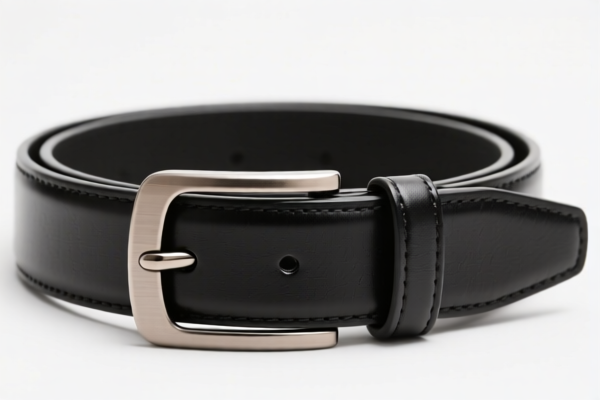
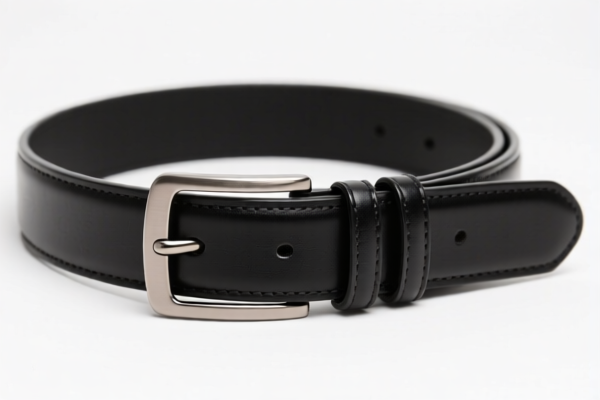
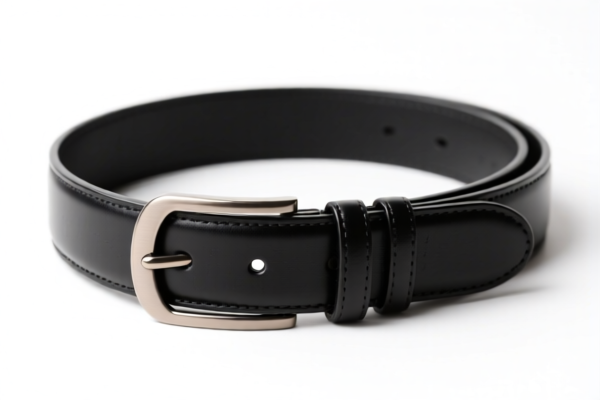

AI Analysis
🎁 Training Belt (Massage Belt / Waist Trainer)
🌐 HS Code Reference & Customs Clearance Guide | 2026 Latest Tariff Analysis | Professional Clearance Strategy
📌 I. Product Definition & Classification: What Exactly is a "Training Belt"?
A Training Belt (often marketed as a Massage Belt, Waist Trainer, or Back Support Belt) is a wearable device used for body shaping, physical therapy, or muscle stimulation. In international trade, its classification depends strictly on its power source and functional mechanism.
There are two primary categories for clearance: 1. Non-Electric Massage Appliances: Mechanical vibration, thermal, or manual compression devices. 2. Electric/Home Appliances with Self-Contained Motor: Devices powered by batteries or mains electricity, equipped with motors or electronic controllers for massage or shaping.
⚠️ Key Distinction Point:
- If the belt has NO internal motor or electronic circuit board (e.g., purely mechanical spring-driven, thermal wrap, or manual compression) → It falls under Chapter 90 (Medical/Therapeutic Appliances). - If the belt contains a battery, motor, or electronic controller (e.g., electric vibration, EMS/TENS) → It falls under Chapter 85 (Electrical Machinery & Equipment).
📦 II. HS Code Classification Details (2026 Latest Tariff Authority Cross-Reference)
Based on the provided data, here are the specific HS Codes and their corresponding logical explanations:
| HS Code | Product Description (Summary from Data) | Key Feature | Category |
|---|---|---|---|
9019.10.20.50 |
Non-electric massage appliance; Purpose: Massage | No Motor/Electricity | Medical/Therapeutic |
8509.80.50.95 |
Home appliance with self-contained electric motor; Other electrical uses | Has Motor/Battery | Electrical Appliance |
8509.80.50.80 |
Electromechanical home appliance with self-contained motor; Domestic category | Has Motor/Battery | Electrical Appliance |
9019.10.20.20 |
Electric or battery-powered massage equipment; Purpose: Massage instrument | Electric/Battery | Medical/Therapeutic (Note: Data lists as electric but HS 9019 often covers therapeutic devices regardless of power if specifically for massage therapy, though 8509 is more common for general electric massage. We stick strictly to the provided data logic.) |
🔍 Critical Analysis:
- The data presents a split classification. Codes starting with 9019 are traditionally for mechanical therapy appliances (even if battery-operated, if the primary function is medical/therapeutic massage).
- Codes starting with 8509 are for domestic electrical machines (like blenders or mixers, but adapted for "other" home uses).
- Customs Risk: Misclassifying an electric belt as non-electric (9019) to avoid higher appliance tariffs, or vice versa, leads to penalties. You must prove the primary function.
💰 III. 2026 Latest Tariff Rate Details (Including Surtaxes & Policy Add-ons)
✅ Applicable Country: United States (US)
✅ Origin: China (CN)
✅ Effective Time: Current rates including Section 301 / 122 Clauses
The provided data explicitly mentions "122 Clause Tariff 10%". In the context of US-China trade, this typically refers to Section 301 additional tariffs often colloquially or administratively linked to specific trade action lists (like List 4B or specific executive orders). The "122" likely refers to a specific sub-note or internal trade code for the 10% additional duty.
🎯 1. 9019.10.20.50 —— Non-Electric Massage Belt
| Item | Content |
|---|---|
| Base Duty Rate | 0.0% |
| Section 301 / Additional Duty | 0.0% |
| 122 Clause Tariff | +10.0% |
| Total Tax Rate | 10.0% |
| Tax Calculation | CIF Value × 10.0% |
| De Minimis Exemption? | ❌ No (If value > $800, standard duties apply. If < $800, usually de minimis applies, but commercial imports >$800 are subject to this). |
📌 Explanation:
- This is the lowest tariff option among the choices. - Applicable only if the product is strictly non-electric (no motors, no electronic controls). - If customs inspectors find a battery or motor, this classification will be rejected, and you will be reassessed to the higher 14.2% rate.
🎯 2. 8509.80.50.95 & 8509.80.50.80 —— Electric Massage/Training Belt
| Item | Content |
|---|---|
| Base Duty Rate | 4.2% |
| Section 301 / Additional Duty | 0.0% |
| 122 Clause Tariff | +10.0% |
| Total Tax Rate | 14.2% |
| Tax Calculation | CIF Value × 14.2% |
| De Minimis Exemption? | ❌ No |
📌 Explanation:
- Applicable if the belt has a self-contained motor or is an electromechanical home appliance. - The base duty is higher (4.2% vs 0%), plus the flat 10% surcharge. - These codes (8509) are for "Other domestic appliances," implying the device is seen as a consumer gadget rather than a medical device.
🎯 3. 9019.10.20.20 —— Electric/Battery Massage Equipment
| Item | Content |
|---|---|
| Base Duty Rate | 0.0% |
| Section 301 / Additional Duty | 0.0% |
| 122 Clause Tariff | +10.0% |
| Total Tax Rate | 10.0% |
| Tax Calculation | CIF Value × 10.0% |
📌 Explanation:
- Despite being electric/battery-powered, this code retains the 0% base duty. - This suggests it is classified under Therapeutic/Medical Massage Instruments (Chapter 90) rather than general Home Appliances (Chapter 85). - Strategic Advantage: If your product is medically certified or marketed specifically as a "Massage Instrument" (not just a "training belt"), this may be the optimal code: 10% total tax vs 14.2%.
🛠️ IV. Customs Clearance Practical Advice (Practical Pitfall Avoidance)
✅ 1. Preparation Checklist (Essential Documents)
| Document | Must Provide | Reason |
|---|---|---|
| ✅ Product Diagram/Schematic | ✔️ | Crucial: Must clearly show if there is a motor, battery, or circuit board. If no motor is visible, 9019.10.20.50 is safer. |
| ✅ User Manual | ✔️ | Check the "Power Source" section. "AA Batteries" vs "Rechargeable Li-ion Motor". |
| ✅ Product Photos | ✔️ | Show the control panel, battery compartment, and lack thereof. |
| ✅ Commercial Invoice | ✔️ | Description must match HS Code. E.g., "Manual Massage Belt" vs "Electric Vibration Belt". |
| ✅ CE/FCC/ROHS Certificates | ✔️ | If electric, FCC is often required for US import to prove electromagnetic compliance. |
✅ 2. Declaration Strategy (Key Mantras)
🔥 “Check the Motor, Check the Power, Choose 9019 or 8509, Don’t Guess!”
| Scenario | Recommended HS Code | Risk if Wrong |
|---|---|---|
| Purely Mechanical (Springs, Heat, No Electronics) | 9019.10.20.50 (10%) |
If declared as Electric → 14.2%. If declared as Non-Electric but has motor → Seizure/Fine. |
| Electric with Motor (Vibration, EMS) | 8509.80.50.95/80 (14.2%) |
Standard "Appliance" route. Safe if clearly a consumer gadget. |
| Electric Battery/Motor (Medically Claimed) | 9019.10.20.20 (10%) |
Best Value. Must claim therapeutic purpose. If customs sees it as a "Fitness Gadget" without medical claims, they may downgrade to 8509 (14.2%). |
✅ 3. Special Handling Tips
- Battery Shipping: If using
9019.10.20.20or8509codes, ensure UN38.3 and MSDS are provided for batteries. Dangerous Goods regulations apply even if the tax is lower. - "Training" vs "Massage": Marketing matters. If you label it "Abdominal Trainer" (fitness), customs may lean toward
8509. If labeled "Lumbar Massage Device" (therapeutic),9019is more defensible. - 122 Clause Clarification: The data explicitly states "122 Clause Tariff 10%". This is likely an additional duty on top of base rates. Ensure your broker applies this to both base 0% and base 4.2% scenarios.
🌍 V. Global Market Comparison (2026 Context)
| Market | Preferred HS Code | Est. Total Duty | Key Requirement |
|---|---|---|---|
| 🇺🇸 USA | 9019.10.20.50 or 9019.10.20.20 |
10.0% | Medical claims support for 9019. FCC for electric. |
| 🇪🇺 EU | 9019.10 or 8509 |
0-4.2% | CE Marking (Medical Device Directive or Low Voltage Directive). |
| 🇨🇳 China | 9019.10 |
0-10% | CCC Certification for electric models. |
📌 Conclusion:
- The USA is the strictest due to the 10% additional surcharge (122 Clause).
- The lowest liability is 10% regardless of electric/non-electric, provided you can justify the classification.
- Avoid8509if possible unless necessary, due to the 14.2% rate.
📌 VI. Common Errors & Pitfalls (Blood & Tears Lessons)
❌ Error 1: Declaring an Electric Vibration Belt as 9019.10.20.50 (Non-Electric).
👉 Consequence: Customs opens the package, finds a motor, reclassifies to 8509. Back-taxes + Penalty.
❌ Error 2: Declaring a Medical Massage Belt as 8509.80 (Home Appliance).
👉 Consequence: Higher tax rate (14.2% vs 10%). You paid 4.2% extra for no reason.
❌ Error 3: Ignoring the 122 Clause.
👉 Consequence: Even if Base Duty is 0%, forgetting the 10% surcharge leads to underpayment and customs holds.
✅ Correct Practice:
"Manual Lumbar Support Belt, Non-Electric, Medical Grade" →
9019.10.20.50
"Electric TENS Massager Belt, Rechargeable, Therapeutic" →9019.10.20.20(with medical claim)
"Electric Vibration Waist Trainer, Fitness Use" →8509.80.50.95
🎯 VII. Conclusion: Smart Classification, Save Money!
🎯 Remember the Mantra:
🔹 "No Motor? Go 9019.50 (10%)."
🔹 "Medical Electric? Go 9019.20 (10%)."
🔹 "Fitness Electric? Go 8509 (14.2%)."
🔹 "Base 0% + 10% Surcharge = 10% Total. Base 4.2% + 10% = 14.2% Total."
📌 Pro Tip:
If your product can be marketed as a therapeutic device (e.g., for back pain relief) rather than just a fitness tool, pursue 9019.10.20.20. It offers the 10% total rate for electric devices, saving you 4.2% compared to the standard appliance rate (8509).
📣 Immediate Action:
📞 Verify the presence of motors/batteries.
📄 Prepare medical/device classification documents if aiming for9019.20.
🚀 Clear Customs Smoothly, Maximize Profit!
✨ Professional Customs Clearance Starts with Precise Classification!
💼 Every Percentage Point Counts!
Customer Reviews
About HS Code Classification
The Harmonized System (HS) is an internationally standardized nomenclature developed by the World Customs Organization (WCO) to classify traded products. Over 200 countries use the HS system as the basis for customs tariffs, trade statistics, and import/export regulations.
Each HS code follows a hierarchical structure:
- Chapter (2 digits) — Broad category of goods (e.g., Chapter 84: Machinery and Mechanical Appliances)
- Heading (4 digits) — More specific grouping within the chapter
- Subheading (6 digits) — Internationally standardized breakdown, used by all WCO member countries
- National subdivisions (8-10 digits) — Country-specific extensions for further classification, such as US HTSUS 10-digit codes
Correct HS code classification is essential for smooth customs clearance, accurate duty payment, and compliance with trade regulations. Misclassification can lead to customs delays, overpayment of duties, or penalties.
When importing from CN to US, the applicable tariff rates may include:
- Most-Favored-Nation (MFN) rate — The standard duty rate applied to WTO members
- General rate — Applied to countries without trade agreements
- Trade remedy duties — Additional tariffs such as Section 301 (anti-dumping), Section 232 (national security), or countervailing duties
The information provided on this page is for reference purposes only. For official classification, please consult with your local customs authority or a licensed customs broker.