Transceiver
CN → US| HS Code | Tariff Rate | Origin | Destination | Doc |
|---|---|---|---|---|
| 8517620020 | 35.0% | CN | US | Official Doc |
| 8517620090 | 35.0% | CN | US | Official Doc |
| 8543706000 | 35.0% | CN | US | Official Doc |
| 8543709810 | 37.6% | CN | US | Official Doc |
Product Images
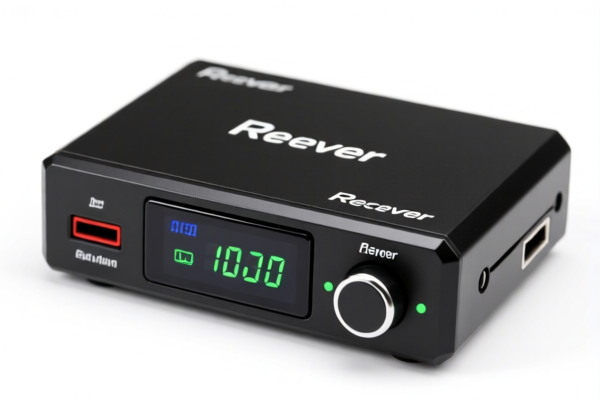
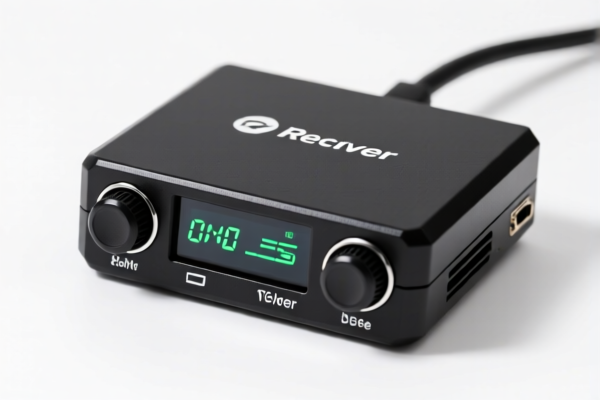
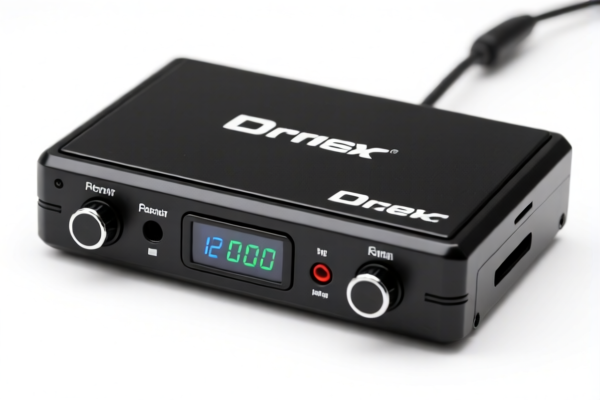
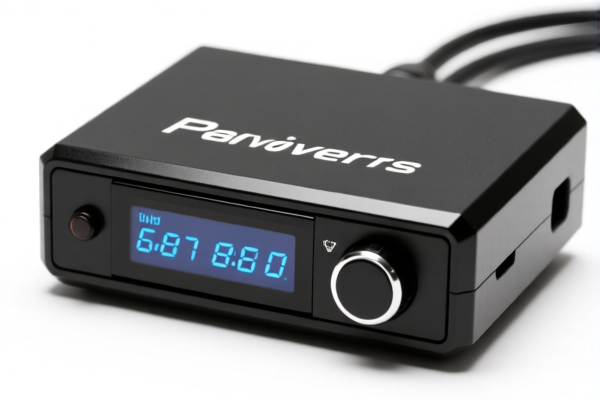
AI Analysis
📡 Transceivers & Network Communication Equipment (Transmission/Reception Apparatus)
🌐 HS Code Reference & Customs Clearance Guide | 2026 Latest Tariff Analysis | Professional Clearance Strategy
📌 I. Product Definition & Classification: What Exactly is a "Transceiver"?
In international trade, the term "Transceiver" is a broad umbrella covering devices that transmit and receive signals. However, for HS Code classification, the critical distinction lies in functionality and network capability:
- Network Switching/Routing Apparatus: Devices that manage data traffic in wired/wireless networks (LAN/WAN). These are the core components of modern IT infrastructure.
- Other Transmission/Reception Apparatus: Devices that transmit/receive voice, images, or data but do not function as network switches/routers (e.g., amplifiers, specialized converters).
⚠️ Key Distinction Point:
- If the device performs switching or routing functions in a network → It falls under 8517.62.
- If the device is an amplifier or other electrical apparatus not specified elsewhere → It falls under 8543.70.
- Exclusions: Do not confuse these with transmission/reception apparatus of headings 8443, 8525, 8527, or 8528.
📦 II. HS Code Classification Details (2026 Latest Tariff Authority Comparison)
| HS Code | Product Description | Applicable Scenario | Network Function? |
|---|---|---|---|
8517.62.00.20 |
Switching and routing apparatus | Network switches, routers, core network equipment | ✅ Yes (Core Function) |
8517.62.00.90 |
Other machines for reception/conversion/transmission/regeneration of data | Other network apparatus not classified as switching/routing | ✅ Yes (Network Related) |
8543.70.60.00 |
Articles for connection to telegraphic/telephonic apparatus or networks | Specialized interface devices, network adapters not covered elsewhere | ⚠️ Peripheral |
8543.70.98.10 |
Other amplifiers (Electrical machines having individual functions) | Signal amplifiers, RF amplifiers, non-network-specific electronic apparatus | ❌ No (Purely Electrical/Amplification) |
🔍 Critical Reminder:
- "Switching and Routing" is the most common classification for standard network transceivers (e.g., Ethernet switches, Wi-Fi routers).
- If the device is merely an amplifier (e.g., signal booster without routing logic), it must be classified under 8543.70.98.10.
- Misclassifying a router as an "amplifier" or vice versa leads to significant customs discrepancies.
💰 III. 2026 Latest Tariff Rate Breakdown (Including Additional Taxes & Policy Add-ons)
✅ Applicable Country: United States (US)
✅ Origin: China (CN)
✅ Effective Time: Current Trade Policy (Section 301 & IEEPA provisions)
🎯 1. 8517.62.00.20 & 8517.62.00.90 – Network Switching & Routing Apparatus
| Item | Content |
|---|---|
| Base Tariff Rate | 0.0% (ad valorem) |
| Additional Tariff (Section 301) | +25.0% |
| Total Effective Tariff | 25.0% |
| Tax Calculation | CIF Value × 25.0% |
| De Minimis Exemption | ❌ Not Applicable (High-value network equipment generally excluded from $800 de minimis benefits if subject to 301 tariffs, though single-item <$800 may vary; consult specific ruling) |
| Legal Basis Path | USITC:8517.62.00.20 → FOOTNOTE:9903.88.01 (Section 301 List 3/4) |
📌 Explanation:
- Network switching and routing apparatus are subject to the 25% Section 301 additional tariff.
- The base tariff is 0%, but the additional 25% makes the total effective rate 25%.
- This applies to most enterprise-grade routers, switches, and network cores.
🎯 2. 8543.70.60.00 – Articles for Connection to Telegraphic/Telephonic Apparatus
| Item | Content |
|---|---|
| Base Tariff Rate | 0.0% |
| Additional Tariff (Section 301) | +25.0% |
| Total Effective Tariff | 25.0% |
| Tax Calculation | CIF Value × 25.0% |
| Legal Basis Path | USITC:8543.70.60.00 → FOOTNOTE:9903.88.01 |
📌 Note:
- This code covers specialized connection articles. Like network apparatus, it bears the 25% additional tariff.
🎯 3. 8543.70.98.10 – Other Amplifiers
| Item | Content |
|---|---|
| Base Tariff Rate | 2.6% |
| Additional Tariff (Section 301) | +25.0% |
| Total Effective Tariff | 27.6% |
| Tax Calculation | CIF Value × 27.6% |
| Legal Basis Path | USITC:8543.70.98.10 → FOOTNOTE:9903.88.01 |
📌 Warning:
- This is the highest rate in this dataset.
- If your "transceiver" is actually a signal amplifier without routing/switching logic, you will pay 27.6%.
- Strategy: If possible, ensure the product has defined routing/switching functions to potentially classify under 8517.62 (25% total) if the legal basis for 8517 applies, or clarify technical specifications to avoid being misclassified as a generic amplifier.
🛠️ IV. Customs Clearance Operational Advice (Practical Pitfall Avoidance)
✅ 1. Documentation Checklist (Non-Negotiable)
| Document | Required | Explanation |
|---|---|---|
| ✅ Technical Datasheet | ✔️ | Must clearly define function: Switching? Routing? Amplifying? |
| ✅ Circuit Diagram/Logic Flow | ✔️ | Proof of routing logic vs. pure amplification. |
| ✅ Product Photos (Labels) | ✔️ | Show model number, ports (RJ45, Fiber, etc.), and interfaces. |
| ✅ Commercial Invoice | ✔️ | Must state: "Network Switching/Routing Apparatus" or "Signal Amplifier" accurately. |
| ✅ Declaration of Conformity | ✔️ | FCC ID (for US market), CE, RoHS. |
| ✅ Packing List | ✔️ | Include accessories; do not split packaging for single unit. |
✅ 2. Classification Strategy (Key Mantra)
🔥 "Routing goes to 8517, Amplifiers go to 8543, Accuracy Saves 2.6%!"
| Scenario | Correct HS Code | Tariff Rate | Risk if Wrong |
|---|---|---|---|
| Network Router/Switch | 8517.62.00.20 |
25.0% | Low (Standard) |
| Other Network Apparatus | 8517.62.00.90 |
25.0% | Low |
| Signal Amplifier/Booster | 8543.70.98.10 |
27.6% | Medium (Higher duty) |
| Network Adapter/Converter | 8543.70.60.00 |
25.0% | Low |
📌 Advice:
- If the device directs traffic (packets/frames), it is likely 8517.62.
- If the device boosts signal strength without decision-making logic, it is 8543.70.
- Misclassification Penalty: Under-declaring tariff by misclassifying a router (25%) as an amplifier (27.6%) is rare, but the reverse (over-declaring or misidentifying function) can lead to audits.
✅ 3. Special Situations
| Situation | Handling Advice |
|---|---|
| OEM Network Equipment | Provide client’s design specs to prove routing functionality. |
| Fiber Optic Transceivers (SFP/SFP+) | Often classified as parts of 8517.62 or 8543.70.98.10. Check if they are "interchangeable modules" for switches (8517) or standalone amplifiers. |
| Wireless Access Points | Typically 8517.62.00.20 (Switching/Routing). |
| RF Amplifiers (Non-Network) | Definitely 8543.70.98.10. |
🌍 V. Global Market Clearance Comparison (2026 Latest)
| Country/Region | Recommended HS Code | Tariff (China Origin) | Certification | Notes |
|---|---|---|---|---|
| 🇺🇸 USA | 8517.62.00.20 |
25.0% | FCC | High scrutiny on "Switching" function. |
| 🇨🇳 China | 8517.62.00.20 |
~0-5% (VAT 13%) | CCC | Import duties often low, but VAT applies. |
| 🇪🇺 EU | 8517.62.00.00 |
0% (if GSP/EBA not applicable) | CE | No additional trade war tariffs currently. |
| 🇬🇧 UK | 8517.62.00.00 |
0% | UKCA | Post-Brexit rules; generally low tariff. |
| 🇯🇵 Japan | 8517.62.00.00 |
0-2% | PSE | Competitive market, low duties. |
📌 Conclusion:
- USA remains the most tariff-heavy market due to Section 301.
- EU/UK/Japan are favorable with 0-2% duties.
- Strategy: If exporting to the US, ensure technical documentation clearly supports 8517.62 to avoid being downgraded or reclassified, which could trigger penalties. If the product is an amplifier, accept the 27.6% rate or consider supply chain adjustments.
📌 VI. Common Errors & Pitfalls (Lessons Learned)
❌ Error 1: Classifying a Router as a generic "Telecommunications Apparatus" (8517.60)
👉 Consequence: May be audited; incorrect subheading usage. Must use 8517.62 for switching/routing.
❌ Error 2: Classifying a Switch as an Amplifier (8543.70.98.10)
👉 Consequence: Paying 27.6% instead of 25.0% unnecessarily. Cost increase!
❌ Error 3: Failing to declare FCC ID for US-bound network equipment
👉 Consequence: Seizure or Return to Origin. FCC compliance is mandatory for 8517/8543 devices.
✅ Correct Practice:
"Network Switch, 48-Port, Gigabit, with Routing Capability, Model XYZ, FCC ID: ABC123"
🎯 VII. Conclusion: Precision Classification, Cost Control, Compliance
🎯 Remember the Mantra:
🔹 "Routing/Switching = 8517 (25%)"
🔹 "Amplifiers = 8543 (27.6%)"
🔹 "Function Defines Code, Code Defines Cost!"
📌 Pro Tip:
For US imports, always prepare a Technical Justification Letter explaining why the device is a "Switching/Routing Apparatus" under 8517.62. This can defend against customs audits that might otherwise question the classification. Consider applying for a Binding Ruling from CBP if the product is innovative or ambiguous.
📣 Immediate Action:
📞 Contact a licensed customs broker.
📂 Submit product specs for pre-classification review.
🚀 Ensure FCC compliance documentation is ready before shipment.
✨ Professional Clearance, Starting from Accurate Classification!
💼 Every Percent of Tariff Saved is Pure Profit!
Customer Reviews
About HS Code Classification
The Harmonized System (HS) is an internationally standardized nomenclature developed by the World Customs Organization (WCO) to classify traded products. Over 200 countries use the HS system as the basis for customs tariffs, trade statistics, and import/export regulations.
Each HS code follows a hierarchical structure:
- Chapter (2 digits) — Broad category of goods (e.g., Chapter 84: Machinery and Mechanical Appliances)
- Heading (4 digits) — More specific grouping within the chapter
- Subheading (6 digits) — Internationally standardized breakdown, used by all WCO member countries
- National subdivisions (8-10 digits) — Country-specific extensions for further classification, such as US HTSUS 10-digit codes
Correct HS code classification is essential for smooth customs clearance, accurate duty payment, and compliance with trade regulations. Misclassification can lead to customs delays, overpayment of duties, or penalties.
When importing from CN to US, the applicable tariff rates may include:
- Most-Favored-Nation (MFN) rate — The standard duty rate applied to WTO members
- General rate — Applied to countries without trade agreements
- Trade remedy duties — Additional tariffs such as Section 301 (anti-dumping), Section 232 (national security), or countervailing duties
The information provided on this page is for reference purposes only. For official classification, please consult with your local customs authority or a licensed customs broker.