Transceiver Equipment
CN → US| HS Code | Tariff Rate | Origin | Destination | Doc |
|---|---|---|---|---|
| 8525601030 | 12.0% | CN | US | Official Doc |
| 8525601050 | 35.0% | CN | US | Official Doc |
| 8543706000 | 35.0% | CN | US | Official Doc |
| 8543709860 | 37.6% | CN | US | Official Doc |
| 8517620090 | 35.0% | CN | US | Official Doc |
Product Images
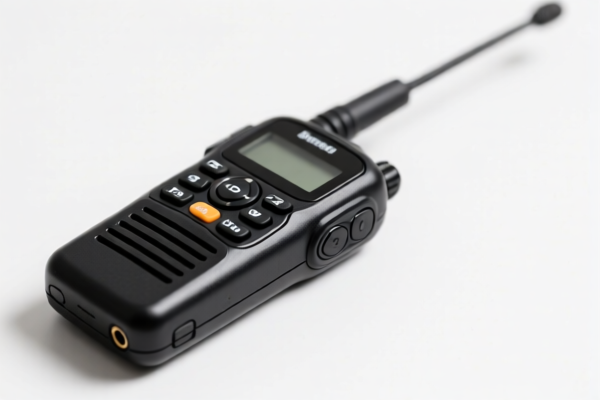
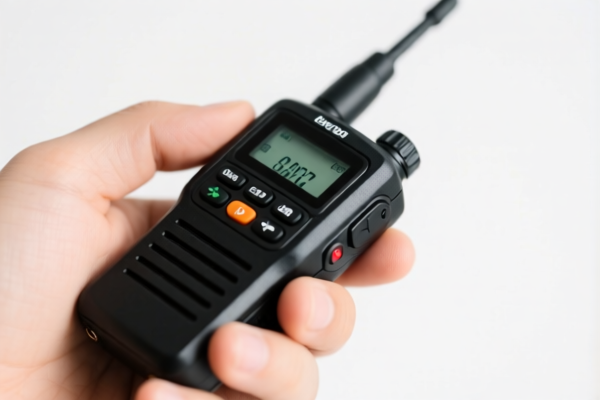
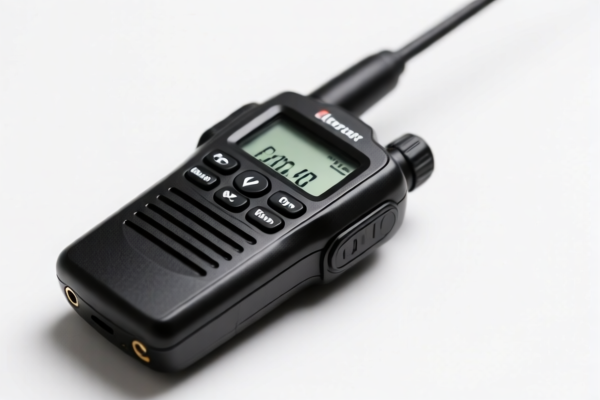
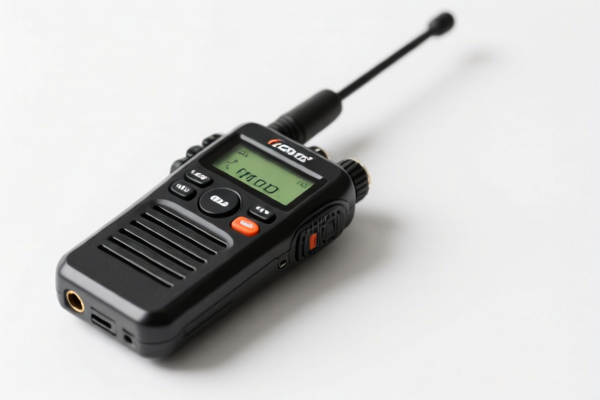
AI Analysis
📡 Transceiver Equipment: The Ultimate Guide to US Customs Classification & Tax Strategy (2026 Update)
🌐 HS Code Reference & Customs Clearance Guide | 2026 Latest Tariff Analysis | Professional Clearance Strategy
📌 I. Product Definition: What Exactly is "Transceiver Equipment"?
In the complex landscape of international trade, Transceiver Equipment is a broad term covering devices capable of both transmitting and receiving signals. This includes Wi-Fi routers, 5G base stations, industrial wireless controllers, and portable communication devices.
However, under US Customs and Border Protection (CBP) and the Harmonized Tariff Schedule (HTS), "Transceiver" is not a standalone final classification. The correct HS Code depends entirely on: 1. Primary Function: Is it a data network converter, a standalone communication device, or a specialized machine? 2. Form Factor: Is it a portable handset or a fixed network unit? 3. End-Use: Does it connect to telephones, data networks, or operate independently?
⚠️ Critical Distinction:
- Misclassification can lead to massive tariff hikes (from 0% to 37.6%) due to Section 301 and IEEPA surcharges.
- The difference between "Portable Handset" and "Network Data Converter" is often just 23.6% in total tax burden!
📦 II. Detailed HS Code Classification Breakdown (Based on Provided Data)
Below is the precise classification for "Transceiver Equipment" as inferred from current trade data. Each code represents a different functional interpretation of the device.
| HS Code | Functional Summary & Logic | Total Tax Rate |
|---|---|---|
| 8525.60.10.30 | Portable Transceiver: Defined as a portable device matching the definition of a "transmitter-receiver." No material or form conflicts. Likely a handheld or mobile unit. | 12.0% |
| 8525.60.10.50 | Other Transceivers (Catch-all): Fits the general definition but falls under "other" categories. No material conflicts. Generic wireless device. | 35.0% |
| 8543.70.60.00 | Signal Transmission Unit: Focuses on signal transmission function, matching characteristics of connecting to telegraph/telephone equipment or networks. | 35.0% |
| 8543.70.98.60 | Independent Function Machine: Classified as a machine/device with independent function, not excluded by other chapters. | 37.6% |
| 8517.62.00.90 | Network Data Converter: "Wireless" corresponds to network communication; "Transceiver" fits data transmission/conversion. Best for Wi-Fi/Routers. | 35.0% |
💰 III. 2026 Tariff Rate Breakdown (Detailed Tax Clauses)
✅ Target Market: United States (US)
✅ Origin: China (CN)
✅ Effective Dates: 2025-2026 (Current Enforcement)
The total tax rate is a composite of: 1. Basic Tariff: The standard HTSUS rate. 2. Section 301 Tariff: "Reciprocal Trade Act" surcharge for Chinese goods. 3. Section 122 (IEEPA) Tariff: Additional surcharge for national security/economic reasons.
🎯 1. HS Code 8525.60.10.30 — The Most Efficient Option (12.0% Total)
| Tax Component | Rate | Legal Basis / Description |
|---|---|---|
| Basic Tariff | 0.0% | Standard HTSUS rate for specific portable transceivers. |
| Section 301 | 2.0% | Additional tariff under USITC Footnote 9903.88.01 (Partial exemption or lower bracket). |
| Section 122 (IEEPA) | 10.0% | Additional surcharge for Chinese origin products. |
| TOTAL EFFECTIVE RATE | 12.0% | Lowest Risk, Lowest Cost |
📌 Interpretation:
This code is ideal if your device is portable and clearly functions as a transmitter-receiver. It benefits from a 0% basic rate and only a 2% Section 301 surcharge, making it significantly cheaper than other options.
🎯 2. HS Code 8525.60.10.50 — Generic Transceiver (35.0% Total)
| Tax Component | Rate | Legal Basis / Description |
|---|---|---|
| Basic Tariff | 0.0% | Standard HTSUS rate for "other" transceivers. |
| Section 301 | 25.0% | Full Section 301 surcharge applies to broader electronic categories. |
| Section 122 (IEEPA) | 10.0% | Additional surcharge for Chinese origin products. |
| TOTAL EFFECTIVE RATE | 35.0% | Standard High-Tax Bracket |
📌 Interpretation:
Use this if the device is not portable or doesn't fit the strict "portable transmitter-receiver" definition. The 25% Section 301 tax drastically increases costs.
🎯 3. HS Code 8543.70.60.00 — Signal Transmission/Network Connection (35.0% Total)
| Tax Component | Rate | Legal Basis / Description |
|---|---|---|
| Basic Tariff | 0.0% | Rate for electric machines and apparatus having individual functions. |
| Section 301 | 25.0% | Full Section 301 surcharge for signal transmission equipment. |
| Section 122 (IEEPA) | 10.0% | Additional surcharge for Chinese origin products. |
| TOTAL EFFECTIVE RATE | 35.0% | Standard High-Tax Bracket |
📌 Interpretation:
This classification emphasizes the network connectivity aspect. If your transceiver is marketed as a "network interface" or "signal converter," this may apply. Same tax burden as 8525.60.10.50.
🎯 4. HS Code 8543.70.98.60 — Independent Machine Device (37.6% Total)
| Tax Component | Rate | Legal Basis / Description |
|---|---|---|
| Basic Tariff | 2.6% | Standard HTSUS rate for "other" machines/apparatus. |
| Section 301 | 25.0% | Full Section 301 surcharge. |
| Section 122 (IEEPA) | 10.0% | Additional surcharge for Chinese origin products. |
| TOTAL EFFECTIVE RATE | 37.6% | Highest Tax Bracket |
📌 Interpretation:
This is the "Catch-All" for independent machines. It is the most expensive option because it includes the 2.6% Basic Tariff + full surcharges. Only use if the device cannot be classified as a communication device (8525) or data equipment (8517).
🎯 5. HS Code 8517.62.00.90 — Network Data Transceiver (35.0% Total)
| Tax Component | Rate | Legal Basis / Description |
|---|---|---|
| Basic Tariff | 0.0% | Rate for machines for the reception, conversion and transmission or regeneration of voice, images or other data. |
| Section 301 | 25.0% | Full Section 301 surcharge for telecommunications equipment. |
| Section 122 (IEEPA) | 10.0% | Additional surcharge for Chinese origin products. |
| TOTAL EFFECTIVE RATE | 35.0% | Standard High-Tax Bracket |
📌 Interpretation:
This is the preferred code for Wi-Fi Routers, 5G CPEs, and Data Transceivers. It leverages the 0% Basic Tariff but still incurs the 25% Section 301 surcharge. It is better than 8543 but worse than 8525.60.10.30.
🛠️ IV. Customs Clearance Practical Advice
✅ 1. Documentation Checklist (Mandatory)
To ensure smooth clearance and avoid reclassification penalties, prepare the following:
| Document | Requirement | Purpose |
|---|---|---|
| Product Specification Sheet | ✔️ Must Include | Detailed technical specs, frequency bands, output power, and portability status (handheld vs. fixed). |
| Block Diagram / Circuit Diagram | ✔️ Highly Recommended | Proves the internal function (e.g., "data conversion" vs. "voice transmission"). |
| Product Photographs | ✔️ Required | Clear images showing the device with its housing (if applicable) to determine if it's a "portable handset" or "fixed unit." |
| Commercial Invoice | ✔️ Critical | DO NOT just write "Transceiver." Use precise descriptions like "Portable Wireless Transceiver, Model XYZ, for Voice Communication" or "Wi-Fi 6 Router, Data Transceiver, Model ABC." |
| FCC ID / Test Reports | ✔️ Required | Proof of compliance with US Federal Communications Commission rules. Mandatory for electronic emissions. |
| Country of Origin Certificate | ✔️ Required | To confirm CN origin and apply correct surcharges. |
✅ 2. Classification Strategy (How to Save Money)
🔥 Golden Rule: "Portable Saves 23%! Network Data Saves 12.6%!"
| Device Type | Recommended HS Code | Total Tax | Why? |
|---|---|---|---|
| Handheld Walkie-Talkie / Portable Radio | 8525.60.10.30 |
12.0% | Fits "Portable Transceiver" definition. Lowest basic + low Section 301. |
| Wi-Fi Router / 5G CPE / Data Modem | 8517.62.00.90 |
35.0% | Fits "Data Transmission/Conversion." 0% Basic, but 25% Section 301. |
| Industrial Wireless Controller | 8543.70.60.00 |
35.0% | Signal transmission focus. Same tax as router, but different functional description. |
| Generic/Unknown Wireless Device | 8543.70.98.60 |
37.6% | AVOID. Highest tax. Only use if no other category fits. |
⚠️ Warning:
- Do not classify a Router as8525.60.10.30unless it is explicitly a portable communication device. CBP may reject this for non-portable units. - Do not classify a Handheld Radio as8543.70.98.60just to be safe. You will pay 25.6% more in taxes unnecessarily.
✅ 3. Common Pitfalls & Avoidance
❌ Pitfall 1: Vague Description
Bad: "Wireless Device"
Good: "Portable VHF/UHF Transceiver for Emergency Communication" OR "Indoor Wi-Fi 6 Access Point for Data Network"
❌ Pitfall 2: Ignoring Portability
If your device has a plug-in power supply and is fixed installation, it is likely NOT
8525.60.10.30. It will be reclassified to8517.62or8543, increasing tax by 23%.
❌ Pitfall 3: Missing FCC Compliance
Electronic transceivers must have an FCC ID. Without it, CBP will seize the shipment or demand extensive testing, causing delays and storage fees.
🌍 V. Market Comparison (2026 Outlook)
| Market | Preferred HS Code for Transceivers | Est. Total Tax (CN Origin) | Key Certification |
|---|---|---|---|
| 🇺🇸 USA | 8525.60.10.30 (Portable) or 8517.62.00.90 (Data) |
12.0% - 35.0% | FCC ID, Section 301, IEEPA 122 |
| 🇨🇳 China | 8517.62.00.90 or 8525.60.10.30 |
0% - 5% | SRRC, CCC |
| 🇪🇺 EU | 8517.62.00.00 or 8525.60.10.00 |
0% - 1.7% | CE, RED Directive |
| 🇬🇧 UK | 8517.62.00.00 |
0% - 2% | UKCA |
📌 Key Takeaway for US Imports:
The US market is unique due to Section 301 (25%) and IEEPA (10%).
- Portability is your best friend for reducing Section 301 liability.
- Data Transmission function is your second best option (0% Basic).
📌 VI. Final Recommendations
- Audit Your Product: Is it portable? Does it transmit data or voice?
- Choose Wisely:
- If Portable & Voice/Comms: Aim for
8525.60.10.30(12.0%). - If Fixed & Data/Internet: Aim for
8517.62.00.90(35.0%). - Avoid
8543.70.98.60unless absolutely necessary.
- If Portable & Voice/Comms: Aim for
- Prepare Documents: Ensure FCC IDs are listed on the invoice. Provide clear functional descriptions.
- Consult a Broker: For high-volume shipments, consider an Advance Ruling from CBP to lock in the HS Code and avoid future disputes.
📣 Act Now:
📞 Verify your HS Code today.
📄 Prepare your FCC & Spec Sheets.
🚀 Save up to 23.6% on tariffs by choosing the correct classification!
✨ Precision Classification, Maximum Profit.
💼 Don't let unclear descriptions cost you thousands in duties.
Customer Reviews
About HS Code Classification
The Harmonized System (HS) is an internationally standardized nomenclature developed by the World Customs Organization (WCO) to classify traded products. Over 200 countries use the HS system as the basis for customs tariffs, trade statistics, and import/export regulations.
Each HS code follows a hierarchical structure:
- Chapter (2 digits) — Broad category of goods (e.g., Chapter 84: Machinery and Mechanical Appliances)
- Heading (4 digits) — More specific grouping within the chapter
- Subheading (6 digits) — Internationally standardized breakdown, used by all WCO member countries
- National subdivisions (8-10 digits) — Country-specific extensions for further classification, such as US HTSUS 10-digit codes
Correct HS code classification is essential for smooth customs clearance, accurate duty payment, and compliance with trade regulations. Misclassification can lead to customs delays, overpayment of duties, or penalties.
When importing from CN to US, the applicable tariff rates may include:
- Most-Favored-Nation (MFN) rate — The standard duty rate applied to WTO members
- General rate — Applied to countries without trade agreements
- Trade remedy duties — Additional tariffs such as Section 301 (anti-dumping), Section 232 (national security), or countervailing duties
The information provided on this page is for reference purposes only. For official classification, please consult with your local customs authority or a licensed customs broker.