Transmission Belt
CN → US| HS Code | Tariff Rate | Origin | Destination | Doc |
|---|---|---|---|---|
| 4010313000 | 38.4% | CN | US | Official Doc |
| 4010316000 | 37.8% | CN | US | Official Doc |
| 5910001010 | 39.0% | CN | US | Official Doc |
| 5910009000 | 37.6% | CN | US | Official Doc |
| 5910001070 | 39.0% | CN | US | Official Doc |
Product Images
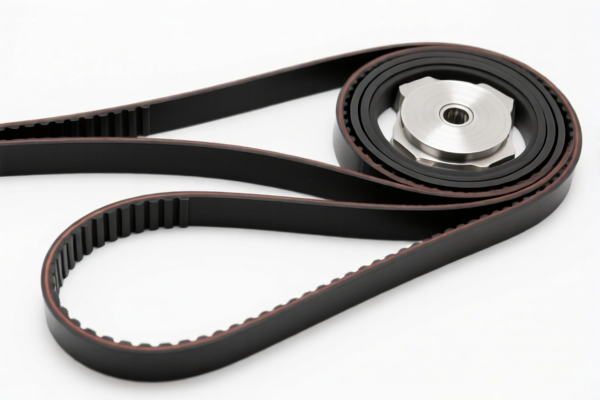
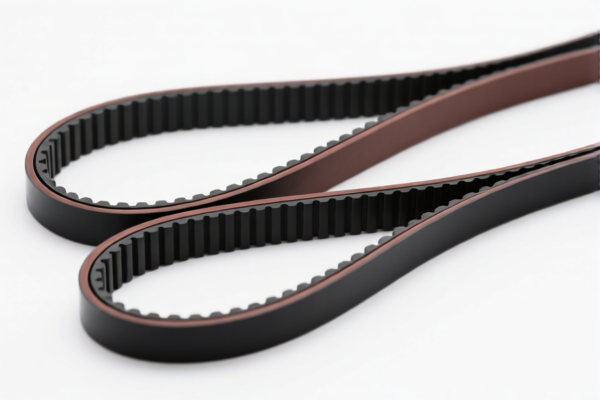


AI Analysis
🏭 Transmission Belts (Industrial Drives & Power Transmission)
🌐 HS Code Reference & Customs Clearance Guide | 2026 Latest Tariff Analysis | Professional Entry Strategy
📌 One, Product Definition: What Exactly is a "Transmission Belt"?
Transmission belts are flexible loops of material used to transmit power between rotating shafts. They are critical components in manufacturing, automotive, and agricultural machinery. In international trade, they are classified primarily by their material composition and structural form.
The data provided highlights two main categories: 1. Rubber Transmission Belts (HS 4010): Made from vulcanized rubber. These are the standard heavy-duty drives for industrial machinery. 2. Textile/Fabric Transmission Belts (HS 5910): Constructed from textile materials (synthetic or artificial fibers), often reinforced. These include V-belts, flat belts, and timing belts made from fabric cores.
⚠️ Key Distinction Point:
- If the belt is primarily vulcanized rubber →归类 to HS 4010
- If the belt is primarily textile/fabric (even if it has rubber coating) →归类 to HS 5910
📦 Two. HS Code Classification Details (2026 Tariff Data Mapping)
Based on the provided , here is the precise breakdown of HS Codes and their corresponding tax structures. Note that all entries are subject to Additional Tariffs (Section 301/122 Clauses) for Chinese origin goods importing into the US.
| HS Code | Product Description & Summary | Material/Form Match | Total Tax Rate | Tax Detail Breakdown |
|---|---|---|---|---|
| 4010.31.30.00 | Rubber Transmission Belt | Vulcanized Rubber Material + General Transmission Belt Form | 38.4% | Base: 3.4% Additional 301: 25.0% Section 122: 10% |
| 4010.31.60.00 | Rubber Transmission Belt | Vulcanized Rubber Material + Specific Application Use | 37.8% | Base: 2.8% Additional 301: 25.0% Section 122: 10% |
| 5910.00.10.10 | Transmission Belt | V-Belt Form + Artificial Fiber/Synthetic Material Scope | 39.0% | Base: 4.0% Additional 301: 25.0% Section 122: 10% |
| 5910.00.90.00 | Textile Transmission Belt | Textile Material + General Transmission Belt Use | 37.6% | Base: 2.6% Additional 301: 25.0% Section 122: 10% |
| 5910.00.10.70 | Textile Transmission Belt | Artificial Fiber Material + Transmission Belt Form | 39.0% | Base: 4.0% Additional 301: 25.0% Section 122: 10% |
🔍 Critical Insight:
- Section 122 Clauses: The "10%" additional tax listed in all entries refers to Section 122 of the Trade Act (often associated with specific national security or emergency provisions depending on the current trade regime).
- Section 301 (25%): The standard "Additional Tariff" of 25.0% applies to most Chinese-origin industrial goods.
- Base Tariff Variation: The base rate varies from 2.6% to 4.0% depending on whether the item is classified under Chapter 40 (Rubber) or Chapter 59 (Textiles).
💰 Three. Detailed Tariff Structure & Cost Calculation
✅ Applicable Market: United States (US)
✅ Origin: China (CN)
✅ Status: Subject to High Additional Duties
🎯 1. Rubber Belts (HS 4010 Series)
| Item | Details |
|---|---|
| Primary Code | 4010.31.30.00 / 4010.31.60.00 |
| Base Duty | 2.8% – 3.4% (Ad Valorem) |
| Section 301 Duty | +25.0% |
| Section 122 Duty | +10.0% |
| Total Effective Rate | 37.8% – 38.4% |
| Calculation Basis | CIF Value × Total Rate |
📌 Explanation:
Rubber transmission belts are considered heavy industrial components. The classification depends on the specific use (general vs. specific application). The high base tariff for rubber products combined with the 25% Section 301 and 10% Section 122 creates a significant cost barrier.
🎯 2. Textile/Fabric Belts (HS 5910 Series)
| Item | Details |
|---|---|
| Primary Code | 5910.00.10.10 / 5910.00.10.70 / 5910.00.90.00 |
| Base Duty | 2.6% – 4.0% (Ad Valorem) |
| Section 301 Duty | +25.0% |
| Section 122 Duty | +10.0% |
| Total Effective Rate | 37.6% – 39.0% |
| Calculation Basis | CIF Value × Total Rate |
📌 Explanation:
Textile belts (V-belts, timing belts with fabric cores) fall under Chapter 59.
-5910.00.10.10&.70: Specific forms (like V-belts) or materials (Artificial Fiber) attract the highest base rate (4.0%), leading to a total of 39.0%.
-5910.00.90.00: General textile belts have the lowest base rate (2.6%), totaling 37.6%.
Strategy: Accurately describing the material and form can save up to 1.4% in duty.
🛠️ Four. Customs Clearance Practical Advice (Avoid Pitfalls)
✅ 1. Documentation Checklist (Mandatory)
| Document | Requirement | Purpose |
|---|---|---|
| Product Specification Sheet | ✔️ Must Include | Material composition (% Rubber vs. % Fabric), dimensions, tensile strength, and intended machinery type. |
| Detailed Commercial Invoice | ✔️ Must Include | Clearly state "Transmission Belt" and avoid vague terms like "Industrial Parts." Specify "Vulcanized Rubber" or "Textile Reinforced." |
| Material Safety Data Sheet (MSDS) | ✔️ Recommended | For rubber components to verify chemical content. |
| Test Reports | ✔️ Recommended | ISO/CE certification for industrial safety standards. |
| Packing List | ✔️ Must Include | Net/Gross weight, number of belts per carton. |
✅ 2. Declaration Tips (The "Golden Rules")
🔥 "Material Defines Chapter, Form Defines Subheading!"
| Scenario | Correct Declaration Strategy | Common Mistake |
|---|---|---|
| Rubber V-Belt | Use HS 4010.31.30.00 (38.4%) if purely rubber. | Misclassifying as textile to get lower base? Risk: High audit penalty. |
| Fabric-Cored V-Belt | Use HS 5910.00.10.10 (39.0%) if artificial fiber. | Declaring as rubber → Customs will reclassify and charge penalty. |
| Timing Belt (Rubber) | Use HS 4010.31.60.00 (37.8%) if specific use. | Vague description "Belt" → Delay for inspection. |
| Timing Belt (Fabric) | Use HS 5910.00.90.00 (37.6%) for general textile. | Using specific fiber codes (4.0% base) when general applies (2.6% base). |
✅ 3. Critical Risk Management
| Risk | Mitigation Strategy |
|---|---|
| Misclassification of Material | Provide a bill of materials showing the core reinforcement. If the core is fabric, Chapter 59 usually applies despite rubber coating. |
| Section 122/301 Compliance | Ensure the Certificate of Origin clearly states Made in China. If sourced from Vietnam/Mexico, ensure no Chinese value-add exceeds thresholds to avoid "transshipment" flags. |
| Valuation Disputes | Declare CIF Value accurately. Includes freight and insurance. Under-declaring value can lead to seizure under Section 301 scrutiny. |
🌍 Five. Global Market Comparison (2026 Overview)
| Market | Recommended HS Code | Est. Total Duty (China Origin) | Key Requirement |
|---|---|---|---|
| 🇺🇸 USA | 4010.31 / 5910.00 |
37.6% – 39.0% (High) | Section 301 + Section 122 Apply. |
| 🇨🇳 China | 4010 / 5910 |
~2.6% – 4.0% (Low) | No additional tariffs. |
| 🇪🇺 EU | 4010 / 5910 |
~0% – 3.0% (Low) | CE Marking required. No Section 301. |
| 🇨🇦 Canada | 4010 / 5910 |
~0% – 3.5% (Low) | USMCA benefits if originating. |
📌 Conclusion:
- The US market is the most expensive for Chinese-origin transmission belts due to the叠加 (stacking) of 25% (301) and 10% (122) tariffs.
- Total duty rates hover around 38%, significantly impacting profit margins.
- EU and Asia-Pacific markets offer much lower duty barriers, making them attractive alternatives for price-sensitive buyers.
📌 Six. Common Errors & Pitfalls (Lessons Learned)
❌ Error 1: Calling all belts "Rubber Belts"
👉 Consequence: If the belt has a textile core (common in V-belts), Customs will reclassify to HS 5910, potentially changing the base rate from 3.4% to 4.0% (Higher Tax).
❌ Error 2: Ignoring Section 122 Clauses
👉 Consequence: Assuming only 25% tariff. The 10% additional duty is mandatory for most industrial goods from China entering the US. Missing this leads to underpayment fines.
❌ Error 3: Vague Description "Industrial Belt"
👉 Consequence: CBP (Customs and Border Protection) will conduct a Type II Entry Review, demanding technical specs. This delays clearance by weeks.
✅ Correct Practice:
"Transmission Belt, Type V-Belt, Vulcanized Rubber, Width 50mm, Length 1000mm, HS Code 4010.31.30.00, Origin China."
🎯 Seven. Conclusion: Precision Saves Money!
🎯 Remember the Formula:
🔹 "Material First: Rubber = Ch 40, Fabric = Ch 59"
🔹 "Total Tax = Base + 25% (301) + 10% (122)"
🔹 "Cheapest Base: 2.6% (Textile General), Most Expensive: 4.0% (Artificial Fiber Specific)"
📌 Pro Tip:
If your supply chain allows, consider sourcing from non-USMCA/Non-China countries (e.g., Vietnam, Thailand) to avoid the 35% additional tariffs. For Chinese goods, pre-classification rulings are strongly recommended to lock in the correct HS Code and avoid post-audit penalties.
📣 Take Action:
📞 Verify material composition with your supplier.
📄 Calculate landed cost using 37.6% - 39.0% duty rate.
🚀 Ensure your commercial invoice matches the HS Code description exactly.
✨ Accurate Classification is the Key to Smooth Customs Clearance!
💼 Don't let tariff miscalculations eat your profit margins!
Customer Reviews
About HS Code Classification
The Harmonized System (HS) is an internationally standardized nomenclature developed by the World Customs Organization (WCO) to classify traded products. Over 200 countries use the HS system as the basis for customs tariffs, trade statistics, and import/export regulations.
Each HS code follows a hierarchical structure:
- Chapter (2 digits) — Broad category of goods (e.g., Chapter 84: Machinery and Mechanical Appliances)
- Heading (4 digits) — More specific grouping within the chapter
- Subheading (6 digits) — Internationally standardized breakdown, used by all WCO member countries
- National subdivisions (8-10 digits) — Country-specific extensions for further classification, such as US HTSUS 10-digit codes
Correct HS code classification is essential for smooth customs clearance, accurate duty payment, and compliance with trade regulations. Misclassification can lead to customs delays, overpayment of duties, or penalties.
When importing from CN to US, the applicable tariff rates may include:
- Most-Favored-Nation (MFN) rate — The standard duty rate applied to WTO members
- General rate — Applied to countries without trade agreements
- Trade remedy duties — Additional tariffs such as Section 301 (anti-dumping), Section 232 (national security), or countervailing duties
The information provided on this page is for reference purposes only. For official classification, please consult with your local customs authority or a licensed customs broker.