Transmission Rod
CN → US| HS Code | Tariff Rate | Origin | Destination | Doc |
|---|---|---|---|---|
| 8412310080 | 35.0% | CN | US | Official Doc |
| 7326908688 | 87.9% | CN | US | Official Doc |
| 8412310040 | 35.0% | CN | US | Official Doc |
| 7326908605 | 87.9% | CN | US | Official Doc |
Product Images
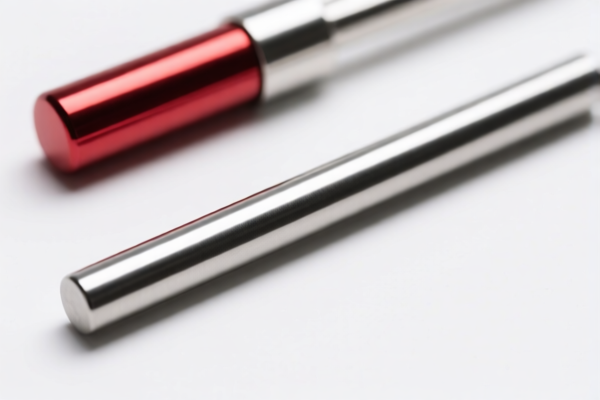
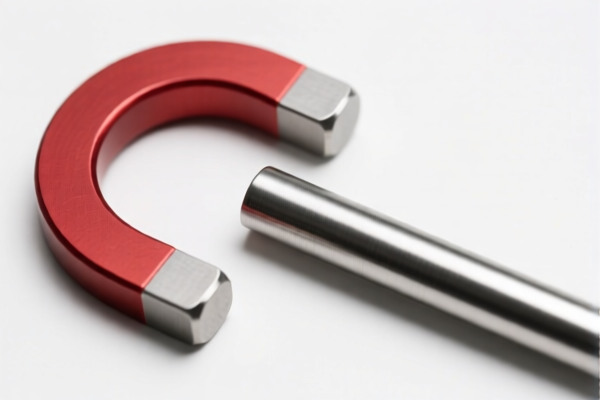
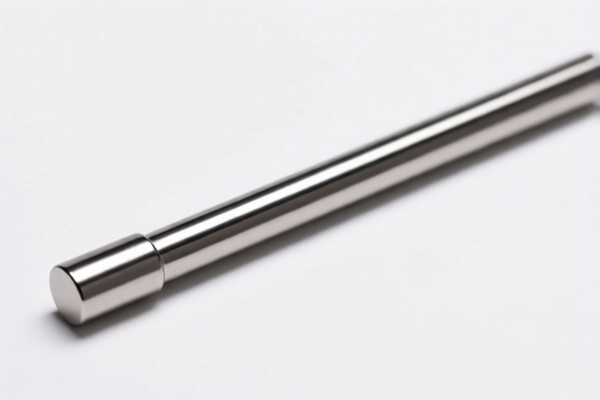
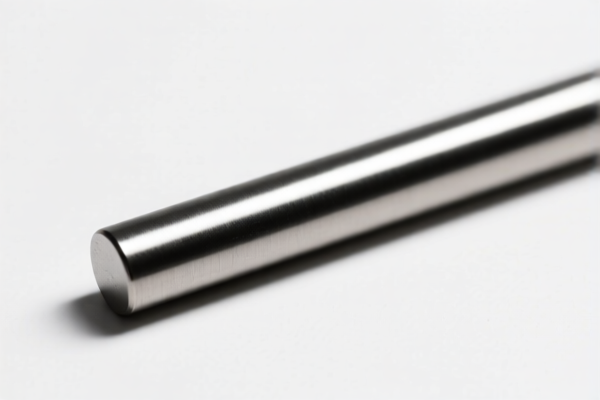
AI Analysis
⚙️ Transmission Rod (Pneumatic Rod / Actuator Linkage)
🌐 HS Code Reference & Customs Clearance Guide | 2026 Latest Tariff Analysis | Professional Clearance Strategy
📌 Part I: Product Definition & Classification – Do You Really Understand "Transmission Rod"?
A Transmission Rod (often referred to in industrial contexts as a Pneumatic Rod, Air Cylinder Tie Rod, or Linear Actuator Linkage) is a critical mechanical component used to transmit motion and force. In international trade, its classification is ambiguous because it depends heavily on its structural integrity and functional role.
There are two primary classification pathways based on how customs authorities view the object:
1. As a Functional Part of Machinery (HS 8412):
If the rod is identified specifically as a component of a pneumatic engine, motor, or cylinder (e.g., a piston rod, tie rod, or connecting rod for a pneumatic cylinder), it is classified under machinery parts.
2. As a Generic Metal Article (HS 7326):
If the rod is a standalone metal bar, shaft, or rod-like structure without specific machinery attachments (like pistons or seals) that clearly define it as a "part of a pneumatic engine," it is classified as a generic steel/iron制品 (article of iron or steel).
⚠️ Key Distinction Point:
- If it is a piston rod, tie rod, or connecting rod specifically designed for a pneumatic cylinder →归入 8412 (Machinery Parts).
- If it is a generic steel rod, shaft, or bar used for transmission or structural support, without specific pneumatic integration →归入 7326 (Steel Articles).
📦 Part II: HS Code Classification Details (2026 Latest Tariff Authority Comparison)
| HS Code | Product Description | Application Scenario | Tax Rate (China Origin to US) |
|---|---|---|---|
8412.31.00.80 |
Pneumatic rods belonging to pneumatic components, linear form, classified as parts/components under other categories | Specific pneumatic cylinder parts (tie rods, piston rods) not elsewhere specified | 35.0% |
7326.90.86.88 |
Pneumatic rods usually made of metal, form fits rods/shafts, falls under other articles of iron or steel | Generic steel rods, shafts, or transmission bars made of steel/iron | 87.9% |
8412.31.00.40 |
Pneumatic rods conform to the morphological characteristics of cylinder pull rods in pneumatic engines/motors, material inferred as metal | Specific cylinder pull rods in pneumatic systems | 35.0% |
7326.90.86.05 |
Pneumatic rods belong to rod-shaped assemblies, material usually metal, no conflict with iron/steel article classification | Generic rod-shaped assemblies, shafts, or links | 87.9% |
🔍 Key Reminder:
- 8412.31.x0 codes apply when the item is clearly a part of a pneumatic engine/motor (e.g., a piston rod). The tax burden is significantly lower (35%).
- 7326.90.86.xx codes apply when the item is viewed as a generic steel article (rod, shaft, bar). The tax burden is extremely high (87.9%) due to Section 301 tariffs and steel-specific surcharges.
- Misclassification Risk: Declaring a pneumatic cylinder part as a "steel rod" can result in a tax hike from 35% to 87.9%.
💰 Part III: 2026 Latest Tariff Rate Breakdown (Including Surcharges & Policy Add-ons)
✅ Applicable Country: United States (US)
✅ Origin: China (CN)
✅ Effective Time: 2025 November 10 onwards (including subsequent imports)
🎯 1. 8412.31.00.80 & 8412.31.00.40 —— Pneumatic Rods (Machinery Parts)
| Item | Content |
|---|---|
| Base Tariff | 0% (ad valorem) |
| USITC Surcharge | +25% (Under USITC Footnote 9903.88.01 / Section 301) |
| IEEPA Surcharge | +10% (Targeting China/HK products, effective from Nov 10, 2025) |
| Total Tax Rate | 35.0% |
| Tax Calculation | CIF Value × 35% |
| De Minimis Eligibility | ❌ Not Eligible (deny_de_minimis) |
| Legal Basis Path | IEEPA:9903.01.25 → IEEPA:9903.01.24 → USITC:8412.31.00.80/40 → FOOTNOTE:9903.88.01 |
📌 Explanation:
- The 25% is the standard Section 301 tariff on Chinese industrial goods.
- The 10% is the additional IEEPA surcharge.
- Total 35%: This is a high tariff, but significantly better than the steel classification.
🎯 2. 7326.90.86.88 & 7326.90.86.05 —— Steel/Rod Articles (Generic Metal)
| Item | Content |
|---|---|
| Base Tariff | 2.9% |
| USITC Surcharge | +25% |
| IEEPA Surcharge | +10% |
| Steel/Aluminum/Copper Surcharge | +50% (Specific to steel products under certain provisions) |
| Total Tax Rate | 87.9% |
| Tax Calculation | CIF Value × 87.9% |
| De Minimis Eligibility | ❌ Not Eligible (deny_de_minimis) |
| Legal Basis Path | IEEPA:9901.25 → IEEPA:9903.01.24 → USITC:7326.90.86.88/05 → FOOTNOTE:Steel Surcharge |
📌 Warning:
- This classification treats the rod as a generic steel product.
- The 50% steel-specific surcharge makes this classification extremely costly.
- Avoid this classification if your product is a functional part of a pneumatic system.
🛠️ Part IV: Customs Clearance Practical Advice (Battle-Tested Pitfall Avoidance)
✅ 1. Required Documentation Checklist (None Missing)
| Document | Must Provide | Description |
|---|---|---|
| ✅ Product Specification Sheet | ✔️ | Dimensions, material (Steel/Alloy), diameter, length, load capacity |
| ✅ Technical Diagram/Structure | ✔️ | Show connection points, ends, and whether it fits into a cylinder |
| ✅ Product Photos (with Label) | ✔️ | Clear view of the rod, ends, and any branding/model numbers |
| ✅ Commercial Invoice | ✔️ | Description must be precise: "Pneumatic Cylinder Tie Rod" or "Actuator Piston Rod" |
| ✅ Packing List | ✔️ | Detail individual quantities and packaging type |
| ✅ Origin Certificate (CO) | ✔️ | If not Chinese origin, may qualify for lower rates |
✅ 2. Declaration Tips (Key Mantra)
🔥 "Define Function, Not Just Material! 'Pneumatic Part' vs. 'Steel Rod'!"
| Scenario | Correct Declaration | Wrong Practice |
|---|---|---|
| Rod is part of a pneumatic cylinder | HS 8412.31.00.80/40 ("Pneumatic Cylinder Part") | Declaring as "Steel Bar" → 87.9% |
| Standalone steel shaft for general use | HS 7326.90.86.88 ("Steel Article") | Declaring as "Pneumatic Part" → Audit Risk |
| Mixed shipment (Rods + Cylinders) | Separate Declaration | Combined declaration → Risk of misclassification |
✅ 3. Special Situations Handling
| Situation | Handling Advice |
|---|---|
| Customized Pneumatic Rods | Provide client order + design drawings. Clearly state "Part for Pneumatic Cylinder". |
| Generic Steel Shafts | If not for pneumatic use, declare as 7326 but accept the 87.9% tax. |
| OEM Products | Ensure the invoice describes the function (e.g., "For Use in Pneumatic Actuators") rather than just the material. |
| Hybrid Products | If the rod includes seals/pistons, it must be declared as a pneumatic part (8412) to avoid the steel surcharge. |
🌍 Part V: Global Market Customs Comparison (2026 Latest)
| Country/Region | Recommended HS Code | Tariff | Certification | Notes |
|---|---|---|---|---|
| 🇺🇸 USA | 8412.31.00.80 |
35% (China Origin) | N/A (General) | Avoid 7326 (87.9%) |
| 🇨🇳 China | 8412.31.00.80 |
~5-10% | CCC (if applicable) | Lower duty for machinery parts |
| 🇪🇺 EU | 8412.31.00 |
~0-5% (if eligible) | CE | Generally lower tariffs on machinery parts |
| 🇦🇺 Australia | 8412.31.00 |
~5% | RCM | No major surcharges |
| 🇯🇵 Japan | 8412.31.00 |
~0-5% | PSE | Favored machinery parts |
📌 Conclusion:
- USA is the critical market with high surcharges.
- Correct classification under 8412 is essential to save 52.9% in taxes compared to 7326.
- For non-US markets, machinery parts (8412) generally enjoy lower or zero tariffs.
📌 Part VI: Common Mistakes & Pitfall Guide (Lessons Learned from Blood)
❌ Mistake 1: Declaring a pneumatic tie rod as a "Steel Rod" or "Shaft"
👉 Consequence: Tax jumps from 35% to 87.9% → Profit destroyed!
❌ Mistake 2: Not specifying the end connections (e.g., eyelets, threads) in the description
👉 Consequence: Customs may classify as generic steel → Back to 87.9%
❌ Mistake 3: Using vague terms like "Transmission Rod" without context
👉 Consequence: Ambiguity leads to manual classification → Delays & Potential Errors
❌ Mistake 4: Combining pneumatic parts with general steel fasteners in one HS Code
👉 Consequence: Misclassification risk → Audit Trigger
✅ Correct Approach:
"Pneumatic Cylinder Tie Rod, Steel, 10mm Dia, 50mm Length, for Industrial Actuator, Model XYZ"
🎯 Part VII: Conclusion: Professional Declaration, Save Time, Cut Costs!
🎯 Remember the Mantra:
🔹 "Function over Material! Pneumatic Part = 35%, Steel Rod = 87.9%!
🔹 "HS Code is Life, Tax Difference is 52.9% One Declaration Away!"
📌 Pro Tip:
If your transmission rods are originally from Vietnam, Mexico, Thailand, or Malaysia, you may apply for IEEPA Exemptions or lower tariffs.
It is highly recommended to apply for an Advance Ruling to confirm the 8412 classification before shipping.
📣 Take Action Now:
📞 Contact a professional customs broker + Provide Product Photos + Apply for HS Code Advance Ruling
🚀 Let your transmission rods clear customs smoothly, export efficiently, and double your profits!
✨ Professional Customs Clearance Starts with Accurate Classification!
💼 Every Cent of Your Cost Deserves to Be Precisely Calculated!
Customer Reviews
About HS Code Classification
The Harmonized System (HS) is an internationally standardized nomenclature developed by the World Customs Organization (WCO) to classify traded products. Over 200 countries use the HS system as the basis for customs tariffs, trade statistics, and import/export regulations.
Each HS code follows a hierarchical structure:
- Chapter (2 digits) — Broad category of goods (e.g., Chapter 84: Machinery and Mechanical Appliances)
- Heading (4 digits) — More specific grouping within the chapter
- Subheading (6 digits) — Internationally standardized breakdown, used by all WCO member countries
- National subdivisions (8-10 digits) — Country-specific extensions for further classification, such as US HTSUS 10-digit codes
Correct HS code classification is essential for smooth customs clearance, accurate duty payment, and compliance with trade regulations. Misclassification can lead to customs delays, overpayment of duties, or penalties.
When importing from CN to US, the applicable tariff rates may include:
- Most-Favored-Nation (MFN) rate — The standard duty rate applied to WTO members
- General rate — Applied to countries without trade agreements
- Trade remedy duties — Additional tariffs such as Section 301 (anti-dumping), Section 232 (national security), or countervailing duties
The information provided on this page is for reference purposes only. For official classification, please consult with your local customs authority or a licensed customs broker.