Transmission and Reception Apparatus
CN → US| HS Code | Tariff Rate | Origin | Destination | Doc |
|---|---|---|---|---|
| 9031808085 | 10.0% | CN | US | Official Doc |
| 8527294000 | 35.0% | CN | US | Official Doc |
| 9031499000 | 35.0% | CN | US | Official Doc |
| 8512300040 | 37.5% | CN | US | Official Doc |
| 8512204080 | 37.5% | CN | US | Official Doc |
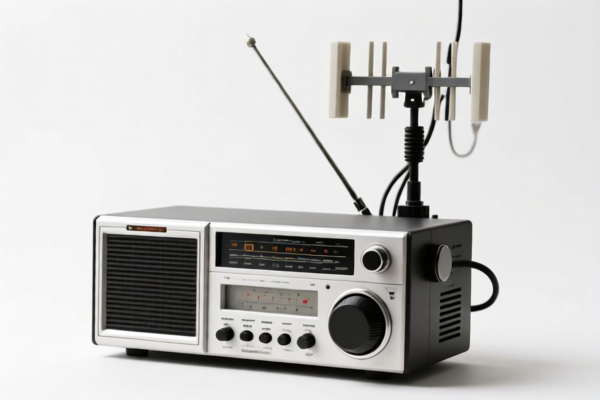
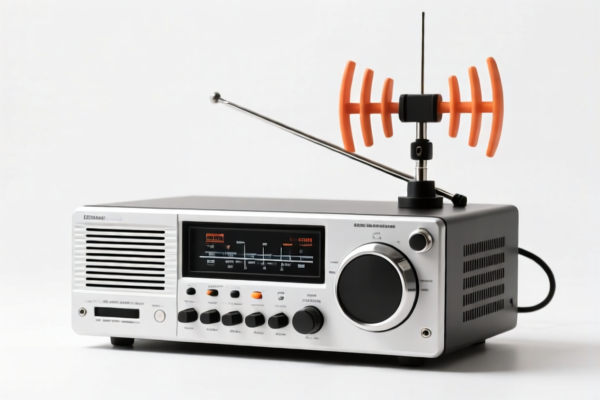
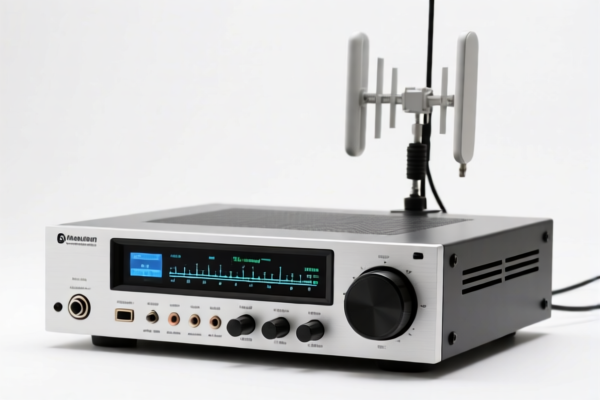
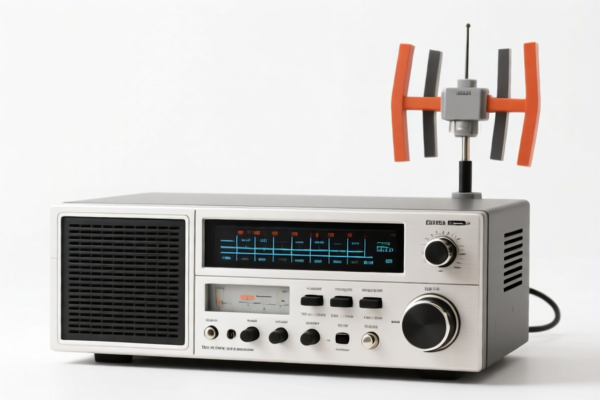
Product Images
AI Analysis
📡 Transmission and Reception Apparatus (Telecommunications Equipment)
🌐 HS Code Reference & Customs Clearance Guide | 2026 Latest Tariff Analysis | Professional Clearance Strategy
📌 I. Product Definition & Classification: Do You Really Understand "Transmission and Reception"?
"Transmission and Reception Apparatus" is a broad category in international trade, encompassing devices used to send, receive, or convert signals for telecommunications, data processing, or specific industrial applications. In customs classification, the function and integration level determine the HS Code.
These products are generally categorized into two main groups: 1. Generic Transmission/Reception Devices (Chapter 85/90): Standalone units like radios, sensors, or signal detectors that don't fit specific communication protocol standards (like GSM/Wi-Fi routers). 2. Communication-Specific Devices: Radios, telephones, or network equipment defined by their communication standard.
⚠️ Key Distinction:
- If the device is primarily a sensor, detector, or measurement tool (even if it transmits data) → Often falls under Chapter 90 (Instruments) or specific Chapter 85 subheadings for signals.
- If the device is a generic radio receiver for audio/broadcast → Falls under Chapter 85.27.
- If it is a visual signaling device (lights, beacons) → Falls under Chapter 85.12.
📦 II. HS Code Classification Details (2026 Latest Tariff Authority对照)
Based on the provided data, here are the specific HS Codes and their logical classifications for "Transmission and Reception Apparatus" variants:
| HS Code | Product Description | Application Scenario | Key Classification Feature |
|---|---|---|---|
9031.80.80.85 |
Apparatus for detecting or processing vehicle status; other measuring/checking instruments | Vehicle diagnostics, industrial state monitoring, generic sensor systems | 兜底类目 (Residual Class): For instruments not elsewhere specified. Focuses on measurement/data processing rather than pure communication. |
8527.29.40.00 |
Radio receivers for motor vehicles | Car stereos, in-vehicle entertainment systems, navigation audio units | 广播接收类 (Broadcast Reception): Specifically designed for audio/radio signals in vehicles. |
9031.49.90.00 |
Other optical instruments and apparatus; optical detection equipment | Optical sensors, laser detectors, non-conflicting optical measurement tools | 光学仪器 (Optical Instruments): Uses optical principles for detection/measurement, not RF transmission. |
8512.30.00.40 |
Signal/detection equipment for motor vehicles | Automotive sensors, reverse alarms, blind-spot detection signals | 电气信号设备 (Electrical Signals): Generates or detects signals for vehicle safety/operation. |
8512.20.40.80 |
Visual signal equipment (other) | Car lights, LED beacons, visual warning devices | 视觉信号 (Visual Signals): Devices that transmit information via light (visible spectrum). |
🔍 Key Reminder:
-9031.80.80.85is a "catch-all" for measurement/checking devices. If your device measures vehicle status (e.g., pressure, speed, engine health) and transmits it, this is a strong candidate if it doesn't fit a more specific "communication" code.
-8527.29.40.00is strictly for audio/radio reception in cars. If it only receives broadcast radio, it goes here.
-8512codes are for signal emission/detection (lights, alarms), not general data transmission.
💰 III. 2026 Latest Tariff Rate Details (Including Surtaxes & Policy Add-ons)
✅ Applicable Country: United States (US)
✅ Origin: China (CN)
✅ Effective Date: From November 10, 2025 (including subsequent imports)
🎯 1. 9031.80.80.85 – Measuring/Checking Instruments (Vehicle Status/Detectors)
| Item | Content |
|---|---|
| Base Tariff | 0.0% (Ad Valorem) |
| USITC Add-on | 0.0% (No specific 301 Tariff for this residual subheading) |
| 122-Clauses Tariff | +10.0% (Section 301 / IEEPA Add-on for China) |
| Total Rate | 10.0% |
| Tax Calculation | CIF Value × 10% |
| De Minimis Exemption | ❌ Not Applicable (High scrutiny on instruments) |
| Legal Basis Path | IEEPA:9903.01.24 → USITC:9031.80.80.85 |
📌 Explanation:
- This code benefits from a low base tariff (0%).
- The 10% surtax is the only major cost driver.
- Why this code? It is used as a residual category for devices that measure/analyze vehicle status but don't fit specific communication or optical instrument definitions.
🎯 2. 8527.29.40.00 – Radio Receivers for Motor Vehicles
| Item | Content |
|---|---|
| Base Tariff | 0.0% |
| USITC Add-on | +25.0% (Section 301 Tariff on Electronics) |
| 122-Clauses Tariff | +10.0% (Section 301 / IEEPA Add-on for China) |
| Total Rate | 35.0% |
| Tax Calculation | CIF Value × 35% |
| De Minimis Exemption | ❌ Not Applicable |
| Legal Basis Path | IEEPA:9903.01.24 → USITC:8527.29.40.00 → FOOTNOTE:9903.88.01 |
📌 Note:
- This is a high-tariff category due to the 25% USITC surtax on electronic audio/communication equipment.
- Even though it's just a "receiver," it is classified under electronics subject to trade restrictions.
🎯 3. 9031.49.90.00 – Optical Instruments/Detection Equipment
| Item | Content |
|---|---|
| Base Tariff | 0.0% |
| USITC Add-on | +25.0% |
| 122-Clauses Tariff | +10.0% |
| Total Rate | 35.0% |
| Tax Calculation | CIF Value × 35% |
| De Minimis Exemption | ❌ Not Applicable |
| Legal Basis Path | IEEPA:9903.01.24 → USITC:9031.49.90.00 → FOOTNOTE:9903.88.01 |
📌 Note:
- Optical detection devices are also subject to the 25% USITC surtax.
- Ensure the device is truly optical (using lenses, lasers, light sensors) and not just a generic electronic sensor.
🎯 4. 8512.30.00.40 – Vehicle Signal/Detection Equipment (Electrical)
| Item | Content |
|---|---|
| Base Tariff | 2.5% |
| USITC Add-on | +25.0% |
| 122-Clauses Tariff | +10.0% |
| Total Rate | 37.5% |
| Tax Calculation | CIF Value × 37.5% |
| De Minimis Exemption | ❌ Not Applicable |
| Legal Basis Path | IEEPA:9903.01.24 → USITC:8512.30.00.40 → FOOTNOTE:9903.88.01 |
📌 Explanation:
- This has the highest total rate (37.5%) due to the 2.5% base tariff + 25% USITC + 10% IEEPA.
- Applies to devices that generate or detect electrical signals for vehicle operation (e.g., reverse alarms, sensor triggers).
🎯 5. 8512.20.40.80 – Visual Signal Equipment
| Item | Content |
|---|---|
| Base Tariff | 2.5% |
| USITC Add-on | +25.0% |
| 122-Clauses Tariff | +10.0% |
| Total Rate | 37.5% |
| Tax Calculation | CIF Value × 37.5% |
| De Minimis Exemption | ❌ Not Applicable |
| Legal Basis Path | IEEPA:9903.01.24 → USITC:8512.20.40.80 → FOOTNOTE:9903.88.01 |
📌 Note:
- Same rate as above. Applies to visual signaling devices (e.g., LED light bars, warning beacons).
- The 2.5% base tariff is unavoidable for this subheading.
🛠️ IV. Customs Clearance Practical Advice (Pitfall Avoidance Guide)
✅ 1. Required Documentation Checklist
| Document | Mandatory? | Notes |
|---|---|---|
| ✅ Product Specification Sheet | ✔️ | Must clearly state: Function (Measurement? Signal? Reception?), Voltage, Interface Type |
| ✅ Circuit Diagram / Block Diagram | ✔️ | Critical to prove if it's an optical instrument (Ch 90) or electronic device (Ch 85) |
| ✅ Product Photos (with Label) | ✔️ | Show model number, brand, input/output specs |
| ✅ Third-Party Test Report | ✔️ | FCC, CE, RoHS, UL (if applicable) |
| ✅ Commercial Invoice | ✔️ | Clearly describe as: "Vehicle Status Detector" or "Radio Receiver for Motor Vehicles" |
| ✅ Certificate of Origin (CO) | ✔️ | For China origin, verify if any exemptions apply |
| ✅ Packing List | ✔️ | Detail items to avoid "split shipment" suspicion |
✅ 2. Declaration Strategy (Key Rules)
🔥 "Function First, Not Just Name! Match Code to Purpose, Avoid High Tariffs!"
| Scenario | Correct HS Code | Wrong Practice | Consequence |
|---|---|---|---|
| Vehicle diagnostic tool (sends data) | 9031.80.80.85 |
Misdeclare as "Radio Receiver" | Rate jumps from 10% to 35% |
| Car Stereo / Radio | 8527.29.40.00 |
Misdeclare as "Generic Instrument" | Rate jumps from 35% to 10%? No,海关 may reject as inconsistent with function |
| Optical Laser Sensor | 9031.49.90.00 |
Misdeclare as "Electronic Sensor" | Risk of audit; must prove optical principle |
| Reverse Alarm / Signal Sensor | 8512.30.00.40 |
Misdeclare as "Light" | Rate 37.5% vs. potentially lower if misclassified? No, this is standard for signals |
| LED Warning Light | 8512.20.40.80 |
Misdeclare as "Bulb" | Rate 37.5% |
✅ 3. Special Cases
| Situation | Handling Advice |
|---|---|
| OEM Custom Sensor | Provide customer order + design specs to prove it's a "measuring instrument" (Ch 90) rather than generic electronics |
| Device with Multiple Functions (e.g., Radio + GPS) | If primary function is reception, use 8527. If positioning/measurement, consider 9031. Primary function rule applies. |
| Visual Signal + Audio Alarm | If primarily visual, use 8512.20. If primarily audio, use 8512.30. Do not split unless shipped separately |
| Import for R&D | May apply for temporary admission or bonded warehouse to defer tax |
🌍 V. Global Market Comparison (2026 Latest)
| Country/Region | Recommended HS Code | Tariff Rate (China Origin) | Certification Required | Notes |
|---|---|---|---|---|
| 🇺🇸 USA | 9031.80.80.85 |
10.0% | FCC + RoHS | Lowest tariff option for measuring devices |
| 🇺🇸 USA | 8527.29.40.00 |
35.0% | FCC + RoHS | High tariff for radio receivers |
| 🇺🇸 USA | 8512.30.00.40 |
37.5% | FCC + RoHS | Highest tariff for signal equipment |
| 🇨🇳 China | 9031.80.80.85 |
0%~5% | CCC | Lower duties domestically |
| 🇪🇺 EU | 9031.80 |
0%~4% | CE + RoHS | No additional surtaxes |
| 🇯🇵 Japan | 9031.80 |
0%~5% | PSE | Competitive |
📌 Conclusion:
- USA imposes heavy surtaxes (25%+10%) on electronics (Ch 85).
- Chapter 90 (Instruments) has a significant advantage with only a 10% IEEPA surtax (if eligible) and 0% base tariff for9031.80.80.85.
- Strategy: If your device is a sensor/detector, argue for Ch 90 classification to save 25%+ in tariffs.
📌 VI. Common Mistakes & Pitfalls (Blood-Teachings)
❌ Mistake 1: Declaring a sensor as a radio receiver
👉 Consequence: Tariff jumps from 10% to 35%. Customs will audit based on function.
❌ Mistake 2: Declaring a visual alarm as a generic instrument
👉 Consequence: May be rejected for misdeclaration. Must use 8512.
❌ Mistake 3: Ignoring the 122-Clauses Tariff (10%)
👉 Consequence: Underpaying duties by 10% → Penalties + Back Taxes.
❌ Mistake 4: Using vague descriptions like "Electronic Device"
👉 Consequence: Customs assigns default higher tariff code → 37.5% instead of 10%.
✅ Correct Approach:
"Vehicle Status Detection Apparatus, Model XYZ, with Data Output Interface, FCC Certified"
vs.
"Radio Receiver for Car, Model ABC, Audio Output"
🎯 VII. Conclusion: Professional Classification Saves Money!
🎯 Remember the Golden Rule:
🔹 "If it measures/detects → Try Ch 90 (10% Tariff)"
🔹 "If it receives audio/radio → Ch 85.27 (35% Tariff)"
🔹 "If it signals visually/electrically → Ch 85.12 (37.5% Tariff)"
🔹 "HS Code determines life or death of your profit margin!"
📌 Pro Tip:
If your device can be classified as both a sensor and a transmitter, prioritize sensor/measurement classification (
9031) to benefit from the lower 10% tariff. Provide detailed technical documentation to justify the "measurement" function over "communication."
📣 Immediate Action:
📞 Contact a professional customs broker + Provide technical specs + Apply for Advance Ruling
🚀 Let your Transmission & Reception Apparatus clear smoothly, efficiently, and cost-effectively!
✨ Professional Clearance Starts with Accurate Classification!
💼 Every Cent of Cost is Worth Precisely Calculated!
Customer Reviews
About HS Code Classification
The Harmonized System (HS) is an internationally standardized nomenclature developed by the World Customs Organization (WCO) to classify traded products. Over 200 countries use the HS system as the basis for customs tariffs, trade statistics, and import/export regulations.
Each HS code follows a hierarchical structure:
- Chapter (2 digits) — Broad category of goods (e.g., Chapter 84: Machinery and Mechanical Appliances)
- Heading (4 digits) — More specific grouping within the chapter
- Subheading (6 digits) — Internationally standardized breakdown, used by all WCO member countries
- National subdivisions (8-10 digits) — Country-specific extensions for further classification, such as US HTSUS 10-digit codes
Correct HS code classification is essential for smooth customs clearance, accurate duty payment, and compliance with trade regulations. Misclassification can lead to customs delays, overpayment of duties, or penalties.
When importing from CN to US, the applicable tariff rates may include:
- Most-Favored-Nation (MFN) rate — The standard duty rate applied to WTO members
- General rate — Applied to countries without trade agreements
- Trade remedy duties — Additional tariffs such as Section 301 (anti-dumping), Section 232 (national security), or countervailing duties
The information provided on this page is for reference purposes only. For official classification, please consult with your local customs authority or a licensed customs broker.