Transparent Coating with Visible Texture
CN → US| HS Code | Tariff Rate | Origin | Destination | Doc |
|---|---|---|---|---|
| 3919102040 | 40.8% | CN | US | Official Doc |
| 3919905040 | 40.8% | CN | US | Official Doc |
| 3209900000 | 40.9% | CN | US | Official Doc |
| 3209100000 | 40.1% | CN | US | Official Doc |
| 3210000000 | 36.8% | CN | US | Official Doc |
Product Images
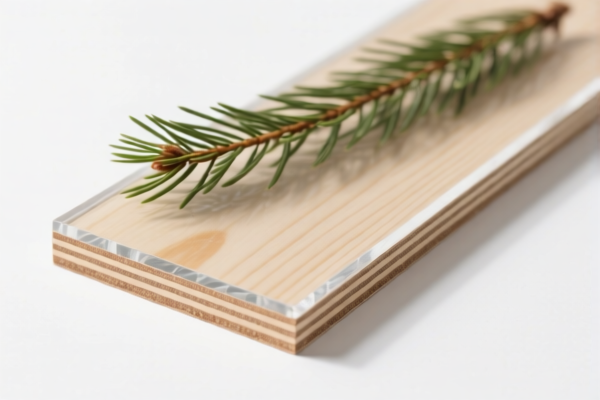

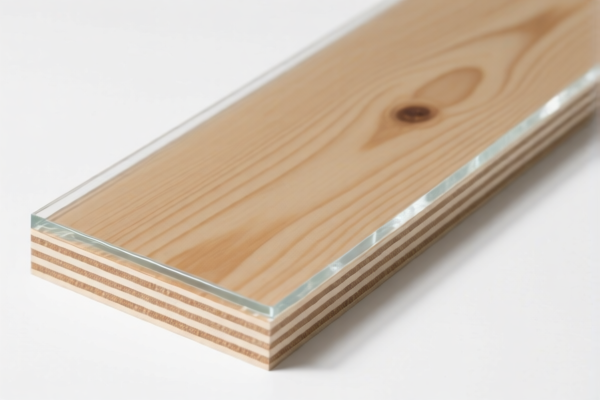
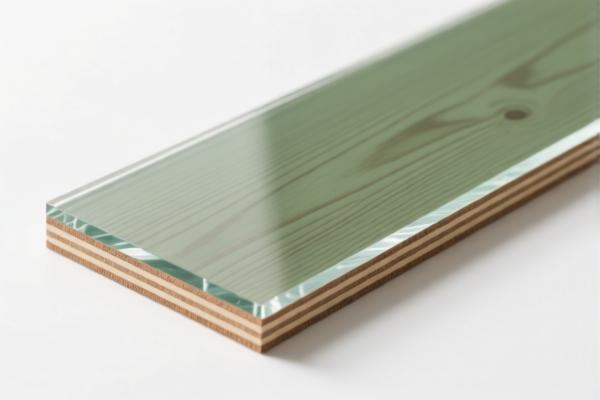
AI Analysis
🎨 Transparent Coating with Visible Texture
🌐 HS Code Reference & Customs Clearance Guide | 2026 Latest Tariff Analysis | Professional Strategy for Exporting to the US
📌 I. Product Definition & Classification: What Exactly is "Transparent Coating with Visible Texture"?
"Transparent Coating with Visible Texture" refers to a specialized coating agent or film applied to surfaces to enhance aesthetics (texture) while maintaining optical clarity. In international trade, the classification depends heavily on the physical form (liquid/paste vs. film/tape) and the chemical composition (paint/varnish vs. plastic polymer).
There are two main interpretations in the provided data: 1. Liquid/Paste Form (Paints/Varnishes): If sold in a container (can/bottle) and brushed/sprayed on, it is likely a varnish or lacquer. 2. Film/Tape Form (Plastic Sheets): If sold as a roll or pre-applied sheet/film, it is likely a plastic self-adhesive or non-adhesive film.
⚠️ Key Distinction Point:
- If it is a liquid meant to be applied by the user →归入 Chapter 32 (Paints/Varnishes)
- If it is a solid film/sheet meant to be peeled or laid down →归入 Chapter 39 (Plastics)
📦 II. HS Code Classification Details (2026 Latest Tariff Authority Match)
Based on the provided data, here are the four most likely classifications, ranked by probability and tax impact.
| HS Code | Product Description | Form/State | Material Inference | Key Feature Match |
|---|---|---|---|---|
3210.00.00.00 |
Other paints and varnishes, including enamels and lacquers, based on synthetic polymers or chemically modified natural polymers | Liquid/Paste | Synthetic Polymer/Varnish | "Coating" implies liquid application; "Transparent" = Varnish/Lacquer |
3209.10.00.00 |
Paints and varnishes based on acrylic or vinyl polymers | Liquid/Paste | Acrylic/Vinyl Polymer | "Transparent coating" often uses acrylics for clarity; fits "varnish" category |
3919.90.50.40 |
Other plates, sheets, film, foil and strip, of plastics, self-adhesive | Solid Film | Plastic (Transparent) | "Visible texture" often implies a textured film; "Transparent" matches plastic clarity |
3919.10.20.40 |
Self-adhesive plates, sheets, film, foil, tape, etc., of plastics, in rolls of width ≤ 20cm | Solid Film (Narrow) | Plastic (Transparent) | Similar to above but assumes narrow roll format; texture layer inferred |
🔍 Critical Analysis:
- Liquid vs. Solid: This is the biggest risk. Customs will check if the product is a "paint" (Ch 32) or "plastic film" (Ch 39).
- "Visible Texture": In paint (Ch 32), this is a special effect pigment/additive. In plastic (Ch 39), this is a physical embossing or layered film.
- Data Confidence: The data suggests3210and3209are strong candidates for liquid forms, while3919is for film forms.
💰 III. 2026 Latest Tariff Rate Breakdown (Including Surtaxes & Policy Add-ons)
✅ Applicable Country: United States (US)
✅ Origin: China (CN)
✅ Effective Date: 2025/2026 Import Cycle
✅ Note: All rates include the 25% Section 301 Tariff and 10% IEEPA Tariff (if applicable based on specific sub-regulations mentioned in data).
🎯 1. 3210.00.00.00 —— Other Paints and Varnishes (Most Likely for Liquid Coatings)
| Item | Content |
|---|---|
| Base Duty Rate | 1.8% |
| Section 301 Surtax | +25.0% |
| IEEPA Add-on (122 Clause) | +10.0% |
| Total Effective Rate | 36.8% |
| Tax Calculation | CIF Value × 36.8% |
| De Minimis Eligibility | ❌ No (Denied de minimis) |
| Legal Basis Path | USITC:3210.00.00.00 → Footnote:25% → IEEPA:10% |
📌 Explanation:
- This is the lowest total tax rate among the options in the data.
- "Transparent Coating" is commonly classified as a "Varnish" or "Lacquer" (Ch 32) if it dries to form a film.
- Advantage: 1.8% base rate is very low compared to plastics.
🎯 2. 3209.10.00.00 —— Acrylic-Based Paints/Varnishes
| Item | Content |
|---|---|
| Base Duty Rate | 5.1% |
| Section 301 Surtax | +25.0% |
| IEEPA Add-on (122 Clause) | +10.0% |
| Total Effective Rate | 40.1% |
| Tax Calculation | CIF Value × 40.1% |
| De Minimis Eligibility | ❌ No |
| Legal Basis Path | USITC:3209.10.00.00 → Footnote:25% → IEEPA:10% |
📌 Note:
- If the coating is specifically acrylic-based (common for high-clarity coatings), it falls here.
- Slightly higher base rate (5.1%) than general varnishes (1.8%).
🎯 3. 3919.90.50.40 & 3919.10.20.40 —— Plastic Films/Tapes (If Sold as Roll/Film)
| Item | Content |
|---|---|
| Base Duty Rate | 5.8% |
| Section 301 Surtax | +25.0% |
| IEEPA Add-on (122 Clause) | +10.0% |
| Total Effective Rate | 40.8% |
| Tax Calculation | CIF Value × 40.8% |
| De Minimis Eligibility | ❌ No |
| Legal Basis Path | USITC:3919.* → Footnote:25% → IEEPA:10% |
📌 Note:
- If the product is a pre-made textured film (not a liquid to be applied), it MUST be classified here.
- Risk: Misclassifying a liquid as plastic film can lead to penalties. Conversely, misclassifying plastic as paint is also risky.
🎯 4. 3209.90.00.00 —— Other Synthetic Polymer Paints
| Item | Content |
|---|---|
| Base Duty Rate | 5.9% |
| Section 301 Surtax | +25.0% |
| IEEPA Add-on (122 Clause) | +10.0% |
| Total Effective Rate | 40.9% |
| Tax Calculation | CIF Value × 40.9% |
| De Minimis Eligibility | ❌ No |
📌 Note:
- "Other" category for synthetic polymers. Use if not specifically acrylic/vinyl.
🛠️ IV. Customs Clearance Practical Advice (Real-World Pitfall Guide)
✅ 1. Preparation Checklist (Must-Haves)
| Document | Required? | Description |
|---|---|---|
| ✅ Product Specification Sheet | ✔️ | Must detail: State (Liquid/Solid), Chemical Composition (Acrylic? Epoxy?), Application Method (Brush/Spray/Peel). |
| ✅ Safety Data Sheet (SDS) | ✔️ | Critical for liquids. Shows if it's classified as hazardous or flammable. |
| ✅ Product Photos | ✔️ | Show the packaging (can vs. roll) and the finished texture on a test surface. |
| ✅ Commercial Invoice | ✔️ | Description: "Water-based Acrylic Varnish, Transparent, Textured Finish" OR "Textured Transparent Plastic Film". Do NOT just say "Coating". |
| ✅ Formula/Composition Breakdown | ✔️ | If classified under Ch 32, customs may ask for % of solids to determine "paint" status. |
✅ 2. Declaration Strategy (Key Mantra)
🔥 "Liquid is Paint, Solid is Plastic. Name it Right, Tax Rate is Light!"
| Scenario | Correct HS Code | Incorrect HS Code | Consequence |
|---|---|---|---|
| Liquid in Can | 3210.00.00.00 (Best Rate) |
3919... |
Misclassification penalty + Higher Tax |
| Roll/Film | 3919.90.50.40 |
3210... |
"Not a Paint" rejection by CBP |
| Acrylic Liquid | 3209.10.00.00 |
3210... |
Acceptable, but slightly higher base rate |
| Mixed Packaging | Separate Lines | Combined Line | Risk of "Assumed Highest Rate" |
✅ 3. Special Considerations
| Situation | Handling Advice |
|---|---|
| "Visible Texture" in Liquid | Ensure the SDS states it is a Varnish/Lacquer, not a "Coating Agent" which might be viewed as an industrial chemical (Ch 38) with higher tariffs. |
| "Visible Texture" in Film | Ensure the plastic film is not considered "Industrial Packaging" (Ch 39 another subhead) which might have different rules. |
| Origin Labeling | Must clearly state "Made in China" to trigger the 25%+10% surtax transparency. |
| HTSUS vs. Harmonized Code | Use the full 10-digit US HTSUS code provided above for accurate duty calculation. |
🌍 V. Global Market Comparison (2026)
| Country/Region | Recommended HS Code | Approx. Duty (Base) | Total Duty (with US Surtaxes*) | Notes |
|---|---|---|---|---|
| 🇺🇸 USA | 3210.00.00.00 |
1.8% | 36.8% | Lowest total duty among options. |
| 🇺🇸 USA | 3919.90.50.40 |
5.8% | 40.8% | Higher if misclassified as plastic. |
| 🇨🇳 China | 3210.00.00.00 |
6.5% | 6.5% | No Section 301 or IEEPA. |
| 🇪🇺 EU | 3209.10.00.00 |
6.5% | 6.5% | Check for REACH compliance. |
| 🇬🇧 UK | 3210.00.00.00 |
6.5% | 6.5% | Post-Brexit rules apply. |
📌 Conclusion:
- USA is the highest cost market due to the layered surtaxes (301 + IEEPA).
-3210.00.00.00is the optimal classification if the product is a liquid varnish, saving ~4% compared to plastic film classifications.
📌 VI. Common Mistakes & Pitfalls (Blood Lessons)
❌ Mistake 1: Calling it "Coating" without specifying form.
👉 Result: Customs asks for clarification, delaying clearance by weeks.
❌ Mistake 2: Classifying a liquid varnish as Plastic Film (3919).
👉 Result: Tax rate jumps from 36.8% to 40.8% + potential fraud investigation if intent is unclear.
❌ Mistake 3: Ignoring the "122 Clause" IEEPA tax.
👉 Result: Underpayment by 10%, leading to fines and bond claims.
❌ Mistake 4: Not providing an SDS for liquid coatings.
👉 Result: CBP refuses entry due to hazardous material concerns.
✅ Correct Approach:
"Acrylic Water-Based Varnish, Transparent, Textured Effect, Liquid, 1L Can, Non-Hazardous" → HS 3210.00.00.00
🎯 VII. Conclusion: Professional Declaration, Cost Efficiency, Smooth Clearance!
🎯 Remember the Mantra:
🔹 "Liquid = Paint (Ch 32), Solid = Plastic (Ch 39)."
🔹 "Varnish saves 4% over Film."
🔹 "Always include the Surcharge in your cost model!"
📌 Pro Tip:
If your product is a dry film transfer or special effect powder, it might fall under Ch 38 or Ch 32 differently. Consult a customs broker with the exact physical form and application method.
Consider applying for an Advance Ruling from CBP if the classification is ambiguous.
📣 Immediate Action:
📞 Engage a Licensed Customs Broker.
📤 Submit SDS + Photos + Formula Breakdown.
🚀 Secure HS 3210.00.00.00 for the lowest possible duty rate of 36.8%!
✨ Professional Customs Clearance Starts with Precise Classification!
💼 Every Percentage Point Counts in the Age of Trade Wars!
Customer Reviews
About HS Code Classification
The Harmonized System (HS) is an internationally standardized nomenclature developed by the World Customs Organization (WCO) to classify traded products. Over 200 countries use the HS system as the basis for customs tariffs, trade statistics, and import/export regulations.
Each HS code follows a hierarchical structure:
- Chapter (2 digits) — Broad category of goods (e.g., Chapter 84: Machinery and Mechanical Appliances)
- Heading (4 digits) — More specific grouping within the chapter
- Subheading (6 digits) — Internationally standardized breakdown, used by all WCO member countries
- National subdivisions (8-10 digits) — Country-specific extensions for further classification, such as US HTSUS 10-digit codes
Correct HS code classification is essential for smooth customs clearance, accurate duty payment, and compliance with trade regulations. Misclassification can lead to customs delays, overpayment of duties, or penalties.
When importing from CN to US, the applicable tariff rates may include:
- Most-Favored-Nation (MFN) rate — The standard duty rate applied to WTO members
- General rate — Applied to countries without trade agreements
- Trade remedy duties — Additional tariffs such as Section 301 (anti-dumping), Section 232 (national security), or countervailing duties
The information provided on this page is for reference purposes only. For official classification, please consult with your local customs authority or a licensed customs broker.