Transparent Flexible Polyester Sheet
CN → US| HS Code | Tariff Rate | Origin | Destination | Doc |
|---|---|---|---|---|
| 3919102040 | 40.8% | CN | US | Official Doc |
| 3926909400 | 35.0% | CN | US | Official Doc |
| 3920992000 | 39.2% | CN | US | Official Doc |
| 3919905040 | 40.8% | CN | US | Official Doc |
| 3920100000 | 39.2% | CN | US | Official Doc |
Product Images

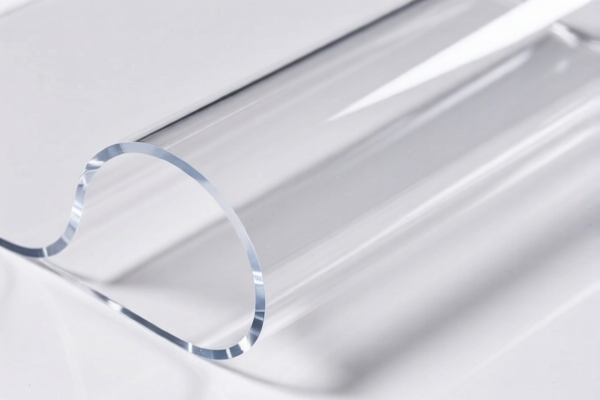
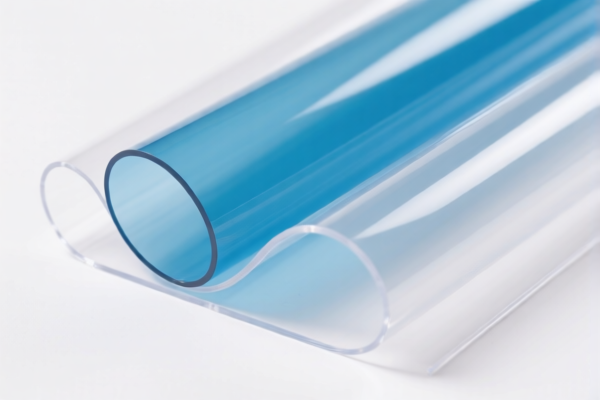
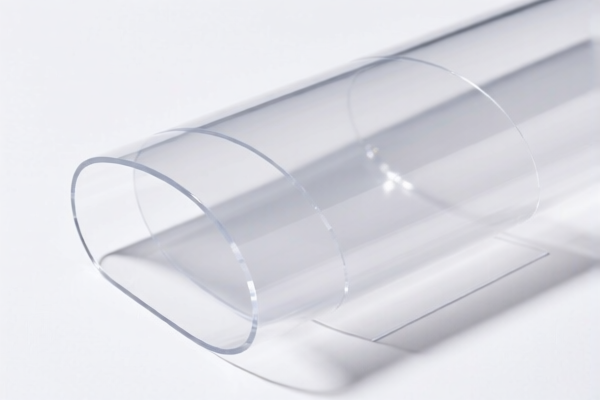
AI Analysis
🧊 Transparent Flexible Polyester Sheet (Polyester Film)
🌐 HS Code Reference & Customs Clearance Guide | 2026 Latest Tariff Analysis | Strategic Compliance for US Imports
📌 1. Product Definition & Classification: Is it a "Film" or a "Plate/Sheet"?
Transparent Flexible Polyester Sheet (commonly known as PET Film) is a versatile material used in packaging, electronics insulation, graphic arts, and industrial applications. In international trade, the distinction lies in its format and function:
- Plastic Films (Rolls/Sheets): If the product is supplied in rolls or flat sheets without specific shaping, it generally falls under Chapter 39 (Plastics and Articles Thereof).
- Self-Adhesive vs. Non-Adhesive: The presence of an adhesive backing significantly changes the classification.
- With Adhesive: Tends toward 3919 (Self-adhesive plates, sheets, film, etc.).
- Without Adhesive: Tends toward 3920 (Other plates, sheets, film, foil, and strip, of plastics).
⚠️ Key Classification Point:
- If the polyester sheet is plain (no adhesive, unprinted, or simply transparent): Look at 3920.99 or 3920.10.
- If the polyester sheet has an adhesive backing (e.g., for labels, tapes, or mounting): Look at 3919.10 or 3919.90.
- If it is a finished plastic article not covered elsewhere (rare for simple sheets, but possible if shaped): 3926.90.
📦 2. HS Code Classification Matrix (2026 Latest Data Source Analysis)
Based on the provided source, here are the 5 matched HS Codes with their specific application scenarios:
| HS Code | Product Description (from Data) | Key Matching Criteria | Total Tax Rate (US/CN) |
|---|---|---|---|
3919.10.20.40 |
Self-adhesive Plastic Film | Material: Plastic. Form: Film. Feature: Transparent. Fits "Plastic Flat Shape & Transparent Attributes." | 40.8% |
3926.90.94.00 |
Other Plastic Articles (Film-like) | Material: Plastic. Form: Film. Fits "Plastic Articles & Specific Forms." | 35.0% |
3920.99.20.00 |
Non-cellular Non-reinforced Plastic Film | Material: Plastic. Form: Film. Fits "Flexible Films, Bands, and Sheets of Non-cellular Non-reinforced Plastic." | 39.2% |
3919.90.50.40 |
Other Self-Adhesive Plastic Sheets/Films | Material: Plastic. Form: Film. Fits "Transparent Tape & Self-Adhesive Plastic Flat Shape Articles." | 40.8% |
3920.10.00.00 |
Polyethylene Polymer Film | Material: Ethylene Polymer. Form: Film. Fits "Material & Form Characteristics." | 39.2% |
🔍 Critical Note on Accuracy:
While the data source matches3920.10to "Ethylene Polymer," Polyester (PET) is chemically a Polyester, not a Polyethylene. Therefore,3920.10may be a mismatch if the material is strictly PET. However,3920.99(Other plastics) is the most technically accurate for Non-adhesive PET Film. If the product is Self-Adhesive PET,3919.10or3919.90is correct.3926.90is a residual category and should be avoided if a more specific film code exists.
💰 3. 2026 Tariff Rate Breakdown (Detailed Tax Components)
✅ Applicable Country: United States (US)
✅ Country of Origin: China (CN)
✅ Effective Date: Post-2025 policies (Section 301 & IEEPA)
🎯 Scenario A: Self-Adhesive Polyester Film (3919.10.20.40 / 3919.90.50.40)
| Component | Rate | Legal Basis |
|---|---|---|
| Base Tariff (MFN) | 5.8% | General Rate of Duty |
| Section 301 Tariff | +25.0% | USITC Footnote 9903.88.01 (China-specific) |
| IEEPA Tariff | +10.0% | International Emergency Economic Powers Act (China-specific, effective Nov 2025) |
| Total Effective Rate | 40.8% | Base + 301 + IEEPA |
📌 Explanation:
- If your polyester sheet is self-adhesive (e.g., PET labels, adhesive backing for laminates), it falls under 3919.
- The base duty is 5.8%, but the trade war penalties apply heavily: 25% (Section 301) + 10% (IEEPA).
- Total Cost Impact: Nearly 41% of the CIF value.
🎯 Scenario B: Non-Adhesive Polyester Film (3920.99.20.00)
| Component | Rate | Legal Basis |
|---|---|---|
| Base Tariff (MFN) | 4.2% | General Rate of Duty for "Other Plastics" |
| Section 301 Tariff | +25.0% | USITC Footnote 9903.88.01 (China-specific) |
| IEEPA Tariff | +10.0% | International Emergency Economic Powers Act (China-specific) |
| Total Effective Rate | 39.2% | Base + 301 + IEEPA |
📌 Explanation:
- If the polyester sheet is plain (no adhesive), it is classified as "Other Plates, Sheets, Film... of Plastics" (3920.99).
- The base duty is slightly lower at 4.2%, but the same punitive tariffs apply: 25% + 10%.
- Total Cost Impact: 39.2% of the CIF value.
🎯 Scenario C: Residual Plastic Article (3926.90.94.00)
| Component | Rate | Legal Basis |
|---|---|---|
| Base Tariff (MFN) | 0.0% | Specific duty-free status for some plastic articles |
| Section 301 Tariff | +25.0% | USITC Footnote 9903.88.01 (China-specific) |
| IEEPA Tariff | +10.0% | International Emergency Economic Powers Act (China-specific) |
| Total Effective Rate | 35.0% | Base + 301 + IEEPA |
⚠️ Warning:
- While the 35.0% rate looks attractive, 3926.90 is for "Other Articles of Plastics."
- Do NOT use this code for plain films unless they are specially shaped or finished in a way that excludes them from Chapter 39 Sections 01-09.
- Misclassification here leads to severe penalties if CBP determines it should be 3920 or 3919.
🎯 Scenario D: Polyethylene Film (3920.10.00.00) — Use with Caution
| Component | Rate | Legal Basis |
|---|---|---|
| Base Tariff (MFN) | 4.2% | General Rate |
| Section 301 Tariff | +25.0% | USITC Footnote 9903.88.01 |
| IEEPA Tariff | +10.0% | International Emergency Economic Powers Act |
| Total Effective Rate | 39.2% | Base + 301 + IEEPA |
📌 Technical Correction:
- Polyester (PET) is NOT Polyethylene (PE).
- If your product is PET, using3920.10is technically incorrect and risks customs audit.
- Only use3920.10if the product is explicitly Polyethylene (e.g., LDPE/HDPE stretch wrap).
🛠️ 4. Customs Clearance Practical Advice
✅ 1. Essential Documentation Checklist
| Document | Required? | Purpose |
|---|---|---|
| Product Specification Sheet | ✅ Yes | Must state: Material (Polyester/PET), Thickness (Microns), Width, Form (Roll/Sheet), Adhesive Status (Yes/No). |
| Commercial Invoice | ✅ Yes | Clearly describe as "Transparent Polyester Film" or "Self-Adhesive PET Film." Avoid vague terms like "Plastic Sheet." |
| Certificate of Origin (CO) | ✅ Yes | Proves Chinese origin to apply (or deny) preferential rates (none for China to US currently). |
| Labeling Samples | ✅ Yes | If self-adhesive, ensure labels are clear and comply with USFTC marking laws. |
| Test Report | ❓ Optional | For high-value shipments, a material test report confirming "Polyester" vs "Polyethylene" can prevent misclassification disputes. |
✅ 2. Classification Strategy (Do's and Don'ts)
| Situation | Recommended HS Code | Reason | Risk if Wrong |
|---|---|---|---|
| Plain PET Film (No adhesive) | 3920.99.20.00 |
Fits "Other Plastic Films." | Misclassifying as 3926 (0% base) risks penalty. |
| Self-Adhesive PET Film | 3919.10.20.40 |
Fits "Self-Adhesive Plastic Film." | Misclassifying as 3920 misses adhesive description. |
| PET Tape (Rolled, adhesive) | 3919.90.50.40 |
Fits "Other Self-Adhesive Plates/Sheets." | Similar to above; ensure it's not "Paper Tape" (3703). |
| Polyethylene (PE) Film | 3920.10.00.00 |
Specific for Ethylene Polymers. | Using this for PET is a material mismatch. |
🔥 Pro Tip:
"Adhesive is King!"
If there is any adhesive backing, DO NOT use 3920. Use 3919.
If there is no adhesive, DO NOT use 3919. Use 3920.
Mixing these up is the #1 cause of customs delays for plastic films.
✅ 3. Special Considerations for US Imports
-
Section 301 Exclusions:
- Most plastic films from China do NOT have Section 301 exclusions.
- Check the USTR Exclusion List periodically, but assume 25% applies unless you have a specific exclusion code.
-
IEEPA 10% Surcharge:
- As of November 10, 2025, an additional 10% is applied to many Chinese goods under IEEPA. This is non-negotiable for HS Codes in Chapter 39.
-
Anti-Dumping/Countervailing Duties (AD/CVD):
- While rare for plain PET film, certain oriented polyester films (used in solar backsheets or specific packaging) may have AD/CVD orders.
- Action: Verify if your specific PET formulation is under an active AD/CVD case. If yes, the tax burden could exceed 100%.
🌍 5. Global Market Comparison
| Region | Recommended HS Code | Est. Total Tax (China Origin) | Notes |
|---|---|---|---|
| 🇺🇸 United States | 3920.99 or 3919.10 |
39.2% - 40.8% | High tariffs due to 301 + IEEPA. |
| 🇨🇳 China (Import) | 3920.53 (PET) |
~6% - 10% | Lower base duty, no US-style punitive tariffs. |
| 🇪🇺 European Union | 3920.61 (PET) |
~5.5% | No Section 301/IEEPA equivalents. |
| 🇬🇧 United Kingdom | 3920.61 (PET) |
~5.5% | Post-Brexit tariffs align closely with EU. |
| 🇯🇵 Japan | 3920.61 (PET) |
~5% - 8% | Stable trade relations, low tariffs. |
📌 Conclusion:
The US market is significantly more expensive due to trade policies. If possible, consider third-country processing (e.g., Vietnam, Thailand) for polyethylene-based films to mitigate risk, though PET supply chains are less flexible.
📌 6. Common Pitfalls & How to Avoid Them
❌ Pitfall 1: Calling it "Plastic Sheet" without specifying Material
👉 Result: CBP may classify under a higher-duty residual category or demand reclassification.
✅ Fix: Always specify "Polyester (PET)" or "Polyethylene (PE)" in the description.
❌ Pitfall 2: Ignoring the Adhesive Factor
👉 Result: Using 3920 for adhesive film leads to misclassification penalties.
✅ Fix: If adhesive exists, use 3919. If not, use 3920.
❌ Pitfall 3: Assuming "Transparent" Means "Zero Duty"
👉 Result: Transparency does not exempt plastic films from Section 301 or IEEPA tariffs.
✅ Fix: Budget for the 35-41% total tax rate.
🎯 7. Final Recommendation
- Confirm Material: Is it Polyester (PET) or Polyethylene (PE)?
- If PET → Use 3920.99 (Non-adhesive) or 3919.10/90 (Adhesive).
- If PE → Use 3920.10.
- Confirm Adhesive: Is there glue?
- Yes → 3919.
- No → 3920.
- Calculate Cost:
- Budget for ~40% landed duty cost for US imports from China.
- Consult Specialist:
- For high-volume shipments, request an Advance Ruling from CBP to lock in the HS Code and avoid future audits.
📣 Take Action Now:
📞 Engage a Licensed Customs Broker to verify the specific PET formulation against AD/CVD lists.
📄 Prepare Detailed Specs showing material composition and adhesive status.
🚀 Optimize Supply Chain to mitigate the ~40% tariff burden in the US market.
✨ Precision in Classification, Profit in Clearance!
💼 Your Plastic Film, Properly Declared, Successfully Landed!
Customer Reviews
About HS Code Classification
The Harmonized System (HS) is an internationally standardized nomenclature developed by the World Customs Organization (WCO) to classify traded products. Over 200 countries use the HS system as the basis for customs tariffs, trade statistics, and import/export regulations.
Each HS code follows a hierarchical structure:
- Chapter (2 digits) — Broad category of goods (e.g., Chapter 84: Machinery and Mechanical Appliances)
- Heading (4 digits) — More specific grouping within the chapter
- Subheading (6 digits) — Internationally standardized breakdown, used by all WCO member countries
- National subdivisions (8-10 digits) — Country-specific extensions for further classification, such as US HTSUS 10-digit codes
Correct HS code classification is essential for smooth customs clearance, accurate duty payment, and compliance with trade regulations. Misclassification can lead to customs delays, overpayment of duties, or penalties.
When importing from CN to US, the applicable tariff rates may include:
- Most-Favored-Nation (MFN) rate — The standard duty rate applied to WTO members
- General rate — Applied to countries without trade agreements
- Trade remedy duties — Additional tariffs such as Section 301 (anti-dumping), Section 232 (national security), or countervailing duties
The information provided on this page is for reference purposes only. For official classification, please consult with your local customs authority or a licensed customs broker.