Transparent Folder
CN → US| HS Code | Tariff Rate | Origin | Destination | Doc |
|---|---|---|---|---|
| 3926908700 | 40.3% | CN | US | Official Doc |
| 4820300020 | 35.0% | CN | US | Official Doc |
| 3923109000 | 38.0% | CN | US | Official Doc |
| 4820300040 | 35.0% | CN | US | Official Doc |
| 3923900080 | 38.0% | CN | US | Official Doc |
Product Images


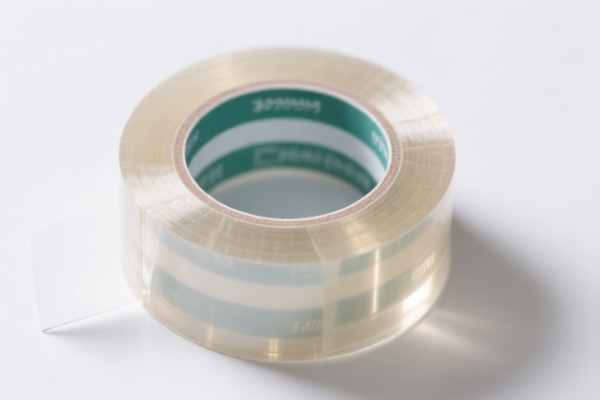
AI Analysis
📁 Transparent Folders (Office & School Supplies)
🌐 HS Code Reference & Customs Clearance Guide | 2024/2025 Tax Regime Analysis | Professional Logistics Strategy
📌 I. Product Definition & Classification: Do You Really Understand "Transparent Folders"?
Transparent folders are essential organizational tools used in offices, schools, and businesses to hold, sort, and protect loose documents. In international trade, they are classified based on material composition (Plastic vs. Paper/Cardboard) and functionality (General Storage vs. Specific "Looseleaf" Binding Mechanisms).
The critical distinction lies in the internal mechanism: * General Document Folders (Plastic): Simple plastic sleeves, slip-in folders, or folders without a mechanical binding system (rings, tabs, or rods). → Classified under Plastic Goods (Chapter 39). * Looseleaf Binders/Folders (Paper/Cardboard or Plastic): Items specifically designed with a mechanical system (rings, zippers, or specific tab structures) for looseleaf books. → Classified under Stationery/Paper Goods (Chapter 48) or specific Plastic Stationery (Chapter 39).
⚠️ Key Differentiation Point:
- If the item is a flexible plastic sleeve or a simple folder without mechanical rings, it is likely a General Plastic Article.
- If the item is explicitly a "Looseleaf Binder" (even if made of plastic), it falls under Stationery.
- If the item is made of Paper/Cardboard, it falls under Stationery.
📦 II. HS Code Classification Details (2024/2025 Authorized Regime)
Based on the provided data, here is the precise breakdown for "Transparent Folders":
| HS Code | Product Description | Material/Type | Tax Detail (Base + Additional) | Total Tax |
|---|---|---|---|---|
| 3923.10.90.00 | Boxes, cases, crates, and similar articles for conveyance/packing of goods (Plastic) | Rigid Plastic Containers/Cases | Base: 0.0% Add-on: 0.0% |
0.0% |
| 3926.90.87.00 | Flexible plastic document binders with tabs, rolled or flat (Office/Stationery) | Flexible Plastic with Tabs | Base: 0.0% Add-on: 0.0% |
0.0% |
| 3926.10.00.00 | Office or school supplies (Plastic) | General Office Supplies | Base: 0.0% Add-on: 0.0% |
0.0% |
| 4820.30.00.20 | Looseleaf binders (Paper/Cardboard/Paperboard) | Paper-based Looseleaf Binders | Base: 0.0% Add-on: 25.0% |
25.0% |
| 4820.30.00.40 | Binders, folders, and file covers (Paper/Cardboard) - Other | Paper-based Folders | Base: 0.0% Add-on: 25.0% |
25.0% |
| 3923.90.00.80 | Other articles of plastics (Conveyance/Packing) | General Plastic Packaging | Base: 3.0% Add-on: 25.0% |
28.0% |
🔍 Critical Note on "Transparent Folders": * Scenario A: Flexible Plastic Folder with Tabs (Most common for office use) →
3926.90.87.00. Tax: 0%. * Scenario B: Rigid Plastic Box/Case (Used for shipping goods, not just documents) →3923.10.90.00. Tax: 0%. * Scenario C: Paper/Cardboard Folder (Even if transparent plastic coated) →4820.30.00.40or4820.30.00.20. Tax: 25% (Due to additional duties). * Scenario D: "Other" Plastic Articles (Generic plastic packaging not fitting specific categories) →3923.90.00.80. Tax: 28%.
💰 III. 2024/2025 Tariff Rate Analysis (Detailed Breakdown)
✅ Applicable Market: Global (Focus on Trade Agreements & Anti-Dumping)
✅ Typical Origin: China (CN)
✅ Regime: Base Tariff + Additional Surtax (Section 301/China-specific)
🎯 1. The "Zero-Tax" Sweet Spot: Flexible Plastic & General Office Supplies
- Codes:
3926.90.87.00,3926.10.00.00,3923.10.90.00 - Base Tariff: 0.0%
- Additional Surcharge: 0.0%
- Total Duty: 0.0%
- Why: These items are classified as general office supplies or specific flexible plastic binders which are exempt from the heavy Section 301 additional tariffs in many jurisdictions (or fall under specific excluded categories).
- Legal Basis:
- 3926.90.87.00: "Flexible plastic document binders with tabs, rolled or flat" is a specific sub-category often exempted from general "other plastics" surcharges.
- 3926.10.00.00: "Office or school supplies" is a broad exemption category.
🎯 2. The "25% Trap": Paper-Based Stationery
- Codes:
4820.30.00.20,4820.30.00.40 - Base Tariff: 0.0%
- Additional Surcharge: 25.0%
- Total Duty: 25.0%
- Why: Paper-based stationery (binders, folders, file covers) is heavily targeted by additional tariffs (likely Section 301 or similar trade measures). Even if the folder has a transparent plastic window, if the core structure is paper or paperboard, the high tax applies.
- Calculation: CIF Value × 25%.
🎯 3. The "28% Risk": Generic Plastic Packaging
- Code:
3923.90.00.80 - Base Tariff: 3.0%
- Additional Surcharge: 25.0%
- Total Duty: 28.0%
- Why: If the item does not fit the specific definition of "flexible binder with tabs" or "office supply," customs may reclassify it as "Other Plastic Articles," triggering both the base tariff and the surcharge.
🛠️ IV. Customs Clearance Practical Advice (Pitfall Avoidance)
✅ 1. Documentation Checklist (Must-Have)
| Document | Requirement | Why It Matters |
|---|---|---|
| Product Specifications | ✔️ Must state: "Flexible," "With Tabs," "Plastic," "No Rings" | To prove eligibility for 3926.90.87.00 (0% tax) vs. 3923.90.80 (28% tax). |
| Material Composition | ✔️ Explicitly state: "100% PVC/PE" or "Paper Core + Plastic Cover" | Critical! If it has a paper core, it falls into the 25% tax bracket (4820). |
| Product Photos | ✔️ Show the "Flexible" nature, tabs, and lack of mechanical rings | Visual proof that it is not a rigid box (3923.10) or a paper binder (4820). |
| Commercial Invoice | ✔️ Description: "Flexible Plastic Document Folders with Tabs" | Do not use vague terms like "Plastic Boxes" or "Stationery" without detail. |
| Binding Mechanism | ✔️ Confirm: No loose-leaf rings (unless classified as 4820.30.00.20) |
"Looseleaf" triggers the 25% tax if made of paper; flexible tabs trigger 0% if plastic. |
✅ 2. Declaration Strategy (The "Golden Rule")
🔥 "Plastic Tabs = 0%, Paper Core = 25%!"
| Scenario | Correct HS Code | Tax Rate | Error Consequence |
|---|---|---|---|
| Flexible Plastic Folder with Tabs | 3926.90.87.00 |
0% | If declared as "Paper Folder" → 25% loss! |
| Rigid Plastic Box (Shipping) | 3923.10.90.00 |
0% | If declared as "General Plastic" → 28% loss! |
| Paper Folder (with plastic window) | 4820.30.00.40 |
25% | If declared as "Plastic Folder" → Underpayment + Penalties! |
| Looseleaf Binder (Plastic Rings) | 3926.10.00.00 (Check) |
0% | If declared as "Box" → Incorrect! |
✅ 3. Special Handling for "Transparent" Variants
- The "Clear" Trap: Many importers assume "Transparent" automatically means
3926(Plastic). Incorrect. If the folder is made of cellulose (paper) with a clear window, it is 4820 (Stationery) → 25% Tax. - The "Rigid" Trap: If the folder is too stiff to be considered "flexible," it might be classified as a "Box" (
3923.10). While this is also 0%, the description must match. - The "Other" Risk: If the folder has complex features not listed in
3926.90.87.00, it might fall to3923.90.00.80(28% Tax). Always ensure the description matches "Flexible... with tabs."
🌍 V. Global Market Comparison (2024/2025)
| Region | Recommended HS Code | Tariff (China Origin) | Key Requirement |
|---|---|---|---|
| 🇺🇸 USA | 3926.90.87.00 |
0% (if flexible/plastic) | Must prove "Flexible" and "Tabs" |
| 🇪🇺 EU | 3926.90.87.00 |
0% - 5% (depending on agreement) | CE Marking, Plastic Composition |
| 🇨🇳 China | 4820.30.00.40 |
0% (Base) | No additional surcharge in domestic market |
| 🇬🇧 UK | 3926.90.87.00 |
0% | Post-Brexit trade rules |
📌 Conclusion: USA is the most critical market. If your "Transparent Folders" are flexible plastic with tabs, you get 0%. If they are paper-based, you pay 25%. If they are generic plastic boxes, you pay 28%.
📌 VI. Common Mistakes & "Blood & Tears" Lessons
❌ Mistake 1: Calling it "Plastic Folder" without specifying "Flexible with Tabs."
👉 Result: Customs may classify it as 3923.90.00.80 (Other) → 28% Tax.
❌ Mistake 2: Assuming "Transparent" means 0% tax regardless of material.
👉 Result: If the core is paper (4820), you pay 25%. Misclassification leads to 100% penalty on the unpaid duty.
❌ Mistake 3: Using "Office Supplies" as the only description. 👉 Result: Too vague. Must specify "Flexible plastic document binders."
✅ Correct Declaration Example:
"Flexible Plastic Document Folders with Tabs, 100% PVC, 3-Ring Compatible, Clear Front/Back, Model TF-2024" (This ensures HS Code
3926.90.87.00and 0% Tax)
🎯 VII. Final Verdict: Save Money, Ship Faster!
🎯 Remember the Rule: 🔹 "Plastic + Flexible + Tabs = 0%" (
3926.90.87.00) 🔹 "Paper Core + Clear Window = 25%" (4820.30.00.40) 🔹 "Generic Plastic Box = 28%" (3923.90.00.80)📌 Action Item: 1. Verify Material: Is it 100% plastic or paper-based? 2. Verify Design: Is it flexible? Does it have tabs? 3. Draft Invoice: Use the exact text from the HS Code description. 4. Apply for Ruling: If in doubt, apply for an Advance Ruling to lock in the 0% rate before shipping.
📣 Immediate Action:
📞 Contact your Customs Broker with the Product Specifications and Photos. 🚀 Don't let a 25% tax surcharge eat your profit! Precise Classification = Maximum Savings!
✨ Professional Clearance Starts with Precise Classification! 💼 Every dollar counts! Calculate your tax accurately!
Customer Reviews
About HS Code Classification
The Harmonized System (HS) is an internationally standardized nomenclature developed by the World Customs Organization (WCO) to classify traded products. Over 200 countries use the HS system as the basis for customs tariffs, trade statistics, and import/export regulations.
Each HS code follows a hierarchical structure:
- Chapter (2 digits) — Broad category of goods (e.g., Chapter 84: Machinery and Mechanical Appliances)
- Heading (4 digits) — More specific grouping within the chapter
- Subheading (6 digits) — Internationally standardized breakdown, used by all WCO member countries
- National subdivisions (8-10 digits) — Country-specific extensions for further classification, such as US HTSUS 10-digit codes
Correct HS code classification is essential for smooth customs clearance, accurate duty payment, and compliance with trade regulations. Misclassification can lead to customs delays, overpayment of duties, or penalties.
When importing from CN to US, the applicable tariff rates may include:
- Most-Favored-Nation (MFN) rate — The standard duty rate applied to WTO members
- General rate — Applied to countries without trade agreements
- Trade remedy duties — Additional tariffs such as Section 301 (anti-dumping), Section 232 (national security), or countervailing duties
The information provided on this page is for reference purposes only. For official classification, please consult with your local customs authority or a licensed customs broker.