Transparent PVB Film
CN → US| HS Code | Tariff Rate | Origin | Destination | Doc |
|---|---|---|---|---|
| 3921905050 | 39.8% | CN | US | Official Doc |
| 3920594000 | 35.0% | CN | US | Official Doc |
| 3920591000 | 41.0% | CN | US | Official Doc |
| 4811516000 | 35.0% | CN | US | Official Doc |
| 4811594040 | 35.0% | CN | US | Official Doc |
Product Images
AI Analysis
🎬 Transparent PVB Film (Polyvinyl Butyral Interlayer)
🌐 HS Code Reference & Customs Clearance Guide | 2026 Latest Tariff Analysis | Professional Customs Strategy
📌 Part I: Product Definition & Classification: Do You Really Understand "Transparent PVB Film"?
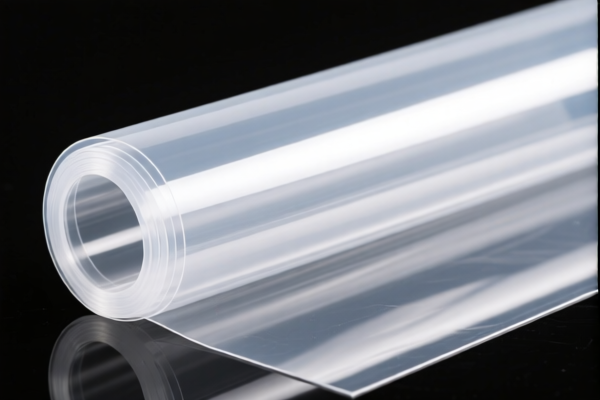
Transparent PVB (Polyvinyl Butyral) Film is a critical interlayer material used primarily in the manufacturing of laminated safety glass (automotive windshields, architectural glass, bulletproof glass). In international trade, its classification hinges on whether it is classified strictly as a plastic film or treated as a processed paper/plastic composite.
Key Characteristics:
- Material: Polyvinyl Butyral (a type of plastic/polymer).
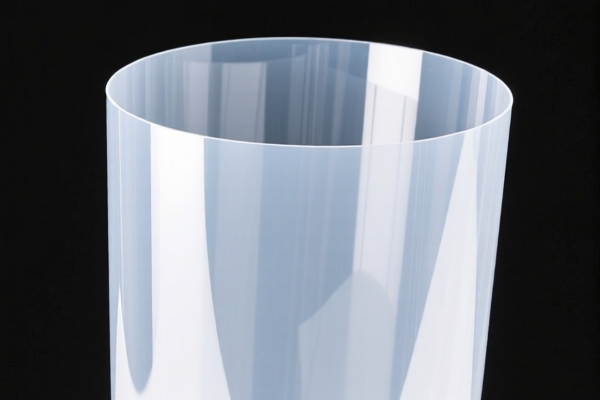
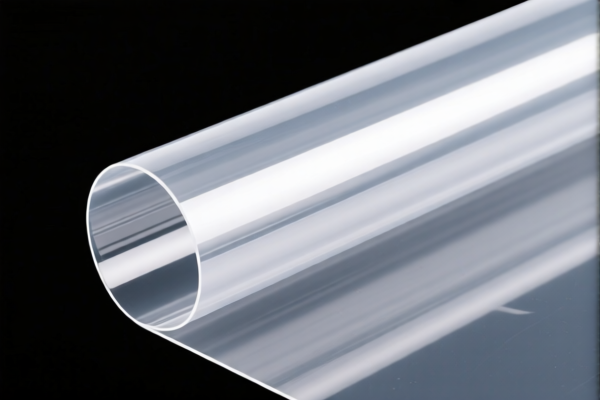
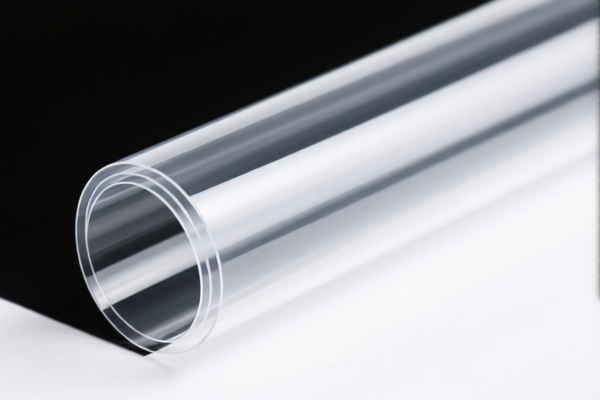
- Form: Transparent, flexible sheets or rolls (films).
- Usage: Laminated with glass; often coated or impregnated.
⚠️ Critical Distinction Point:
- If the film is identified purely as a plastic sheet/film without significant paper backing or complex coating processes that change its essential character → It falls under Chapter 39 (Plastics and Articles Thereof).
- If the film is considered a "plastic-covered paper" or has specific coating/impregnation characteristics that align with Chapter 48 classifications (though less common for pure PVB) → It may fall under Chapter 48 (Paper and Paperboard).
- Note: The provided data suggests a strong push towards "兜底" (catch-all) classifications in both chapters due to specific transparency and material inference.
📦 Part II: HS Code Classification Details (2026 Latest Tariff Authority Comparison)
| HS Code | Product Description | Application Scenario | Material/State |
|---|---|---|---|
3921.90.50.50 |
Other plates, sheets, film, foil, and strip, of plastics (n.e.s.) | General transparent plastic films; "Catch-all" for plastic films not elsewhere specified | ✅ Plastic (Inferred) |
3920.59.40.00 |
Other plates, sheets, film, non-cellular, of acrylic polymers | Acrylic-based transparent sheets/films; High clarity applications | ✅ Acrylic Plastic |
3920.59.10.00 |
Plates, sheets, film, non-cellular, of acrylic polymers | Acrylic polymer films; Specific sub-category for acrylics | ✅ Acrylic Plastic |
4811.51.60.00 |
Paper, paperboard, etc., covered with plastics | Plastic-covered paper products; Used if film is seen as a coating on paper base | ✅ Paper + Plastic Cover |
4811.59.40.40 |
Other paper, paperboard, etc., coated, impregnated, covered, surface-decorated | General processed paper/plastic composites; "Catch-all" for processed paper products | ✅ Paper + Plastic Cover/Impregnation |
🔍 Important Reminder:
- PVB is chemically a plastic polymer. However, customs authorities may sometimes classify certain flexible films under Chapter 48 if they are interpreted as "plastic-covered paper" or if the specific sub-heading requires a paper substrate that isn't explicitly stated.
- The provided analysis uses "reasonable inference" based on transparency. Since PVB is plastic, Chapters 39 are more technically accurate, but Chapter 48 codes are provided as "possible" alternatives due to their "n.e.s." (not elsewhere specified) nature.
💰 Part III: 2026 Latest Tariff Rate Breakdown (Including Surcharges & Policy Add-ons)
✅ Applicable Country: United States (US)
✅ Origin: China (CN)
✅ Effective Date: From November 10, 2025 (including subsequent imports)
🎯 1. 3921.90.50.50 —— Other Plastic Films (Catch-all)
| Item | Content |
|---|---|
| Base Tariff | 4.8% (Ad Valorem) |
| Section 301 Surcharge | +25.0% |
| 122 Clause Tariff | +10.0% |
| Total Tax Rate | 39.8% |
| Tax Calculation | CIF Value × 39.8% |
| De Minimis Exemption | ❌ Not Eligible (Deny de minimis for China-origin goods under these clauses) |
| Legal Basis Path | USITC:3921.90.50.50 → Section 301: Footnote 9903.88.01 → 122 Clause |
📌 Explanation:
- This is a high-tariff category. The base 4.8% is standard for many plastics, but the 35% in total surcharges make it expensive.
- Ensure your declaration explicitly states "Polyvinyl Butyral (PVB) Film" to avoid being misclassified as a generic, higher-duty plastic.
🎯 2. 3920.59.40.00 —— Acrylic Polymer Films
| Item | Content |
|---|---|
| Base Tariff | 0.0% |
| Section 301 Surcharge | +25.0% |
| 122 Clause Tariff | +10.0% |
| Total Tax Rate | 35.0% |
| Tax Calculation | CIF Value × 35.0% |
| De Minimis Exemption | ❌ Not Eligible |
| Legal Basis Path | USITC:3920.59.40.00 → Section 301 → 122 Clause |
📌 Note:
- While PVB is not strictly acrylic, if customs accepts the "transparent film" description as acrylic-like, this code offers a 3.8% savings compared to3921.90.50.50.
- Risk: Misclassification risk if the material is clearly PVB and not acrylic.
🎯 3. 3920.59.10.00 —— Specific Acrylic Polymer Films
| Item | Content |
|---|---|
| Base Tariff | 6.0% |
| Section 301 Surcharge | +25.0% |
| 122 Clause Tariff | +10.0% |
| Total Tax Rate | 41.0% |
| Tax Calculation | CIF Value × 41.0% |
| De Minimis Exemption | ❌ Not Eligible |
| Legal Basis Path | USITC:3920.59.10.00 → Section 301 → 122 Clause |
📌 Warning:
- This is the highest tax rate among the plastic options. Only use if specifically required by a narrow definition of acrylic films. Generally, avoid if3920.59.40.00or3921.90.50.50is applicable.
🎯 4. 4811.51.60.00 —— Plastic-Covered Paper (Catch-all)
| Item | Content |
|---|---|
| Base Tariff | 0.0% |
| Section 301 Surcharge | +25.0% |
| 122 Clause Tariff | +10.0% |
| Total Tax Rate | 35.0% |
| Tax Calculation | CIF Value × 35.0% |
| De Minimis Exemption | ❌ Not Eligible |
| Legal Basis Path | USITC:4811.51.60.00 → Section 301 → 122 Clause |
📌 Explanation:
- This classification assumes the film is treated as a plastic-coated paper product.
- Risk: PVB is a pure plastic interlayer, not typically on paper. Misclassification here could lead to customs audits or rejection if the physical product clearly lacks a paper substrate.
🎯 5. 4811.59.40.40 —— Other Coated/Impregnated Paper Products
| Item | Content |
|---|---|
| Base Tariff | 0.0% |
| Section 301 Surcharge | +25.0% |
| 122 Clause Tariff | +10.0% |
| Total Tax Rate | 35.0% |
| Tax Calculation | CIF Value × 35.0% |
| De Minimis Exemption | ❌ Not Eligible |
| Legal Basis Path | USITC:4811.59.40.40 → Section 301 → 122 Clause |
📌 Note:
- Similar to4811.51.60.00, this is a "catch-all" for processed paper/plastic composites.
- Use only if there is a paper backing or if the product is marketed as a "coated paper film." For pure PVB, this is high-risk.
🛠️ Part IV: Customs Clearance Practical Advice (Real-World Pitfall Guide)
✅ 1. Documentation Checklist (Non-Negotiable)
| Document | Required | Description |
|---|---|---|
| ✅ Product Specification Sheet | ✔️ | Must explicitly state "Polyvinyl Butyral (PVB)" as the material. Avoid vague terms like "transparent film." |
| ✅ MSDS (Material Safety Data Sheet) | ✔️ | Confirms chemical composition. Crucial for proving it's plastic, not paper. |
| ✅ Product Photos (Clear View) | ✔️ | Show transparency, flexibility, and lack of paper texture. |
| ✅ Certificate of Origin (CO) | ✔️ | To determine if any duty mitigation strategies apply (though unlikely for China origin under current 122/301 rules). |
| ✅ Commercial Invoice | ✔️ | Clearly describe as "PVB Interlayer Film for Laminated Glass". |
| ✅ Packing List | ✔️ | Indicate weight and dimensions. |
✅ 2. Declaration Strategy (Key Mnemonic)
🔥 "Material First, Don't Guess Paper, Be Specific, Avoid Penalties!"
| Situation | Correct Declaration | Wrong Action |
|---|---|---|
| Pure PVB Film (No Paper) | Chapter 39 (e.g., 3921.90.50.50) |
Misclassifying as Chapter 48 (Paper) → Audit Risk |
| PVB with Paper Backing | Chapter 48 (e.g., 4811.51.60.00) |
Declaring as pure plastic → Misclassification |
| Generic "Transparent Film" | Specify Material (PVB) | Vague description → Customs Hold |
✅ 3. Special Case Handling
| Scenario | Handling Advice |
|---|---|
| OEM PVB for Glass Manufacturers | Provide end-use declaration: "For manufacturing laminated safety glass." |
| Sample Imports | Even samples are subject to 35-41% tax. Do not assume "samples" are duty-free. |
| Multi-material Rolls | If the roll contains PVB + Adhesive + Paper backing, consult a customs broker for GRI (General Rules of Interpretation) application. Likely Chapter 39 or 48 depending on essential character. |
🌍 Part V: Global Market Comparison (2026 Latest)
| Country/Region | Recommended HS Code | Tariff Rate (China Origin) | Certification Requirements | Remarks |
|---|---|---|---|---|
| 🇺🇸 USA | 3921.90.50.50 |
39.8% (Plastic) | None specific | High tariff due to 301 + 122 Clause |
| 🇨🇳 China | 3920.40.00.00 |
~6% (Standard) | CCC (if applicable) | Lower tariff, but export-focused |
| 🇪🇺 EU | 3920.40.00.00 |
~6% | REACH Compliance | No Section 301 equivalent |
| 🇦🇺 Australia | 3920.40.00.00 |
~5% | None | No special surcharges for China |
| 🇯🇵 Japan | 3920.40.00.00 |
~6% | PSE (if electrical, not applicable) | Standard tariff |
📌 Conclusion:
- USA is the most challenging market for PVB film due to the 35%+ in surcharges.
- EU, Australia, and Japan offer significantly lower tariffs (~5-6%).
- Consider supply chain diversification if exporting large volumes to the US to mitigate tariff impact.
📌 Part VI: Common Mistakes & Pitfall Guide (Lessons from Experience)
❌ Mistake 1: Declaring PVB as "Plastic Sheet" without specifying PVB
👉 Consequence: Customs may assign a higher duty code or request additional info, delaying clearance.
❌ Mistake 2: Misclassifying as Chapter 48 (Paper) when no paper is present
👉 Consequence: Customs rejection or penalty for misdeclaration. PVB is plastic, not paper.
❌ Mistake 3: Ignoring the 122 Clause and Section 301 Surcharge
👉 Consequence: Underestimating landed cost by 35%. Budget accordingly!
❌ Mistake 4: Using "Film" without material specification
👉 Consequence: High risk of classification error. Always use "Polyvinyl Butyral Film".
✅ Correct Practice:
"Transparent Polyvinyl Butyral (PVB) Interlayer Film, Roll Form, for Laminated Safety Glass, HS 3921.90.50.50"
🎯 Part VII: Conclusion: Precision in Classification Saves Money!
🎯 Remember the Mnemonic:
🔹 "PVB is Plastic, Not Paper, HS 39 is Key, Don't Guess the Tariff!"
🔹 "35% Tax is Real, Check the Code, Avoid the Delays!"
📌 Pro Tip:
If your PVB film is originating from Vietnam, Thailand, or Malaysia, you may qualify for lower or zero tariffs under various Free Trade Agreements (FTAs).
Recommend Advance Ruling for large shipments to ensure classification certainty.
📣 Immediate Action:
📞 Contact a licensed customs broker + Provide Product Specs + Apply for HS Code Advance Ruling
🚀 Ensure your PVB film clears customs smoothly, avoids penalties, and maximizes profit margins!
✨ Professional Customs Clearance Starts with Accurate Classification!
💼 Every Percent of Tax Matters!
Customer Reviews
About HS Code Classification
The Harmonized System (HS) is an internationally standardized nomenclature developed by the World Customs Organization (WCO) to classify traded products. Over 200 countries use the HS system as the basis for customs tariffs, trade statistics, and import/export regulations.
Each HS code follows a hierarchical structure:
- Chapter (2 digits) — Broad category of goods (e.g., Chapter 84: Machinery and Mechanical Appliances)
- Heading (4 digits) — More specific grouping within the chapter
- Subheading (6 digits) — Internationally standardized breakdown, used by all WCO member countries
- National subdivisions (8-10 digits) — Country-specific extensions for further classification, such as US HTSUS 10-digit codes
Correct HS code classification is essential for smooth customs clearance, accurate duty payment, and compliance with trade regulations. Misclassification can lead to customs delays, overpayment of duties, or penalties.
When importing from CN to US, the applicable tariff rates may include:
- Most-Favored-Nation (MFN) rate — The standard duty rate applied to WTO members
- General rate — Applied to countries without trade agreements
- Trade remedy duties — Additional tariffs such as Section 301 (anti-dumping), Section 232 (national security), or countervailing duties
The information provided on this page is for reference purposes only. For official classification, please consult with your local customs authority or a licensed customs broker.