Transparent Packaging Film
CN → US| HS Code | Tariff Rate | Origin | Destination | Doc |
|---|---|---|---|---|
| 3921110000 | 40.3% | CN | US | Official Doc |
| 3921905050 | 39.8% | CN | US | Official Doc |
| 3920594000 | 35.0% | CN | US | Official Doc |
| 3920591000 | 41.0% | CN | US | Official Doc |
| 4811516000 | 35.0% | CN | US | Official Doc |
Product Images
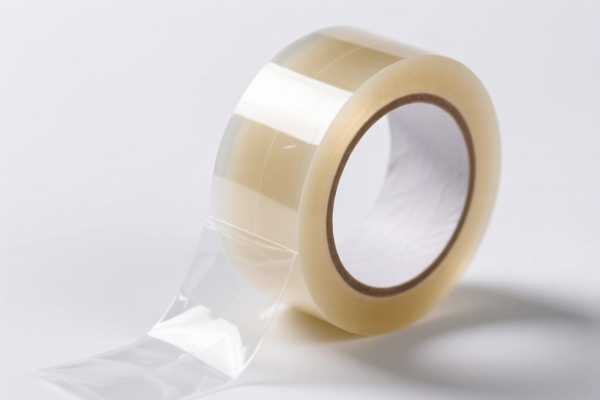
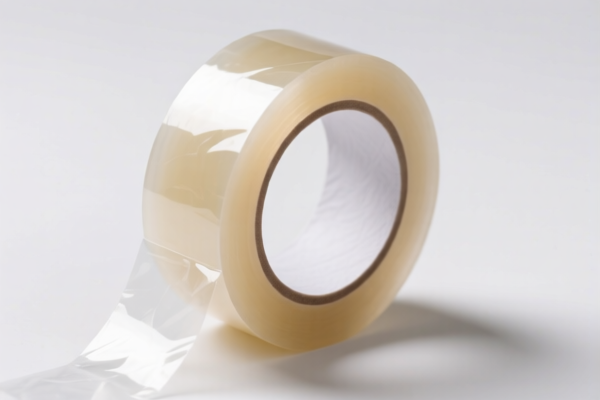
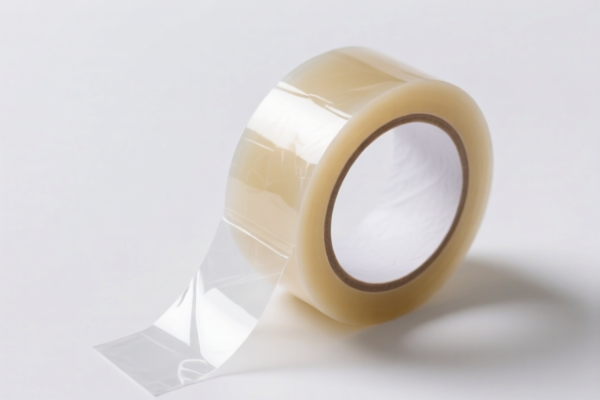
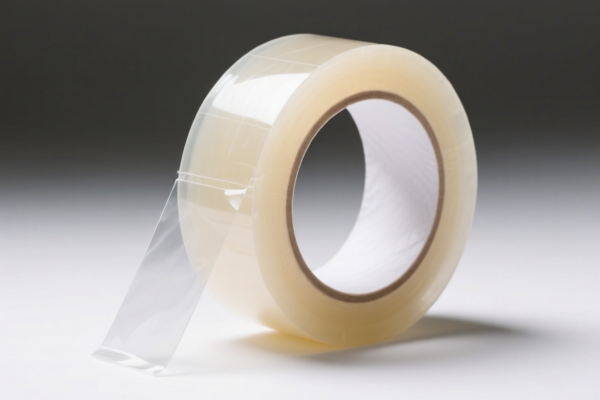
AI Analysis
📦 Transparent Packaging Film (Plastic/Paper Laminates)
🌐 HS Code Reference & Customs Clearance Guide | 2026 Latest Tariff Analysis | Professional Clearance Strategy
📌 I. Product Definition & Classification: Do You Truly Understand "Transparent Packaging Film"?
Transparent packaging film is a versatile material used in consumer goods, industrial components, and food packaging. In international trade, it is categorized based on its material composition (Plastic vs. Paper) and physical form (Sheet vs. Roll, though "Film" usually implies thin plastic or coated paper).
Key Distinction Points: * Plastic Films: If the primary material is plastic (e.g., Acrylic, PVC, PE) and it has a thickness characteristic of a film/sheet. * 归入 Chapter 39 (Plastics) * Paper-Based Films: If the substrate is paper, even if it is coated with plastic or has high transparency (e.g., glassine, coated paper). * 归入 Chapter 48 (Paper & Paperboard)
⚠️ Critical Identification Tip:
- If the material is Acrylic (PMMA) or similar clear plastic → Use HS 3920 or 3921.
- If the material is Paper with a plastic coating/lamination → Use HS 4811.
- "Transparent" alone is not enough; you must specify the base material to avoid customs misclassification.
📦 II. HS Code Classification Details (2026 Latest Tariff Reference)
Based on the provided data, here are the five most likely HS Codes for "Transparent Packaging Film," ranked by relevance and tax efficiency.
| HS Code | Product Description & Logic | Material/Form Inference | Total Tax Rate* |
|---|---|---|---|
| 3921.11.00.00 | Plastic Sheets & Film: Other plates, sheets, film, foil, and strip. | Plastic Film. Inferred as plastic due to form. No polystyrene conflict. | 40.3% |
| 3921.90.50.50 | Plastic Sheets & Film: Other plates, sheets, film, etc. | Plastic Film. "Other" catch-all category. Inferred as plastic due to transparency. | 39.8% |
| 3920.59.40.00 | Plastic Sheets (Non-cellular): Other plates, sheets, film. | Acrylic Plastic. Inferred as Acrylic (PMMA) due to transparency and thinness. | 35.0% |
| 4811.51.60.00 | Paper: Coated, impregnated, covered, surface-treated. | Paper with Plastic Cover. Lacks explicit gram weight or paper base proof, defaulted to "Plastic-covered" undercatch-all. | 35.0% |
| 3920.59.10.00 | Plastic Sheets (Non-cellular): Other plates, sheets, film. | Acrylic Polymer. Inferred as acrylic polymer. | 41.0% |
*Note: Tax rates include Base Duty, Section 301 Tariff (25%), and Section 122 Tariff (10%). See Section III for breakdown.
💰 III. 2026 Latest Tariff Rate Breakdown (Detailed Policy Add-ons)
✅ Applicable Country: United States (US)
✅ Origin: China (CN)
✅ Effective Time: 2025/2026 (Includes Section 301 & Section 122 Add-ons)
🎯 1. 3921.11.00.00 & 3921.90.50.50 (General Plastic Films)
These codes represent generic plastic films or "other" plastic sheets. They are subject to the highest combined tax burden.
| Item | Content |
|---|---|
| Base Duty Rate | 5.3% (for 3921.11) or 4.8% (for 3921.90) |
| Section 301 Tariff | +25.0% (Standard USITC Footnote for Chinese Plastics) |
| Section 122 Tariff | +10.0% (Specific additional duty on certain goods from China) |
| Total Effective Tax | 40.3% (Code 3921.11) or 39.8% (Code 3921.90) |
| Calculation | CIF Value × Total Tax Rate |
| De Minimis Exemption? | ❌ NO (Deny De Minimis) |
📌 Explanation:
- The 25% is a punitive tariff under Trade Act Section 301.
- The 10% is an additional duty under Section 122.
- Result: These are high-cost categories. If your film is generic plastic, expect nearly 40% in taxes.
🎯 2. 3920.59.40.00 (Acrylic Plastic Film) – OPTIMAL FOR CLEAR PLASTIC
If your transparent film is made of Acrylic (PMMA), this code offers the lowest tax rate among plastic options.
| Item | Content |
|---|---|
| Base Duty Rate | 0.0% (Zero duty for certain acrylic sheets) |
| Section 301 Tariff | +25.0% |
| Section 122 Tariff | +10.0% |
| Total Effective Tax | 35.0% |
| Calculation | CIF Value × 35% |
| De Minimis Exemption? | ❌ NO |
📌 Explanation:
- The Base Duty is 0%, which saves 5% compared to generic plastic codes.
- This is the most cost-effective classification if you can prove the material is Acrylic/PMMA.
- Key Requirement: Material must be verifiably Acrylic, not just "clear plastic."
🎯 3. 4811.51.60.00 (Paper-Based Packaging Film) – ALTERNATIVE IF PAPER-BASED
If the "transparent" appearance is due to a coating on paper (e.g., waxed paper, coated cardboard stock), this code applies.
| Item | Content |
|---|---|
| Base Duty Rate | 0.0% |
| Section 301 Tariff | +25.0% |
| Section 122 Tariff | +10.0% |
| Total Effective Tax | 35.0% |
| Calculation | CIF Value × 35% |
| De Minimis Exemption? | ❌ NO |
📌 Explanation:
- If your product is technically paper (even if coated), it falls here.
- However, the summary notes: "Lacks explicit gram weight and paper base."
- Risk: If customs inspects and finds it is purely plastic, you will be reclassified to Chapter 39, leading to penalties and back-taxes. Only use this if you have a paper substrate.
🎯 4. 3920.59.10.00 (Other Acrylic Polymer)
| Item | Content |
|---|---|
| Base Duty Rate | 6.0% |
| Section 301 Tariff | +25.0% |
| Section 122 Tariff | +10.0% |
| Total Effective Tax | 41.0% |
| Calculation | CIF Value × 41% |
⚠️ Warning: This code has a 6% base duty, making it the most expensive plastic classification listed. Avoid this unless specifically required by other regulations. Prefer
3920.59.40.00(0% base) if it’s acrylic.
🛠️ IV. Customs Clearance Practical Advice (Pitfall Avoidance Guide)
✅ 1. Preparation Checklist (Non-Negotiable)
| Document | Required? | Reason |
|---|---|---|
| ✅ Material Safety Data Sheet (MSDS) | ✔️ | To prove polymer type (Acrylic vs. PS vs. PE). |
| ✅ Commercial Invoice | ✔️ | Must state "Transparent Packaging Film, Material: [Acrylic/Plastic/Paper]". |
| ✅ Product Photograph | ✔️ | Show thickness, edge profile, and packaging label. |
| ✅ Declaration of Origin | ✔️ | To confirm CN origin (triggers 301/122 tariffs). |
| ✅ Gram Weight/GSM (if paper) | ✔️ | Critical for 4811 codes. If <150gsm or no paper base, do not use 4811. |
✅ 2. Declaration Strategy (Key Mantra)
🔥 "Material Defines Code, Transparency is Just a Feature!"
| Scenario | Recommended HS Code | Reasoning |
|---|---|---|
| Clear Plastic Sheet/Film (Acrylic) | 3920.59.40.00 |
Lowest tax (35%), 0% base duty. Best for PMMA. |
| Clear Plastic Sheet/Film (Generic) | 3921.90.50.50 |
Slightly better than 3921.11 (39.8% vs 40.3%). |
| Paper Coated with Plastic | 4811.51.60.00 |
Only if substrate is definitively paper. |
| Polystyrene Film | Not Listed in Top 5 | Excluded from 3921.11 per summary. Would likely fall under 3921.90 or 3920.49. |
✅ 3. Special Handling & Risks
| Risk | Mitigation Strategy |
|---|---|
| Misclassification Penalty | If you declare 4811 (Paper) but it's plastic, Customs will seize/penalize. Prove the base material. |
| Thickness Ambiguity | "Film" vs. "Sheet" can change classification. Ensure your technical data specifies thickness (mm or mils) consistently. |
| Section 122 Targeting | Ensure your product is not on the specific exclusion list for Section 122. Most generic plastics are not excluded. |
| De Minimis Loophole | Do not attempt to use $800 de minimis for these goods from China. The data explicitly denies deny_de_minimis. Ship via formal entry. |
🌍 V. Global Market Comparison (2026 Update)
| Market | Recommended HS Code | Est. Total Duty (China Origin) | Notes |
|---|---|---|---|
| 🇺🇸 USA | 3920.59.40.00 |
35.0% | Best rate for Acrylic. Include 301 + 122. |
| 🇺🇸 USA | 3921.11.00.00 |
40.3% | Higher base duty. |
| 🇨🇳 China | 3920.59.40.00 |
~3-5% | Low import duty, no Section 301. |
| 🇪🇺 EU | 3920.59.40.00 |
~4-6% | No Section 301/122 equivalent. |
📌 Conclusion:
- For the US market, the 10% Section 122 and 25% Section 301 are unavoidable for most plastics.
- Strategy: Optimize for 0% base duty by proving Acrylic (PMMA) content to land on3920.59.40.00(35% total) rather than generic plastic codes (40%+ total).
📌 VI. Common Errors & Pitfalls (Lessons Learned)
❌ Error 1: Declaring all transparent films as 4811 (Paper).
👉 Consequence: If the item is plastic, Customs imposes penalties and re-taxes at 40%+. Document the base material!
❌ Error 2: Using 3920.59.10.00 for Acrylic.
👉 Consequence: You pay 41% instead of 35%. 6% base duty waste! Check subheadings carefully.
❌ Error 3: Assuming "Thin" = "Film" for tax purposes without material proof.
👉 Consequence: Customs may classify as a "Packaging Container" or "Other Plastic Article," leading to delays.
✅ Correct Declaration Example:
"Transparent Packaging Film, Material: Polymethyl Methacrylate (PMMA/Acrylic), Thickness: 0.5mm, Form: Sheet/Film, Used for: Industrial Packaging, Origin: China"
🎯 VII. Conclusion: Professional Classification Saves Money!
🎯 Remember the Mantra:
🔹 "Acrylic gets 0% base, Generic Plastic pays 5%+, Paper is risky."
🔹 "35% Total for Acrylic, 40%+ for others. Don't pay extra!"
🔹 "No De Minimis for China. Formal Entry Required."
📌 Pro Tip:
If your film is not Acrylic but is a clear Polyester (PET) or Polypropylene (PP), check if they fall under 3920.59.40.00 or 3921.11.00.00. PET often has similar 0% base duty structures in Chapter 39, potentially saving you 5% over PS or PVC.
📣 Immediate Action:
📞 Confirm Material: Is it Acrylic, PET, or Generic Plastic?
📄 Verify Base: Is it truly Paper or Plastic?
🚀 Declare Accurately: Use3920.59.40.00for Acrylic to save 5-6% in taxes.
✨ Precise Classification is the Key to Profitability!
💼 Every Percentage Point Saved is Pure Margin!
Customer Reviews
About HS Code Classification
The Harmonized System (HS) is an internationally standardized nomenclature developed by the World Customs Organization (WCO) to classify traded products. Over 200 countries use the HS system as the basis for customs tariffs, trade statistics, and import/export regulations.
Each HS code follows a hierarchical structure:
- Chapter (2 digits) — Broad category of goods (e.g., Chapter 84: Machinery and Mechanical Appliances)
- Heading (4 digits) — More specific grouping within the chapter
- Subheading (6 digits) — Internationally standardized breakdown, used by all WCO member countries
- National subdivisions (8-10 digits) — Country-specific extensions for further classification, such as US HTSUS 10-digit codes
Correct HS code classification is essential for smooth customs clearance, accurate duty payment, and compliance with trade regulations. Misclassification can lead to customs delays, overpayment of duties, or penalties.
When importing from CN to US, the applicable tariff rates may include:
- Most-Favored-Nation (MFN) rate — The standard duty rate applied to WTO members
- General rate — Applied to countries without trade agreements
- Trade remedy duties — Additional tariffs such as Section 301 (anti-dumping), Section 232 (national security), or countervailing duties
The information provided on this page is for reference purposes only. For official classification, please consult with your local customs authority or a licensed customs broker.