Transparent Packaging Tape
CN → US| HS Code | Tariff Rate | Origin | Destination | Doc |
|---|---|---|---|---|
| 4811412100 | 35.0% | CN | US | Official Doc |
| 3919905040 | 40.8% | CN | US | Official Doc |
| 4811411000 | 35.0% | CN | US | Official Doc |
| 3919102040 | 40.8% | CN | US | Official Doc |
| 3919102040 | 40.8% | CN | US | Official Doc |
Product Images

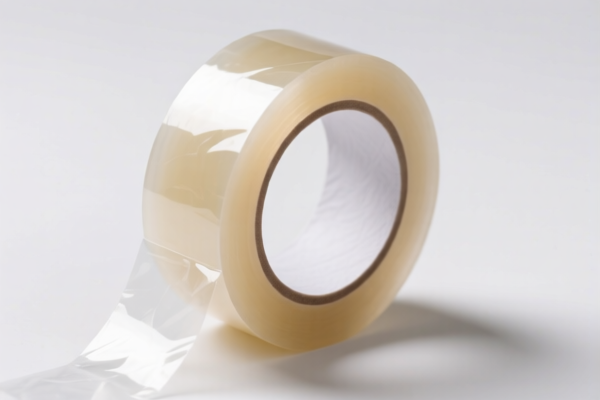


AI Analysis
🎞️ Transparent Packaging Tape (Adhesive Tapes)
🌐 HS Code Reference & Customs Clearance Guide | 2026 Latest Tariff Analysis | Professional Clearance Strategy 📌 1. Product Definition & Classification: What Exactly is "Transparent Tape"?
Transparent Packaging Tape is a versatile adhesive product used for sealing, bundling, and securing packages. In international trade, it is primarily classified based on its base material: * Paper-Based Tapes (Bopp/Cellulose): Often classified under Chapter 48. * Plastic/Polymer-Based Tapes (BOPP/PE/PVC): Often classified under Chapter 39. * Other Plastic Articles: If the classification doesn't fit standard adhesive tape definitions, it may fall under miscellaneous plastic articles.
⚠️ Key Distinction Point: - If the base is paper (even if coated with plastic/adhesive), it generally falls under 4811 or 4819. - If the base is plastic (BOPP, PVC, PE), it generally falls under 3919 or 3926. - The "Self-Adhesive" nature is critical for classification under Chapter 39 or 48.
📦 2. HS Code Classification Details (Based on Provided Data)
| HS Code | Product Description | Base Material | Key Characteristics |
|---|---|---|---|
4811.41.21.00 |
Transparent/Sealing Tape | Paper/Plastic Film Composite | Self-adhesive, rolled, used for sealing/packing. Note: Text specifies "Adhesive paper/cardboard" but HS 4811 often covers paper-based adhesive products. |
3919.90.50.40 |
Transparent/Sealing Tape | Plastic/Polymer | Self-adhesive, rolled, plastic base (e.g., BOPP). Matches "Plastic self-adhesive strip". |
4811.41.10.00 |
Transparent/Sealing Tape | Paper-Based | Self-adhesive, rolled. Text specifies "Self-adhesive paper form". |
3919.10.20.40 |
Transparent/Sealing Tape | Plastic/Polymer | Self-adhesive, rolled, plastic base. Text specifies "Plastic material". |
3926.90.99.89 |
Transparent Tape (Rolled) | Plastic/Polymers | Other plastic articles, not elsewhere specified. Used if it doesn't fit the specific "self-adhesive tape" definition of 3919. |
🔍 Important Note: - Ch 3919 is the primary classification for self-adhesive tapes of plastics (like standard clear BOPP packing tape). - Ch 4811 typically covers paper-based adhesive tapes or coated paper. - Ch 3926 is a "catch-all" for other plastic articles, used when the specific self-adhesive tape heading (3919) is not applicable due to specific product form or material composition nuances.
💰 3. 2026 Latest Tariff Rate Breakdown (Including Surtaxes)
✅ Applicable Country: United States (US) ✅ Origin: China (CN) ✅ Effective Date: Current Trade Policies (Section 301 & IEEPA)
🎯 1. Paper-Based / Composite Tape (HS Codes: 4811.41.21.00, 4811.41.10.00)
| Item | Detail |
|---|---|
| Base Duty Rate | 0.0% |
| Section 301 Surtax | +25.0% |
| IEEPA Surtax | +10.0% (122 Clause) |
| Total Duty Rate | 35.0% |
| Tax Calculation | CIF Value × 35% |
| De Minimis Eligibility | ❌ No (Usually subject to scrutiny if high value) |
| Legal Basis | Section 301 + IEEPA:122 |
📌 Explanation: - These tapes are classified as paper-based or composite. - While the base duty is low (0%), the 25% Section 301 tariff plus 10% IEEPA tariff results in a 35% total burden.
🎯 2. Plastic-Based Self-Adhesive Tape (HS Codes: 3919.90.50.40, 3919.10.20.40)
| Item | Detail |
|---|---|
| Base Duty Rate | 5.8% |
| Section 301 Surtax | +25.0% |
| IEEPA Surtax | +10.0% (122 Clause) |
| Total Duty Rate | 40.8% |
| Tax Calculation | CIF Value × 40.8% |
| De Minimis Eligibility | ❌ No |
| Legal Basis | Section 301 + IEEPA:122 |
📌 Explanation: - Standard plastic packing tape (BOPP) falls here. - The base duty is 5.8%, which is higher than paper-based tapes. - Adding 25% + 10% surtaxes leads to a 40.8% total duty rate.
🎯 3. Other Plastic Articles / Non-Specific Tape (HS Code: 3926.90.99.89)
| Item | Detail |
|---|---|
| Base Duty Rate | 5.3% |
| Section 301 Surtax | +7.5% (Note: Lower surtax rate in data) |
| IEEPA Surtax | +10.0% (122 Clause) |
| Total Duty Rate | 22.8% |
| Tax Calculation | CIF Value × 22.8% |
| De Minimis Eligibility | ❓ Check Specifics (Often exempt if under $800, but high-risk) |
| Legal Basis | Section 301 (7.5%) + IEEPA:122 |
📌 Explanation: - This is the LOWEST tax rate option (22.8%) among the listed codes. - However, classification risk is HIGH. Customs may reject this if the product is clearly a "self-adhesive tape" (which should be 3919). - Warning: Misclassification can lead to penalties, back taxes, and shipment delays. Only use if the product does not fit standard "tape" definitions (e.g., decorative plastic strips, non-adhesive films, etc.).
🛠️ 4. Customs Clearance Practical Advice (Pitfall Avoidance Guide)
✅ 1. Documentation Checklist (Must-Have)
| Document | Required | Notes |
|---|---|---|
| Product Specification Sheet | ✔️ | Must specify Base Material (Paper vs. BOPP/Plastic), Adhesive Type, Width, Length. |
| Commercial Invoice | ✔️ | Clearly state "Adhesive Tape" and HS Code. Avoid vague terms like "Plastic Goods". |
| Packing List | ✔️ | Detail roll dimensions and weight. |
| Material Safety Data Sheet (MSDS) | ✔️ | If adhesive contains volatile chemicals. |
| Declaration of Self-Adhesive Nature | ✔️ | Crucial for Ch 3919 vs 3926 distinction. |
✅ 2. Classification Strategy & Risk Assessment
| Scenario | Recommended HS Code | Risk Level | Notes |
|---|---|---|---|
| Standard Clear BOPP Tape | 3919.10.20.40 or 3919.90.50.40 |
🟢 Low | Most accurate for common packing tape. Duty: 40.8%. |
| Paper-Based Packing Tape | 4811.41.10.00 |
🟢 Low | If base is kraft paper or similar. Duty: 35.0%. |
| Unclear/Non-Standard Plastic Item | 3926.90.99.89 |
🔴 High | Use with caution. Customs may reclassify to 3919, adding 25% + 10% back taxes + penalties. Duty: 22.8%. |
| Decorative Plastic Tape (Non-Adhesive) | 3926.90.99.89 |
🟡 Medium | If truly non-adhesive or not "tape" in function, this code may be valid. |
🔥 Golden Rule: "Material Dictates Code: Paper=4811, Plastic=3919. Don't Force 3926!"
✅ 3. Cost-Saving & Compliance Tips
- Verify Base Material: If you use BOPP (standard clear tape), you cannot use 4811. If you use Paper, you cannot use 3919.
- Pre-Ruling Request: For large volumes, consider requesting an Advance Ruling from US Customs if classification is ambiguous (especially for 3926).
- Supply Chain Diversification:
- The total tax burden on Chinese-made adhesive tape is 22.8% to 40.8%.
- Consider sourcing from Vietnam, Thailand, or Mexico to avoid Section 301/IEEPA surtaxes (check FTAs like USMCA for Mexico).
- De Minimis Caution: While 3926 has a lower rate, the risk of reclassification outweighs the 18% savings for most standard tape imports.
🌍 5. Global Market Comparison (2026)
| Country/Region | Recommended HS Code | Approx. Duty (China Origin) | Notes |
|---|---|---|---|
| 🇺🇸 USA | 3919.10.20.40 |
40.8% | High tariffs due to Section 301 & IEEPA. |
| 🇪🇺 EU | 3919.10.00 |
6.5% | No Section 301 equivalent. Standard MFN rate. |
| 🇨🇳 China | 3919.10.00 |
5.0% | Low import duty, but focus is on exports. |
| 🇬🇧 UK | 3919.10.00 |
6.5% | Post-Brexit MFN rates apply. |
| 🇯🇵 Japan | 3919.10.00 |
0% | JPEPA Free Trade Agreement may apply. |
📌 Conclusion: - USA is the most expensive market for Chinese adhesive tapes. - EU/UK/Japan offer significantly better duty rates for similar products. - If shipping to the US, ensure your HS Code is precise to avoid unexpected reclassification penalties.
📌 6. Common Mistakes & Pitfalls (Lessons Learned)
❌ Mistake 1: Classifying BOPP Tape as 4811 (Paper)
👉 Consequence: Customs rejection, reclassification to 3919, retroactive duties + penalties.
❌ Mistake 2: Classifying Standard Adhesive Tape as 3926 to save taxes
👉 Consequence: High risk of audit. If challenged, you owe the difference (40.8% - 22.8% = 18%) + interest + fines.
❌ Mistake 3: Ignoring IEEPA 122 Clause 👉 Consequence: Failing to include the 10% IEEPA tax in your cost calculation leads to underpayment and shipment holds.
✅ Correct Approach:
"Clear BOPP Packing Tape, Self-Adhesive, 48mm x 100m, Base Material: Polypropylene (Plastic)" HS Code:
3919.10.20.40Total Duty: 40.8%
🎯 7. Conclusion: Professional Classification Saves Money
🎯 Key Takeaway:
🔹 Paper Tape = 4811 (35% Total Tax) 🔹 Plastic Tape = 3919 (40.8% Total Tax) 🔹 Non-Specific Plastic = 3926 (22.8% Total Tax, High Risk)
📌 Recommendation: For standard transparent packaging tape, accuracy is more important than minimization. The 5.8% difference between 35% and 40.8% is minor compared to the risk of penalty for misclassification.
📣 Immediate Action:
- Confirm the base material of your tape (Paper vs. Plastic).
- Select 4811 or 3919 accordingly.
- Calculate landed cost including 35-40.8% duty.
- If volume is high, explore non-China sourcing to mitigate tariff impact.
✨ Precision in Classification, Clarity in Customs! 💼 Every HS Code Choice Impacts Your Bottom Line!
Customer Reviews
About HS Code Classification
The Harmonized System (HS) is an internationally standardized nomenclature developed by the World Customs Organization (WCO) to classify traded products. Over 200 countries use the HS system as the basis for customs tariffs, trade statistics, and import/export regulations.
Each HS code follows a hierarchical structure:
- Chapter (2 digits) — Broad category of goods (e.g., Chapter 84: Machinery and Mechanical Appliances)
- Heading (4 digits) — More specific grouping within the chapter
- Subheading (6 digits) — Internationally standardized breakdown, used by all WCO member countries
- National subdivisions (8-10 digits) — Country-specific extensions for further classification, such as US HTSUS 10-digit codes
Correct HS code classification is essential for smooth customs clearance, accurate duty payment, and compliance with trade regulations. Misclassification can lead to customs delays, overpayment of duties, or penalties.
When importing from CN to US, the applicable tariff rates may include:
- Most-Favored-Nation (MFN) rate — The standard duty rate applied to WTO members
- General rate — Applied to countries without trade agreements
- Trade remedy duties — Additional tariffs such as Section 301 (anti-dumping), Section 232 (national security), or countervailing duties
The information provided on this page is for reference purposes only. For official classification, please consult with your local customs authority or a licensed customs broker.