Transparent Plastic Bag
CN → US| HS Code | Tariff Rate | Origin | Destination | Doc |
|---|---|---|---|---|
| 3923210030 | 38.0% | CN | US | Official Doc |
| 4202929700 | 52.6% | CN | US | Official Doc |
| 4202221500 | 51.0% | CN | US | Official Doc |
| 3926909950 | 22.8% | CN | US | Official Doc |
| 9004900010 | 20.0% | CN | US | Official Doc |
Product Images
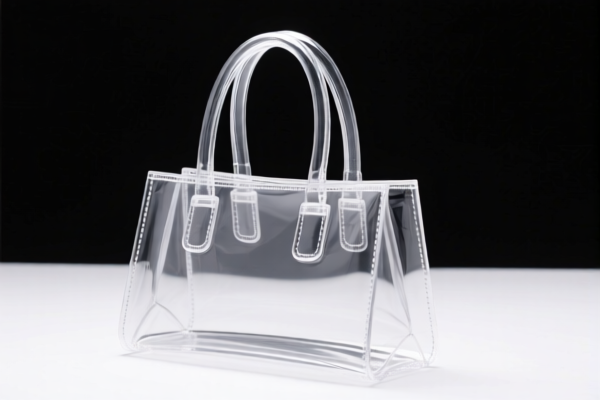
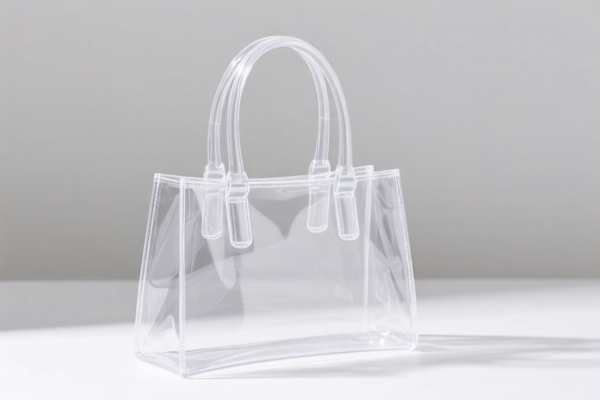
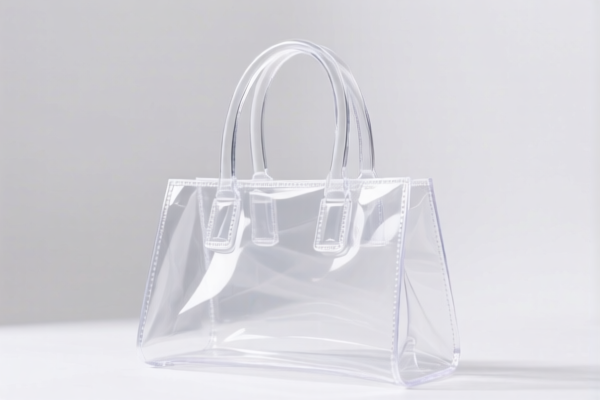
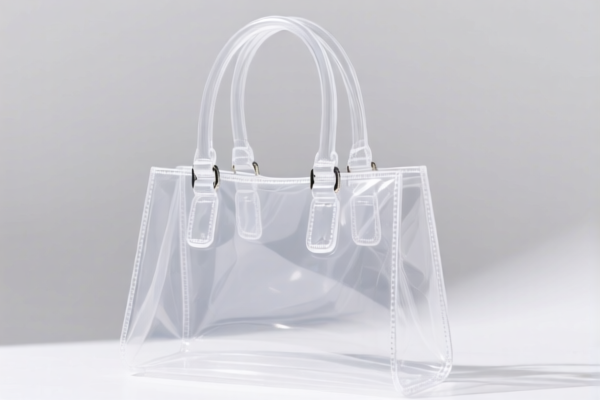
AI Analysis
🛍️ Transparent Plastic Bag (Transparent Plastic Bags)
🌐 HS Code Reference & Customs Clearance Guide | 2026 Latest Tariff Analysis | Strategic Clearance Strategy
📌 I. Product Definition & Classification: Do You Really Understand "Plastic Bags"?
A "Transparent Plastic Bag" is a ubiquitous packaging item used for shopping, storage, or retail display. In international trade, the classification depends heavily on its specific material composition and intended use. It is primarily categorized under Chapter 39 (Plastics and Articles Thereof) or Chapter 42 (Articles of Leather; Saddle Harness and Harness for Animals).
Key Distinctions: * Pure Plastic Bags (Chapter 39): Made primarily of polymers like Polyethylene (PE) or Polypropylene (PP), used for general wrapping, mailing, or industrial packaging. * Shopping/Retail Bags (Chapter 42): Often classified as "articles of apparel accessories" or specific containers if they have handles, rigid structures, or are designed for specific retail purposes (like shopping bags or bottle carriers).
⚠️ Critical Classification Point:
- If the bag is a simple, unstructured film bag (e.g., garbage bags, standard ziplock, mailing bags) → Generally Chapter 39.
- If the bag is structured, has handles, or is explicitly for shopping/retail display → Often Chapter 42.
📦 II. HS Code Classification Details (2026 Latest Tariff Authority Comparison)
Based on the provided data, here are the four most relevant HS Codes for "Transparent Plastic Bags," ranked by potential tax burden and classification logic.
| HS Code | Product Description & Logic | Tax Category | Total Tax Rate (US/CN Origin) |
|---|---|---|---|
| 3923.21.00.30 | General Plastic Bags: Matches material (plastic/vinyl polymer) and form (bags/sacks). Classified under the "Other" catch-all principle for plastic articles. | Lowest Tax | 38.0% |
| 4202.92.97.00 | Shopping/Retail Bags: Material is plastic; form is a bag. Fits the description of "made of plastic sheets" and "shopping bags, bottle bags, and similar containers." | High Tax | 52.6% |
| 4202.22.15.00 | Structured Plastic Bags: Name explicitly indicates plastic; fits "external surface made of plastic sheets." Form is a bag/satchel (handbags/containers). | High Tax | 51.0% |
| 9004.90.00.10 | Face Shields/Goggles (Reference Only): Note: This code is for face protection, not bags. Included in data as a reference for plastic articles but NOT applicable to standard bags. | Low Tax | 20.0% |
🔍 Important Note:
- HS Codes 3923.21.00.30 is the most likely candidate for general-purpose transparent plastic bags (e.g., polythene bags) due to its lower total tax rate (38%).
- HS Codes 4202.92.97.00 and 4202.22.15.00 apply to shopping bags or bags with specific retail structures, attracting significantly higher tariffs (51-52.6%).
- HS Code 9004.90.00.10 is incorrect for standard bags. It is for face shields/goggles. Misusing this code for a bag is a serious classification error.
💰 III. 2026 Latest Tariff Rate Breakdown (Including Surcharges & Policy Add-ons)
✅ Applicable Country: United States (US)
✅ Origin: China (CN)
✅ Effective Time: November 10, 2025 onwards
🎯 1. 3923.21.00.30 – Plastic Bags (General/Other)
The most cost-effective classification for standard transparent plastic bags.
| Item | Detail |
|---|---|
| Base Duty | 3.0% (Ad Valorem) |
| Section 301 Surcharge | +25.0% (USITC Footnote 9903.88.01) |
| IEEPA Surcharge | +10.0% (China/HK specific, effective Nov 10, 2025) |
| Total Tax Rate | 38.0% |
| Tax Calculation | CIF Value × 38% |
| De Minimis Exemption | ❌ Not Eligible |
| Legal Path | IEEPA:9903.01.25 → IEEPA:9903.01.24 → USITC:3923.21.00.30 |
📌 Explanation:
- This is the lowest tax bracket among the bag-related codes.
- The 25% Section 301 duty applies to almost all Chinese plastic articles.
- The 10% IEEPA duty is a new layer added in 2025.
- Recommendation: Use this code for simple, unstructured bags (e.g., ziplock, poly mailers, garbage bags).
🎯 2. 4202.92.97.00 – Shopping Bags & Similar Containers
| Item | Detail |
|---|---|
| Base Duty | 17.6% (Ad Valorem) |
| Section 301 Surcharge | +25.0% |
| IEEPA Surcharge | +10.0% |
| Total Tax Rate | 52.6% |
| Tax Calculation | CIF Value × 52.6% |
| De Minimis Exemption | ❌ Not Eligible |
| Legal Path | IEEPA:9903.01.25 → IEEPA:9903.01.24 → USITC:4202.92.97.00 |
📌 Explanation:
- This code applies to shopping bags, bottle carriers, or bags with handles.
- The base duty (17.6%) is much higher than Chapter 39 (3.0%).
- High Risk: Misclassifying a shopping bag as a general plastic bag (3923) to save taxes can lead to penalties.
🎯 3. 4202.22.15.00 – Satchels/Handbags with Plastic Exterior
| Item | Detail |
|---|---|
| Base Duty | 16.0% (Ad Valorem) |
| Section 301 Surcharge | +25.0% |
| IEEPA Surcharge | +10.0% |
| Total Tax Rate | 51.0% |
| Tax Calculation | CIF Value × 51.0% |
| De Minimis Exemption | ❌ Not Eligible |
| Legal Path | IEEPA:9903.01.25 → IEEPA:9903.01.24 → USITC:4202.22.15.00 |
📌 Explanation:
- Applies to bags with a structured shape (like handbags) but with a plastic exterior.
- Slightly lower than 4202.92.97.00 due to a lower base duty, but still significantly higher than Chapter 39.
⚠️ 4. 9004.90.00.10 – Face Shields/Goggles (NOT FOR BAGS)
Included in data as a reference for plastic articles, but DO NOT USE for plastic bags.
| Item | Detail |
|---|---|
| Base Duty | 2.5% |
| Section 301 Surcharge | +7.5% |
| IEEPA Surcharge | +10.0% |
| Total Tax Rate | 20.0% |
| Tax Calculation | CIF Value × 20.0% |
📌 Warning:
- This code is for eye protection.
- Using this code for a plastic bag is fraud/misclassification.
- Only use if you are actually shipping face shields (e.g., for medical or safety use).
🛠️ IV. Customs Clearance Practical Advice (实战避坑指南)
✅ 1. Documentation Checklist (Non-negotiable)
| Document | Required | Purpose |
|---|---|---|
| ✅ Product Specification Sheet | ✔️ | Must specify material (PE/PP/PS), thickness, and usage (general vs. shopping). |
| ✅ Product Photos | ✔️ | Clear images showing handles, seams, and transparency. |
| ✅ Commercial Invoice | ✔️ | Must accurately describe the item (e.g., "Transparent Polyethylene Bags" vs. "Shopping Bags"). |
| ✅ Packing List | ✔️ | Weight and quantity details. |
| ✅ Material Composition Statement | ✔️ | Confirm % of plastic polymer to justify Chapter 39 vs. Chapter 42. |
✅ 2. Declaration Strategy (Key Tips)
🔥 "Shape Dictates Code, Material Confirms It!"
| Scenario | Correct HS Code | Wrong Code | Consequence of Wrong Code |
|---|---|---|---|
| Simple ziplock/garbage bag | 3923.21.00.30 (38%) |
4202.92.97.00 (52.6%) |
Overpaying 14.6% tax unnecessarily |
| Retail shopping bag with handles | 4202.92.97.00 (52.6%) |
3923.21.00.30 (38%) |
Underpayment → Penalty + Back Taxes |
| Face Shield (Medical) | 9004.90.00.10 (20%) |
3923.21.00.30 (38%) |
Misclassification → Goods Rejected/Seized |
| Standard Plastic Bag | 9004.90.00.10 (20%) |
Any Bag Code | Severe Fraud Penalty + Criminal Liability |
✅ 3. Special Situations
| Situation | Handling Advice |
|---|---|
| Transparent Bag with Printed Logo | If printing is the primary feature, still likely Chapter 39. Ensure description highlights "Plastic Bag." |
| Bag with Handles | Check if handles are integral (sewn/melted) or attached. If it resembles a "shopping bag," lean towards Chapter 42. |
| Industrial vs. Retail | Industrial stretch wrap = Chapter 39. Retail carry-out bag = Chapter 42. |
| Sample Shipments | Even samples are subject to duty if declared as commercial. Use "Non-Commercial Samples" label but declare accurately. |
🌍 V. Global Market Comparison (2026)
| Country/Region | Recommended HS Code | Tax Rate | Certification | Note |
|---|---|---|---|---|
| 🇺🇸 USA | 3923.21.00.30 |
38% | No special cert | High tariff due to 301 + IEEPA |
| 🇪🇺 EU | 3923.21.00 |
~6.5% | REACH | No Section 301 equivalent |
| 🇨🇳 China | 3923.21.00 |
5% | None | Low base duty |
| 🇬🇧 UK | 3923.21.00 |
5% | UKCA | Post-Brexit rules apply |
📌 Conclusion:
- USA is the most expensive market for plastic bags due to the 35% total surcharge (25% + 10%).
- Cost-Saving Tip: If the bag has no handles and is for general use, strictly classify under 3923.21.00.30 to save ~14% compared to shopping bag codes.
📌 VI. Common Mistakes & Pitfalls (Blood-Teaching Lessons)
❌ Mistake 1: Calling all plastic bags "Shopping Bags"
👉 Result: 52.6% tax instead of 38%. Lost Profit!
❌ Mistake 2: Using 9004.90.00.10 for plastic bags to get 20% tax
👉 Result: Customs Seizure, fines, and potential legal action. DO NOT DO THIS.
❌ Mistake 3: Ignoring the "Handle" feature
👉 Result: If a bag has handles, it may be classified as Chapter 42. Check design carefully.
❌ Mistake 4: Incorrect Material Description
👉 Result: If you say "Polymer" but it's "Fabric-reinforced plastic," it might be misclassified. Be precise.
✅ Correct Practice:
"Transparent Polyethylene Bags, 12x16 inches, No Handles, For General Packaging, Model XYZ" → Use
3923.21.00.30.
🎯 VII. Conclusion: Accurate Classification Saves Money!
🎯 Remember the Mantra:
🔹 "No Handles? Use 3923 (38%). Has Handles? Use 4202 (51-52%). Face Shield? Use 9004 (20%). Don't Mix!"
🔹 "HS Code Determines Cost, 14% Difference is Huge!"
📌 Pro Tip:
If you are shipping small quantities for testing, consider using DDP (Delivered Duty Paid) terms with a customs broker who specializes in Plastic Articles.
Apply for Advance Rulings if you have large volumes or ambiguous designs (e.g., bags with unique handles).
📣 Immediate Action:
📞 Consult a Customs Broker + Provide Photos + Confirm Handle Status
🚀 Clear Customs Smoothly, Maximize Profit!
✨ Professional Clearance Starts with Accurate Classification!
💼 Every Penny Saved is Pure Profit!
Customer Reviews
About HS Code Classification
The Harmonized System (HS) is an internationally standardized nomenclature developed by the World Customs Organization (WCO) to classify traded products. Over 200 countries use the HS system as the basis for customs tariffs, trade statistics, and import/export regulations.
Each HS code follows a hierarchical structure:
- Chapter (2 digits) — Broad category of goods (e.g., Chapter 84: Machinery and Mechanical Appliances)
- Heading (4 digits) — More specific grouping within the chapter
- Subheading (6 digits) — Internationally standardized breakdown, used by all WCO member countries
- National subdivisions (8-10 digits) — Country-specific extensions for further classification, such as US HTSUS 10-digit codes
Correct HS code classification is essential for smooth customs clearance, accurate duty payment, and compliance with trade regulations. Misclassification can lead to customs delays, overpayment of duties, or penalties.
When importing from CN to US, the applicable tariff rates may include:
- Most-Favored-Nation (MFN) rate — The standard duty rate applied to WTO members
- General rate — Applied to countries without trade agreements
- Trade remedy duties — Additional tariffs such as Section 301 (anti-dumping), Section 232 (national security), or countervailing duties
The information provided on this page is for reference purposes only. For official classification, please consult with your local customs authority or a licensed customs broker.