Transparent Plastic PVC Carpet
CN → US| HS Code | Tariff Rate | Origin | Destination | Doc |
|---|---|---|---|---|
| 5703900000 | 38.8% | CN | US | Official Doc |
| 3918101040 | 40.3% | CN | US | Official Doc |
| 5703310030 | 41.0% | CN | US | Official Doc |
Product Images
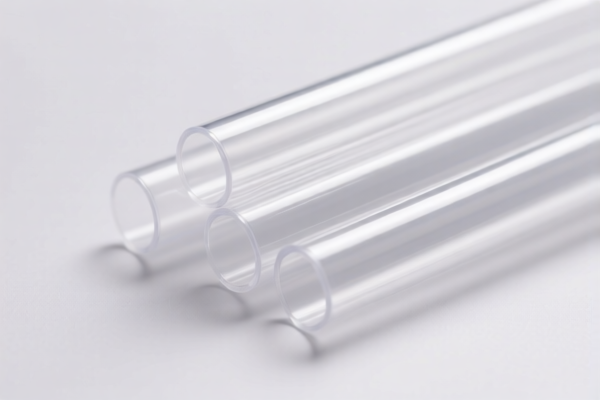
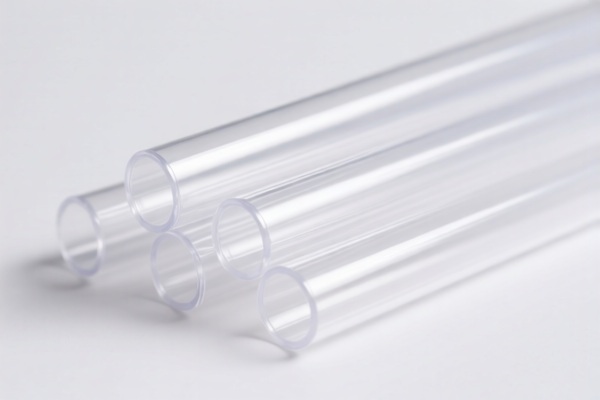
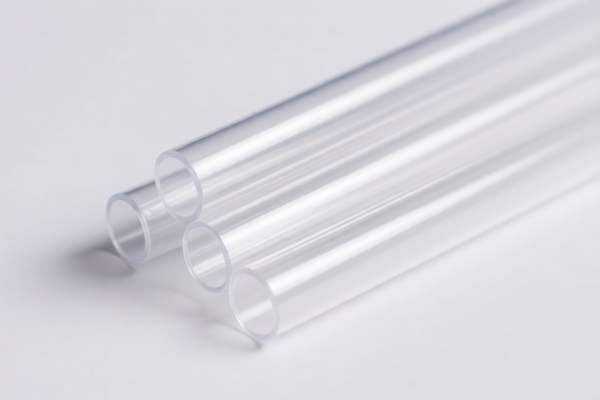
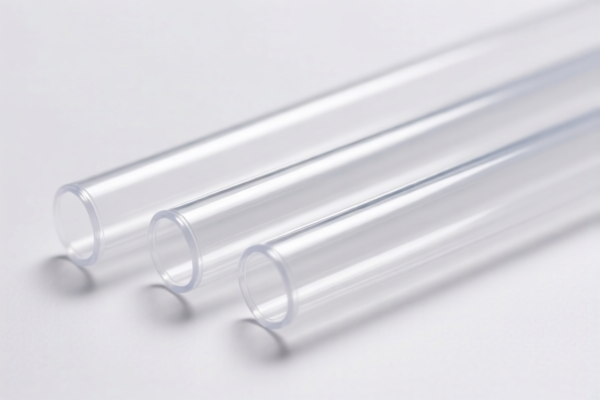
AI Analysis
🎨 Transparent Plastic PVC Carpet (Clear Vinyl Flooring)
🌐 HS Code Reference & Customs Clearance Guide | 2026 Latest Tariff Analysis | Professional Compliance Strategy
📌 I. Product Definition & Classification: Do You Really Understand "PVC Carpet"?
"Transparent Plastic PVC Carpet" is a ambiguous term in international trade. It generally refers to vinyl floor coverings used for protection, decoration, or industrial flooring. The core conflict lies in whether it is classified as a "Textile Product" (if the primary support is fabric) or a "Plastic Product" (if the primary material is PVC resin).
Key Distinction: * PVC Flooring/Vinyl Tiles: Made primarily of Polyvinyl Chloride (PVC) resin, possibly with plasticizers and fillers. It may have a fabric backing, but the PVC layer is dominant. → Chapter 39 * Textile Carpets with PVC Coating/Backing: Made primarily of textile fibers (synthetic or artificial), with PVC used for backing or coating. → Chapter 57
⚠️ Critical Judgment Point:
- If the product is flexible, transparent/translucent, and primarily composed of PVC plastic, it falls under Chapter 39 (Plastics and Articles Thereof).
- If the product is a woven tufted carpet where the PVC is merely a backing or coating, it falls under Chapter 57 (Carpeting and Textile Floor Coverings).
📦 II. HS Code Classification Details (2026 Latest Tariff Authoritative Comparison)
Based on the provided data, there are 4 possible HS Codes depending on the specific structure and material composition. Here is the breakdown:
| HS Code | Product Description | Key Characteristics | Classification Logic |
|---|---|---|---|
3918.10.10.20 |
PVC Flooring (Vinyl Base) Material: Vinyl Polymers |
Transparent/translucent PVC sheet/flooring; primary material is plastic. | ✅ Primary Plastic Chapter 39: Plastics |
3918.10.10.40 |
Vinyl Tiles/Paving Materials Consistent Material & Use |
PVC-based interlocking tiles or sheets; designed for floor covering. | ✅ Primary Plastic Chapter 39: Plastics |
5703.90.00.00 |
Other Textile Floor Coverings Other Textile Materials |
Carpet-like structure, but made of non-cotton/non-wool textile materials, possibly with PVC coating. | ✅ Primary Textile Chapter 57: Carpets |
5703.31.00.30 |
Tufted Carpets (Artificial Fibers) Other Artificial Textile Materials |
Tufted structure (needle-punch), made of synthetic/artificial fibers, PVC backing. | ✅ Primary Textile Chapter 57: Tufted Carpets |
🔍 Key Insight:
- Transparent PVC Carpets are most commonly classified under3918.10.10.20or3918.10.10.40because the defining feature is the PVC material, not the textile structure.
- If the "carpet" is actually a textile rug with a clear PVC protector, it might fall under5703.90.00.00.
- Misclassification Risk: Declaring a purely plastic PVC sheet as a "textile carpet" to reduce duty is risky and may lead to penalties.
💰 III. 2026 Latest Tariff Rate Breakdown (Including Surcharges & Policy Add-ons)
✅ Applicable Country: United States (US)
✅ Country of Origin: China (CN)
✅ Effective Time: 2025+ (Subject to current trade policies)
🎯 1. 3918.10.10.20 & 3918.10.10.40 —— PVC Flooring/Vinyl Tiles (Plastic Category)
| Item | Detail |
|---|---|
| Base Duty Rate | 5.3% (Ad Valorem) |
| Section 301 Surcharge | +25.0% (USITC Footnote) |
| Section 122 Tariff | +10.0% (Specific US Trade Law Provision) |
| Total Tax Rate | 40.3% |
| Tax Calculation | CIF Value × 40.3% |
| De Minimis Exemption? | ❌ No (High-duty goods are excluded from de minimis) |
| Legal Basis Path | USITC:3918.10.10.xx → 301:25% → 122:10% |
📌 Explanation:
- 5.3% is the standard MFN (Most Favored Nation) duty for plastic floor coverings.
- 25% is the Section 301 tariff, widely applied to Chinese plastic products.
- 10% is the Section 122 tariff, a national security/trade remedy surcharge.
- Total: 40.3% is a significant cost factor.
🎯 2. 5703.90.00.00 —— Other Textile Floor Coverings (Textile Category)
| Item | Detail |
|---|---|
| Base Duty Rate | 3.8% (Ad Valorem) |
| Section 301 Surcharge | +25.0% (USITC Footnote) |
| Section 122 Tariff | +10.0% (Specific US Trade Law Provision) |
| Total Tax Rate | 38.8% |
| Tax Calculation | CIF Value × 38.8% |
| De Minimis Exemption? | ❌ No |
| Legal Basis Path | USITC:5703.90.00.00 → 301:25% → 122:10% |
📌 Explanation:
- Slightly lower base rate (3.8% vs 5.3%), but still subject to the same heavy surcharges.
- Savings: Only 1.5% difference compared to PVC classification. Not worth risking misclassification.
🎯 3. 5703.31.00.30 —— Tufted Carpets (Artificial Fibers)
| Item | Detail |
|---|---|
| Base Duty Rate | 6.0% (Ad Valorem) |
| Section 301 Surcharge | +25.0% (USITC Footnote) |
| Section 122 Tariff | +10.0% (Specific US Trade Law Provision) |
| Total Tax Rate | 41.0% |
| Tax Calculation | CIF Value × 41.0% |
| De Minimis Exemption? | ❌ No |
| Legal Basis Path | USITC:5703.31.00.30 → 301:25% → 122:10% |
📌 Explanation:
- Highest total rate (41.0%) due to the higher base duty (6.0%).
- Only apply if the product is clearly tufted (needle-punched) with artificial fibers.
🛠️ IV. Customs Clearance Practical Advice (Pitfall Avoidance Guide)
✅ 1. Documentation Checklist (Mandatory)
| Document | Required | Notes |
|---|---|---|
| ✅ Product Specification Sheet | ✔️ | Must clearly state: Material composition (e.g., "95% PVC, 5% Plasticizer"), Thickness, Dimensions. |
| ✅ Product Photos (Clear & Opaque) | ✔️ | Show both sides. If transparent, show texture. If opaque, show surface pattern. |
| ✅ Commercial Invoice | ✔️ | Use precise description: "PVC Vinyl Floor Tile, Transparent, 2mm Thickness" NOT just "Carpet". |
| ✅ Material Composition Statement | ✔️ | Declare exact % of PVC vs. Textile backing. Crucial for HS Code determination. |
| ✅ Bill of Lading | ✔️ | Ensure weight and dimensions match invoice. |
✅ 2. Declaration Strategy (Key Tips)
🔥 "Describe by Material, Not by Function!"
| Scenario | Correct Declaration | Wrong Declaration | Risk |
|---|---|---|---|
| Pure PVC Sheet/Floor | PVC Vinyl Flooring, Transparent |
PVC Carpet |
Misclassification → 38.8% vs 40.3% or 41.0% |
| Textile Carpet + PVC Backing | Tufted Artificial Fiber Carpet with PVC Backing |
PVC Carpet |
Wrong HS Code → Penalties |
| Transparent PVC Protector | PVC Protective Sheet |
Carpet |
Might be classified as 3918.10.10.20 |
📌 Note:
- "Carpet" is a broad term. Customs will look at the primary material.
- If the product is transparent, it is almost certainly PVC-based, so3918is the most likely correct code.
- Avoid vague terms like "Flooring Mat" without material details.
✅ 3. Special Cases
| Scenario | Handling Advice |
|---|---|
| Multi-layer PVC Flooring | Declare total PVC content. If backing is minimal, still 3918. |
| Anti-static PVC Floor | Same HS Code, but mention "Anti-static" in description to avoid technical query. |
| Sample Imports | Even samples are subject to duty if declared as commercial. Use "Samples - No Commercial Value" carefully, but high-duty goods may still be taxed. |
| Drop Shipping | Ensure invoice matches the physical product. Discrepancies lead to seizure. |
🌍 V. Global Market Comparison (2026 Latest)
| Country/Region | Recommended HS Code | Duty Rate (China Origin) | Certification | Notes |
|---|---|---|---|---|
| 🇺🇸 USA | 3918.10.10.20 |
40.3% (Total) | None specific | High duty due to 301 & 122 |
| 🇨🇳 China | 3918.10.10.20 |
5.3% (Base) | CCC (if applicable) | No surcharges |
| 🇪🇺 EU | 3918.10.10 |
6.5% | CE, REACH | No 301/122 surcharges |
| 🇬🇧 UK | 3918.10.10 |
6.5% | UKCA, REACH | Post-Brexit rules apply |
| 🇦🇺 Australia | 3918.10.10 |
5.0% | RCM, WELS | Moderate duty |
📌 Conclusion:
- USA is the most expensive market due to additional tariffs.
- EU/UK/Australia are more favorable with standard MFN rates.
- Transparency in material declaration is key to avoiding penalties in all markets.
📌 VI. Common Mistakes & Pitfalls (Lessons Learned)
❌ Mistake 1: Calling it "Carpet" because it covers the floor
👉 Consequence: Customs may classify it as 5703 (Textile) if they suspect textile backing, leading to 41.0% instead of 40.3% or 38.8%.
❌ Mistake 2: Omitting "PVC" in the description
👉 Consequence: Classification uncertainty → Potential re-classification by customs → Delays + Fines.
❌ Mistake 3: Assuming de minimis applies
👉 Consequence: All 4 HS Codes listed are subject to high duties (>38%), so no de minimis exemption. Full duty applies even for small shipments.
❌ Mistake 4: Confusing "Vinyl" with "Rubber"
👉 Consequence: Rubber flooring (4008) has different duties. PVC and Rubber are chemically different. PVC is plastic.
✅ Correct Practice:
"Transparent PVC Vinyl Flooring Sheet, 2mm Thickness, 100% Polyvinyl Chloride, for Indoor Floor Protection"
🎯 VII. Conclusion: Precise Classification Saves Money!
🎯 Remember the Key Takeaways:
🔹 "Transparent = PVC = Chapter 39"
🔹 "Total Duty ~40% for US Imports"
🔹 "Declare Material, Not Just Function"
🔹 "No De Minimis Exemption for High-Duty Goods"
📌 Pro Tip:
If you are shipping to the USA, consider pre-classification ruling from CBP if the product is borderline (e.g., heavy textile backing). This ensures certainty and avoids unexpected 40%+ duties.
📣 Immediate Action:
📞 Contact your customs broker with product samples and material composition details.
🚀 Ensure your commercial invoice clearly states "PVC" and "Transparent" to facilitate smooth clearance.
💼 Your profit margin depends on accurate HS Code selection!
✨ Professional Customs Clearance Starts with Accurate Classification!
💼 Every percentage point counts!
Customer Reviews
About HS Code Classification
The Harmonized System (HS) is an internationally standardized nomenclature developed by the World Customs Organization (WCO) to classify traded products. Over 200 countries use the HS system as the basis for customs tariffs, trade statistics, and import/export regulations.
Each HS code follows a hierarchical structure:
- Chapter (2 digits) — Broad category of goods (e.g., Chapter 84: Machinery and Mechanical Appliances)
- Heading (4 digits) — More specific grouping within the chapter
- Subheading (6 digits) — Internationally standardized breakdown, used by all WCO member countries
- National subdivisions (8-10 digits) — Country-specific extensions for further classification, such as US HTSUS 10-digit codes
Correct HS code classification is essential for smooth customs clearance, accurate duty payment, and compliance with trade regulations. Misclassification can lead to customs delays, overpayment of duties, or penalties.
When importing from CN to US, the applicable tariff rates may include:
- Most-Favored-Nation (MFN) rate — The standard duty rate applied to WTO members
- General rate — Applied to countries without trade agreements
- Trade remedy duties — Additional tariffs such as Section 301 (anti-dumping), Section 232 (national security), or countervailing duties
The information provided on this page is for reference purposes only. For official classification, please consult with your local customs authority or a licensed customs broker.